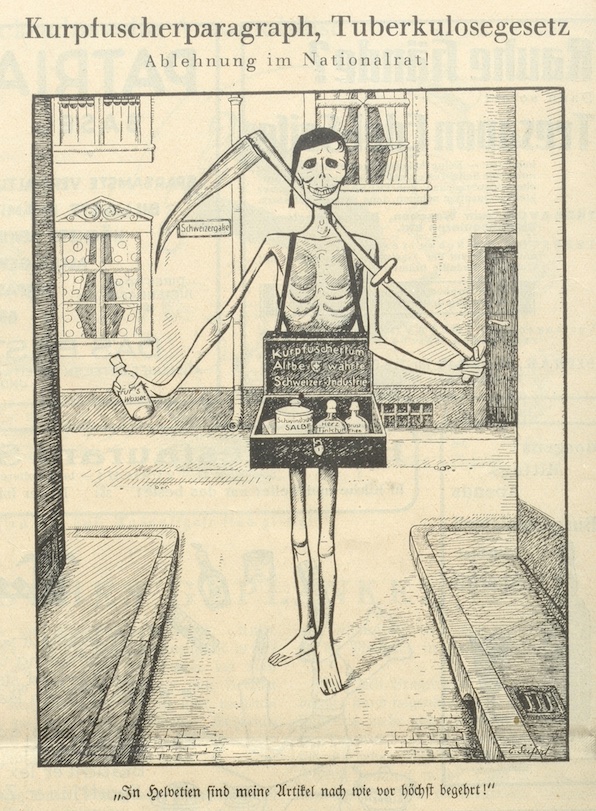
Rejection in National Council!
(figure bearing various quack cures)
“In Switzerland my wares are as popular as ever!”
(Nebelspalter, Zurich, 1927)
Rejection in National Council!
(figure bearing various quack cures)
“In Switzerland my wares are as popular as ever!”
(Nebelspalter, Zurich, 1927)
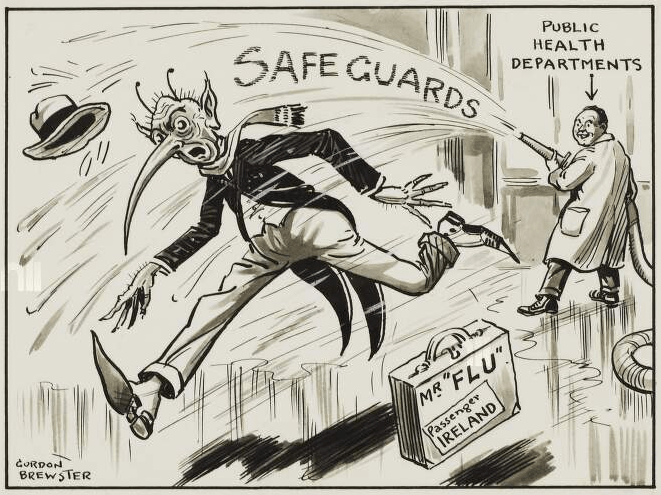
(Evening Herald, Dublin, 1927; from the Gordon Brewster Cartoon Collection at the National Library of Ireland.)
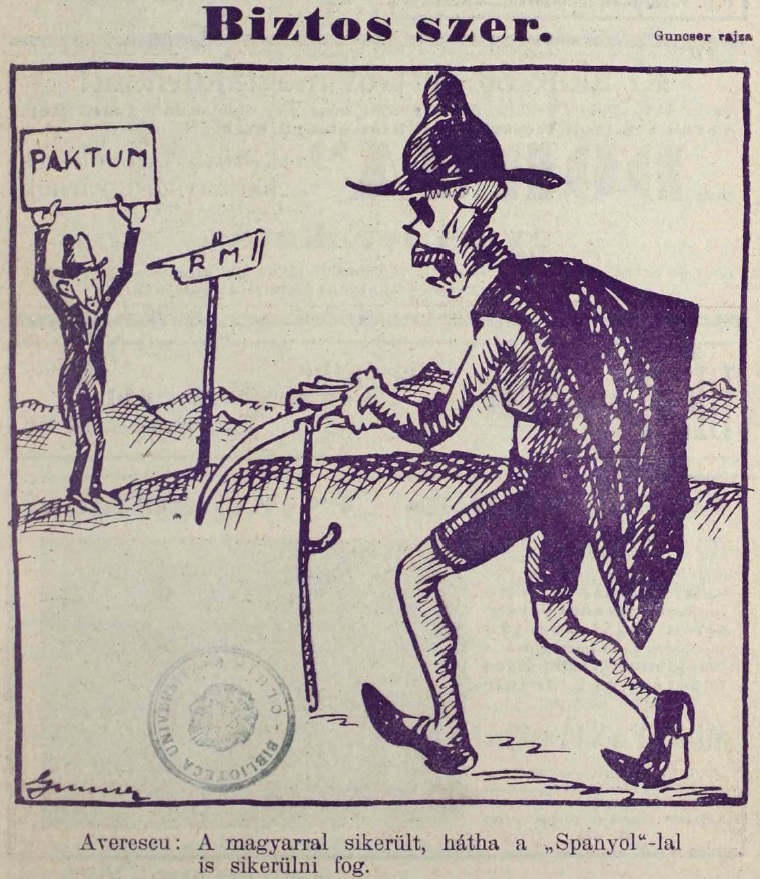
Early in 1927 influenza was resurgent in the Danube region. A young Otto von Habsburg, the nominal king of Hungary then in Spanish exile, contracted pneumonia after a bout of the flu, which was still frequently referred to as the “Spanish epidemic” in Hungarian. King Ferdinand of Romania caught the flu as well, unsettling domestic politics. The previous year, Ferdinand has been instrumental in returning General Alexandru Averescu to the premiership as head of the People’s Party. Averescu proceeded to cozy up with Mussolini’s Fascist Italy. Several months after the appearance of this cartoon, Ferdinand would die from what turned out to be cancer, but not before helping unseat Averescu.
Averescu: “It worked with the Hungarian, maybe it will work with the “Spanish” as well.”
(Vágóhid, Kolozsvár-Cluj, 1927)
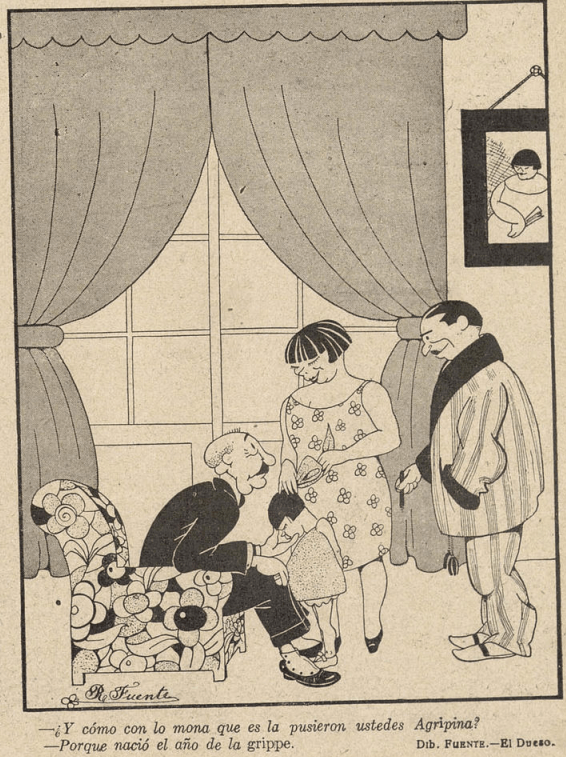
“And how did this little cutie get the name Agrippina?”
“Because I was born in the year of the grippe [flu].”
(Buen Humor, Madrid, 1927)
(From newspapers.) People’s Welfare Minister Rudevics has raised the issue of disinfecting incoming items in order to protect officials.
Woman: “If you don’t mind: from the countryside with a petition?! First of all, present a certificate that you’ve had a bath; then a certificate that you have been vaccinated against smallpox, typhus, cholera, tuberculosis, or rhinitis, then a document that your family is not insane; then a covering letter disinfecting the petition; then …”
Petitioner: “Then I better wait and bring a certificate that I am dead and buried!…”
(Svari, Riga, 1927)
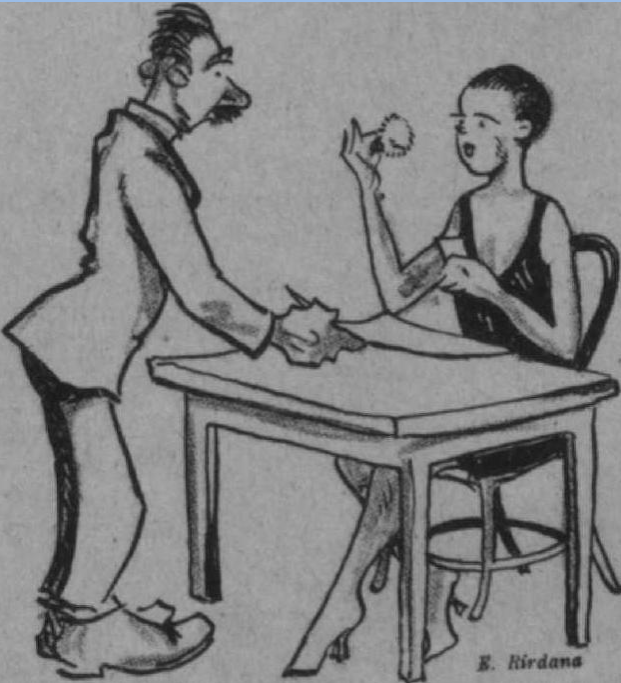
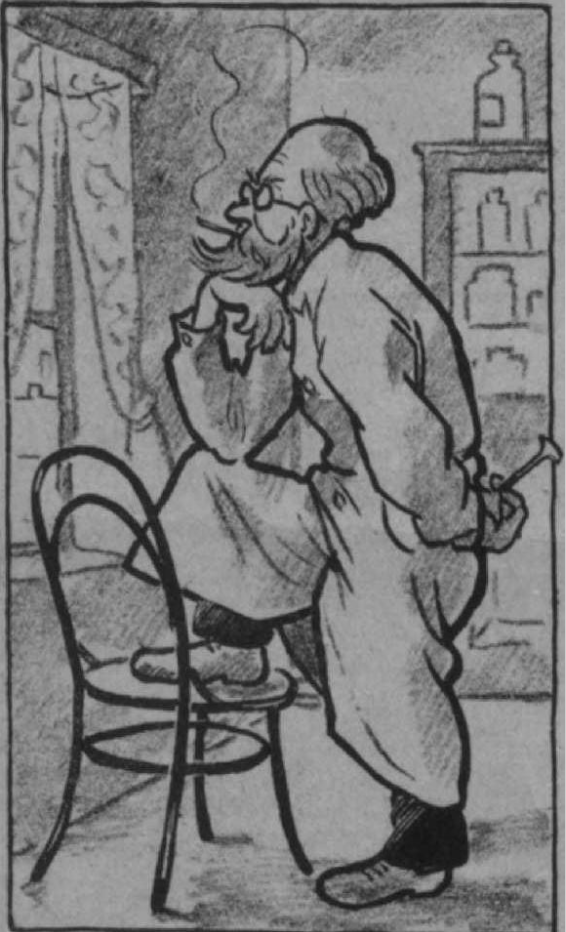
Our doctor:
When the times come for us,
What do you see in other countries now?! . . .
(Svari, Riga, 1927)
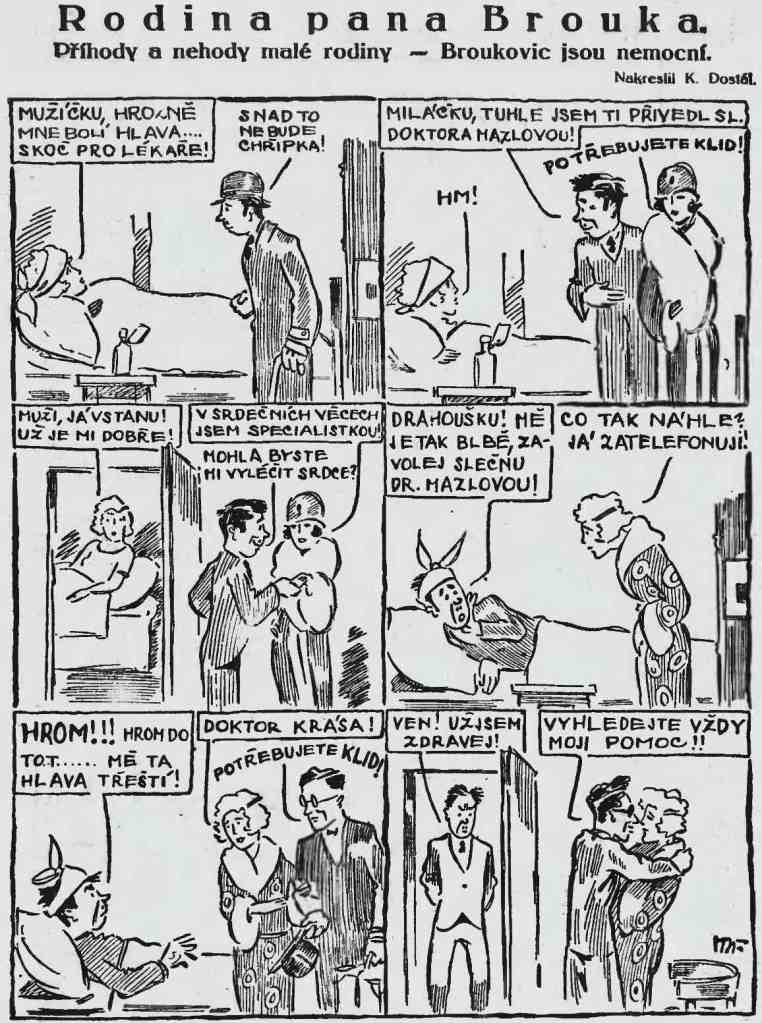
The nature and mishaps of a small family – The Beetles are ill.
Mrs. Beetle: “Hubby, I have a terrible headache… Go get the doctor!”
Mr. Beetle: “Hope it’s not the flu!”
“Honey, I brought you this lady, Dr. Mazlová!”
Mrs. Beetle: “Hm.”
Dr. Mazlová: “You need rest!”
Mrs. Beetle: “Dear, I’ll get up! I’m fine now!”
Dr. Mazlová: “I’m a cardiac specialist.”
Mr. Beetle: “Could you cure my heart?”
(later)
Mr. Beetle: “Dear! I’m so sick, summon Dr. Mazlová!”
Mrs. Beetle: “What’s going on? I’ll call!”
Mr. Beetle: “The pounding. The pounding … My head is killing me!”
Mrs. Beetle: “Here’s Doctor Krása!”
Doctor Krása: “You need rest!”
Mr. Beetle: “Get out! I’m already feeling better!”
Doctor Krása (to Mrs. Beetle): “Always seek my assistance!”
(Komár, Brno, 1927)
(The Brazilian League Against Tuberculosis, using the discovery of Calmette and Guérin [a French vaccine first introduced in 1921], will save newborn babies from the white plague.)
Joachim Francisco de Assis Brasil (Brazilian politician who had played an important role in securing Amazonian borderlands to the Republic) and Francisco Antônio de Almeida Morato (Brazilian politician and founding figure of the Democratic Party this same year): “We bring you here the National Party in order to be protected against near or future consumption [TB].”
Miguel Couto (Brazilian physician and politician) and Ataulfo de Paiva (magistrate, elite networker, and apparently at one point a figurehead in the Brazilian Academy of Sciences): “There’s no harm in experimenting. But if the disease is born, there will be no vaccine to cure it…”
(O Malho, Rio de Janeiro, 1927)
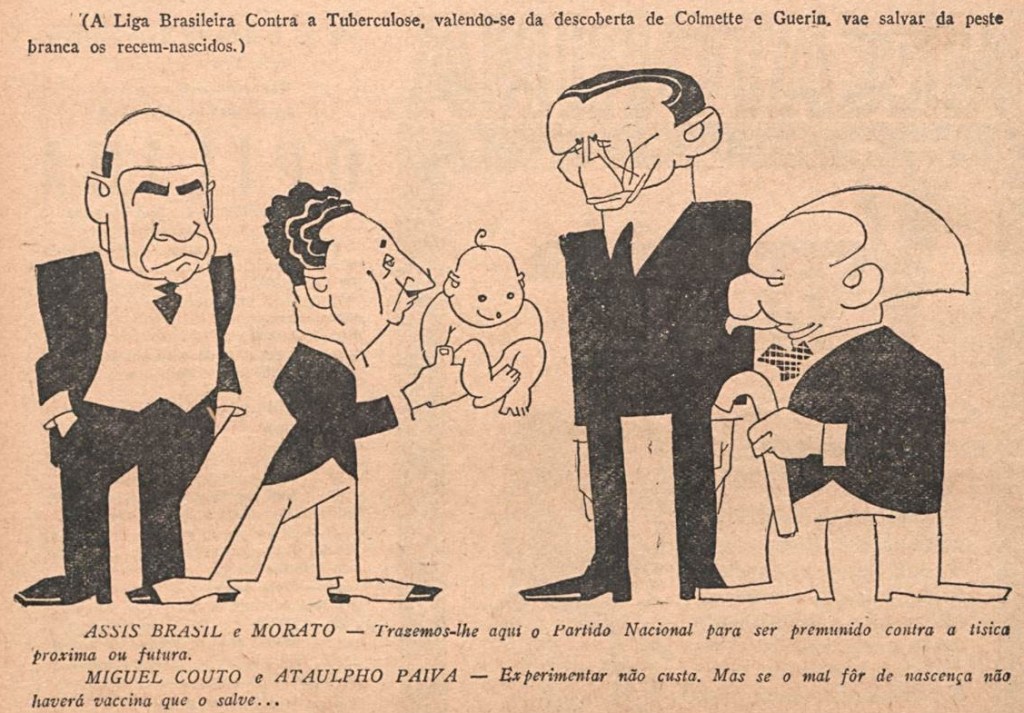
The political vaccination metaphor was not new to O Malho: see this example from 1904.
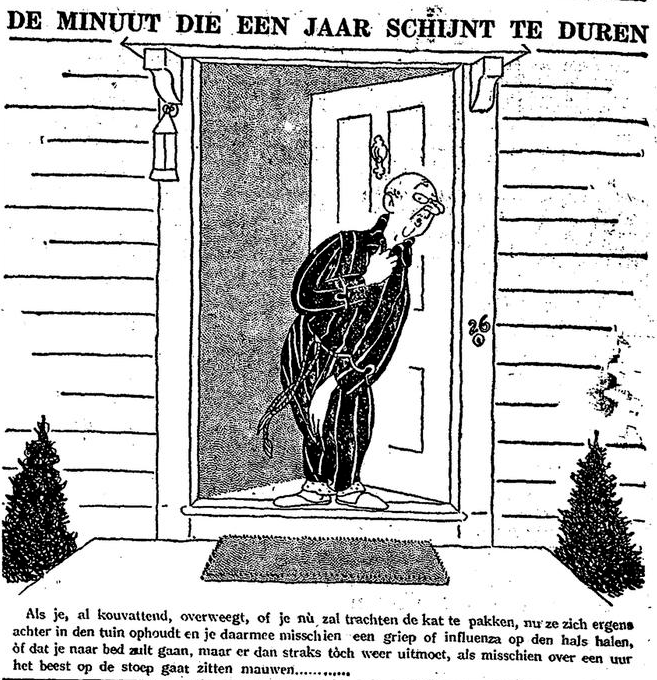
While catching a cold, you consider whether to try to catch the cat now, while she is hiding in the back of the garden and you might get a flu or influenza from it, or whether you will go to bed, but then have to go out there again later, when in an hour the beast will perhaps be meowing on the sidewalk ….
(Het Vaderland, ‘s Gravenhage, 1927)
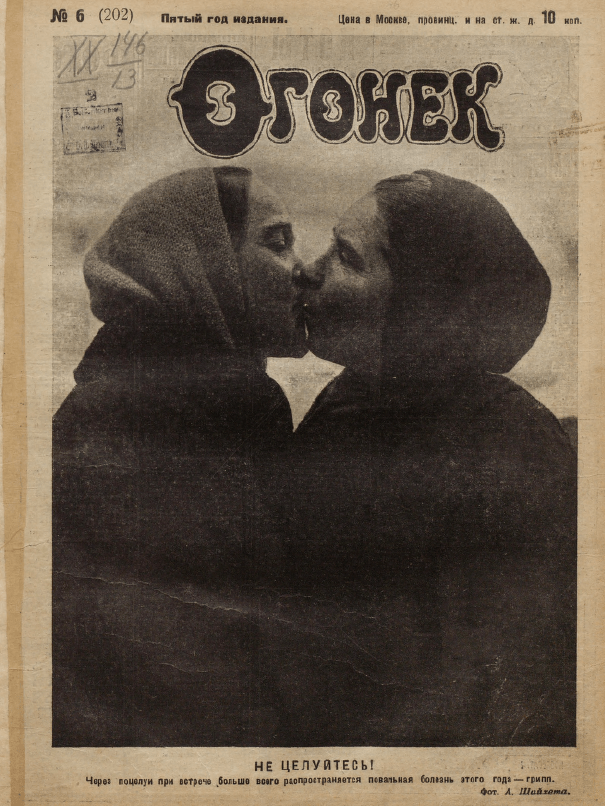
The infectious disease of the year, the flu, is transmitted most of all via kissing when greeting each other.
(Ogonek no. 6, Moscow, 1927)
(Though I took the image from another source, I owe this to the Soviet Visuals page on Facebook.)
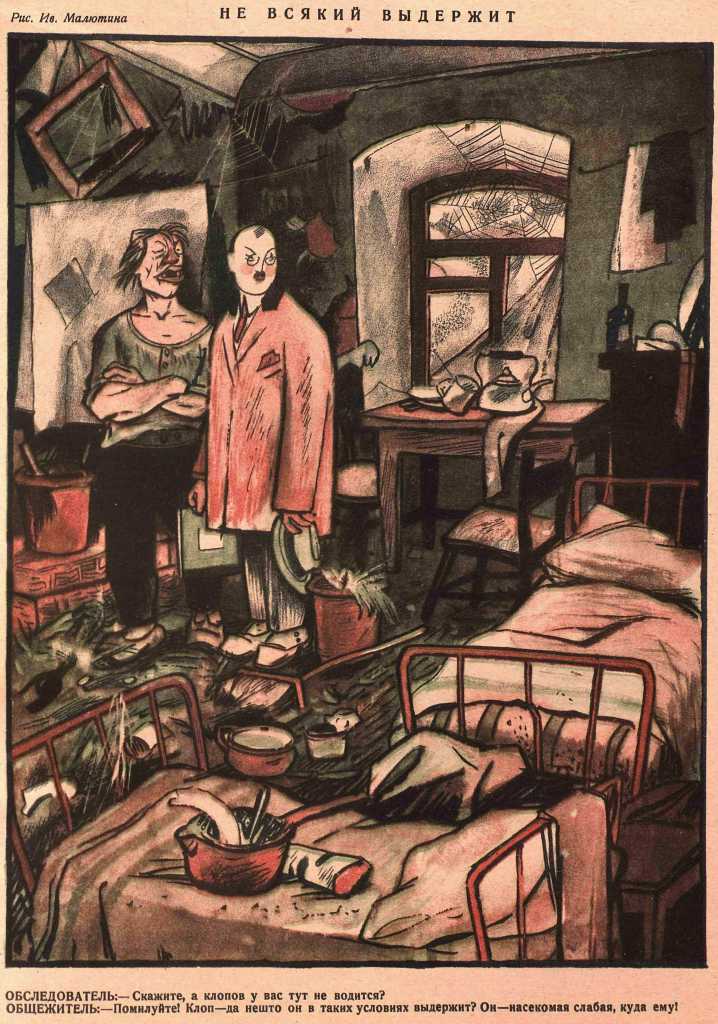
Inspector: “Say, are there any bedbugs found here?”
Resident: “Mercy! Can bedbugs stand these conditions? It’s a weak insect, where would it go?”
(Krokodil, Moscow, 1927)
(from life in the provinces)
“What sloppiness! What a mess here, what terrible air! Are you the chairman of the public health commission? What in the world are you looking at?!”
“Please pay it no mind, measures have been taken. Now I will sprinkle some pine water and everything will be fine.”
(Krokodil, Moscow, 1927)

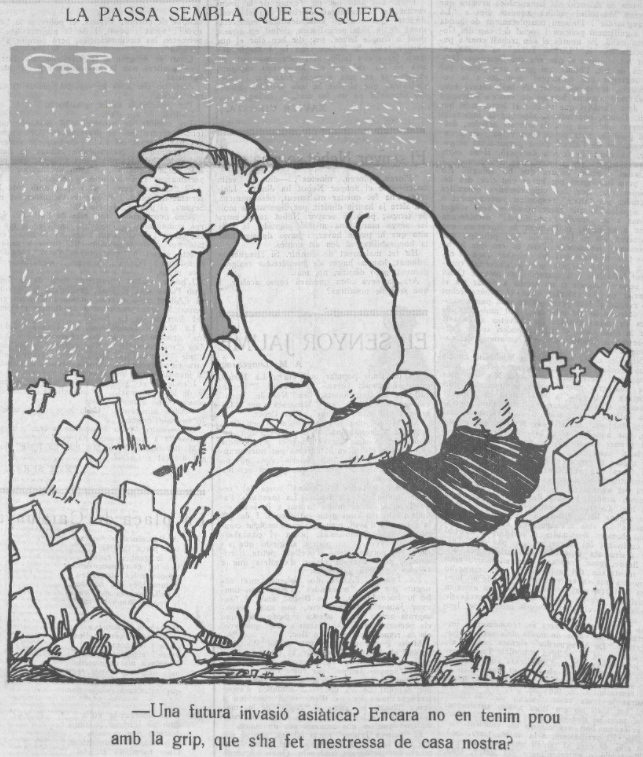
A future Asian invasion? We still haven’t had enough of the flu, hasn’t she become the mistress of our house?
(La Campana de Gracia, Barcelona, 1927)
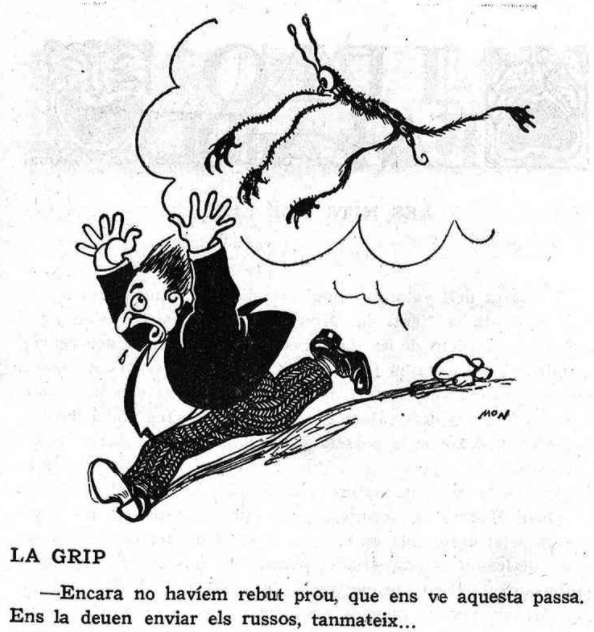
As if we had not yet received enough, that things have come to this pass. The Russians must have sent it to us, however…
(La Esquella de la torratxa, Barcelona, 1931)
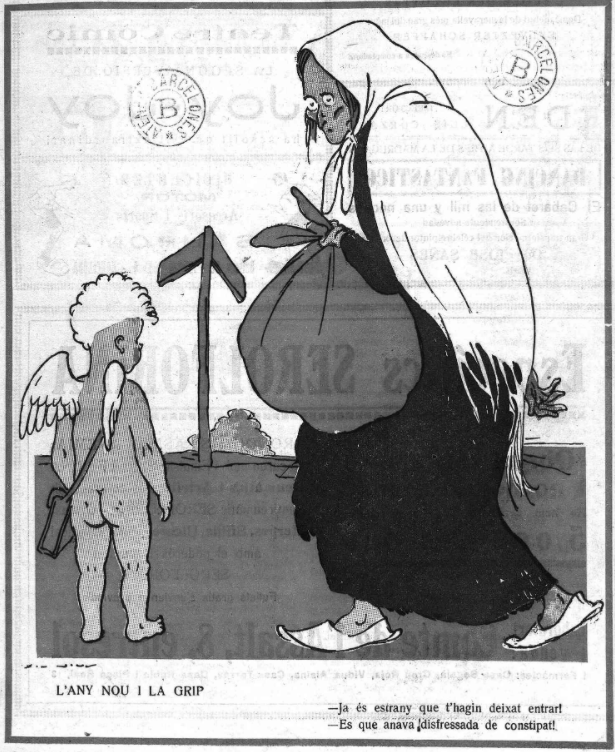
“It’s weird they let you in!”
“It’s because it was disguised as constipation!”
(La Esquella de la torratxa, Barcelona, 1927)
 Sic Transit Pestilentia