“Last night I dreamed that I was constantly being vaccinated!”
“Very interesting, did you get the beasts too?”
(Der Lichtblick, Vienna, 1946) (Idiom needs improvement)
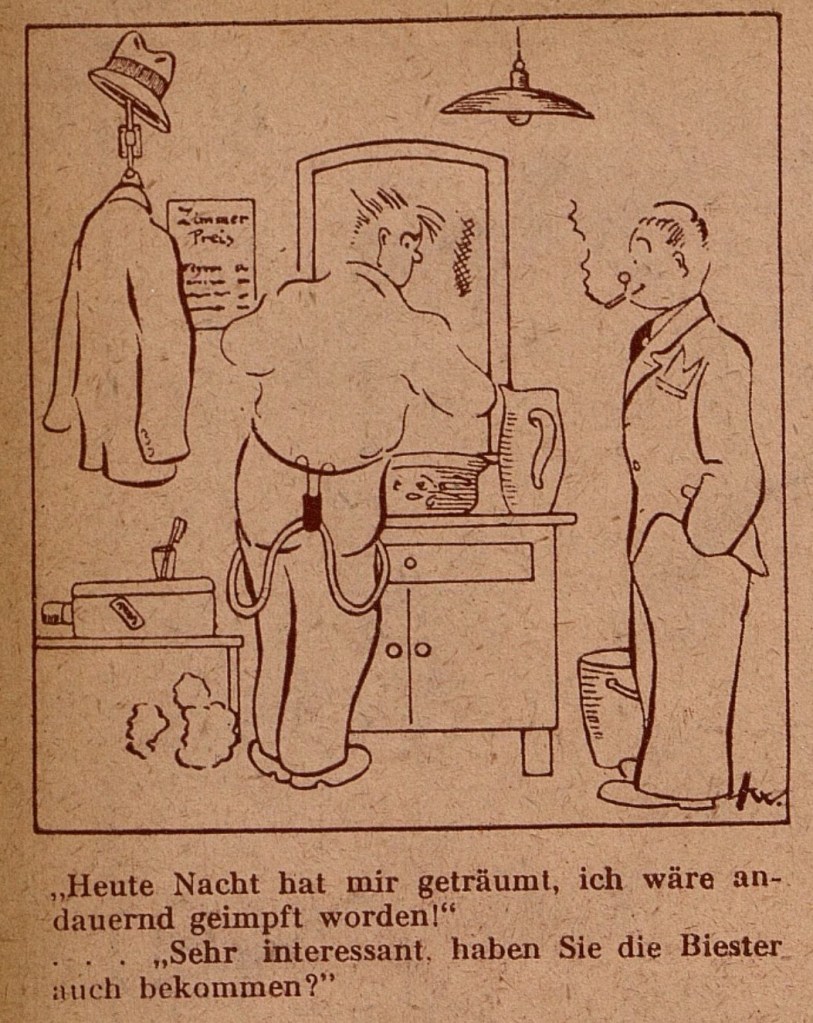
Austrian hygiene cartoon
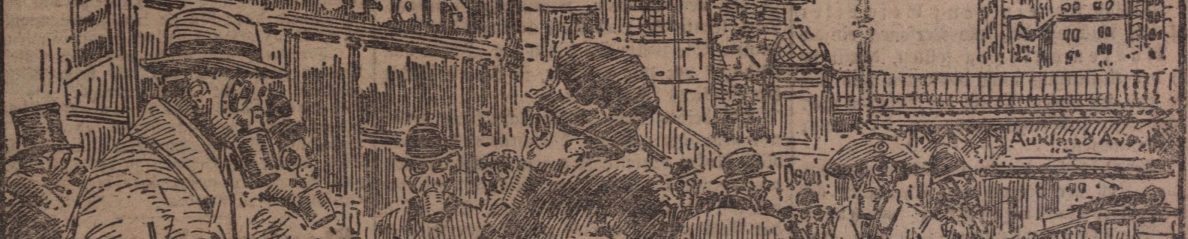
“Last night I dreamed that I was constantly being vaccinated!”
“Very interesting, did you get the beasts too?”
(Der Lichtblick, Vienna, 1946) (Idiom needs improvement)
Austrian hygiene cartoon
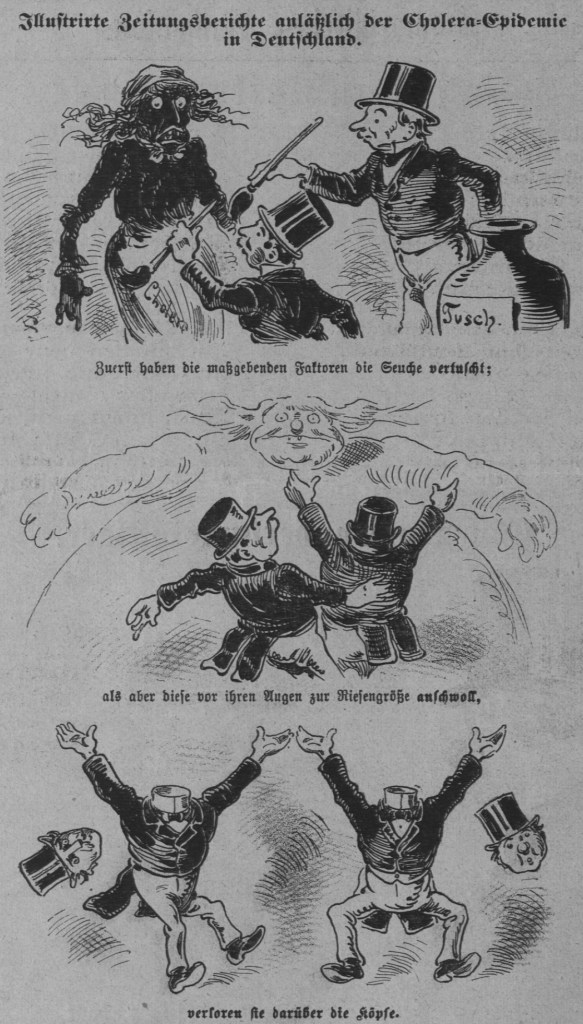
First the decisive factors covered up the contagion;
but when it swelled to gigantic proportions before their eyes,
they lost their heads over it.
(Kikeriki, Vienna, 1892)
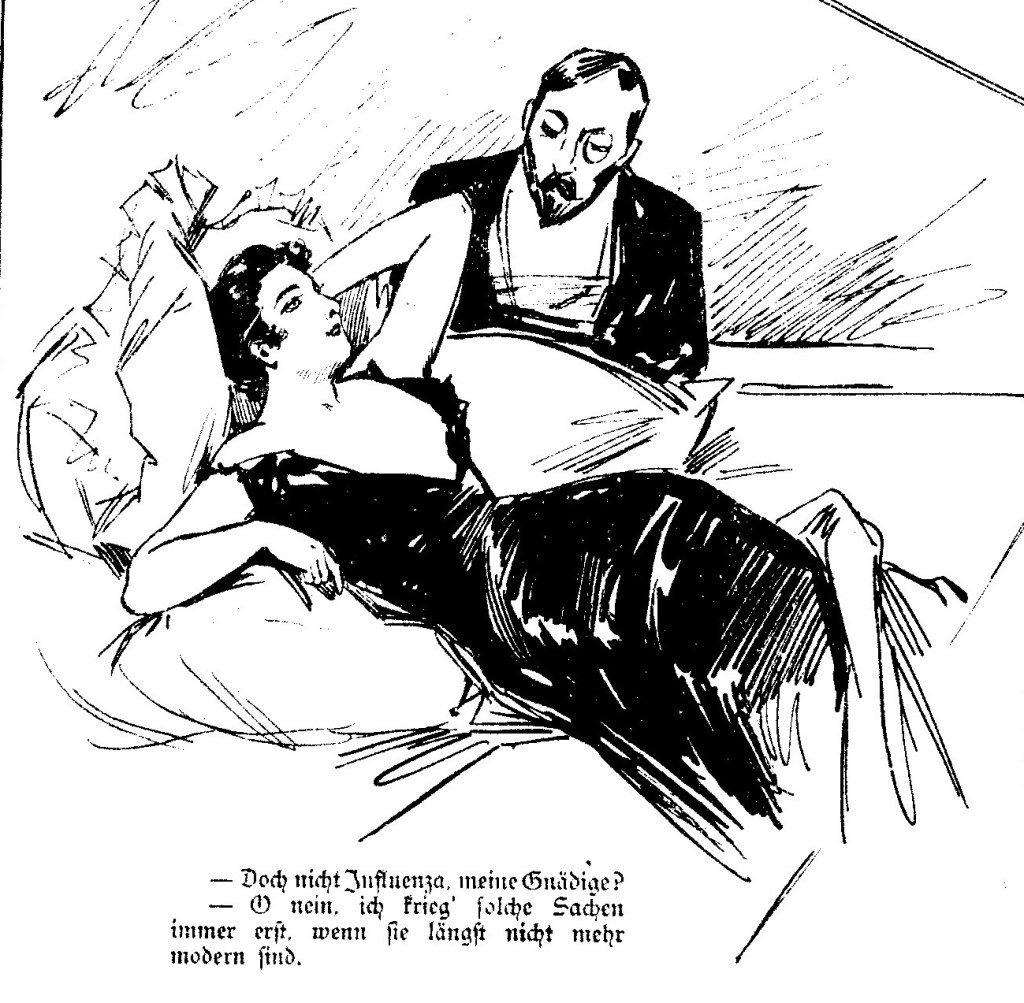
“It isn’t influenza, is it, my lady?”
“Oh no, I only get such things when they are no longer modern [i.e., in fashion].”
(Wiener Caricaturen, Vienna, 1893) (An inversion of another Austrian cartoon.)
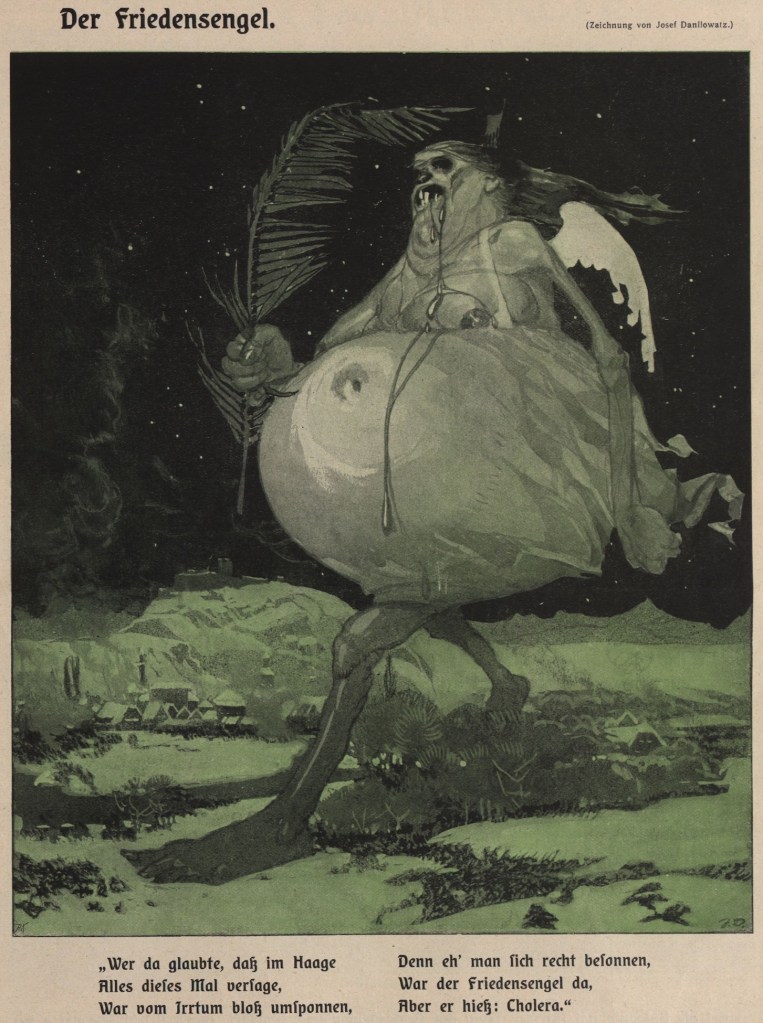
Whoever thought that in the Hague
Everything would fail this time,
Was simply wreathed in error,
Because before you thought things over,
The Angel of Peace was there,
But he was called: cholera.
(Die Muskete, Vienna, 1912) (The First Balkan War was drawing to a close, and for the first time the Hague Conventions were to play a role in the negotiations. Complicating the proceedings was the outbreak of cholera on both sides of the Bulgarian-Turkish lines.)
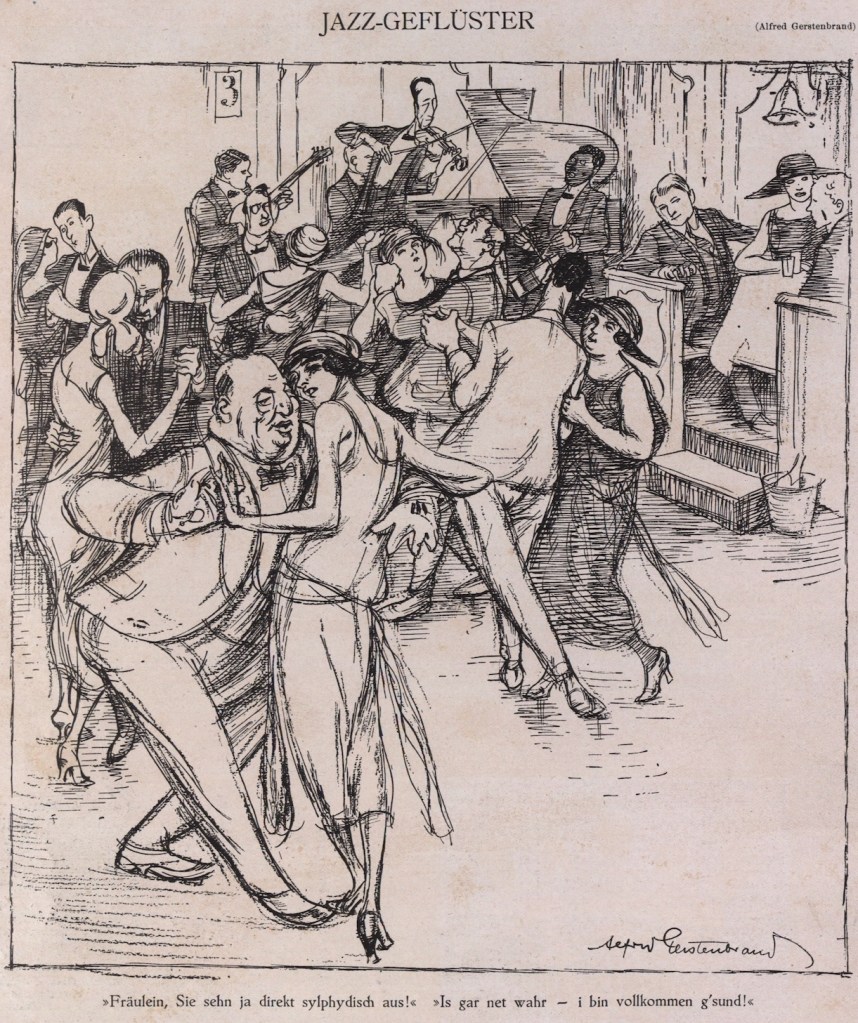
“Young lady, you look straight out of Sylphides!”
“Dat ain’t true, I’m totally healthy!”
(Die Muskete, Vienna, 1923) (Les Sylphides was an early Romantic ballet most famously revived by Michel Fokine in 1909.)
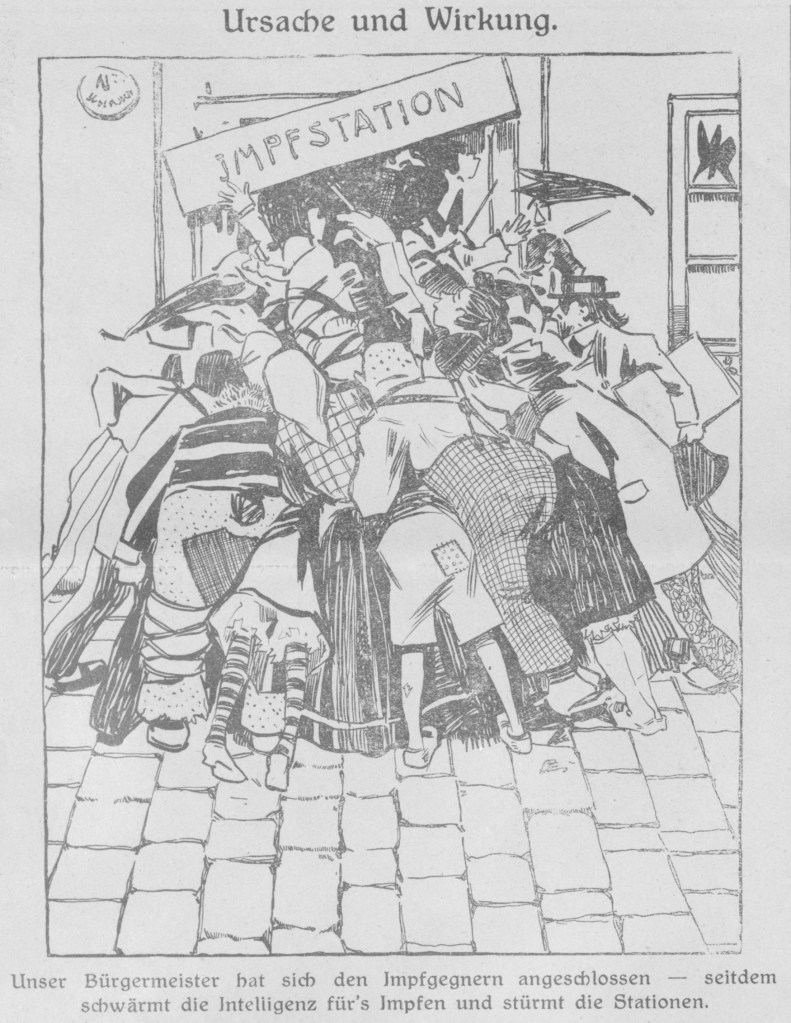
At a vaccination station: Our mayor has joined the antivaxxers, and since then the intellectuals are raving about vaccination and storming the stations.
(Wiener Caricaturen, Vienna, 1912)
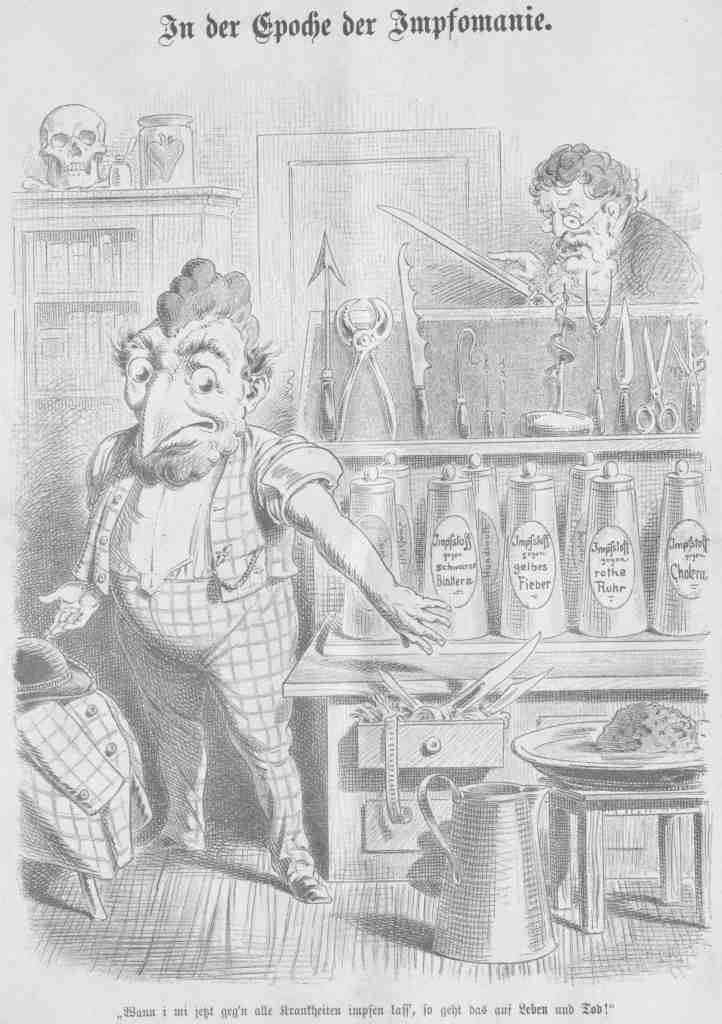
Canisters labeled “measles vaccine,” “yellow fever vaccine,” “dysentery vaccine,” “cholera vaccine.”
“When I’m having myself vaccinated against all diseases now, it’s a matter of life and death!”
(Kikeriki, Vienna, 1885)
Doctor: “Are those relatives of the patient?”
“No, those are neighbors: they found out that the patient has a terrible fever and came to warm up around him.”
(Bich, Paris, 1920) (Compare a similar German cartoon from 1847 in Fliegende Blätter)
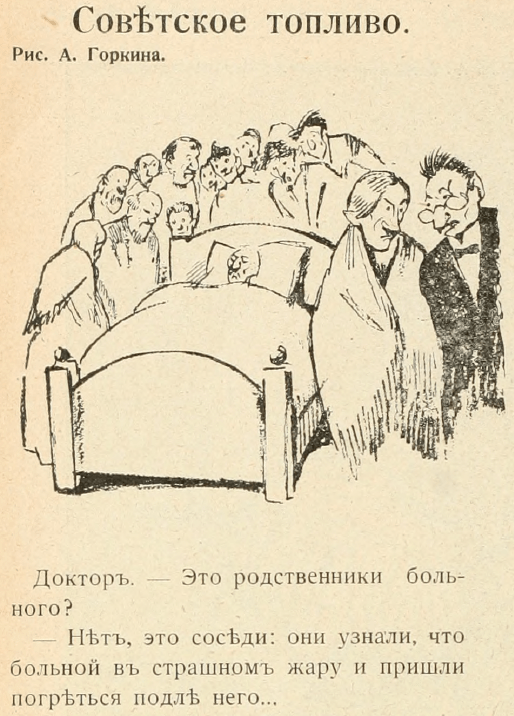
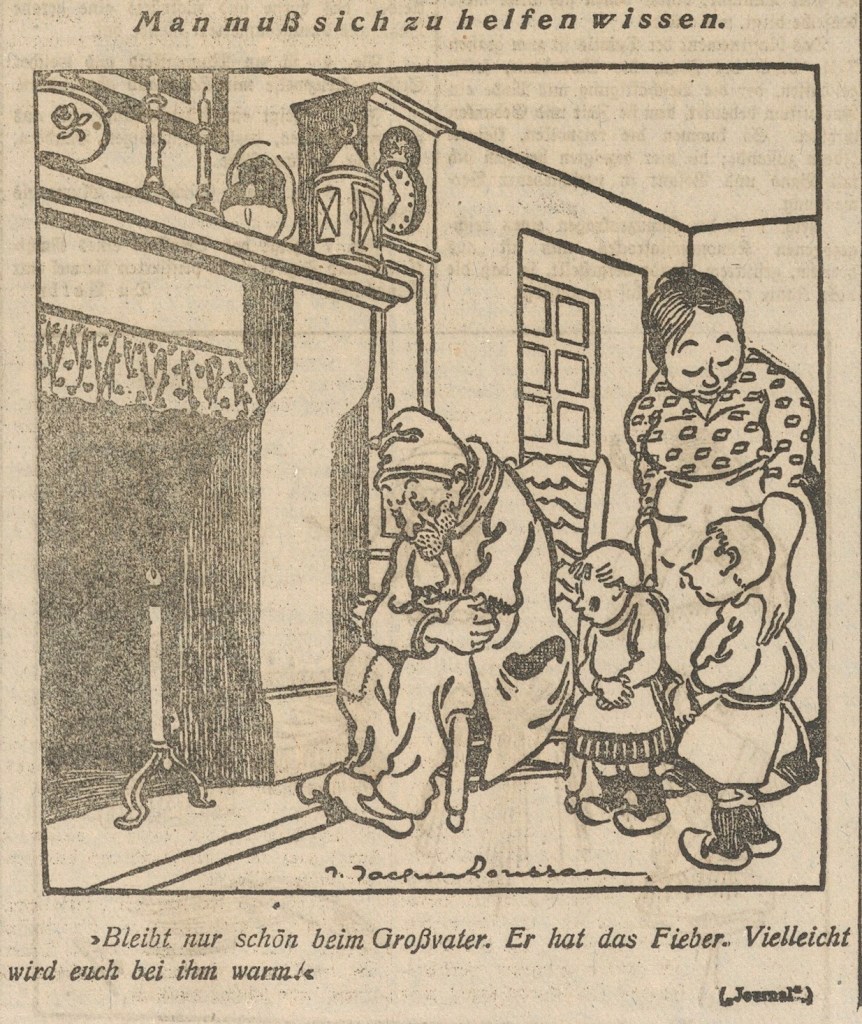
Der neue Tag in Vienna printed a cartoon with a similar theme in 1919, apparently reprinted from a French source:
Title: “You have to know how to help yourself”
“Just stick close to Grandpa. He has the fever. Perhaps you’ll get warm near him.”
Main caption: A French man of culture has made the proposal to introduce bombs with plague bacteria as a new means of warfare. If this benevolent enterprise were to be realized, then the Central Powers will not be accountable for the reply.
(Kikeriki, Vienna, 1915)
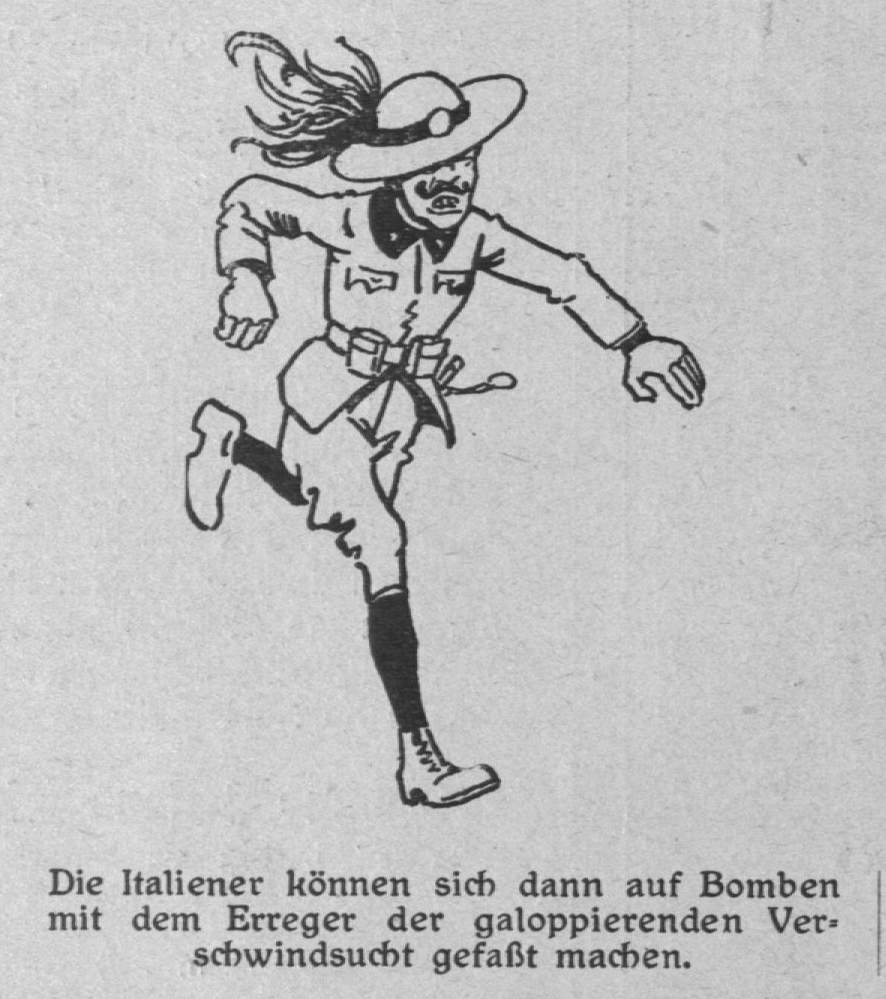
The Italians can then prepare themselves for bombs with the pathogen of galloping consumption.
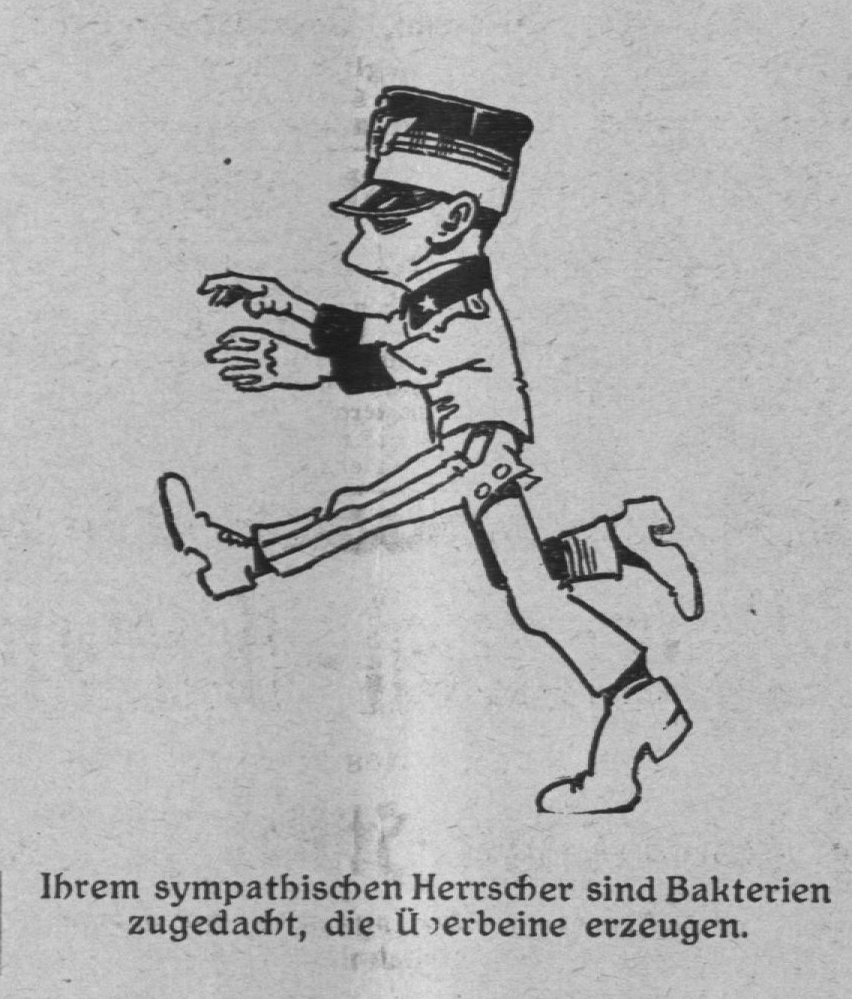
Bacteria which produce extra upper legs are intended for their sympathetic ruler.
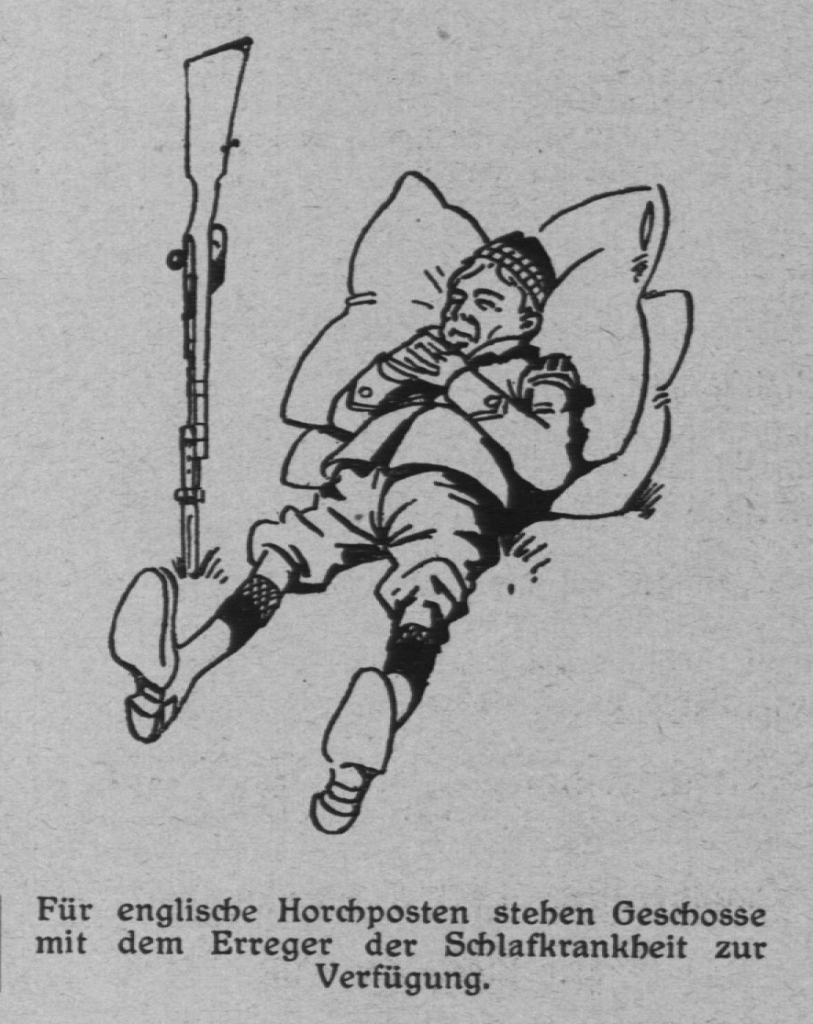
For English listening posts bullets with the sleeping sickness pathogen are at the ready.
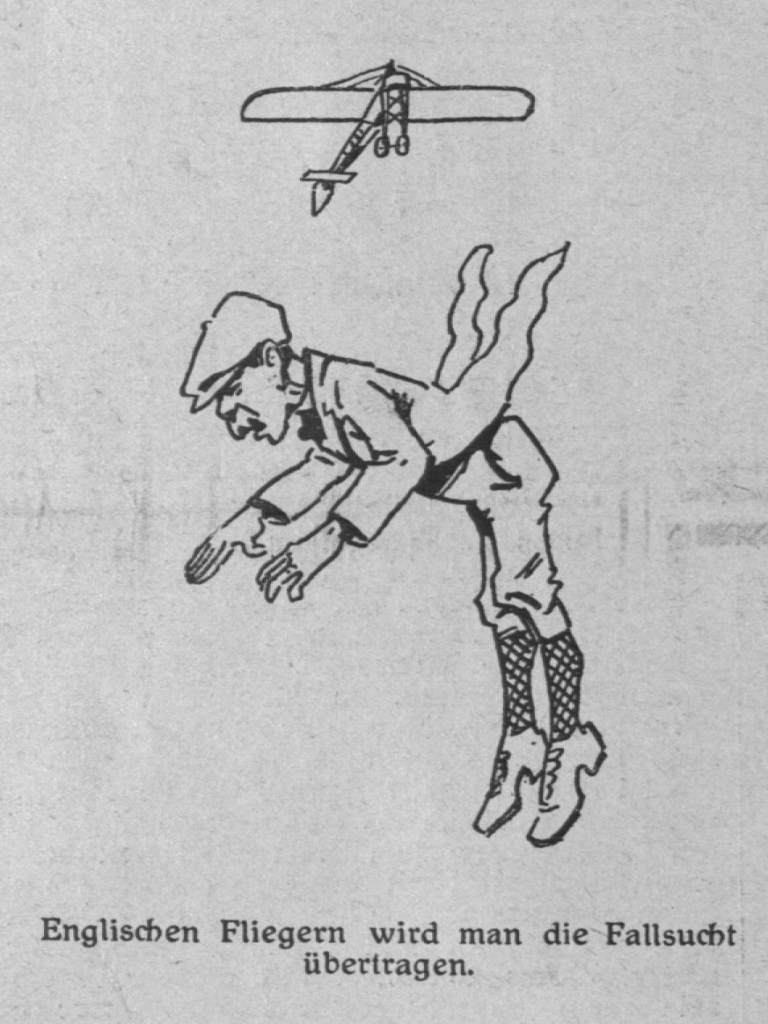
Epilepsy will be transmitted to English flyers.
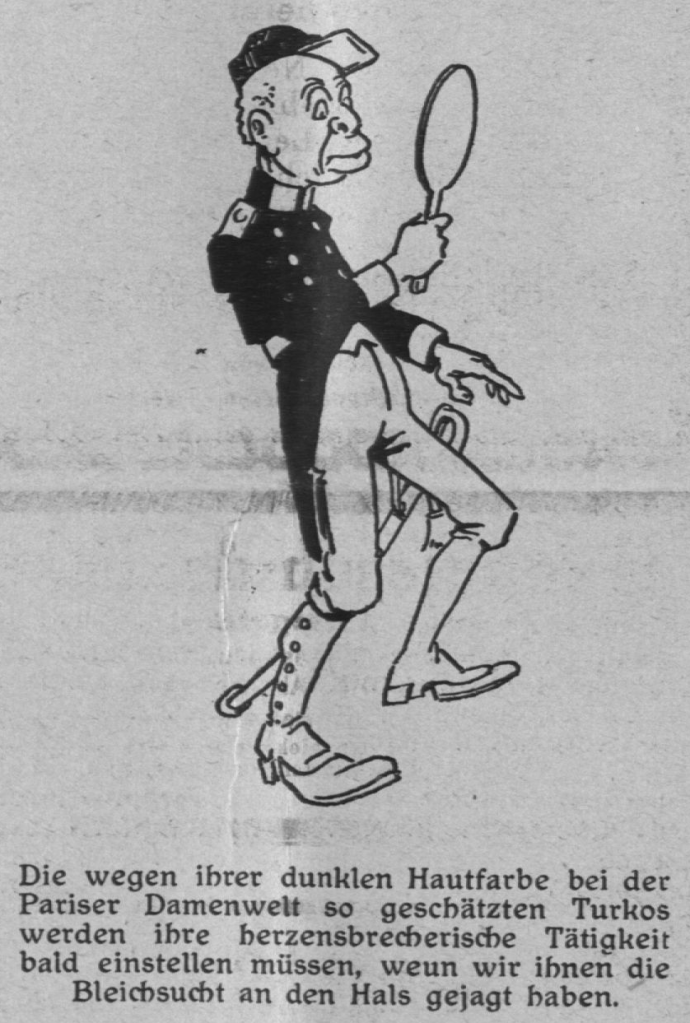
The Foreign Legion soldiers so valued by the Parisian ladies world for their dark skin color will have to cease their heartbreaking activity soon, when we’ve given them bleaching on their necks.

Transmitting the English disease to the equine ranks of the Allies is child’s play.
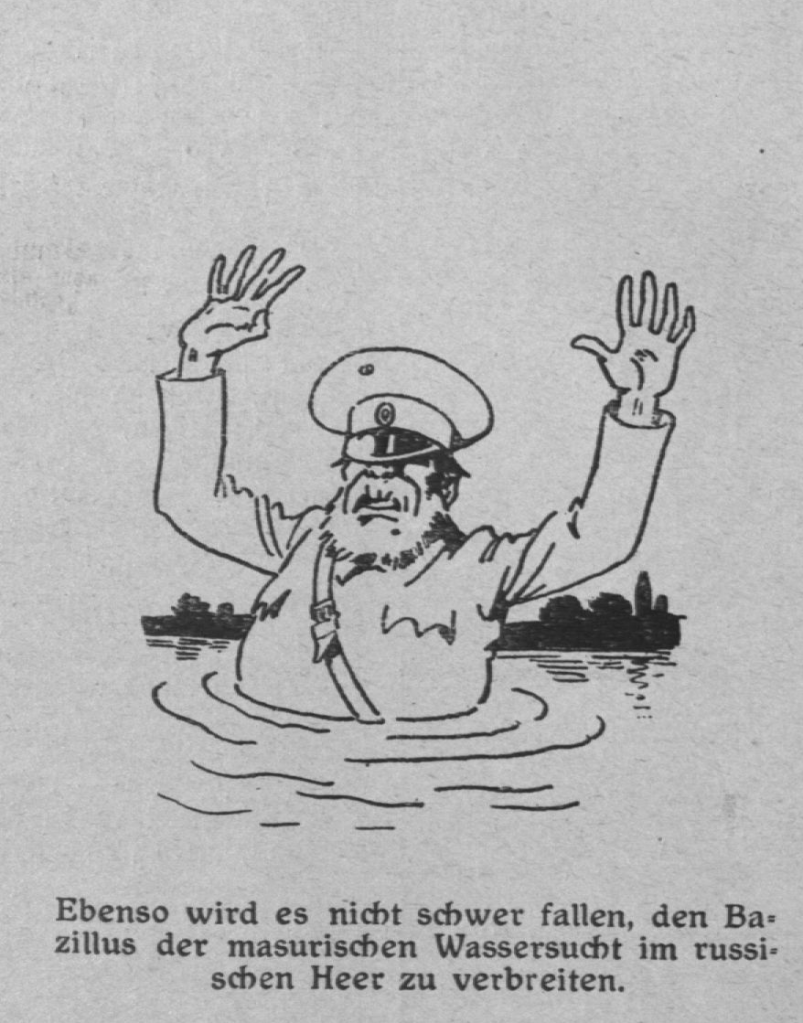
It will be just as easy to spread the bacillus of Masurian dropsy in the Russian army.
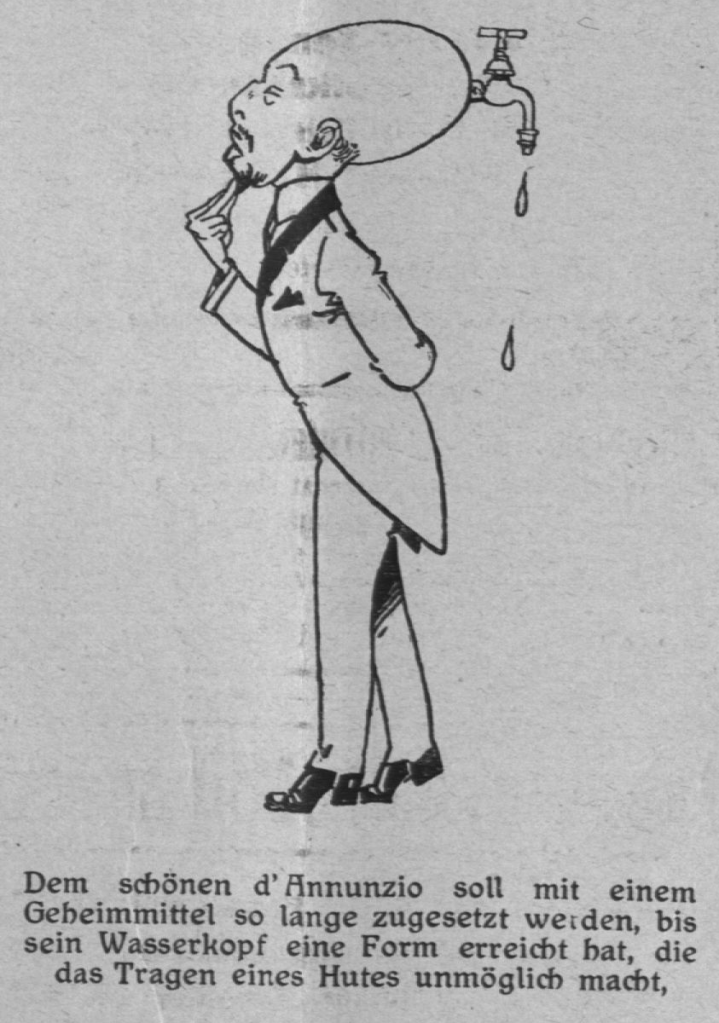
The lovely d’Annunzio ought to be punished by a secret medicament until his hydrocephaly has attained a form that makes it impossible to wear a hat.
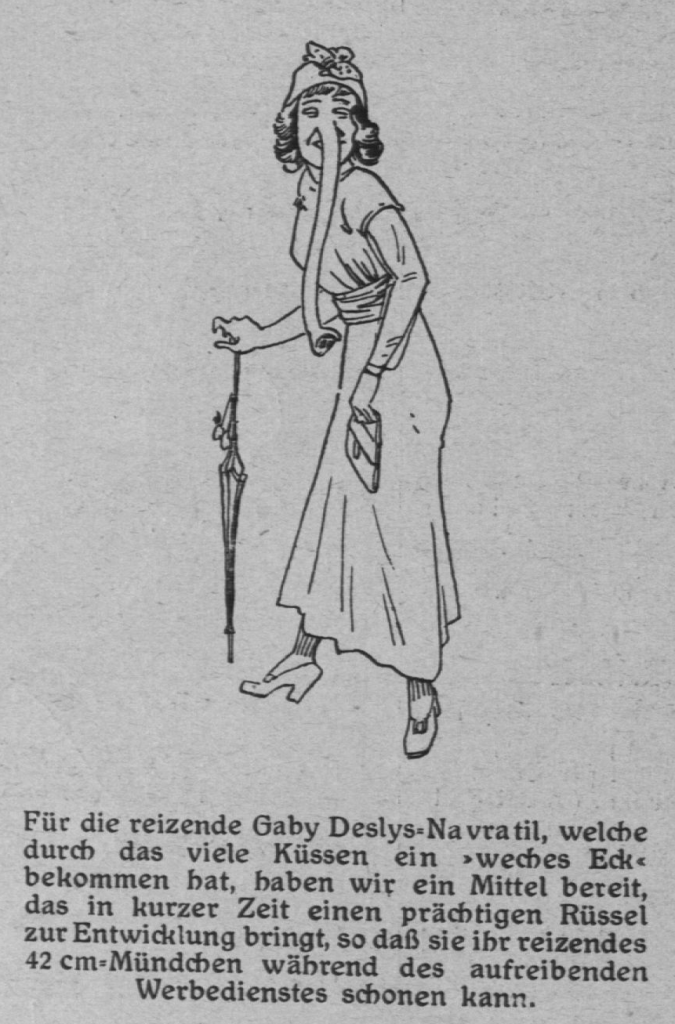
For the delightful Gaby Deslys-Navratil [an immensely popular French singer and silent film actor who would expire in 1920 from complications following a bout with Spanish flu], who has gotten into a bit of a spot from all the kissing, we have a means ready to develop a splendid trunk in a short time, so that she can spare her lovely 42 cm mouth during her grueling advertising service.
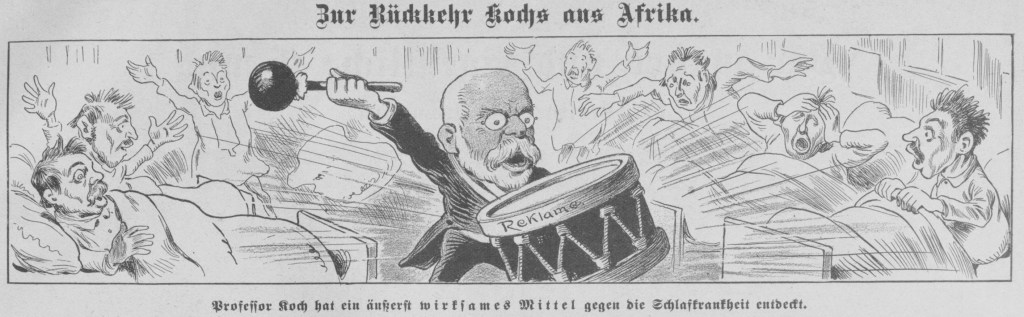
Professor Koch has discovered an extremely effectively treatment against sleeping sickness. (Namely, loudly advertising his colonial researches.)
(Kikeriki, Vienna, 1907)
(In 1906 the famous German bacteriologist Robert Koch led a group of researchers to German East Africa in search of a cure for African sleeping sickness. Experimenting with a “magic bullet” of the sort his protégé Paul Ehrlich had developed in his laboratory, Koch and his associates treated thousands of patients with Atoxyl, an arsenic-based substance with toxic side effects. Though Koch remained convinced of its efficacy up to his death in 1910, this therapy proved to be his greatest failure.)
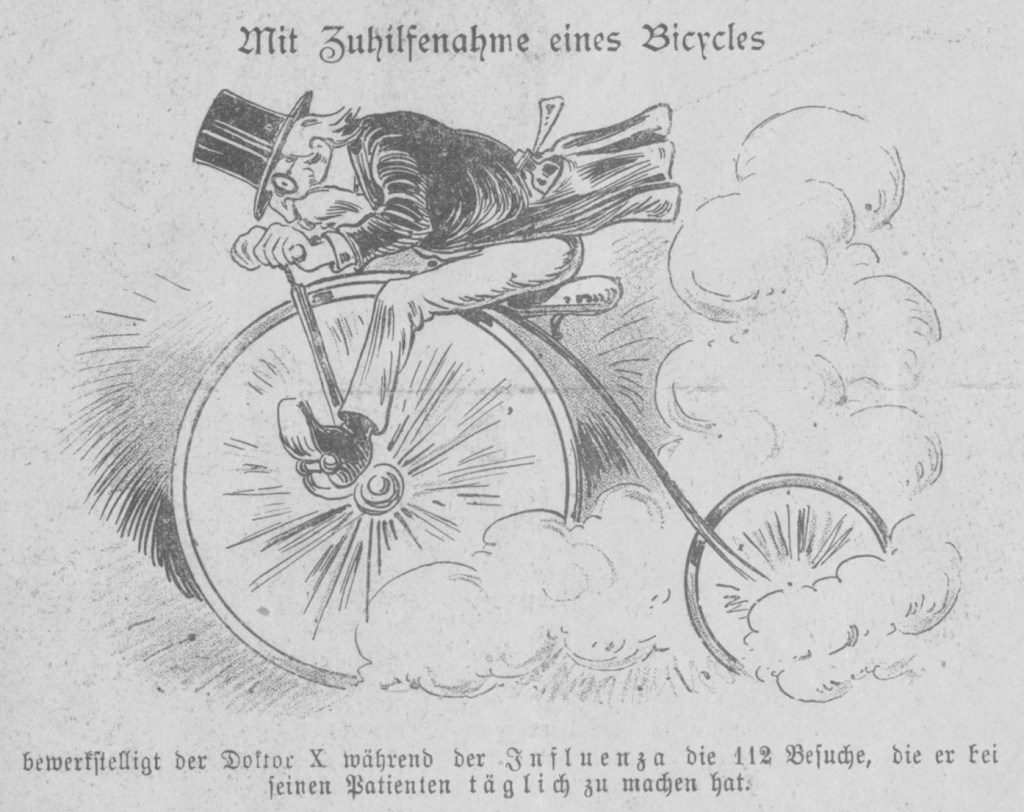
With the assistance of a bicycle during the influenza Doctor X managed the 112 visits that he had to make daily to his patients.
(Kikeriki, Vienna, 1890)
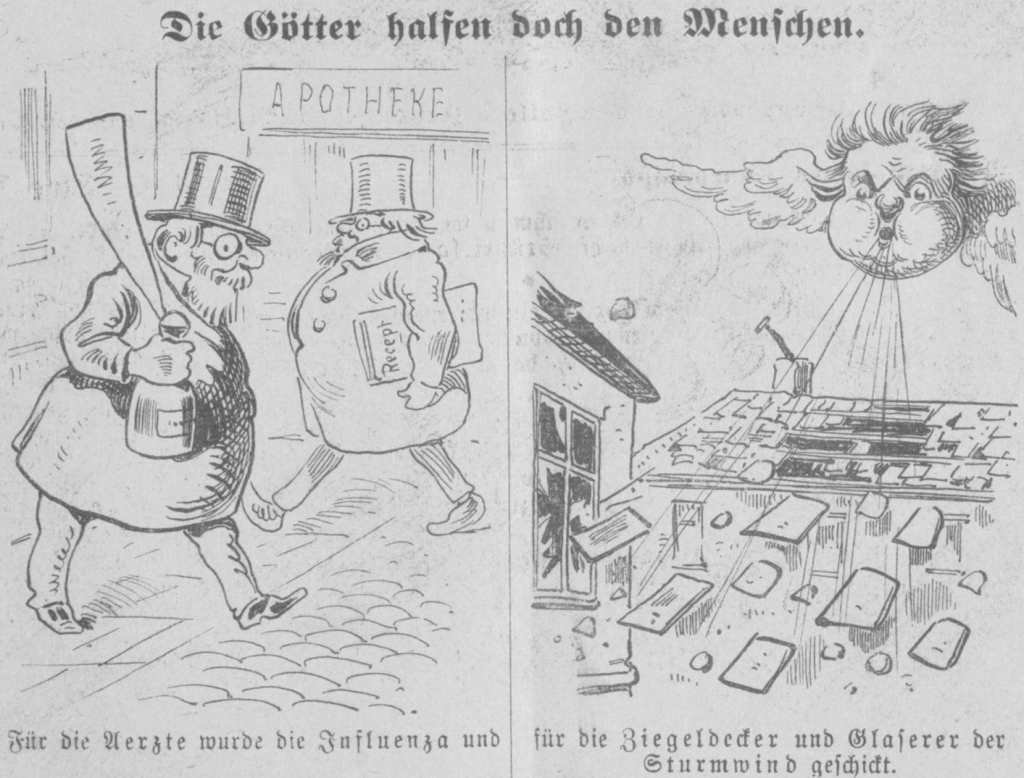
Influenza was sent for the doctors, and stormy winds were sent for the roofers and glazers.
(Kikeriki, Vienna, 1890)
(After only schools and not government offices were closed for the sake of influenza.)
“O blessed, o blessed to be a child still!”
(Kikeriki, Vienna, 1890)

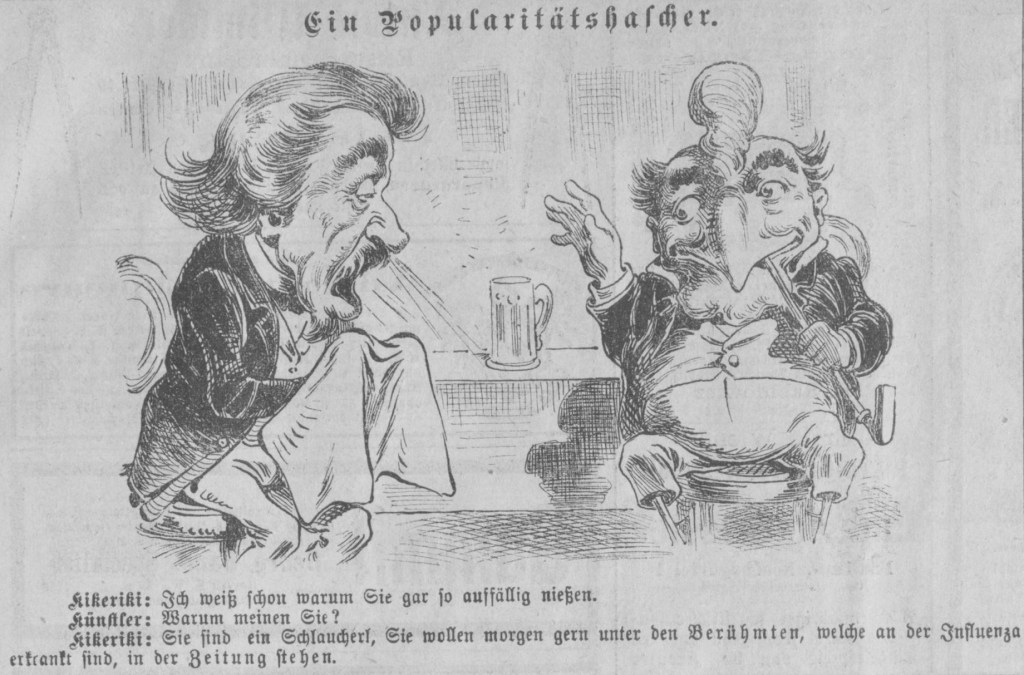
Kikeriki: “I know just why you’re sneezing so conspicuously.”
Artist: “What do you mean?”
Kikeriki: “You’re one of these clever types who would like to find themselves in the newspaper tomorrow among the famous people who are ill with influenza.”
(Kikeriki, Vienna, 1890)
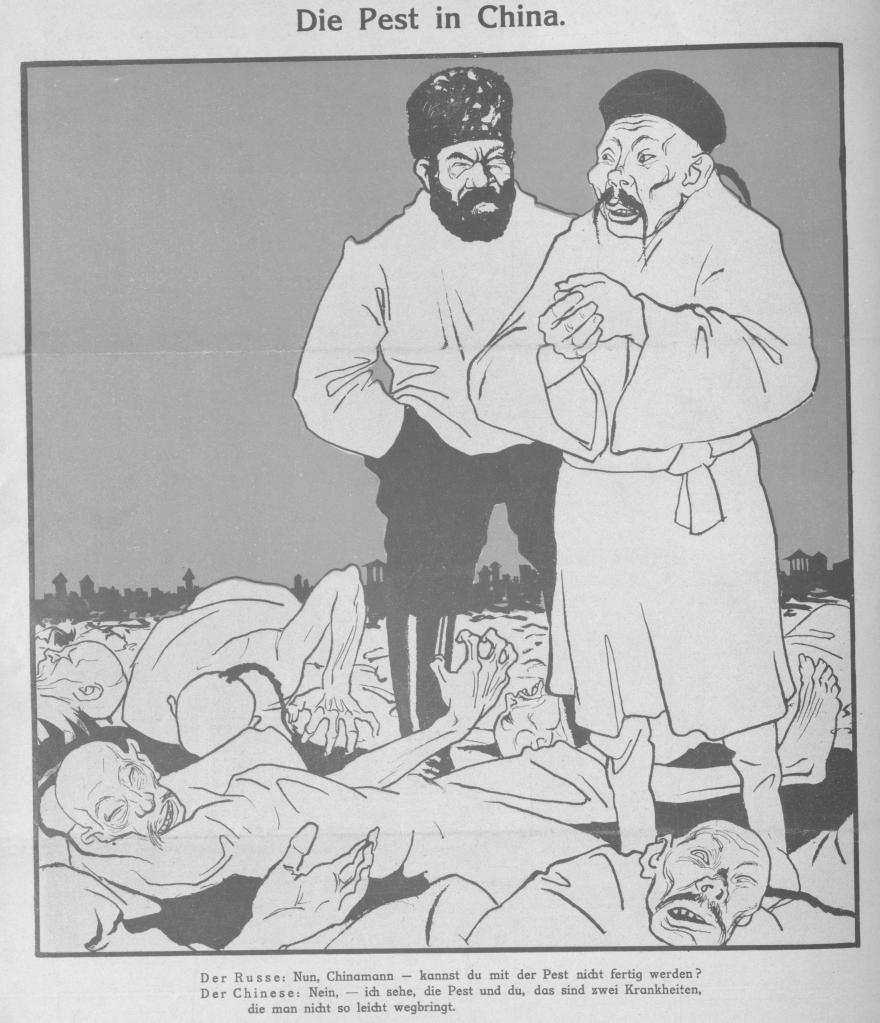
Russian: “Now, Chinaman, can’t you be done with the plague?”
Chinese: “No, I see the plague and you, and those are two ailments that one cannot easily get rid of .”
(Wiener Caricaturen, Vienna, 1911)
 Sic Transit Pestilentia