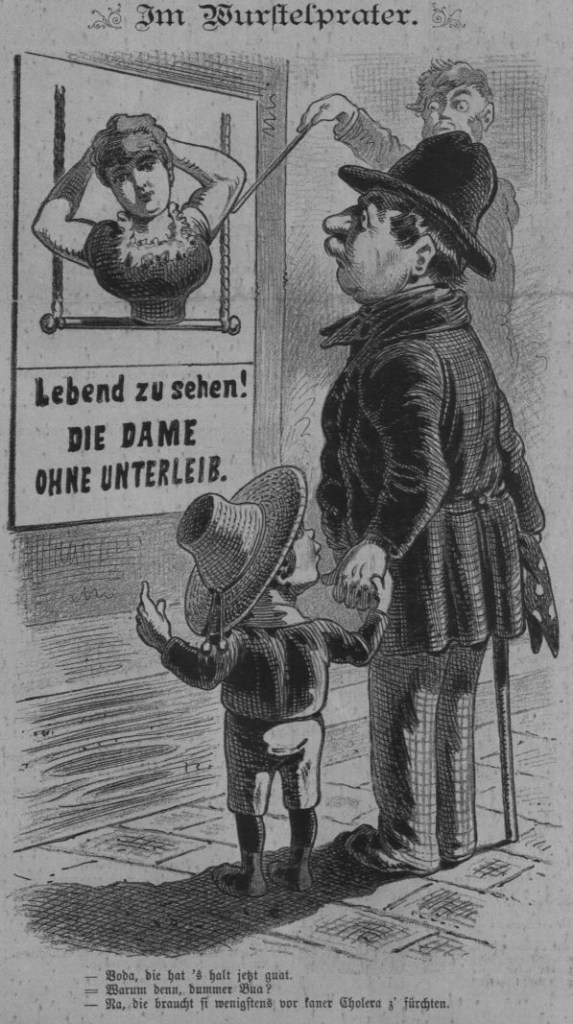
This may be the weirdest cartoon in the entire collection, yet once you know about the intestinal agonies experienced by cholera victims, the child’s observation somehow seems very relatable.
Carnival poster: See her live! The lady with no lower abdomen.
Little boy: “Boda, she must have it good now.” “Why, foolish boy?” “Well, at least she doesn’t have to be afraid of any cholera.” (Kikeriki, Vienna, 1892)
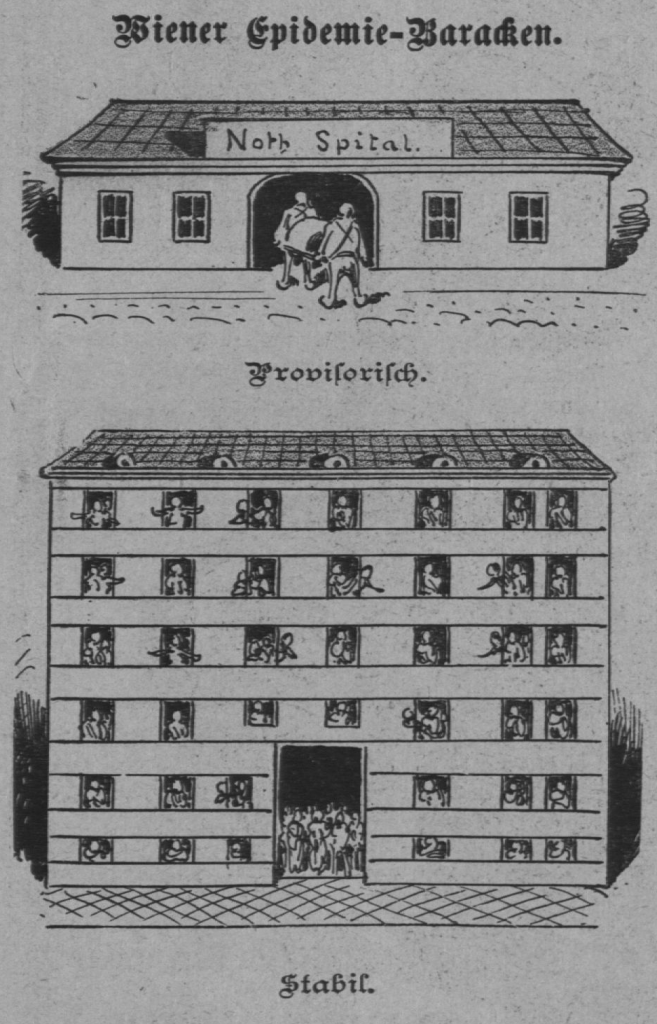
Provisional. Stable. (Kikeriki, Vienna, 1892) An adjacent story lists the epidemic illnesses then prevailing in the city: street-paving-disease; city-theater-Sunday-afternoon-performance-fever; stock-market-congestion with migraine effects and scenery-typhus; general-intestinal-contraction among small business as a consequence of great virulence of intermittent brokeness; prizewinning-Danube-dropsy; robbery-fear in the watchmaker association; acute tram-crowding; catalepsy of the greater Vienna roadworks commission; food-marasmus; cholera-comma-bacillus-mania.
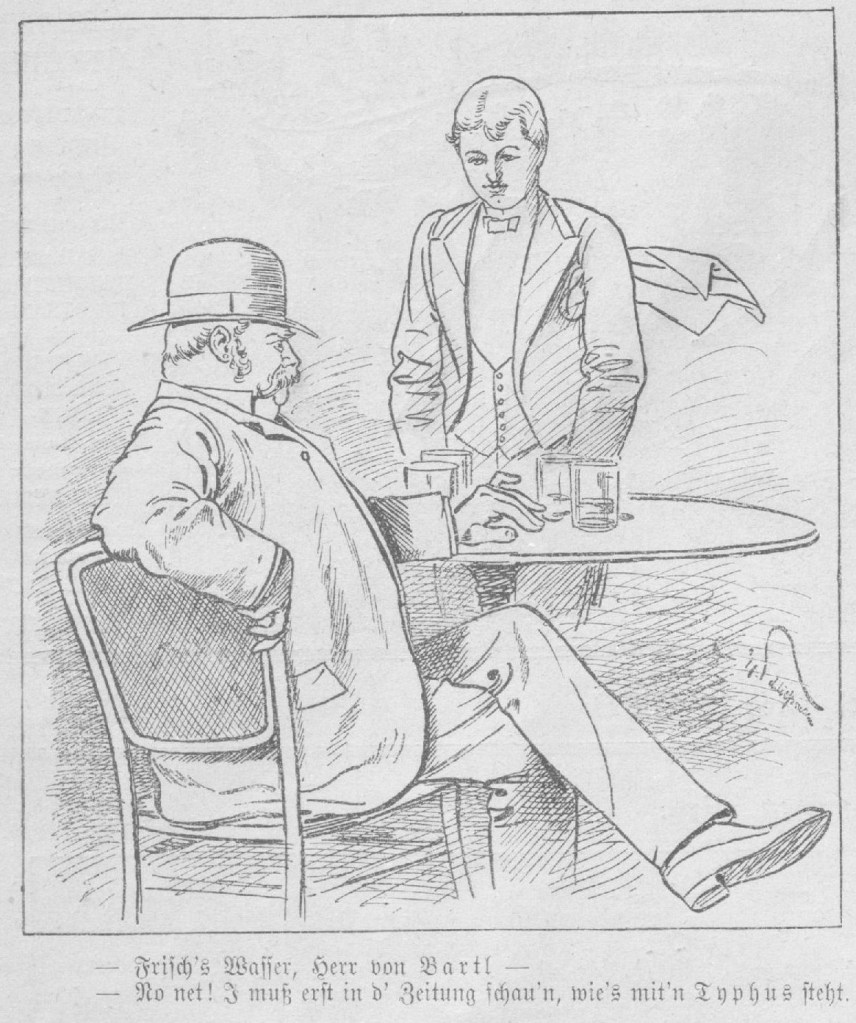
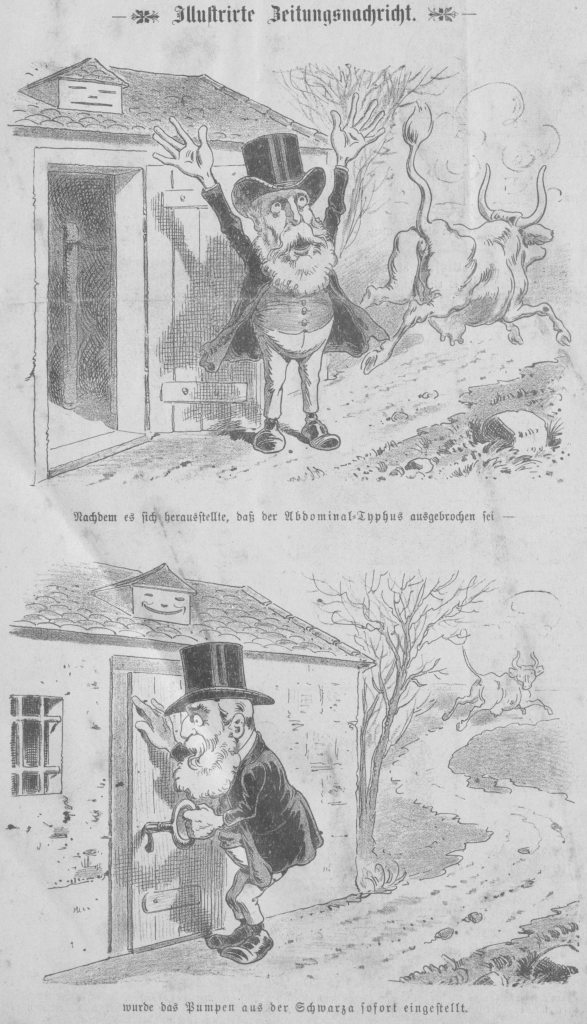
Once it was established that the abdominal typhus has broken out, the pumping station at Schwarza was immediately locked down. (Kikeriki, Vienna, 1889)
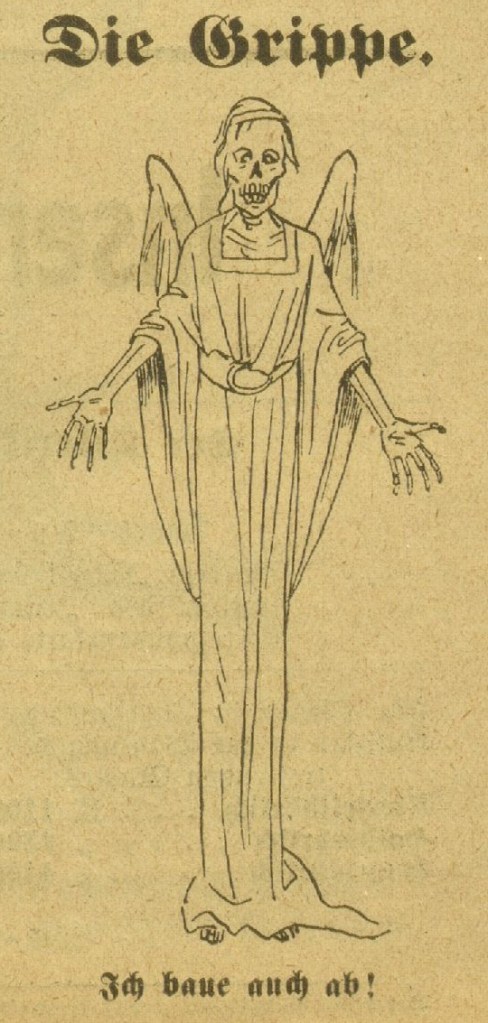
“I’m also cutting back!” (Three years after the Spanish flu epidemic, at a time of reductions in social welfare amid mounting postwar inflation.) (Kikeriki, Vienna, 1922)
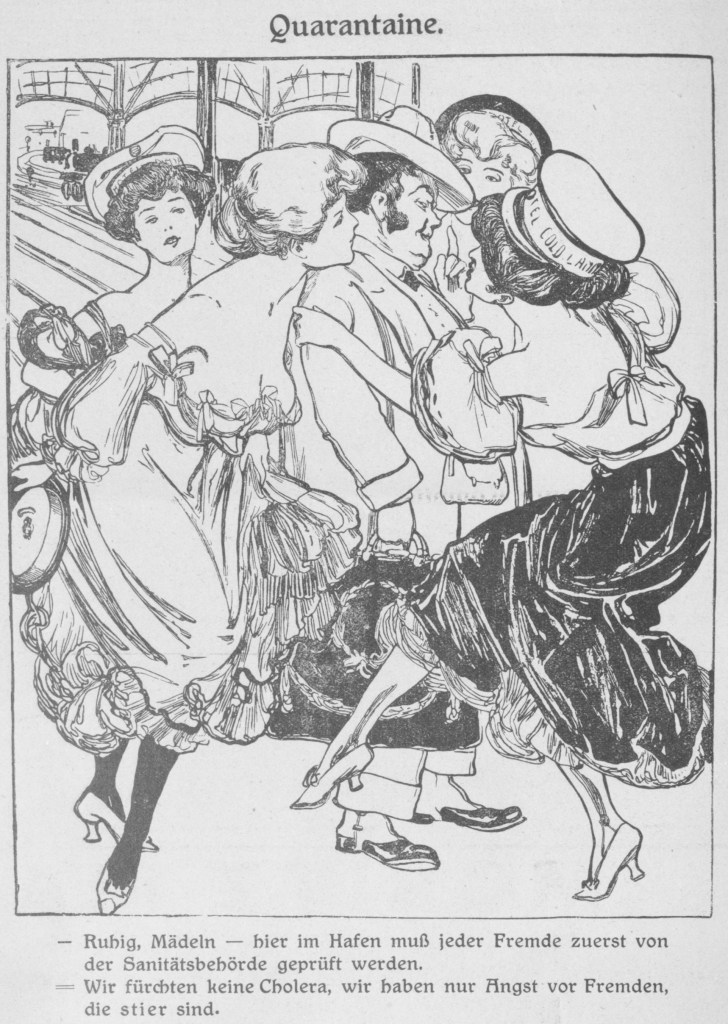
“Calm down, girls, every foreigner here in port must first be examined by the public health authorities.” “We’re not afraid of cholera, we’re only afraid of foreigners who are broke.” (Wiener Caricaturen, Vienna, 1911)
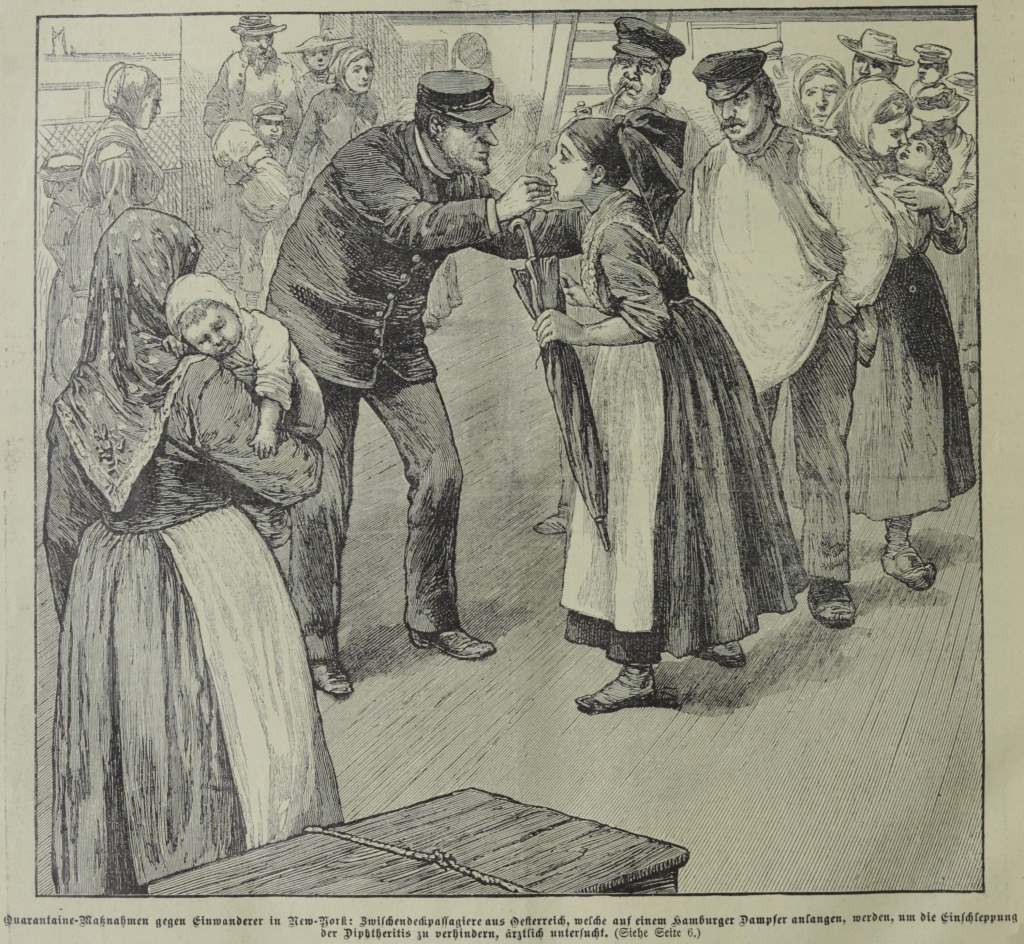
Lower-deck passengers from Austria [the Habsburg Empire] who embarked from a Hamburg steamer are medically examined to prevent the introduction of diphtheria. (Das interessante Blatt, Vienna, 1883)
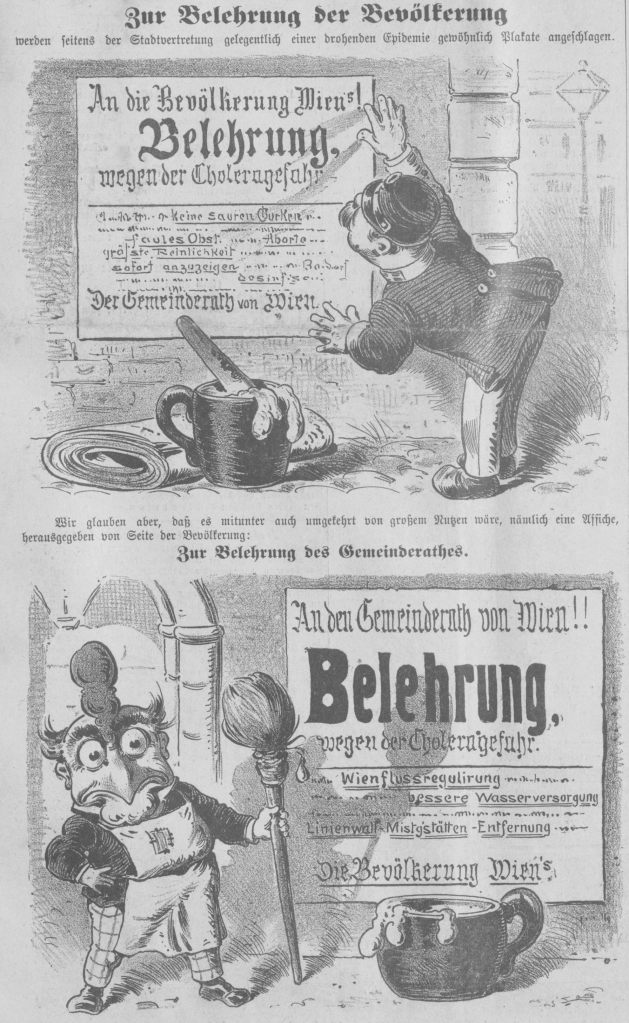
For the instruction of the populace posters of an impending epidemic will occasionally be put up by the city council. (The first poster forbids sour pickles, rotten vegetables, and (I think) abortions (!), while demanding cleanliness.) We believe, however, that it would also be immensely useful to include a placard published on behalf of the populace: For the instruction of the city council. (The second poster wants better channeling of the Danube river against floods, better water services, better waste removal.) (Kikeriki, Vienna, 1886)
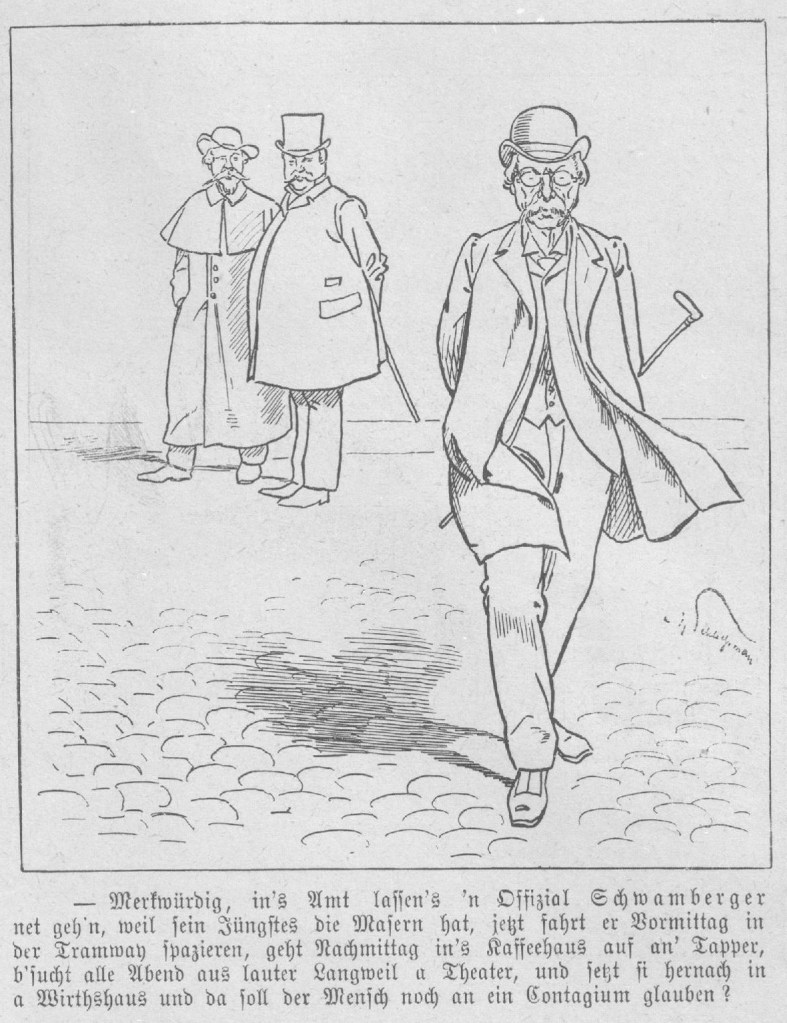
“Remarkable, Schwamberger the official is not allowed to go to the office, because his youngest child has measles, now he’s taking the tram in the morning to breeze about, he goes to the coffee house in the afternoon for a round of cards, he visits the theater every evening out of sheer boredom, and he takes a seat afterwards in a pub and a person is still supposed to believe in a contagion?” (Figaro, Vienna, 1888)
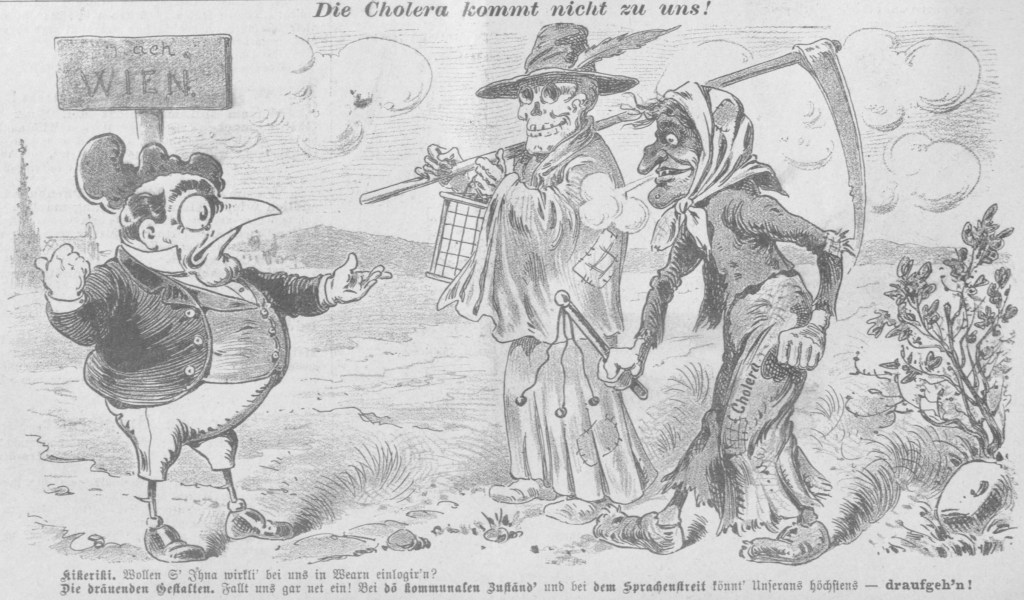
Kikeriki: “Do you really want to take lodgings with us in Vienna?” Looming figures: “It didn’t occur to us! With the communal situation and the language conflict the likes of us could croak at best!” (Kikeriki, Vienna, 1886)
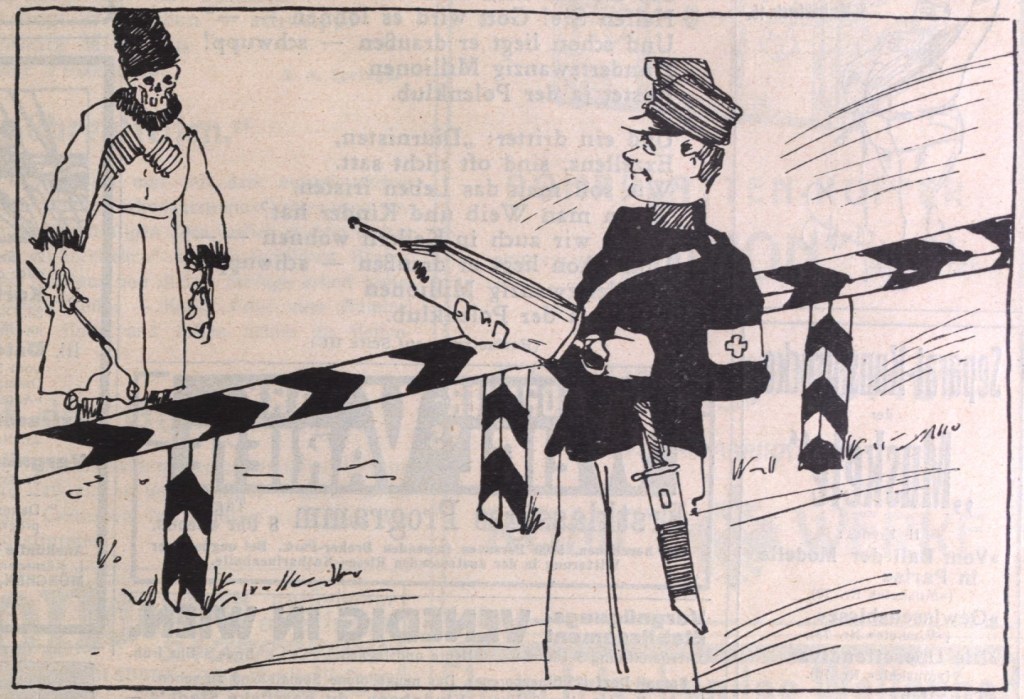
This cartoon set at the Austrian border with the Russian Empire is accompanied by a bit of nasty verse entitled “Cholera Russica” (in my slapdash translation):
The Slavic danger — how should I Just say it? — is not an empty delusion; On the contrary, it swells menacingly In the south and in the east.
Defending against it, cannons are Dispensable and rifles, too; Only from sanitation troops alone Can we make successful use.
In the south, where it is more primitive, Yet still fruitless, It besets us with vermin, In the east with epidemics.
Now due to this realization the eastern one Terrifies us especially clearly, Since its main pathogen is just now Loosing the prohibited heart of the epidemic;
Even though the tightest quarantine, That we usually put in place, Sets hardly more conditions than those, That the Tsar himself always imposes.
And as for the man himself, it was not A plague that instilled fear in him, For whom the greatest of all plagues Hasn’t yet withered him: his regime! (Die Muskete, Vienna, 1910) (Or this bit of German verse in a similar vein.)
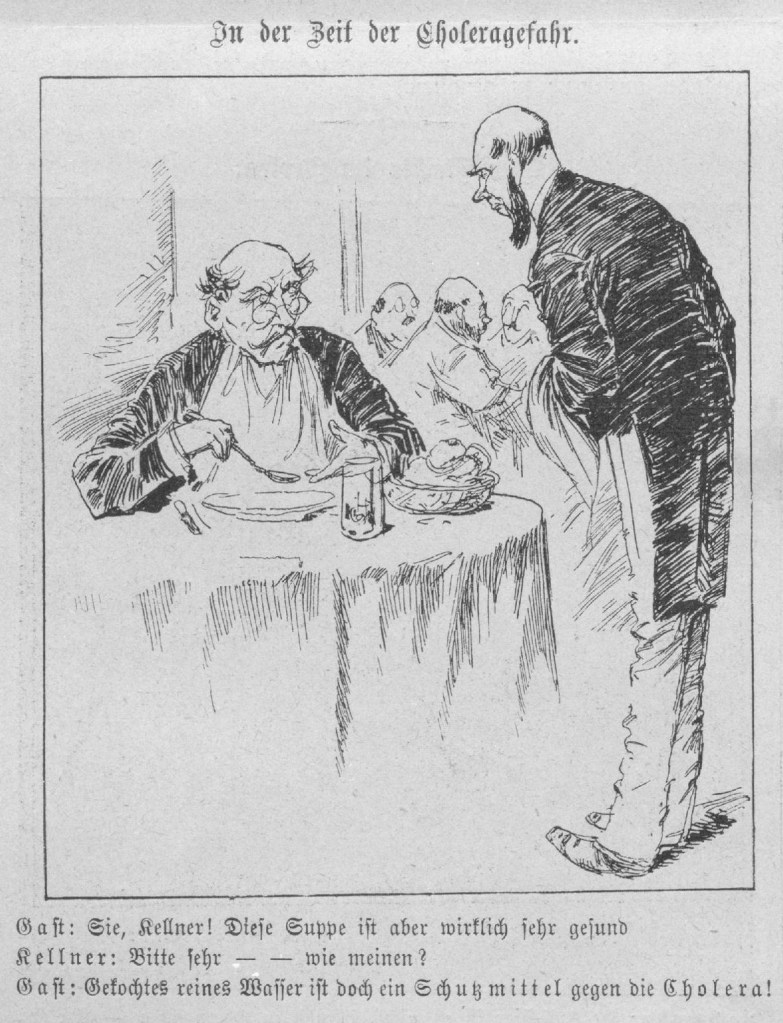
Guest: “Waiter! This soup is really very healthy.” Waiter: “You’re welcome — how do you mean?” Guest: “Pure boiled water is a prophylactic against cholera!” (Figaro, Vienna, 1892)
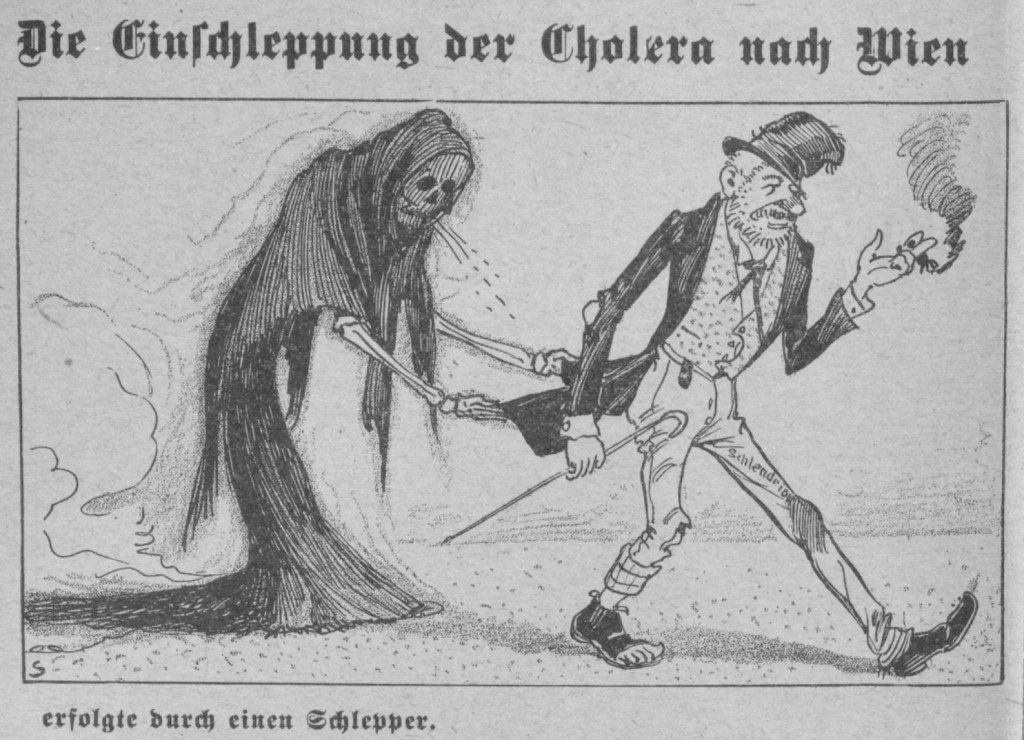
The introduction of cholera to Vienna was effected by a “coyote.” Actually many English speakers will be able to recognize the wordplay on “schlep,” but just to make clear the negative connotations, the cartoonist marks the man as a careless ambler. (Kikeriki, Vienna, 1911)
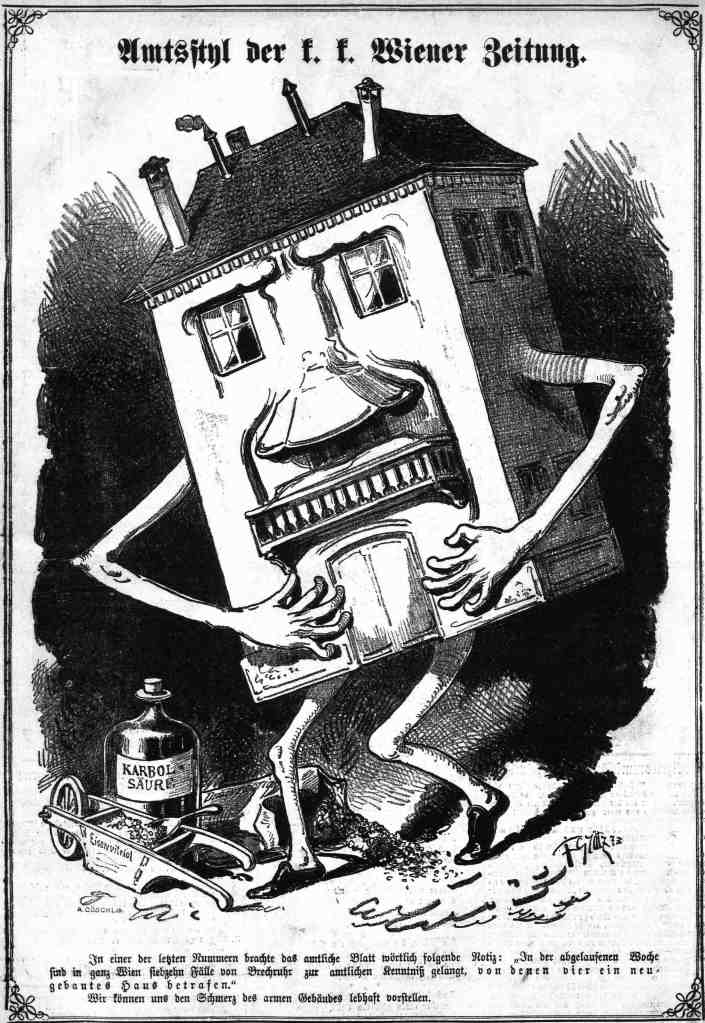
Kikeriki mocking the imperial royal newspaper of Vienna, Wiener Zeitung (supplied with “iron vitriol” and carbolic acid): “In a recent issue the official newspaper included the following literal notice: ‘In the past week seventeen cases of dysentery have come to official attention in all of Vienna, of which four pertained to a newly constructed residence.’ We can vividly imagine the pain of the poor building.” (Kikeriki, Vienna, 1873)

 Sic Transit Pestilentia