A street scene from the Toledo, where a toothpaste pedlar cleans the teeth of passers-by. That same year, Naples was hit by the fifth global cholera epidemic.
(Das interessante Blatt, Vienna, 1884)
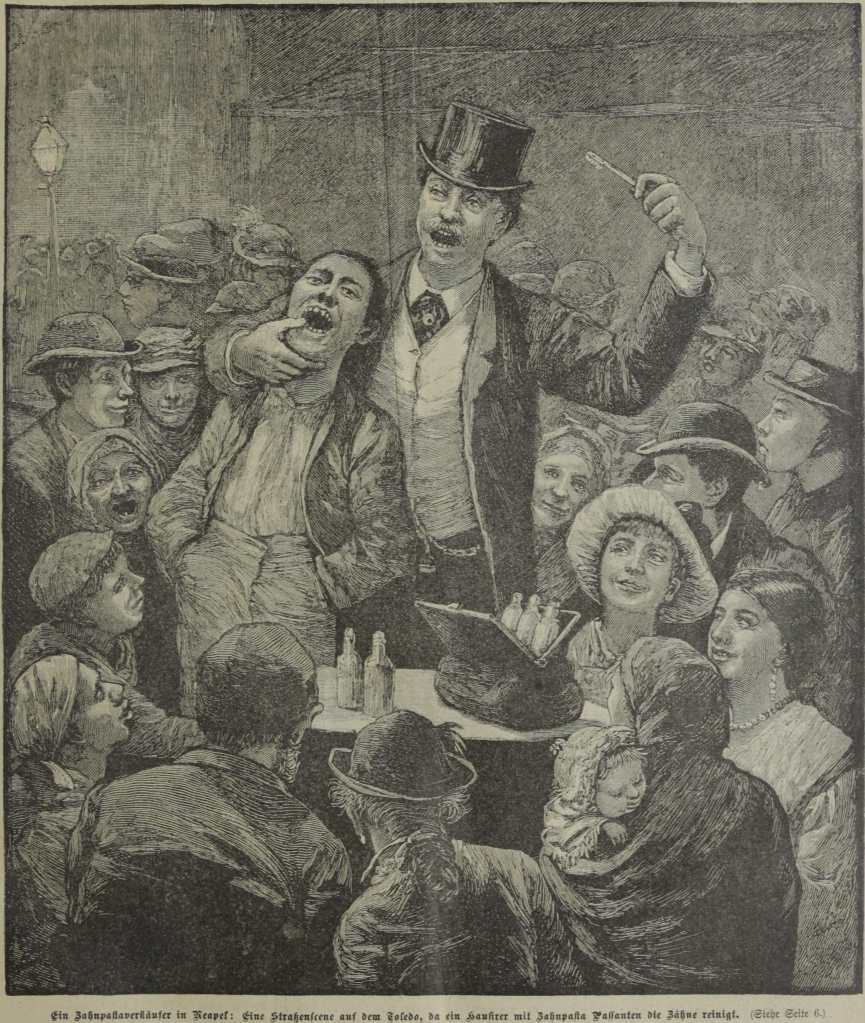
A street scene from the Toledo, where a toothpaste pedlar cleans the teeth of passers-by. That same year, Naples was hit by the fifth global cholera epidemic.
(Das interessante Blatt, Vienna, 1884)
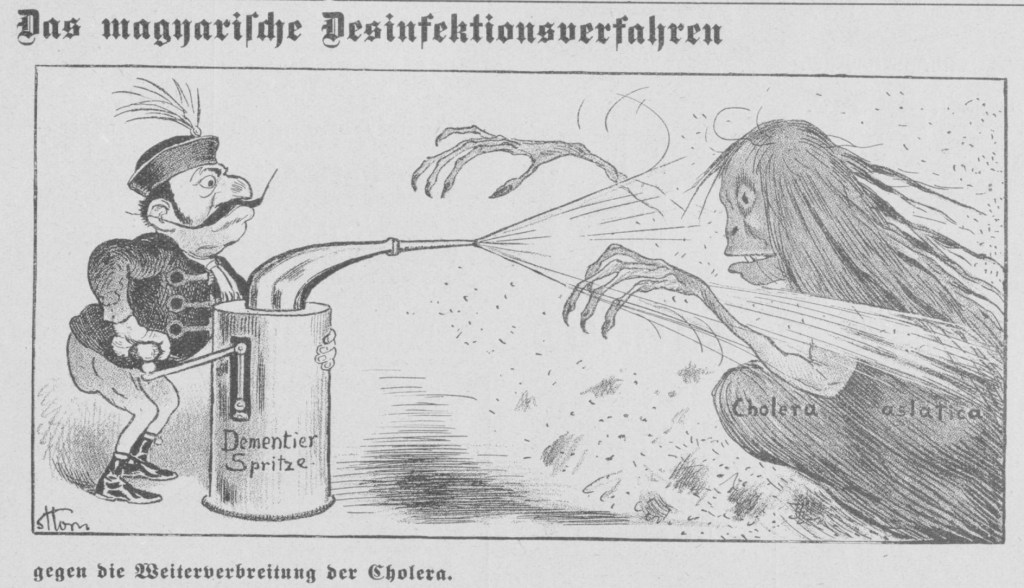
…against the further spread of cholera. (“Denial sprays” are being applied against cholera.)
(Kikeriki, Vienna, 1910)
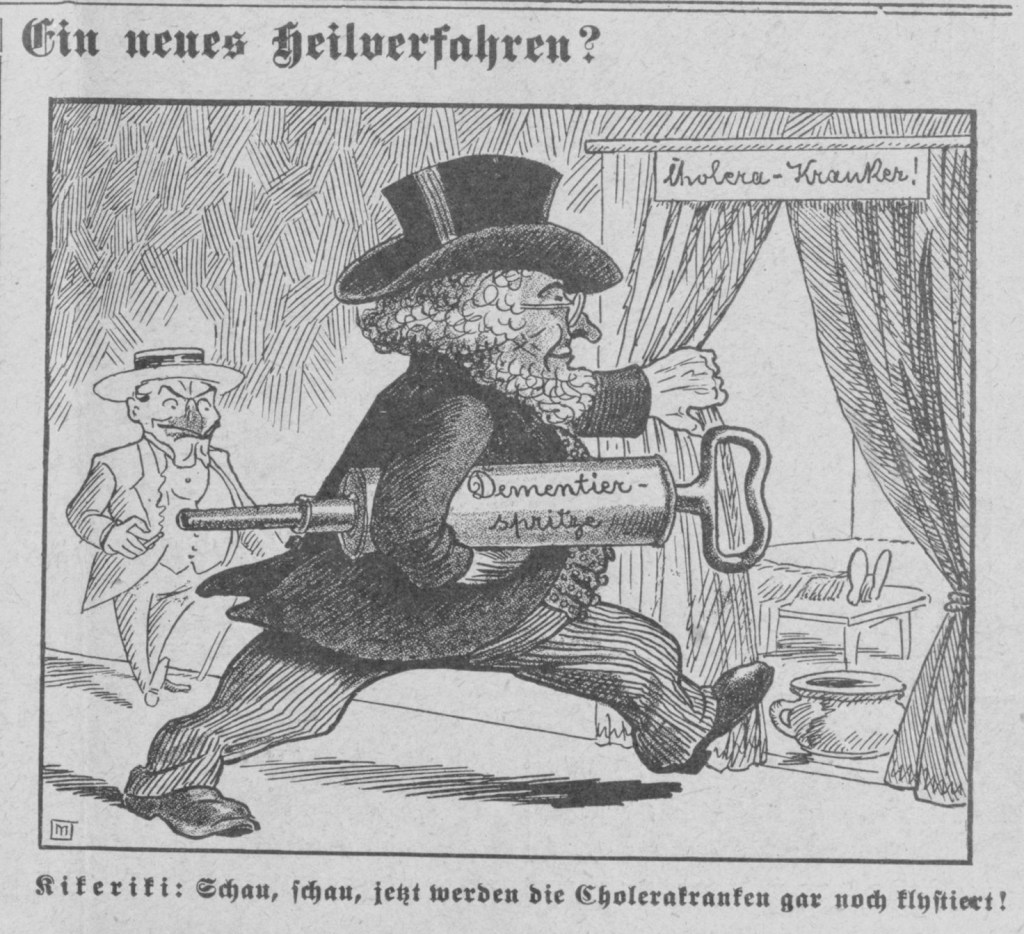
Kikeriki: “Look, look, now the cholera patients won’t be purged at all!”
(Doctor heading towards cholera ward with syringe labeled “denial shots.”)
(Kikeriki, Vienna, 1911)
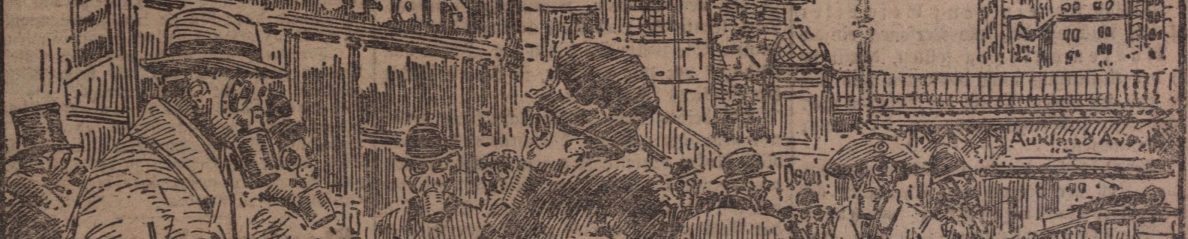
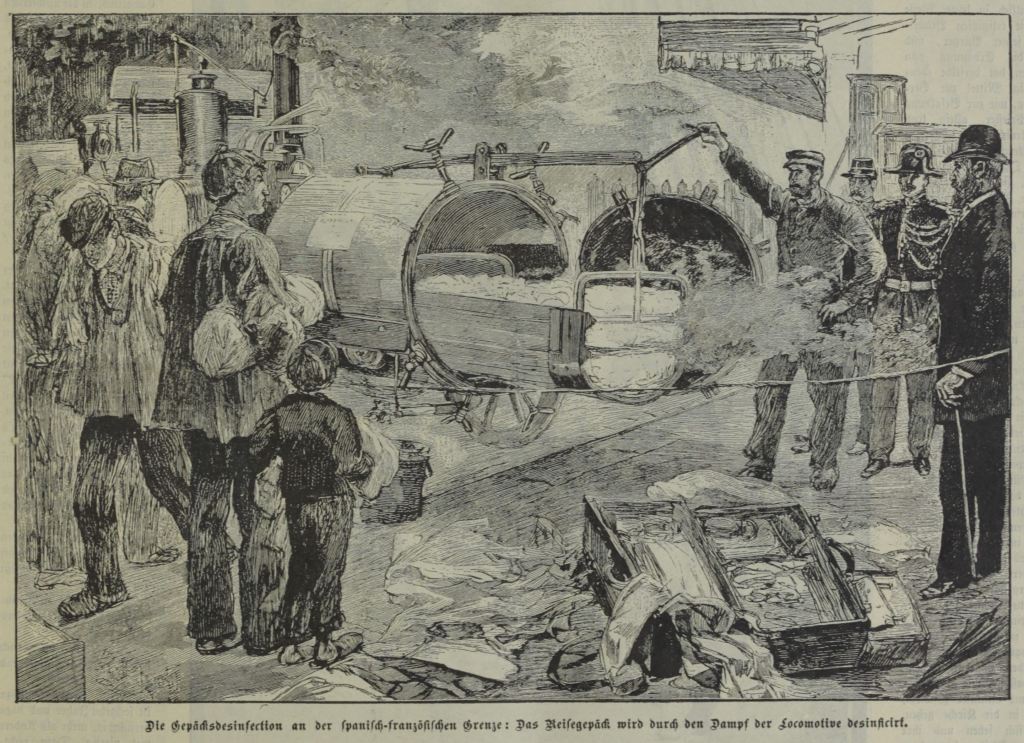
Baggage disinfection at the Spanish-French border: Luggage is disinfected by the locomotive steam.
(Das interessante Blatt, Vienna, 1890)
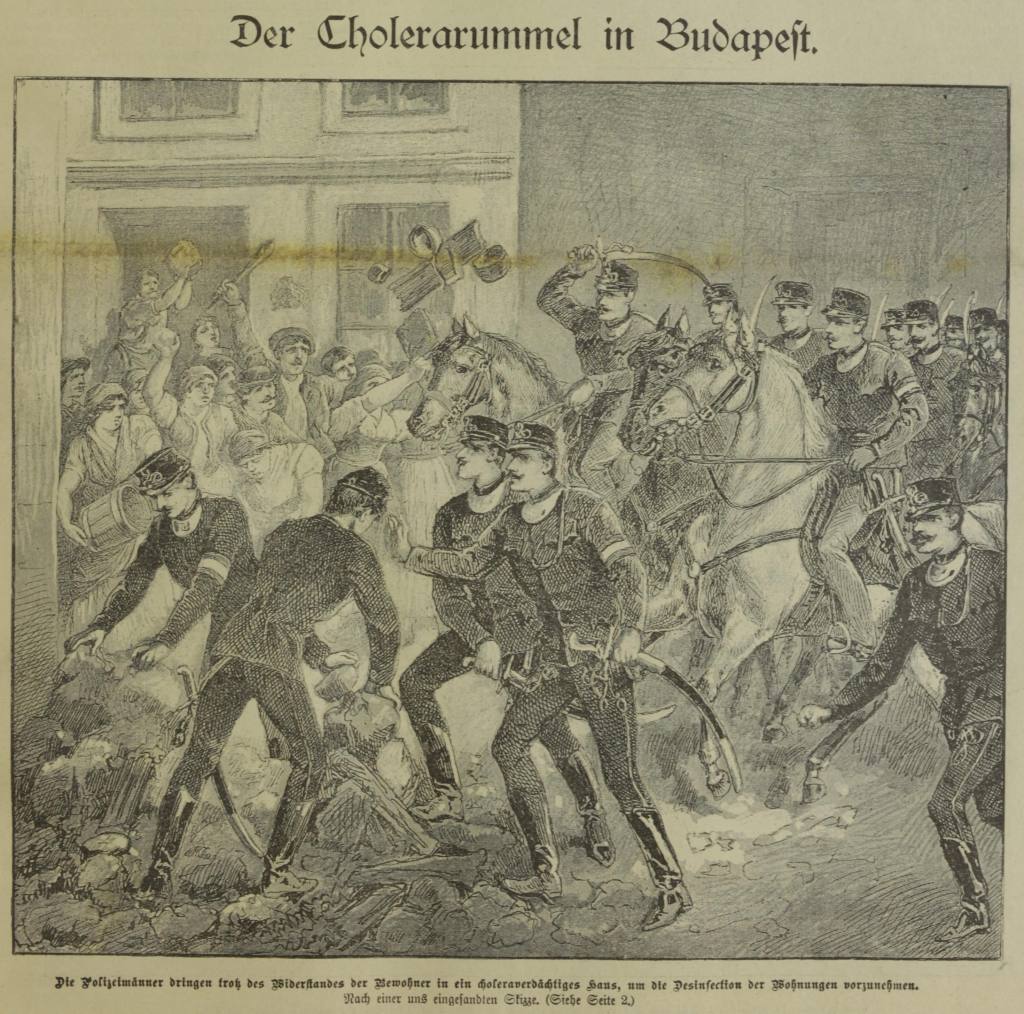
The police force their way despite resistance from residents into a building suspected of cholera, in order to undertake disinfection of the flats. According to the accompanying story, the building was in one of the most densely populated sections of Budapest, with more than 600 residents. In the entryway thirty-two policemen were met with a shower of vegetables, pickles, refuse, manure, and stones. Once inside, some were scalded with cooking water by infuriated women. The editors faulted the city fathers for not instructing the populace about the nature of cholera and the precautionary measures in a timely fashion.
(Das interessante Blatt, Vienna, 1892)
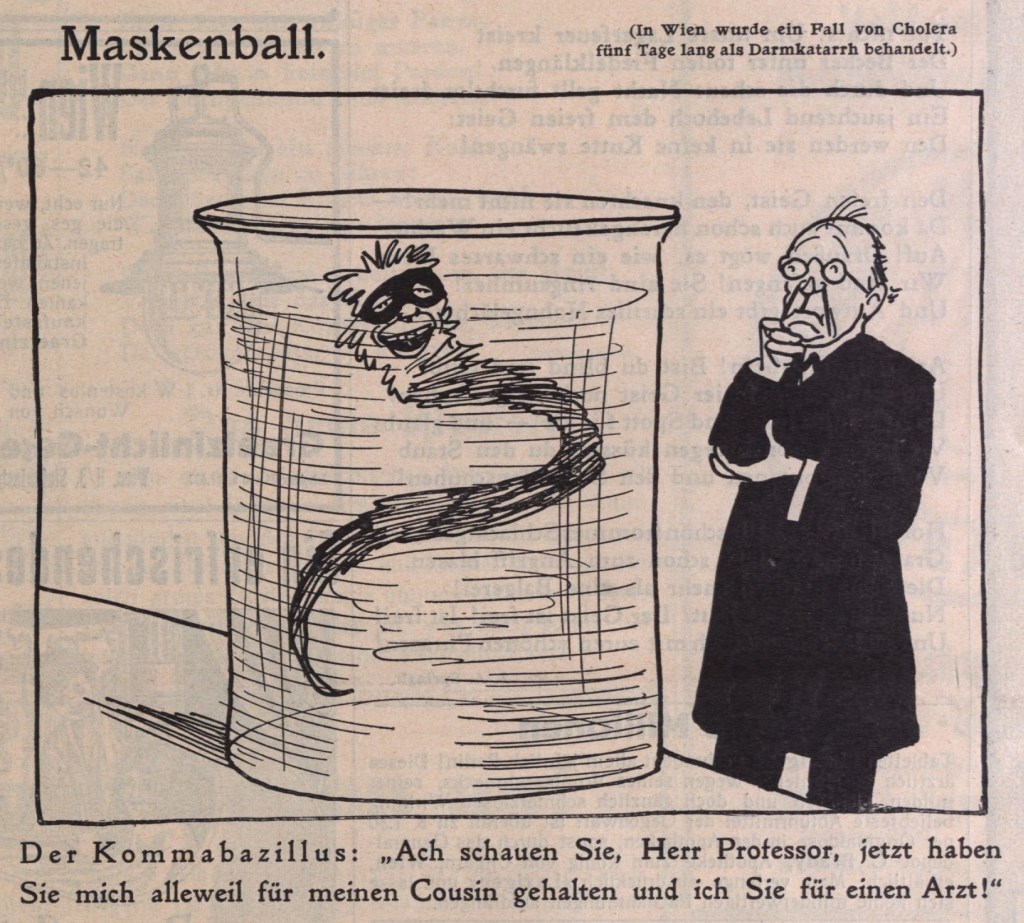
(In Vienna a case of cholera was treated for five days as intestinal catarrh.)
Comma Bacillus [found in the intestines of patients suffering from cholera]: “Look here, Herr Professor, now you have taken me the whole time for my cousin and I’ve taken you for a doctor!”
(Die Muskete, Vienna, 1910)
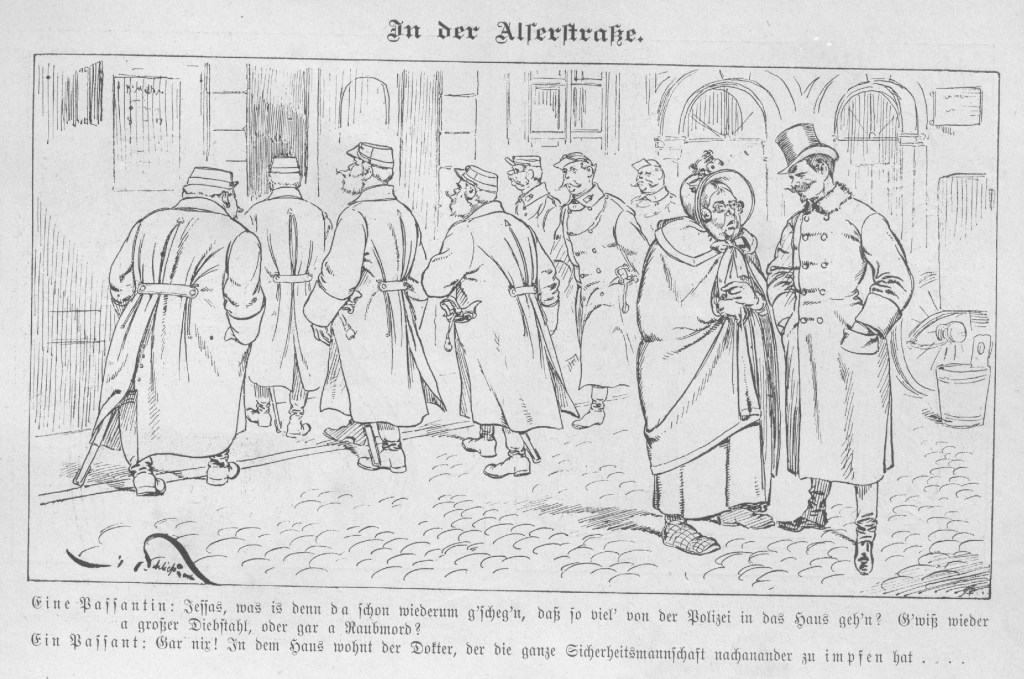
Lady passing by: “Goodness, what’s happening around there again, that so many police are going into that house? It’s got to be another big burglary, or even a robbery?”
Man passing by: “Not at all! In that house lives the doctor who has to vaccinate the entire security team…”
(Figaro, Vienna 1886)
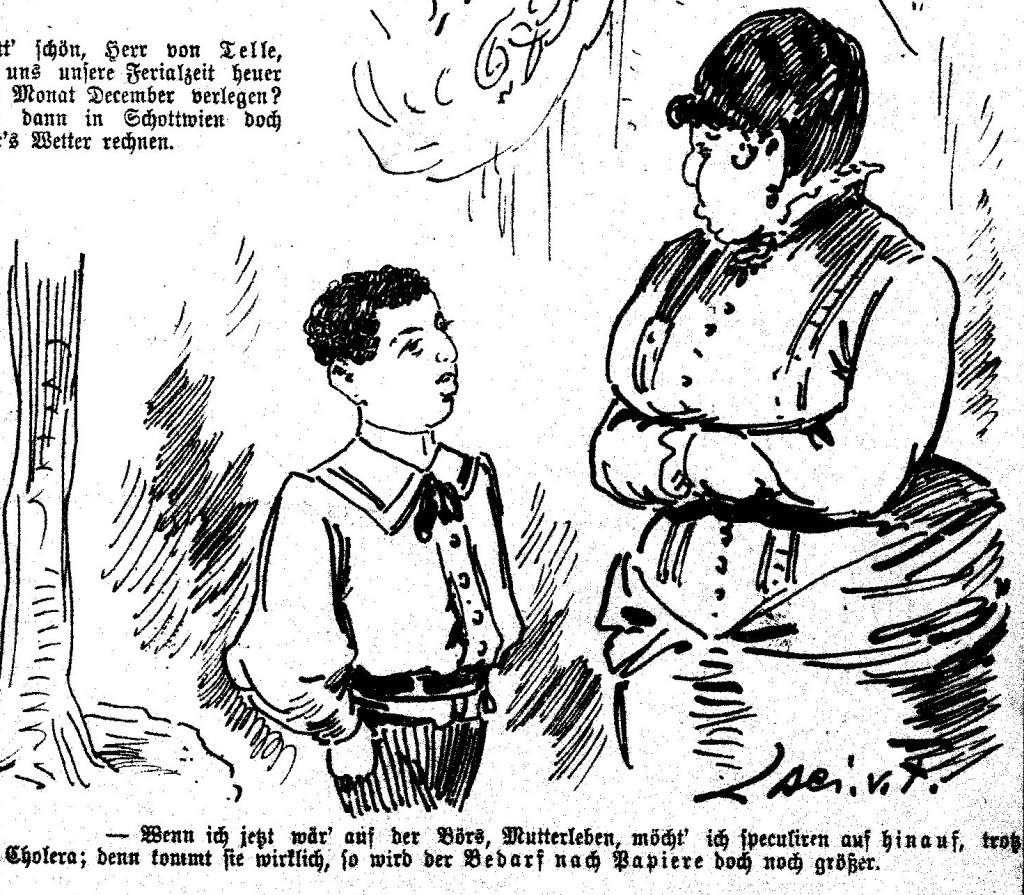
“If I were playing the stock market, mummy dearest, I would like to speculate, despite cholera, for when it really comes, the demand for paper goods will surely be even greater.” (No bonus points for noting the unsubtle ethnic signaling here.)
(Die Bombe, Vienna, 1884)
Cholera (to the Italians and Turks): “Why are you fighting about joint possession in Tripoli? You have the best company in me right now.”
(Wiener Caricaturen, Vienna, 1911)

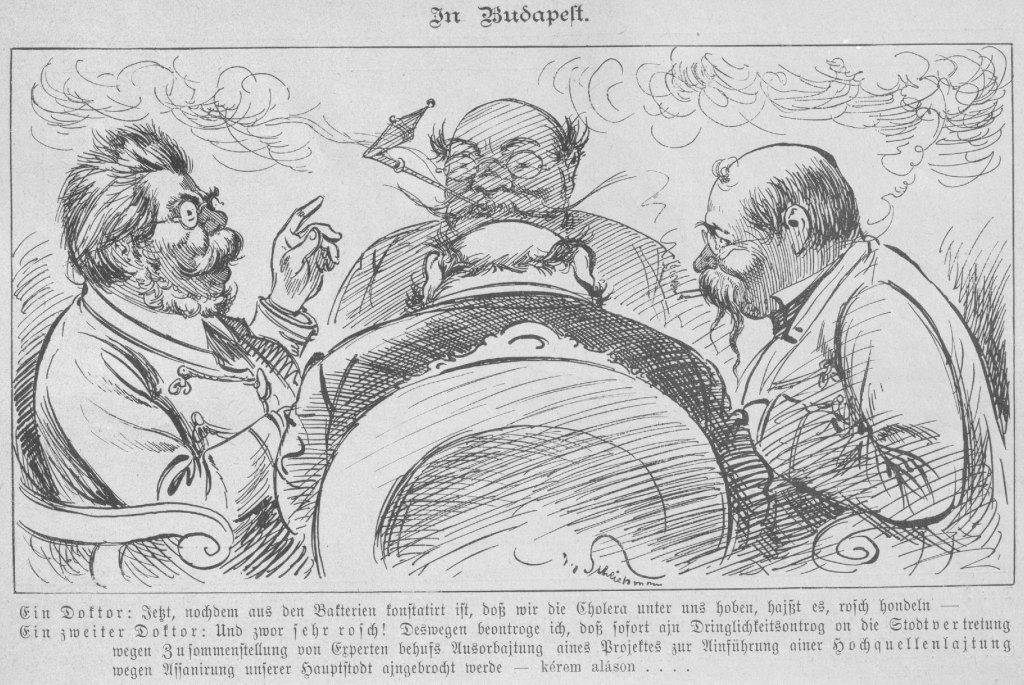
Doctor: “Now that it has been established from the bacteria that we have cholera among us, it means that we must act promptly.”
Second doctor: “And indeed very promptly! That is why I propose that an urgent request to the city council regarding the assembly of experts for preparation of a draft plan for introduction of a high-quality water supply on account of the renovation [?] of our capital is to be introduced immediately, (in Hungarian) I humbly request….” (Lost here are the cartoon’s subtler linguistic caricatures amid the mockery of hyperbureaucratic formulations.)
(Figaro, Vienna, 1886)
“The Russian regime has initiated an aid campaign against famine, since a radical solution of the problem has been made possible by cholera anyhow.” (Meaning it’s just for show and the weak state won’t have to try very hard.)
(Die Glühlichter, Vienna, 1910)

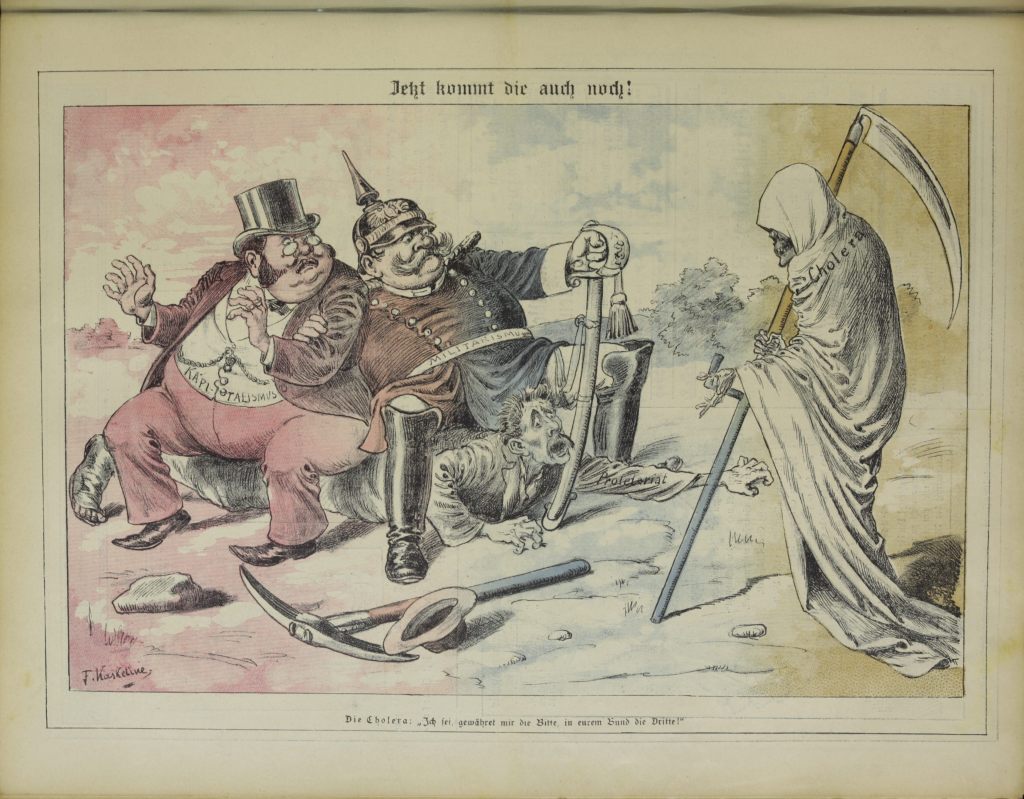
Cholera (to capitalism and militarism, seated on the proletariat): “Were you to grant my request, I would be the third in your alliance.”
(Die Glühlichter, Vienna, 1893)
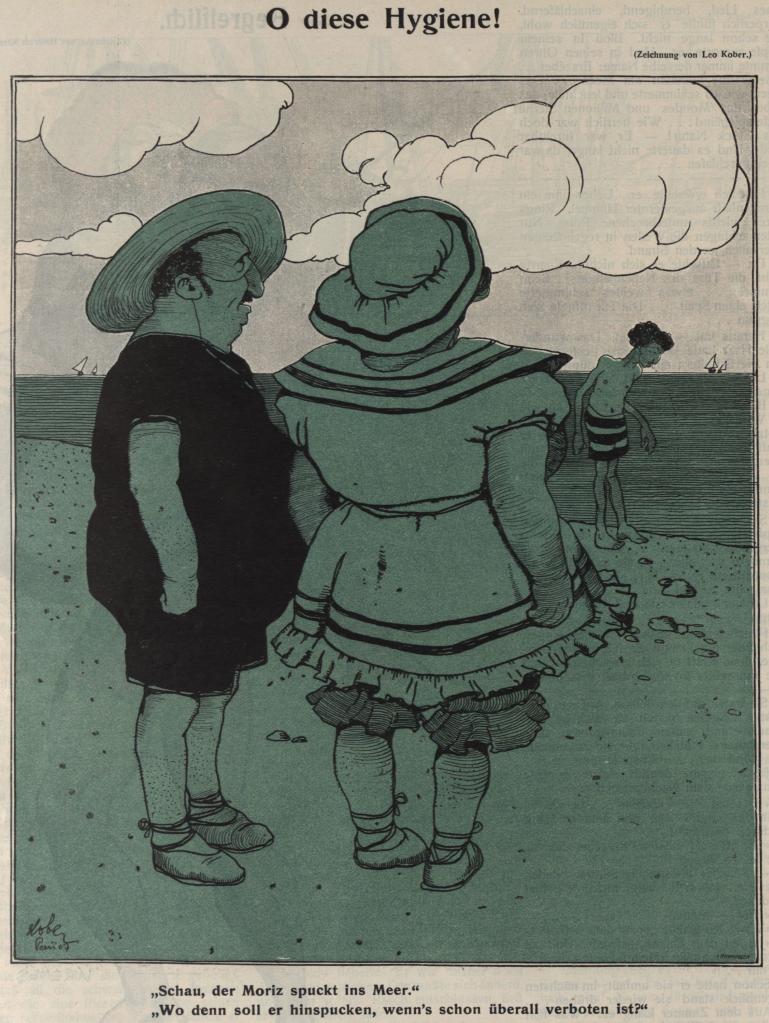
“Look, Moritz is spitting in the sea.”
“So where is he supposed to spit if it’s forbidden everywhere?”
(Die Muskete, Vienna, 1907)
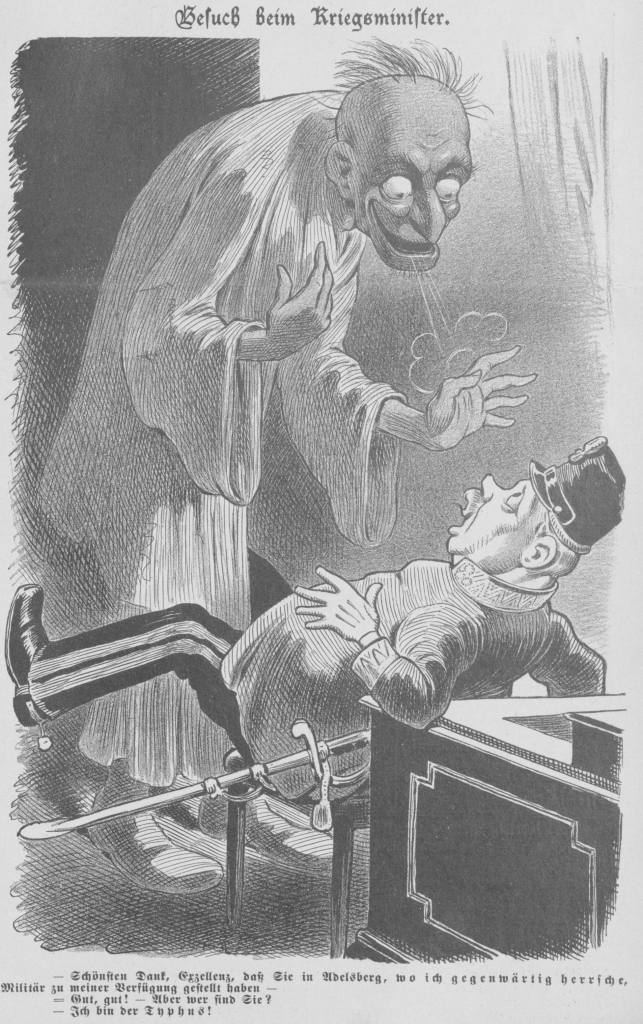
“My best thanks, Excellency, for putting the military at my disposal in Adelsberg [Postojne in the Slovenian countryside northeast of Trieste], where I currently rule.”
“Fine, fine! But who are you?”
“I am Typhus!”
(Kikeriki, 1907)
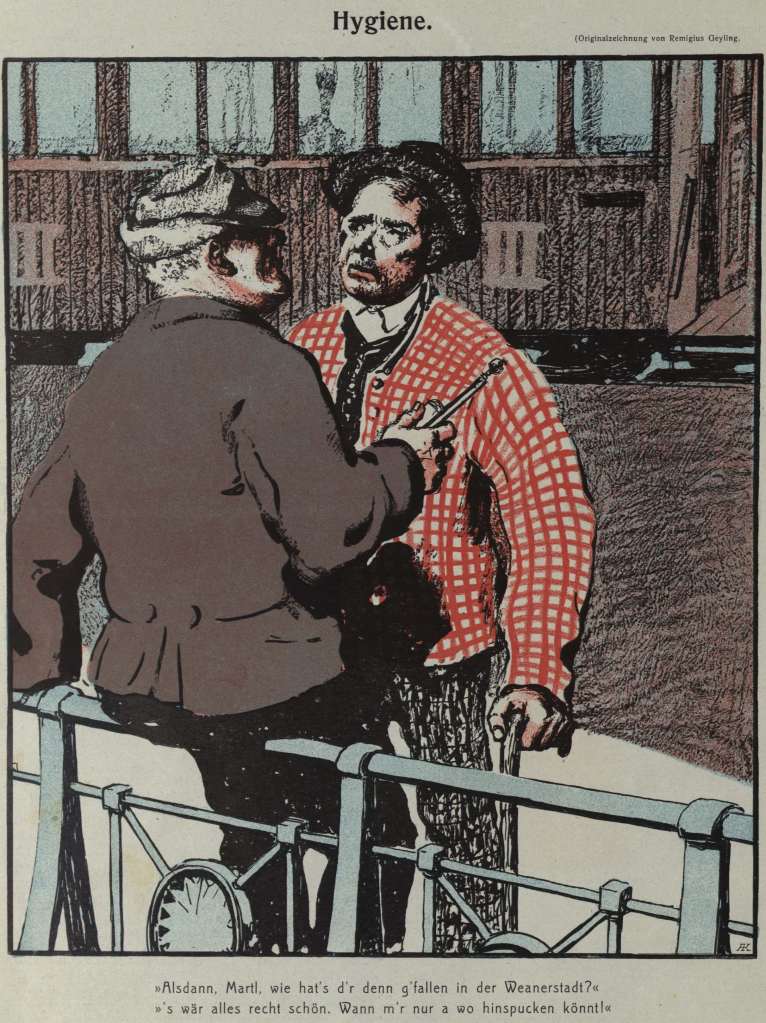
“Alright then, Marty, so how did you like big city Vienna?”
“It was all pretty nice. If only I had someplace to spit!”
(Die Muskete, 1905)
 Sic Transit Pestilentia