“Disinfection shells, fire!”
(Der Floh, 1906)
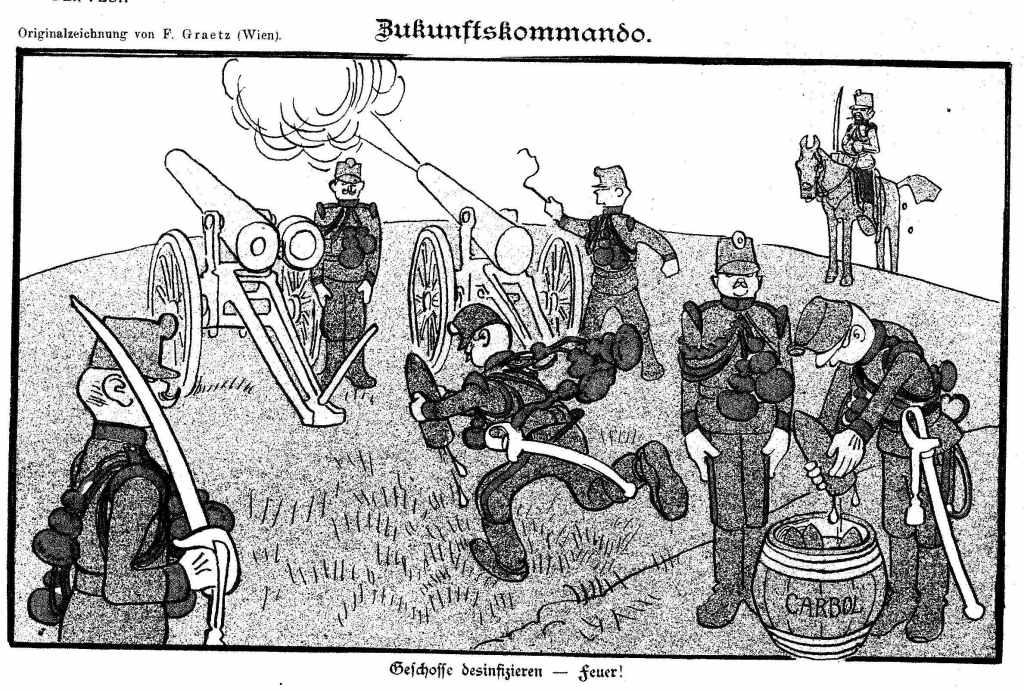
“Disinfection shells, fire!”
(Der Floh, 1906)
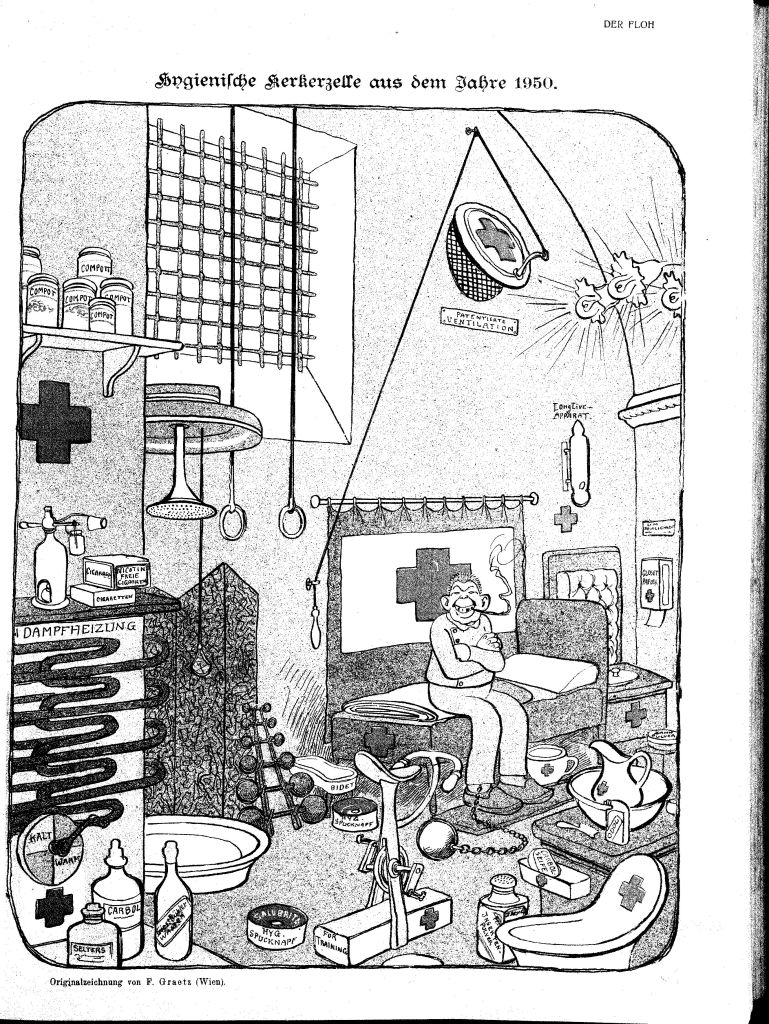
In May 1906 Archduke Franz Salvator opened a large international hygiene exhibition in Vienna. In early July the first major revision to the Hague Convention was adopted in Geneva, among other things strengthening the protections for prisoners of war. The International Committee of the Red Cross was especially prominent in pressing for these provisions, surely strengthening the modern conviction that enforced confinement should be sanitary. In this image we see a “hygienic dungeon cell from the year 1950,” as imagined in Viennese satirical magazine Der Floh in June 1906. Note how all the accoutrements come with the Red Cross symbol.
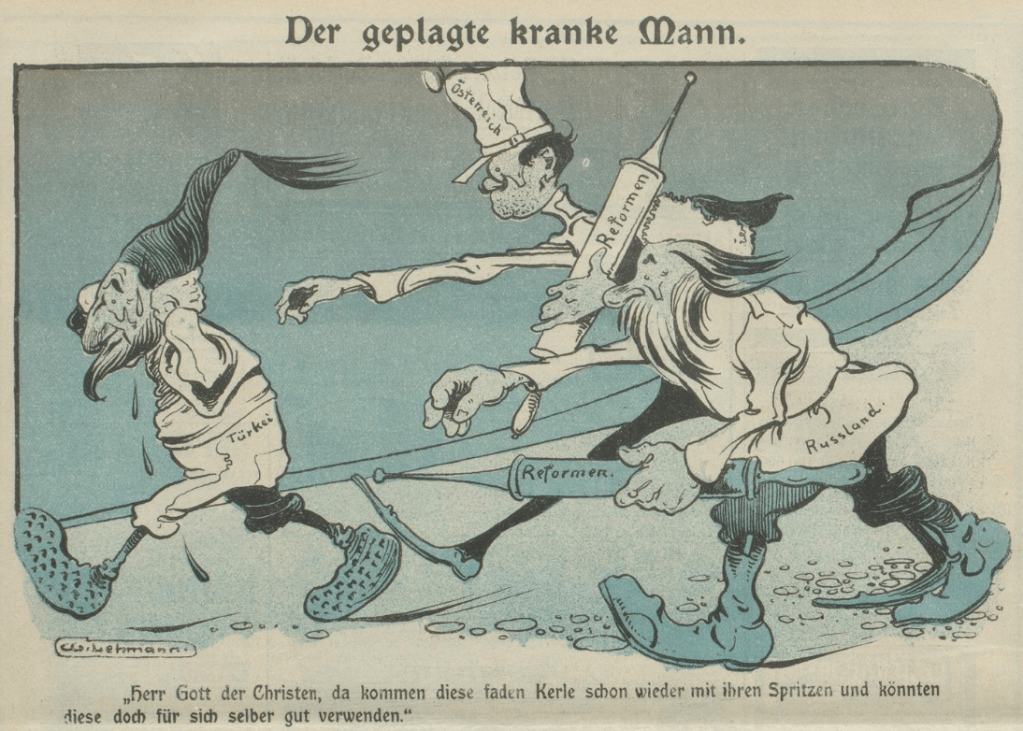
Turkey pursued by Austria and Russia with syringes full of reforms. “Lord God of the Christians, here come these stupid guys again with their syringes and yet they could put them to use for themselves.” (Included mainly for the use of the clystère theme.)
(Nebelspalter, Zurich, 1907)
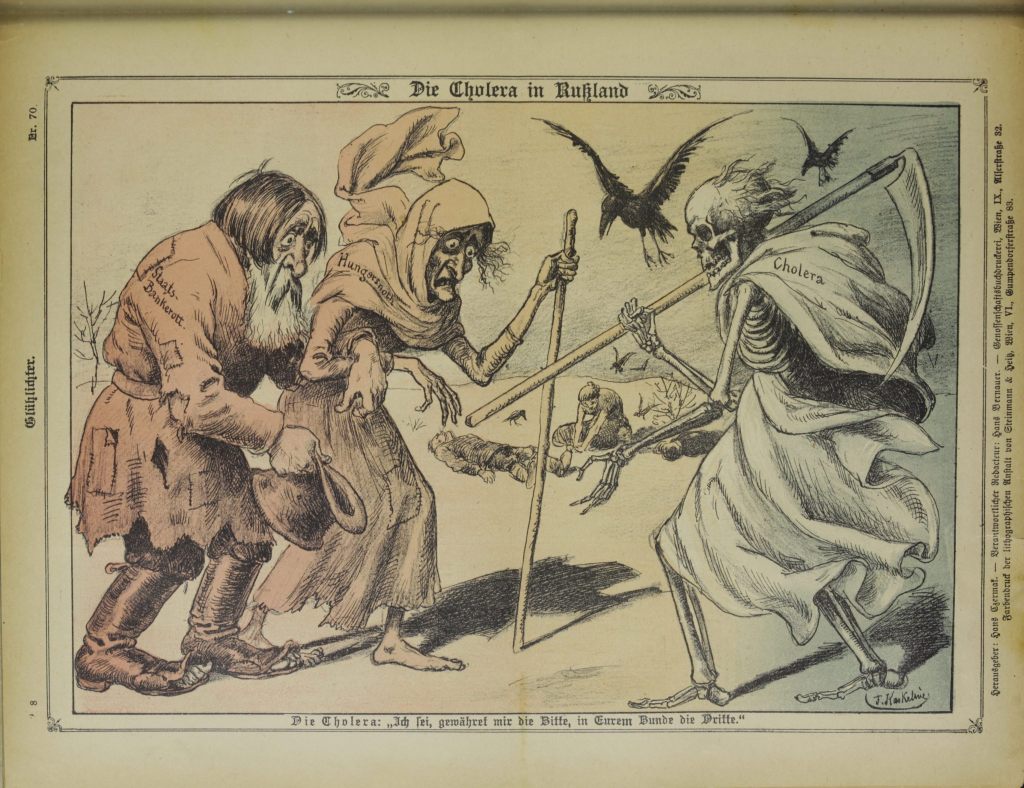
To state bankruptcy and famine: “Were you to grant my request, I would be the third member of your alliance.”
(Glühlichter, Vienna, 1892)
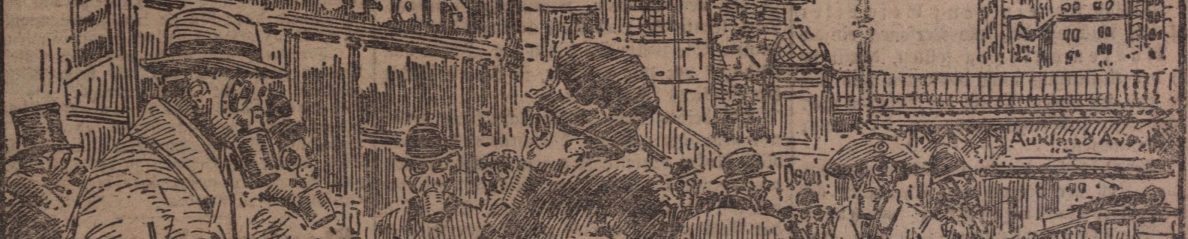
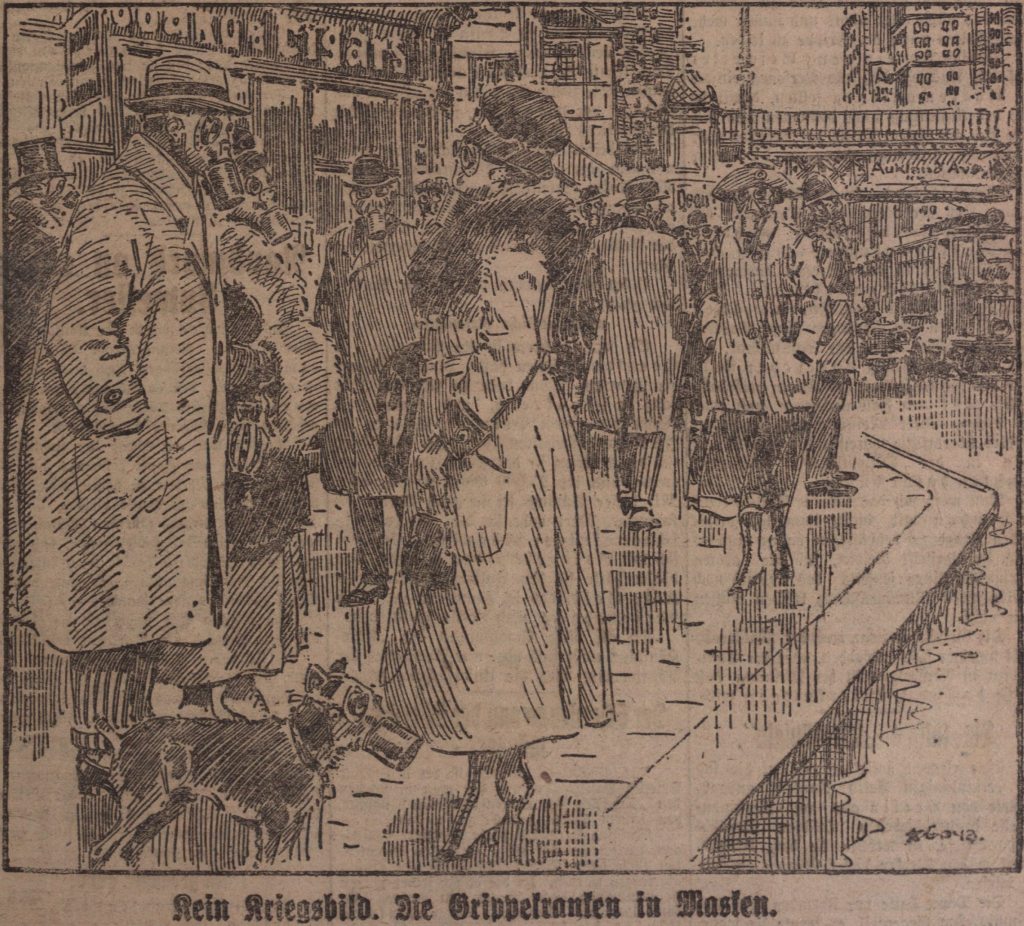
Flu sufferers in masks.
(Kronen Zeitung, Vienna, 1919)
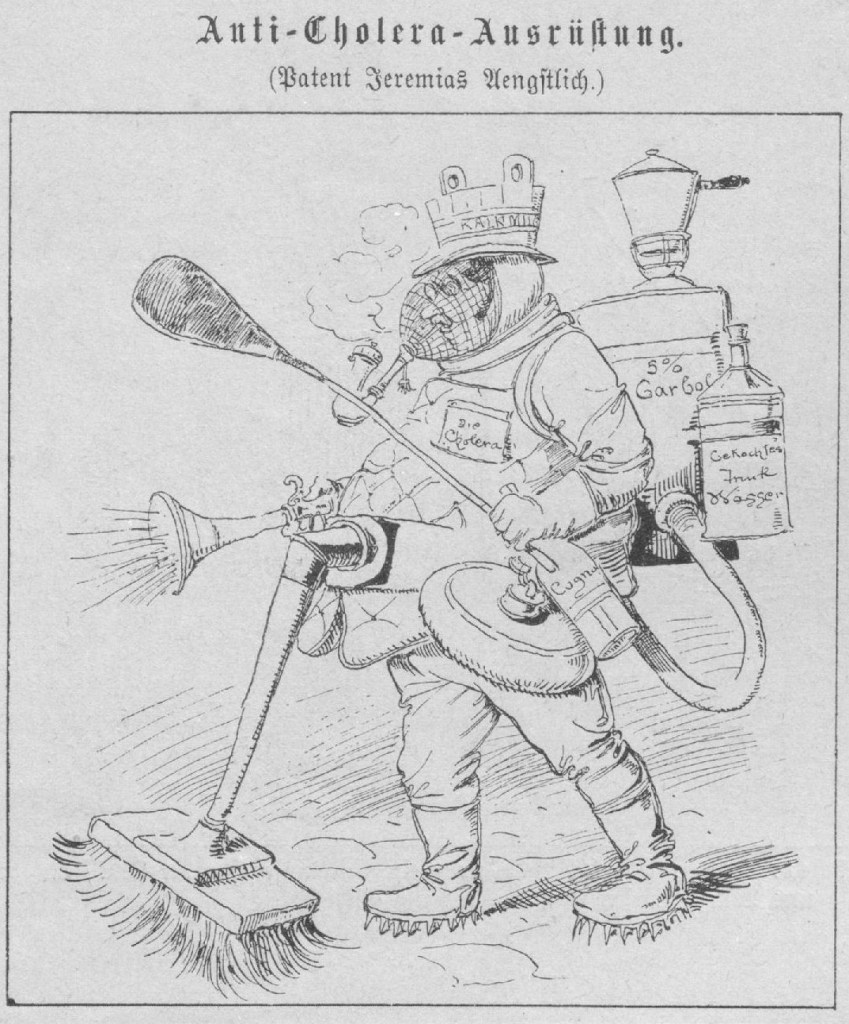
Jeremiah Fastidious and his patented anti-cholera equipment.
(Figaro, Vienna, 1892) (There is a similar image from the 1918 flu pandemic. The satirical theme goes back at least to 1832, in this marvelous example preserved by the Wellcome Collection.)
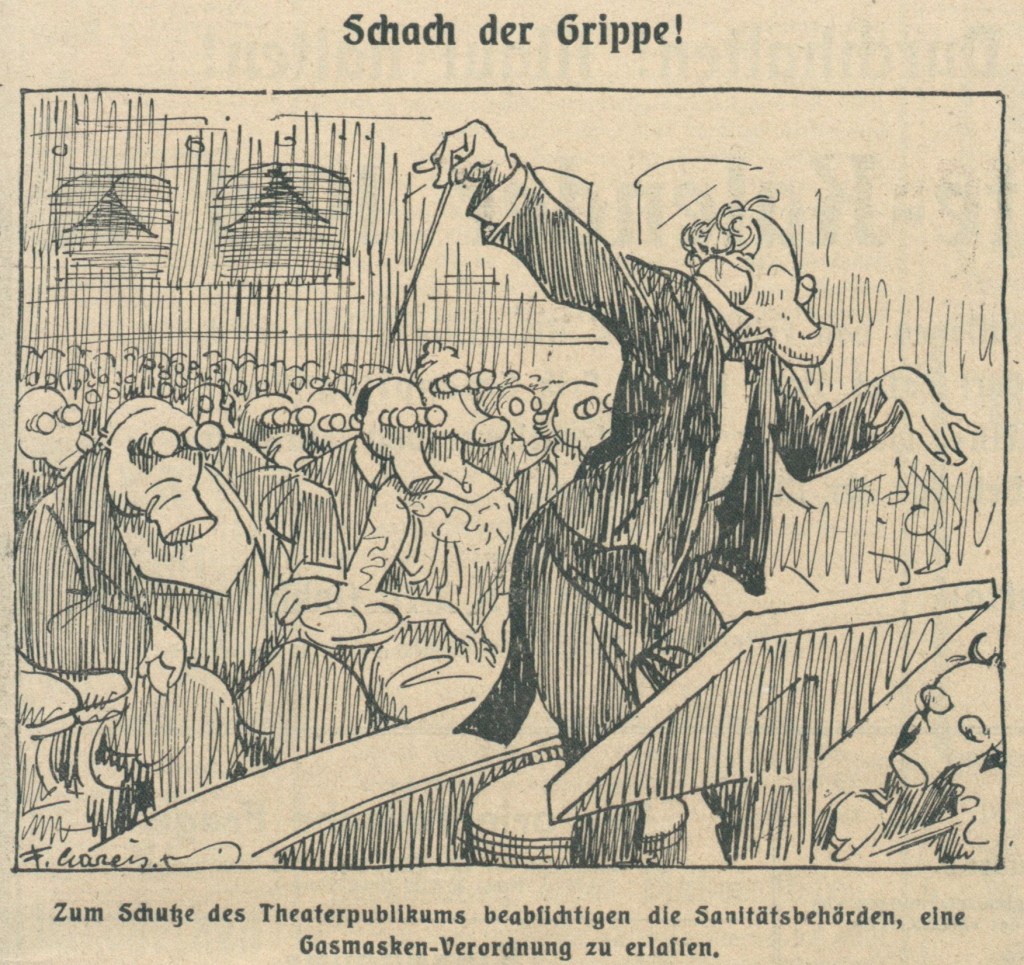
Imagining what theatergoing will be like once the public health authorities in Vienna introduce a gas mask ordinance. (Die Muskete, Vienna, 1918)
“Battling disease germs,” reads the headline, including disinfecting books (center and right photos). (Volksfreund, Austria, 1928) Can we have our library books back now?

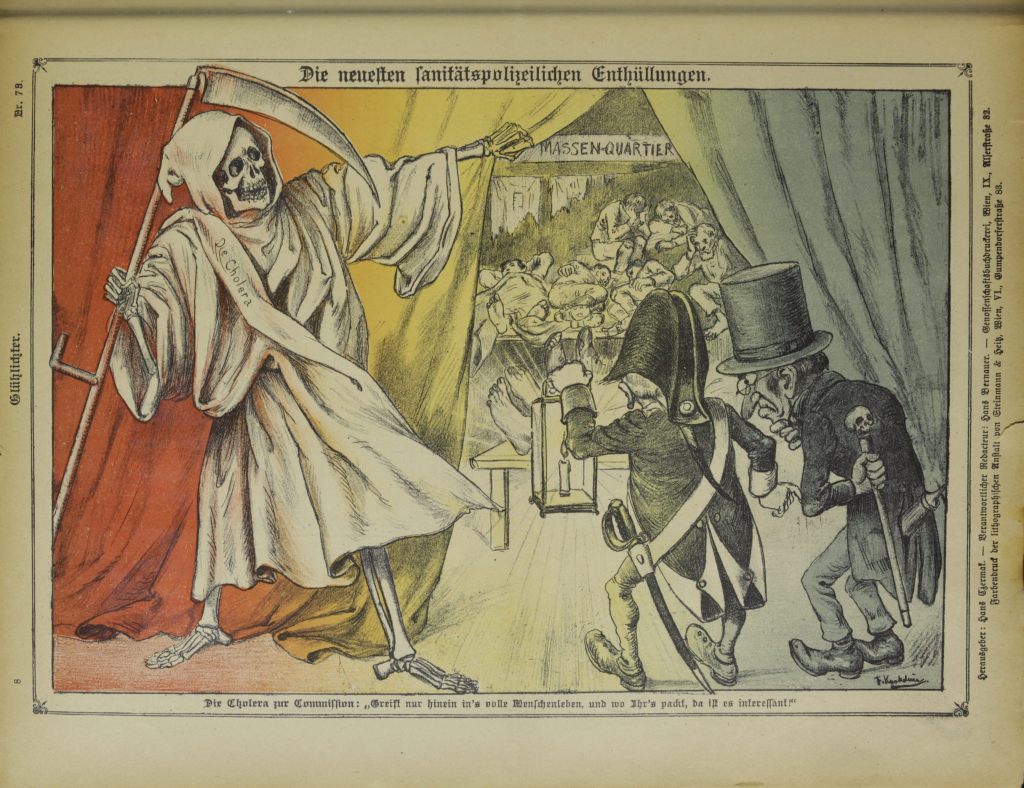
Cholera draws the curtain on a slum and speaks to the public health commission: “Grasp the life of man complete, and wherever you touch, there’s interest without end!” (Glühlichter, Vienna, 1892) A colleague points out that this phrasing is taken from a text known to any contemporary German speaker: the Prelude to Goethe’s Faust.
In other words, there is ample precedent to talk about differential privilege in physical distancing.
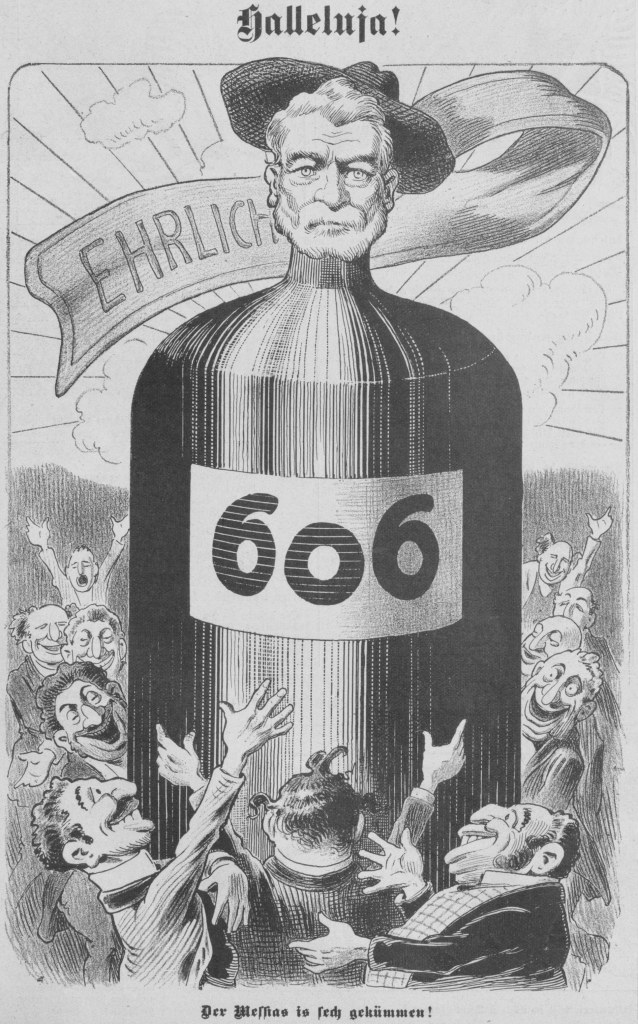
In 1910 German bacteriologist Paul Ehrlich became world famous when Hoechst AG began marketing Salvarsan, or “compound 606,” the first organic anti-syphilitic drug. Ehrlich’s laboratory colleague Sahachiro Hata first noted its toxicity to the syphilis spirochete, but Ehrlich’s “magic bullet” strategy for fighting epidemic diseases was what captured public attention. (Kikeriki, 1910) If you look carefully at this Tolstoy image from another post, you will see that Salvarsan is the connection.
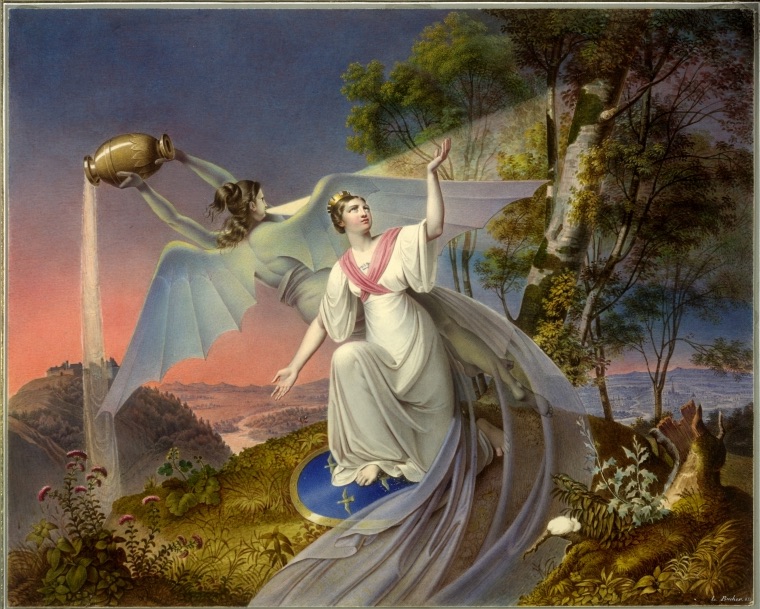
Allegory of the threat to Vienna from the cholera epidemic in 1831/32: The personification of Austria kneels on the coat of arms with five eagles (larks) and looks imploringly to the sky. Hovering behind her is the personification of cholera with bat wings and a vessel that she empties into the Danube. The scene takes place on the Kahlenberg with a view of the Leopoldsberg and the Danube valley, with the city of Vienna at dawn on the right in the background. Leopold Bucher, 1832.
(Austrian National Library)
 Sic Transit Pestilentia