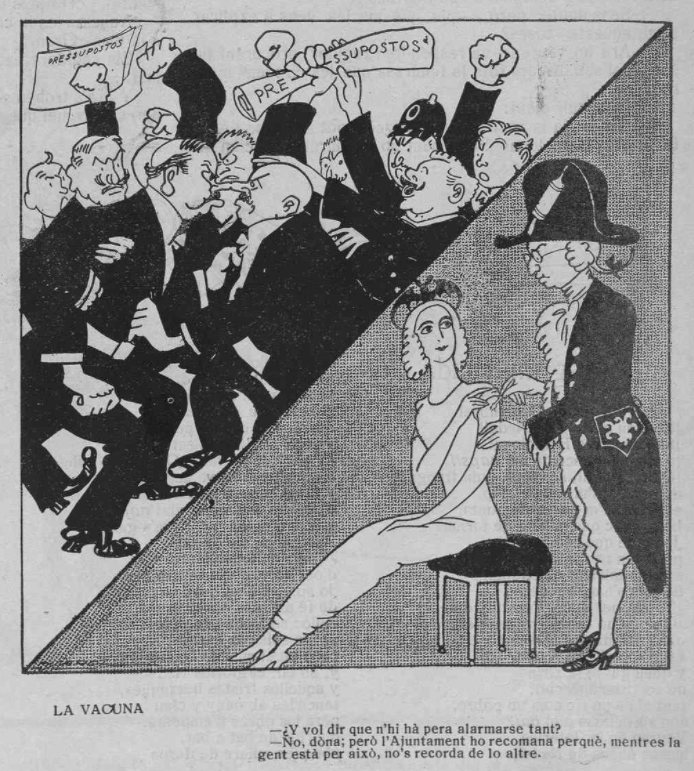
(City Council members fighting over budgets) “And does this mean there’s cause for alarm?” “No, ma’am; but the City Council recommends the vaccine because while the people are occupied with this, they won’t remember the other stuff.” (La Esquella de la torratxa, Barcelona, 1912)
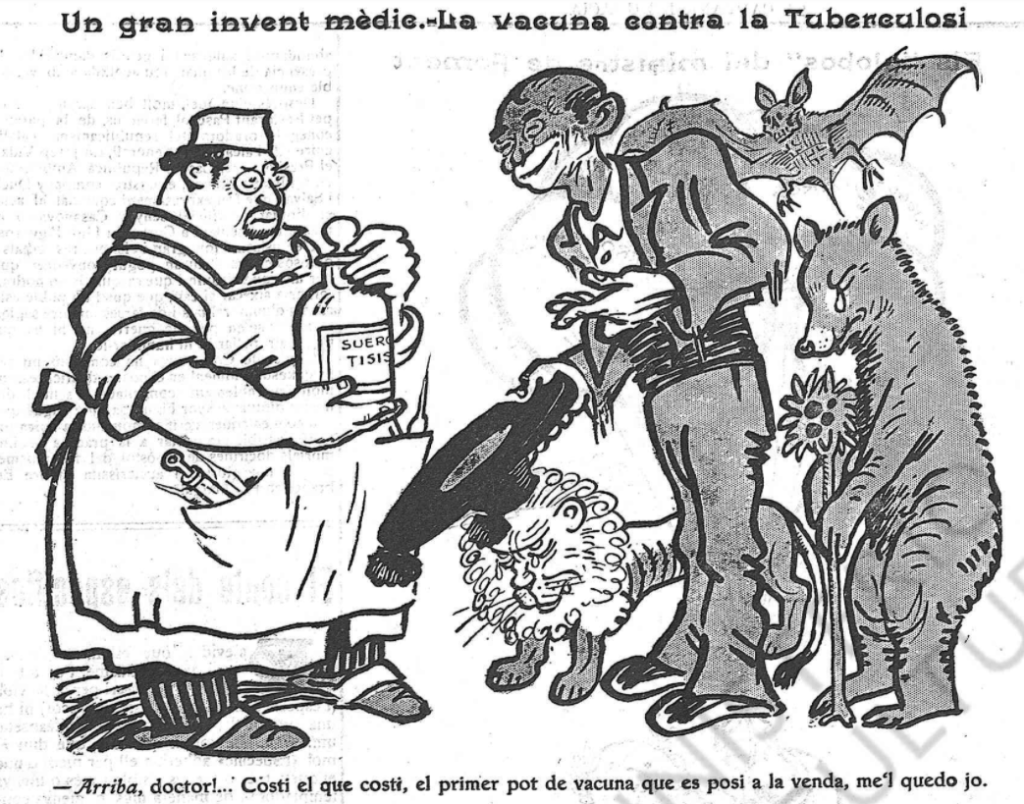
“Arriba, doctor! No matter what it costs, the first jar of vaccine to go on sale, I’ll keep it.” (La Campana de Gracia, Barcelona, 1921) (Clearly I need more context for this one.)
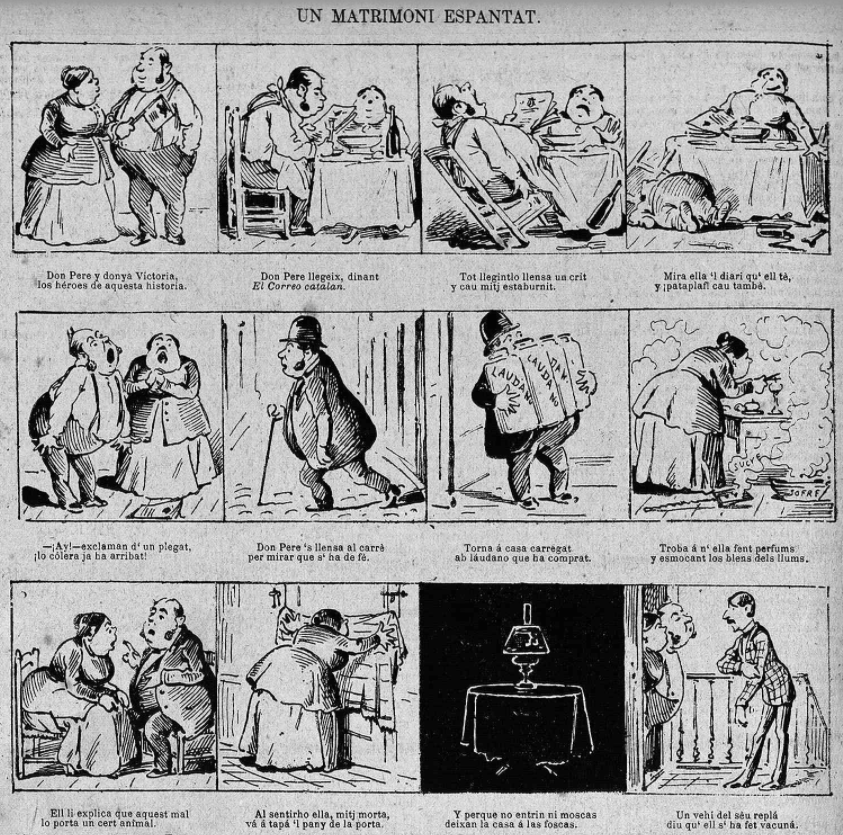
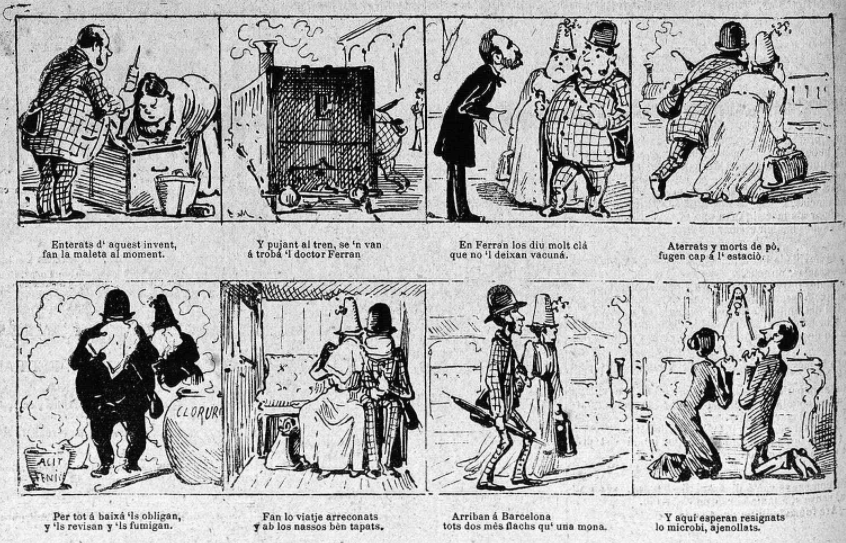
An example of the Catalan “auca” genre devoted to cholera, one whose rhymed couplets I won’t pretend to translate in full. A contented couple learns the city will be visited by cholera and copes using the nostrums available, including chasing after an elusive vaccine. They incur fumigation along their journey, returning weakened and resigned to await the microbes. (La Esquella de la torratxa, Barcelona, 1885)
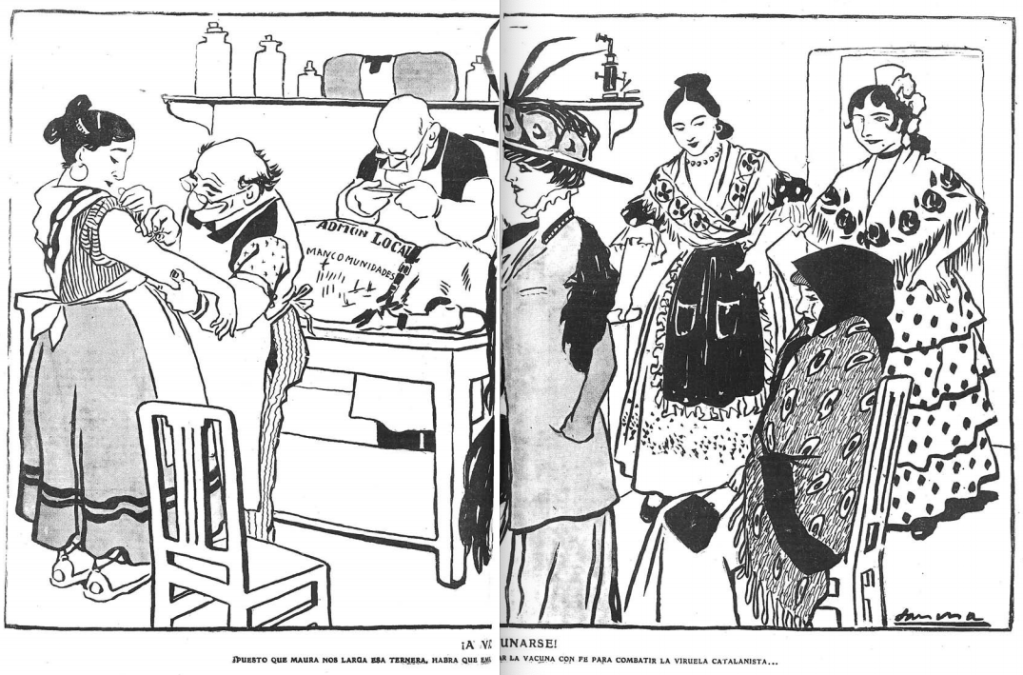
Since Maura gives us that veal, we will have to increase the vaccine with faith to combat Catalan smallpox… (Gedeón, Madrid, 1909) (Correction welcome!)
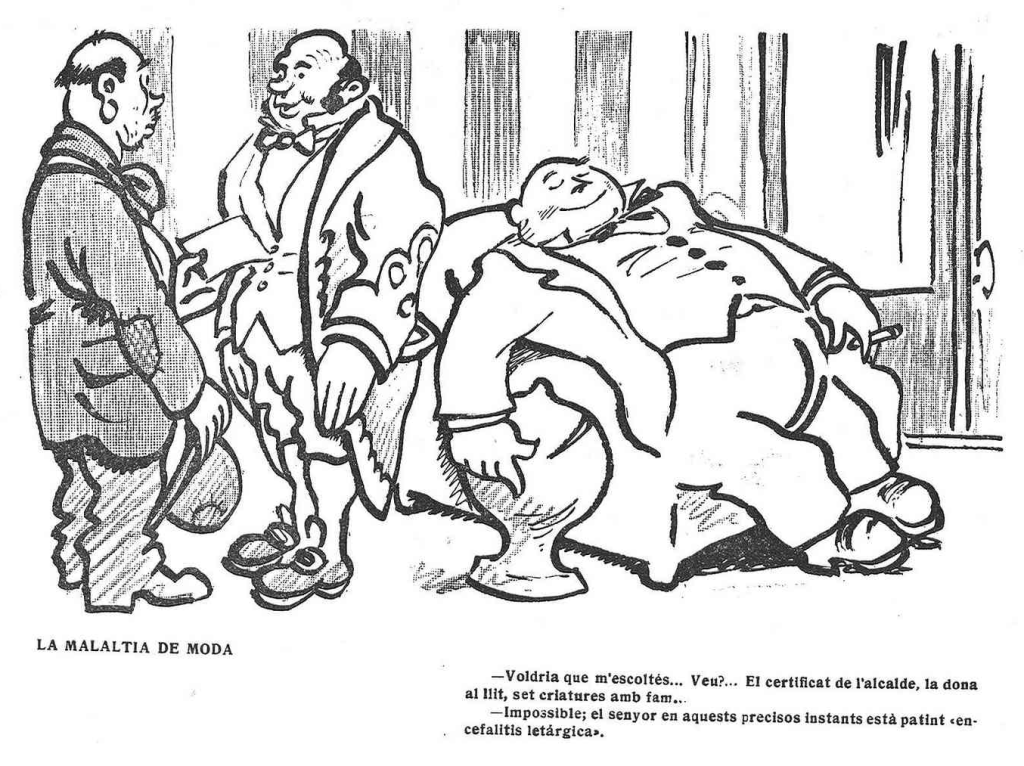
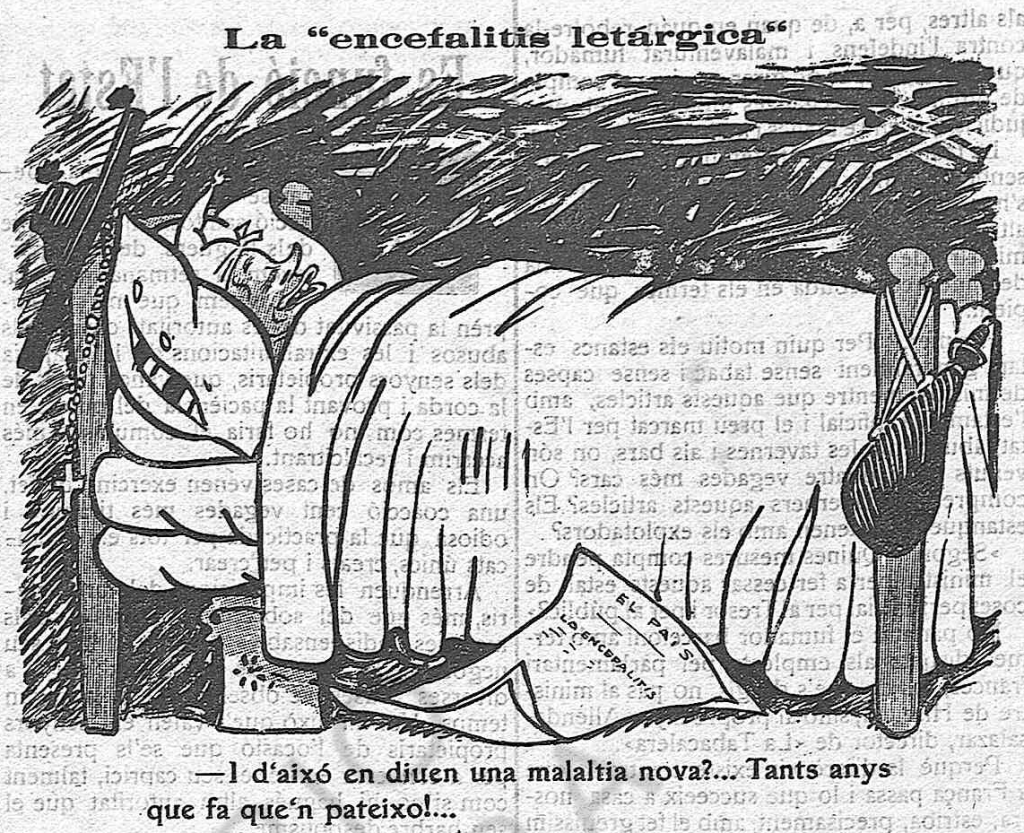
“Would you please hear me out… Voice?… The mayor’s certificate, the lady of the house in bed, with seven hungry children…” “Impossible; the gentleman is currently suffering from ‘encephalitis lethargica’ [sometimes called sleeping sickness].” (La Esquella de la torratxa, Barcelona, 1920)
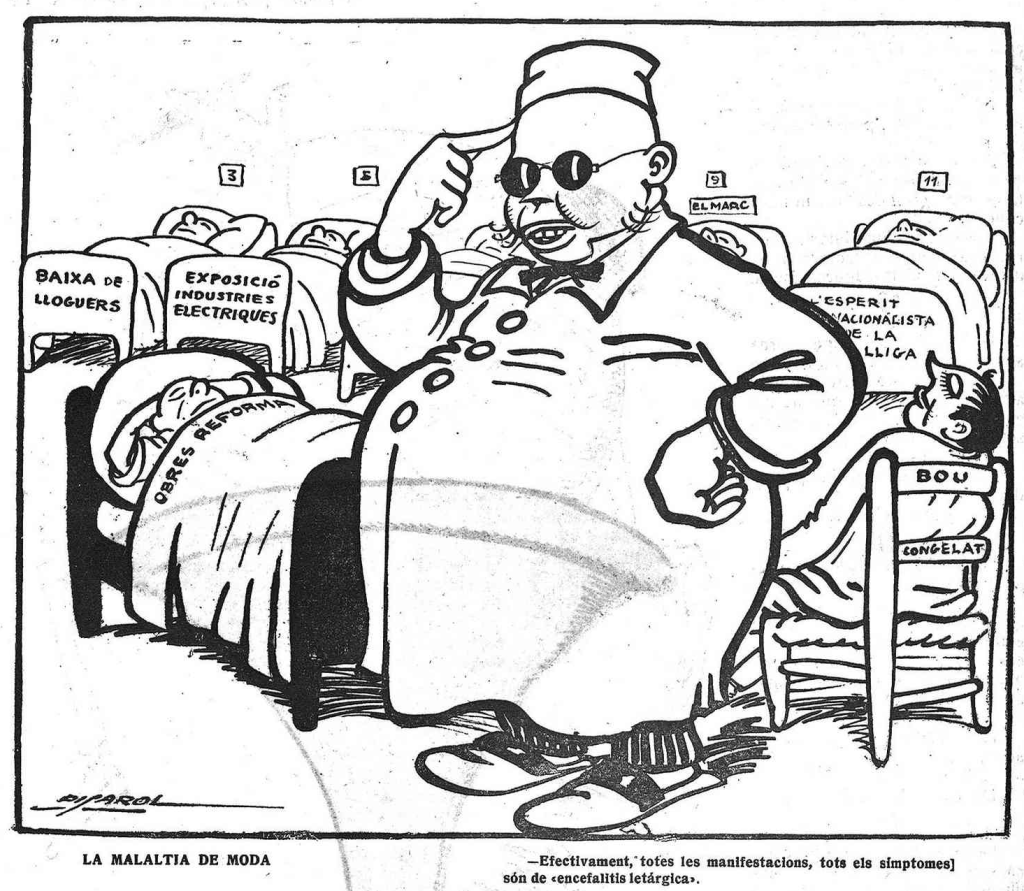
(Suffering patients include low rents, renovation works, the nationalist spirit of the league, frozen beef (?).) “Indeed, all the manifestations, all the symptoms are of the ‘encephalitis lethargica’.” (La Esquella de la torratxa, Barcelona, 1920)
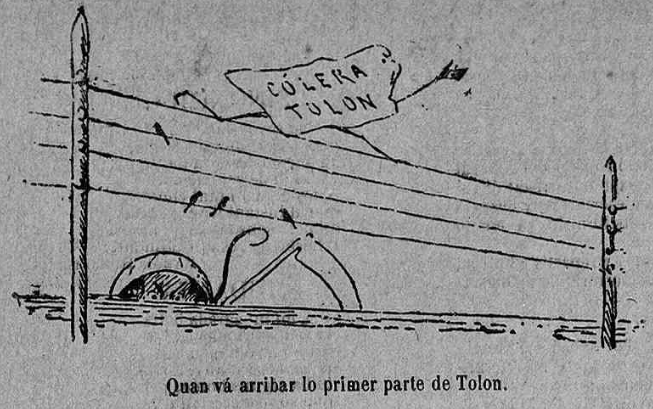
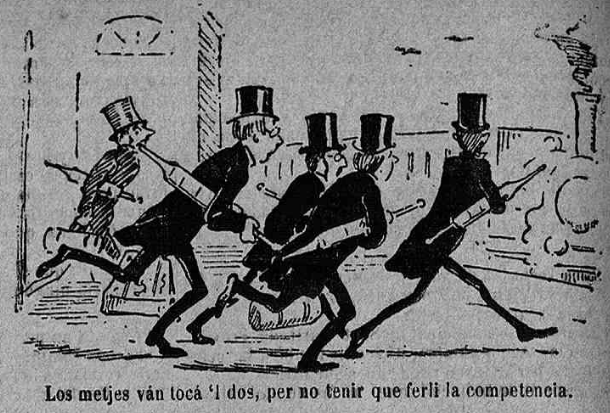
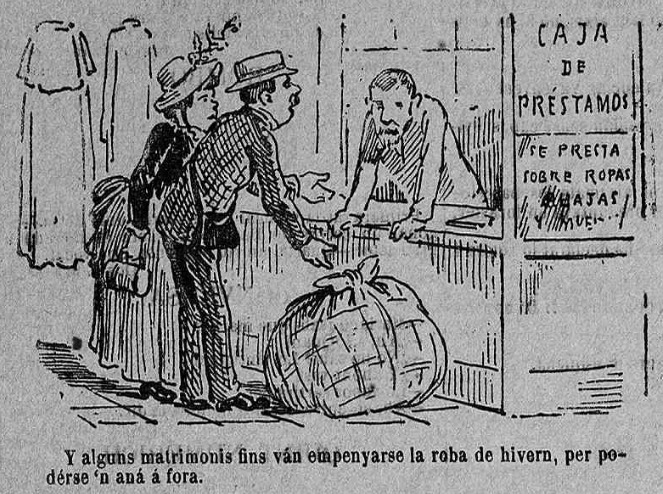
Marfuga is an olive oil producing region in Perugia, but I have no idea what the title signals. The individual panels in this cholera cartoon are amusing, however, mocking the urge to flee Barcelona for the countryside when news arrives of cholera in the French port of Toulon. (Apologies for the inept translations.) (La Esquella de la torratxa, Barcelona, 1884)
When the leading role arrived from Toulon.
Catalan cholera cartoon
The doctors will play the secondary role, so as not to have to demonstrate expertise.
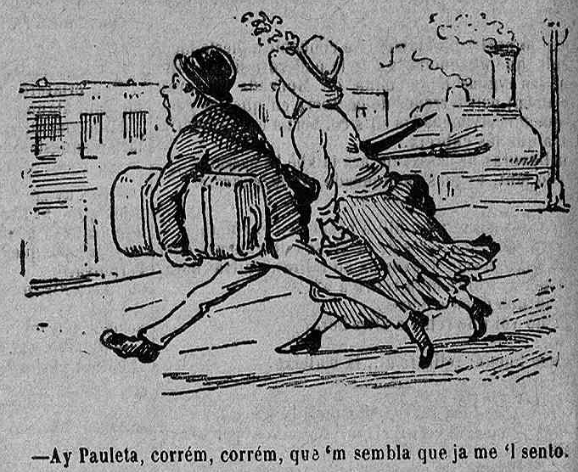
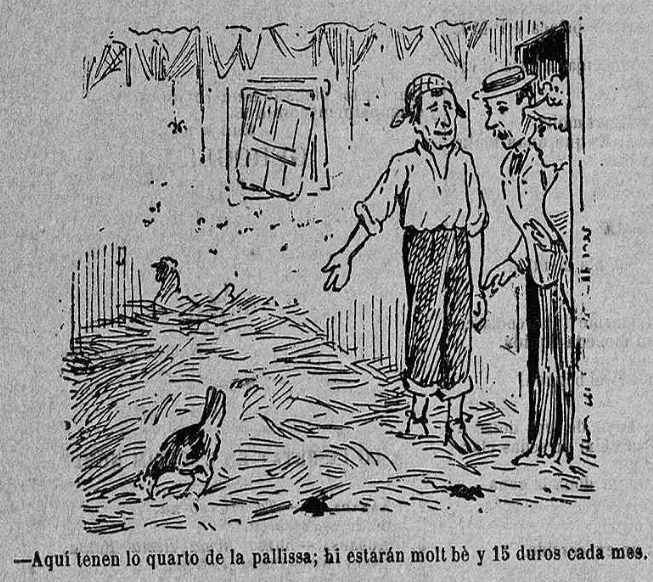
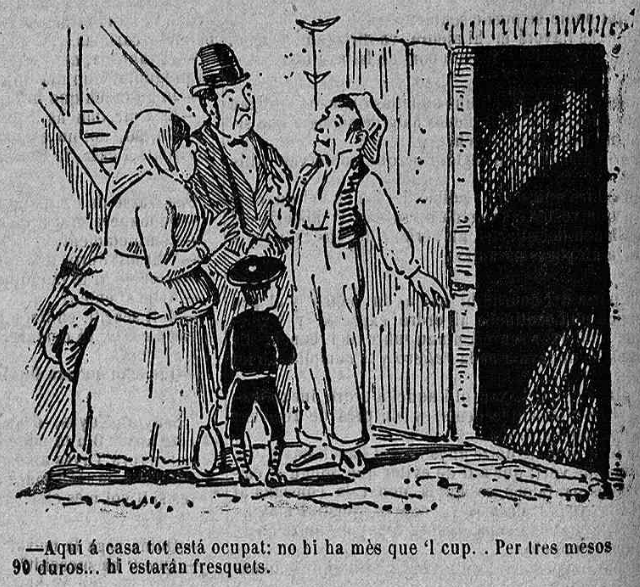
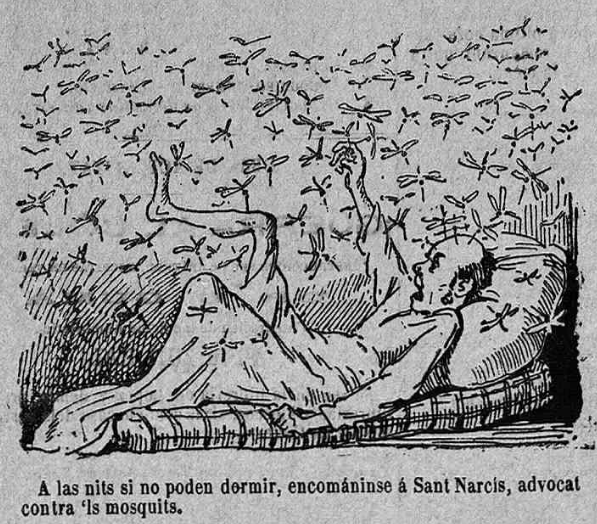
And some couples even pawned their winter clothes, to be able to go outside the city.
Oh Pauleta, run, run, it seems to me that I’ll be sorry.
Here you have the quarter of the hayloft; it will be very nice and 15 duros per month.
Here at home everything is occupied: there is nothing but the winepress… It’s 90 duros for three months… it will be cool.
At night, if you can’t sleep, entrust yourself to St. Narcissus, a lawyer against mosquitos.
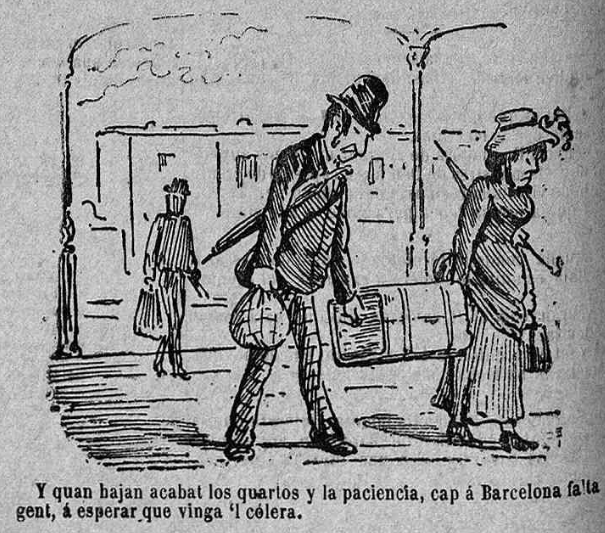
And when the quarters and patience are exhausted, the people missing out in Barcelona wait for the cholera to come.
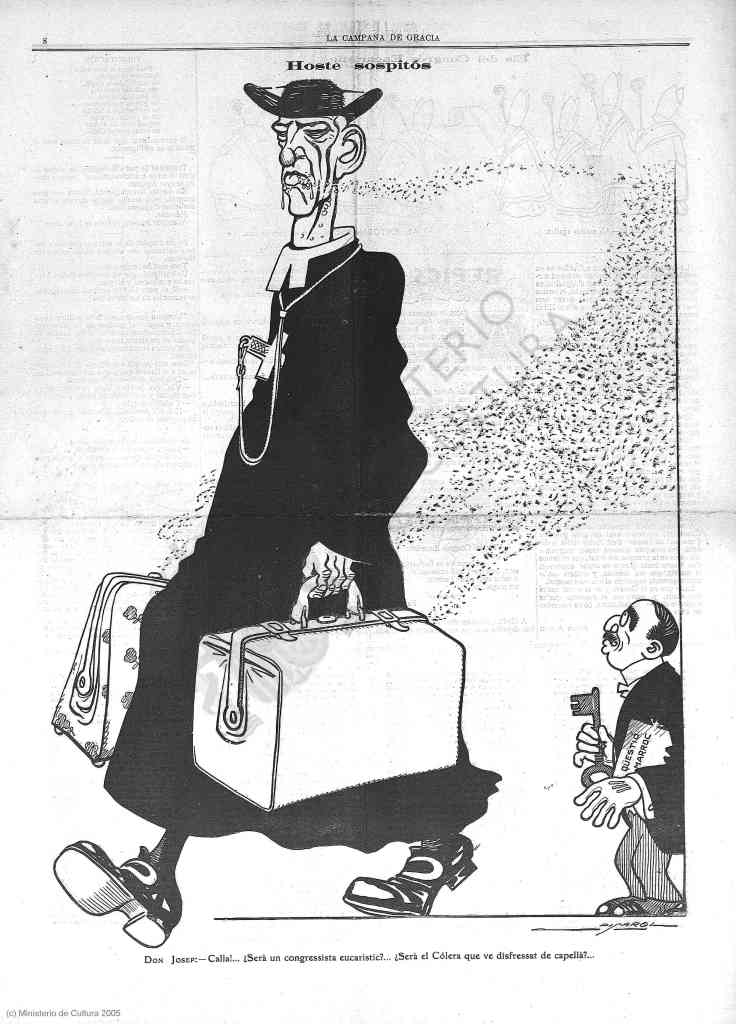
(The 22nd International Eucharistic Congress was held in Madrid in July 1911. The man on the lower right with a key and a piece of paper labeled “Moroccan Question” would seem to connect church delegates with disease transmission in a colonial context.) Don Josep: “Shut up! Will he be a eucharistic congressman? Will the Cholera come disguised as a chapel?” (La Campana de Gracia, Barcelona, 1911)
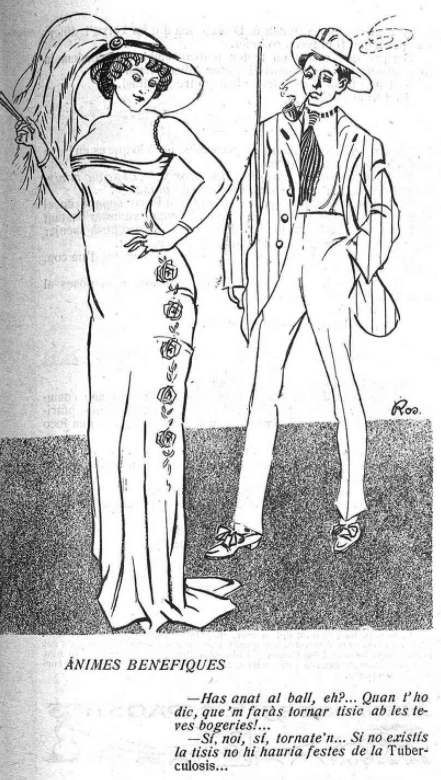
“You went to the dance, eh?… If you tell me that, you’ll make me go crazy with your madness!…” “Yes, boy, yes, come back… If consumption didn’t exist there would be no Tuberculosis parties…” (La Esquella de la torratxa, Barcelona, 1910)
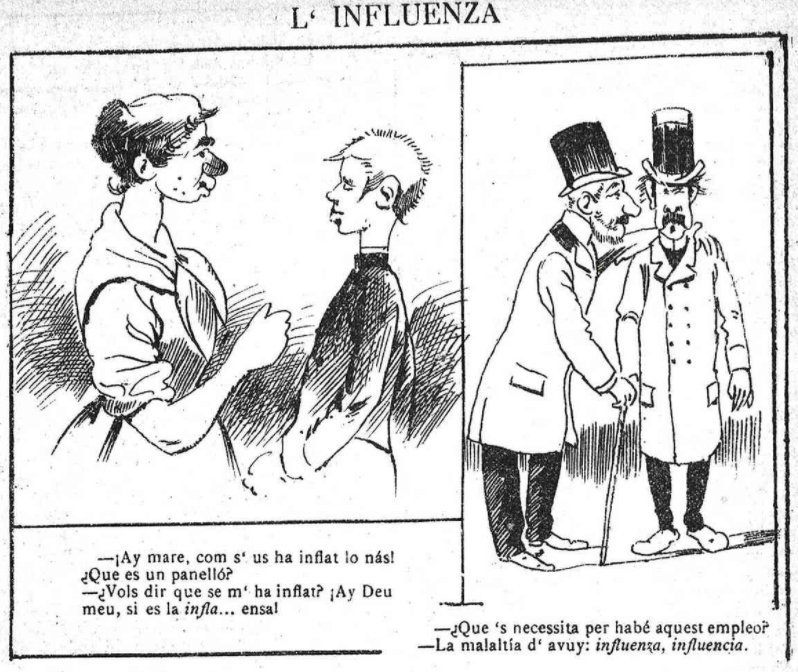
First panel: “Oh mother, how your nose is swollen! Is it chilblains?” “You mean, it’s inflated? Oh my God, if it’s the infla…enza!” Second panel: “What’s needed for this job?” “The disease of the day: influenza, influence.” (La Tomasa, Barcelona, 1892)
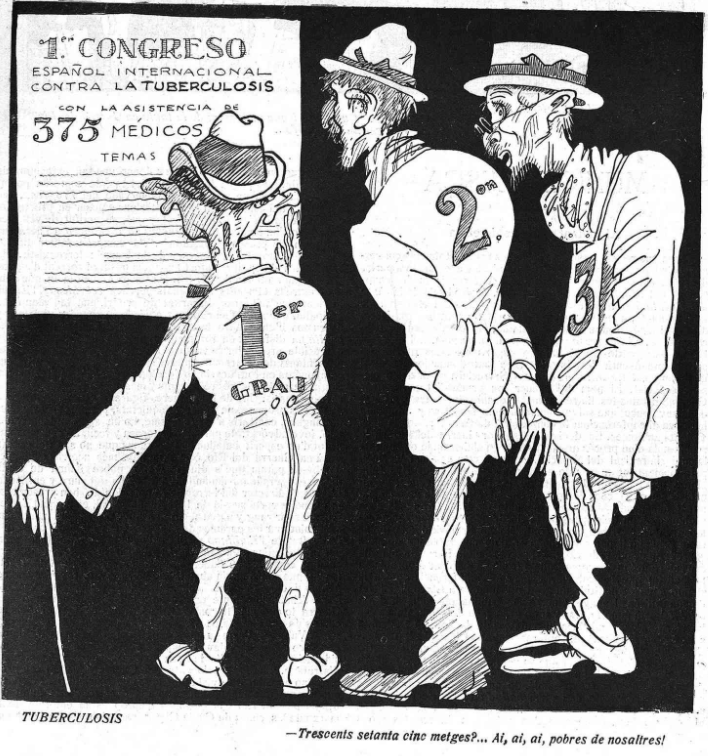
(Elderly figures apparently labeled according to the degree of their consumption affliction, reading poster for 1st Spanish International Congress Against Tuberculosis, convened with the help of 375 physicians.) “Three hundred and seventy-five doctors?… Alas, alas, alas, poor us!” (La Esquella de la torratxa, Barcelona, 1910)
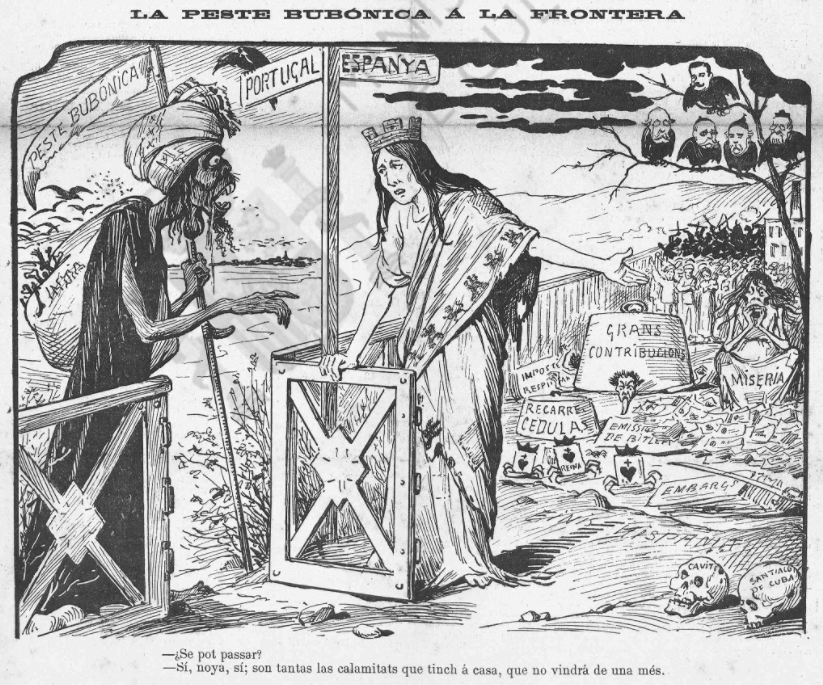
Woman: “Could you bypass us?” Plague (still carrying wares from India): “Yes, girl, yes; I have so many calamities at home that it will be a month before I come.” (La Campana de Gracia, Barcelona, 1899)
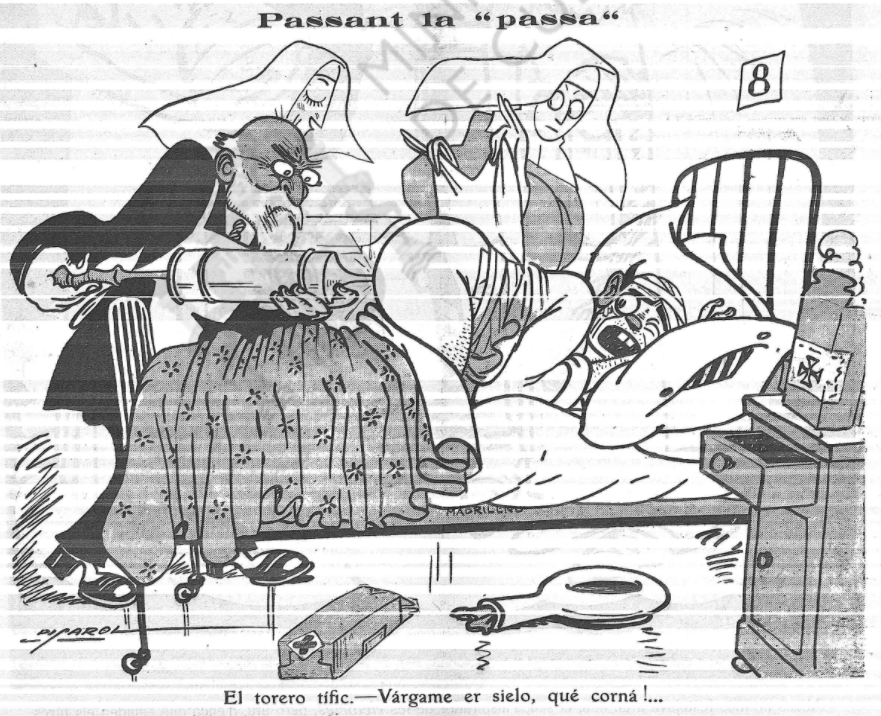
The typhus bullfighter. “Heaven forbid, what a horn!…” (This has to be the most explicit in the ongoing clystère theme.) (La Campana de Gracia, Barcelona, 1914)
 Sic Transit Pestilentia