“It’s no use, we have to ask for new cannons again. The current ones are not enough for such an enemy from the south.”
(Kopřivy, Prague, 1910)
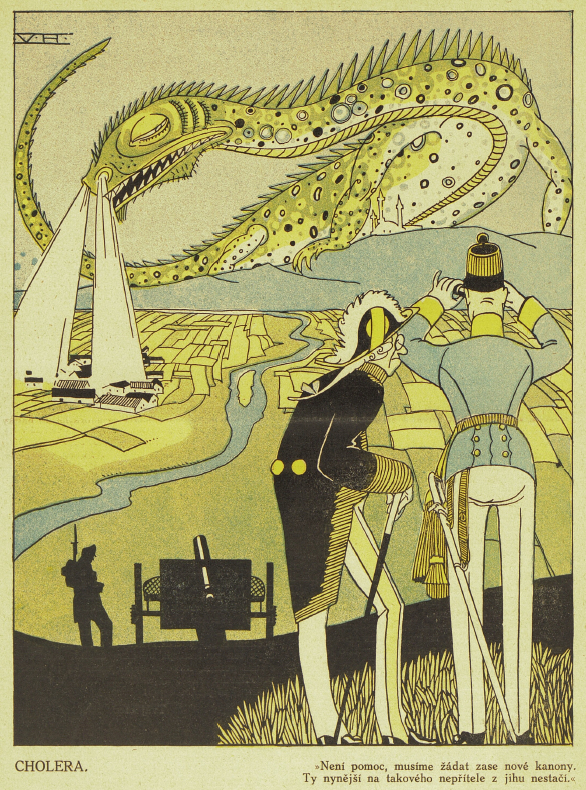
“It’s no use, we have to ask for new cannons again. The current ones are not enough for such an enemy from the south.”
(Kopřivy, Prague, 1910)
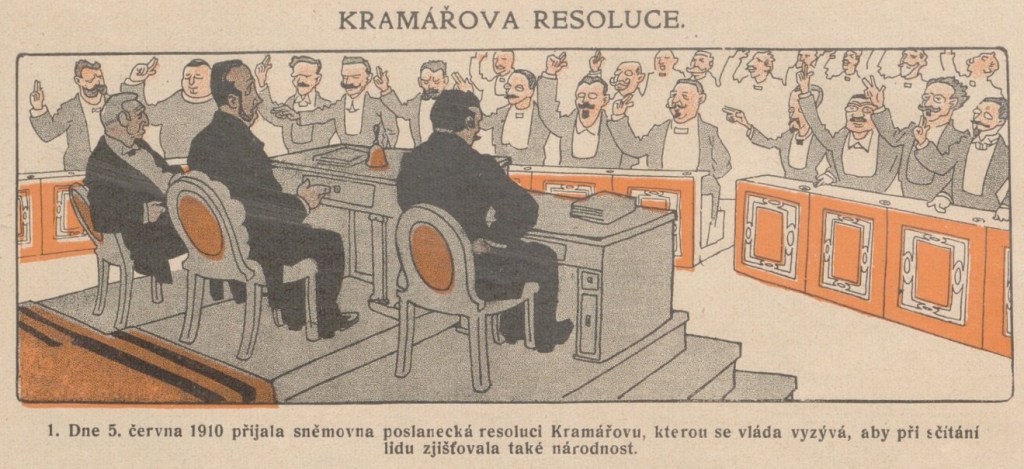
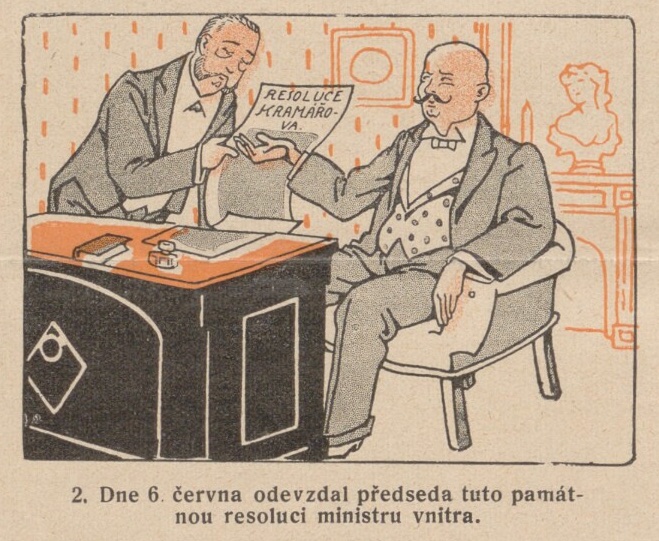
Karl Kramář was the leader of the Young Czech Party in Austria-Hungary. The Austro-Hungarian Minister of the Interior was Guido von Haerdtl, a German nationalist known for his hostility to Czech interests, especially regarding the use of anything but German as the official language in bureaucratic matters. (Kopřivy, Prague, 1910)
On June 5, 1910, the Chamber of Deputies adopted Kramář’s parliamentary resolution, which called on the government to ascertain nationality during the census.
On 6 June, the President forwarded this memorable resolution to the Minister of the Interior.
On June 7, the Minister of the Interior felt that he was experiencing symptoms of cholera.

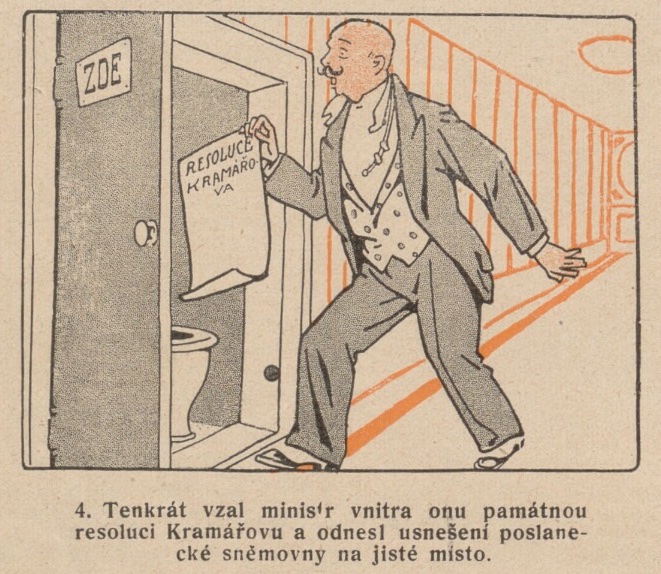
At that time, the Minister of the Interior brought the memorable Kramář resolution and took the decree of the Chamber of Deputies away to a certain locale.
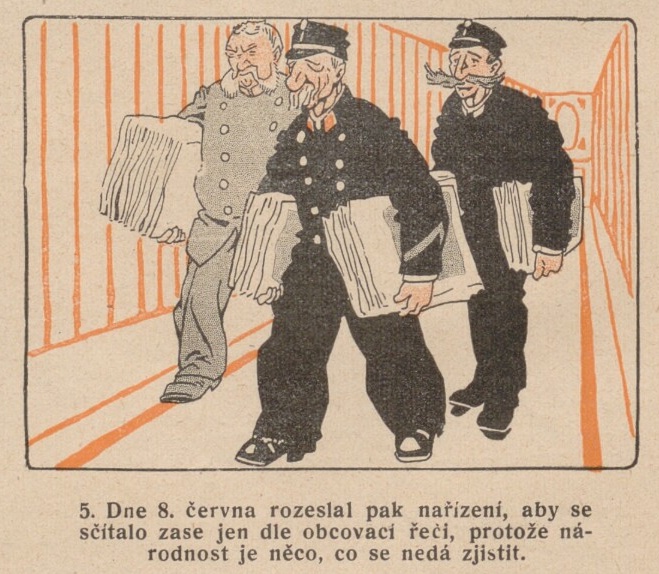
On June 8, he sent out an order to add it again only according to conversational language, because nationality is something that cannot be ascertained.
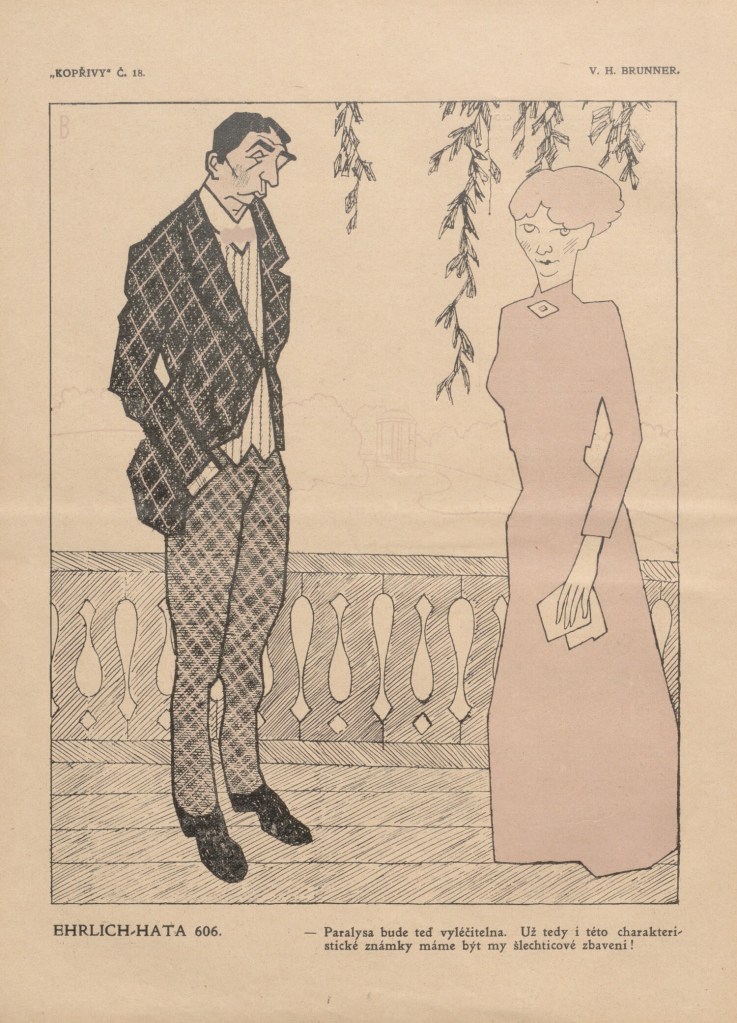
“The paralysis will now be curable. This way we nobles will be deprived even of this characteristic mark.”
(Kopřivy, Prague, 1910) (See also this cartoon for the reference to a syphilis cure.)
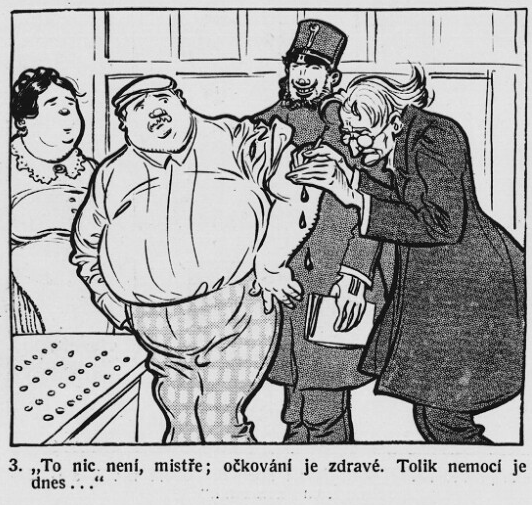
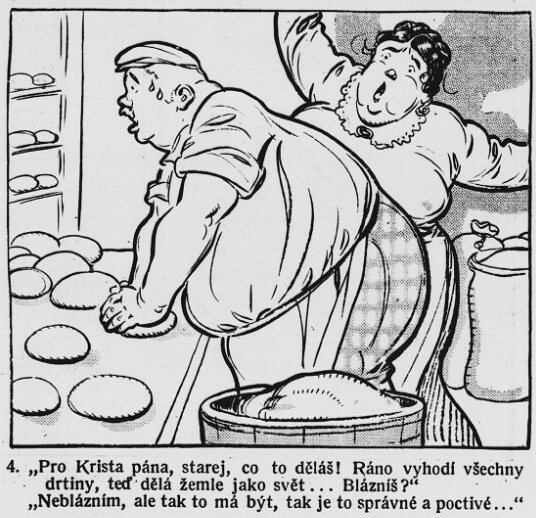
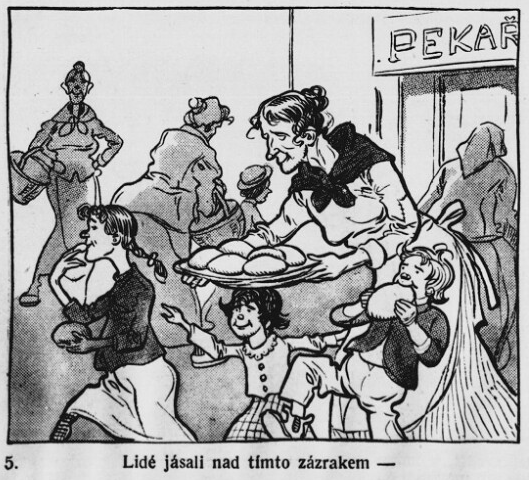
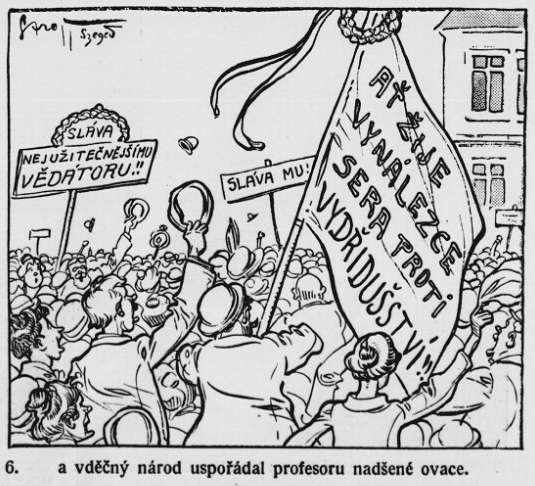
A multi-panel cartoon by Karel Stroff from Humoristické listy (Prague, 1915), drawn at a time during World War I when cities were beginning to experience food shortages, and producers were frequently suspected of overcharging for ersatz materials unsuited for human consumption.
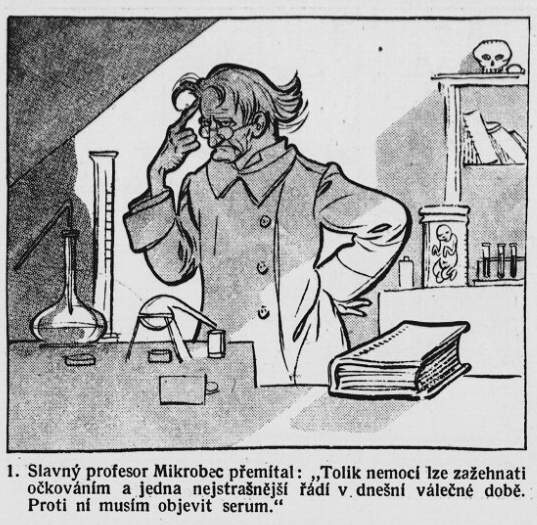
2. At the “qualified authorities”: Rest assured, gentlemen, that my invention will not disappoint. We can start tomorrow.

3. It’s nothing, sir, vaccination is healthy. There are so many diseases today…
4. For Christ’s sake, old man, what are you doing? Throw away all the crumbs in the morning, and now make buns like there’s no tomorrow… Are you crazy?
I’m not crazy, but that’s the way it is, that’s the right and honest thing…
5. People cheered on this miracle–
6. (Signs reading “Glory to the most useful scientist!!” and “Long live the inventor of the serum against extortion!!”)
and the grateful nation demanded enthusiastic applause for the professor.
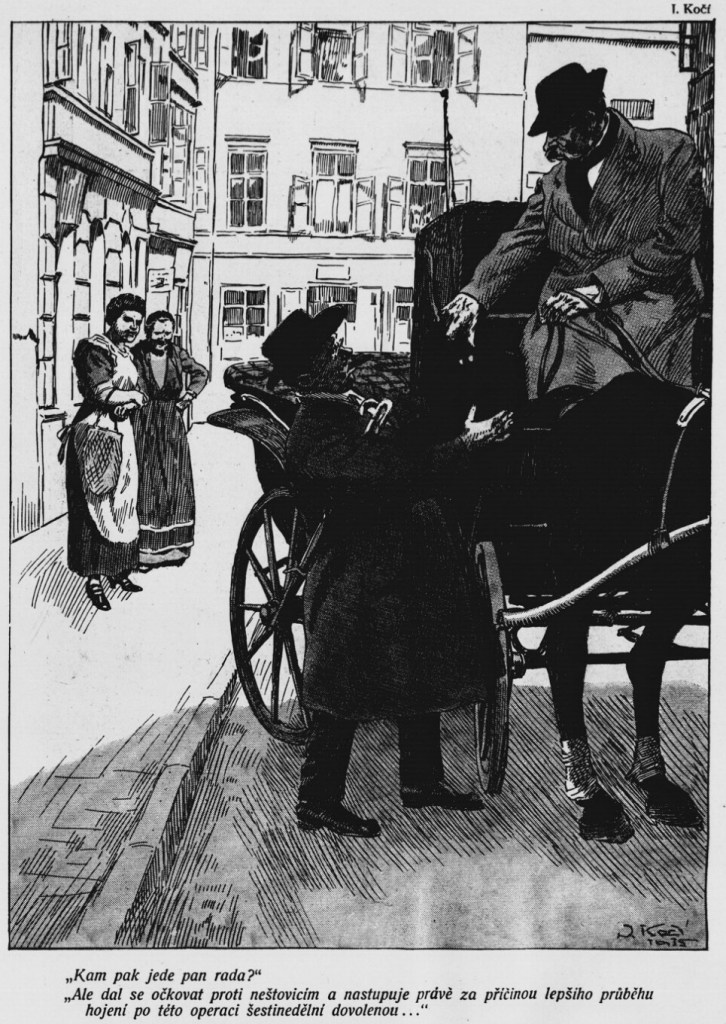
“Where is the Counsellor going then?”
“Well, he was vaccinated against smallpox and for the sake of better recuperation he is just starting a six-week holiday…”
(Humoristické listy, Prague, 1915)
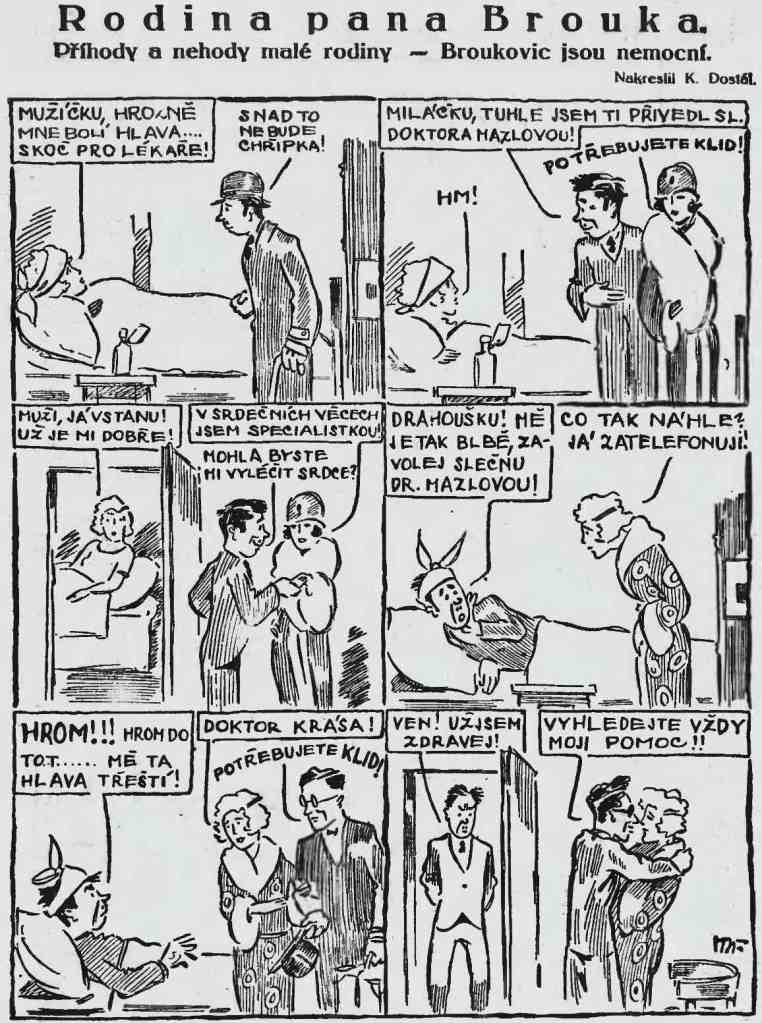
The nature and mishaps of a small family – The Beetles are ill.
Mrs. Beetle: “Hubby, I have a terrible headache… Go get the doctor!”
Mr. Beetle: “Hope it’s not the flu!”
“Honey, I brought you this lady, Dr. Mazlová!”
Mrs. Beetle: “Hm.”
Dr. Mazlová: “You need rest!”
Mrs. Beetle: “Dear, I’ll get up! I’m fine now!”
Dr. Mazlová: “I’m a cardiac specialist.”
Mr. Beetle: “Could you cure my heart?”
(later)
Mr. Beetle: “Dear! I’m so sick, summon Dr. Mazlová!”
Mrs. Beetle: “What’s going on? I’ll call!”
Mr. Beetle: “The pounding. The pounding … My head is killing me!”
Mrs. Beetle: “Here’s Doctor Krása!”
Doctor Krása: “You need rest!”
Mr. Beetle: “Get out! I’m already feeling better!”
Doctor Krása (to Mrs. Beetle): “Always seek my assistance!”
(Komár, Brno, 1927)
“Last week I was vaccinated against smallpox, today I’m going to be treated against typhus, then against cholera–“
“Are you that afraid of those diseases?”
“Oh, that’s not it. But we have a single young doctor…”
(Humoristické listy, Prague, 1915)

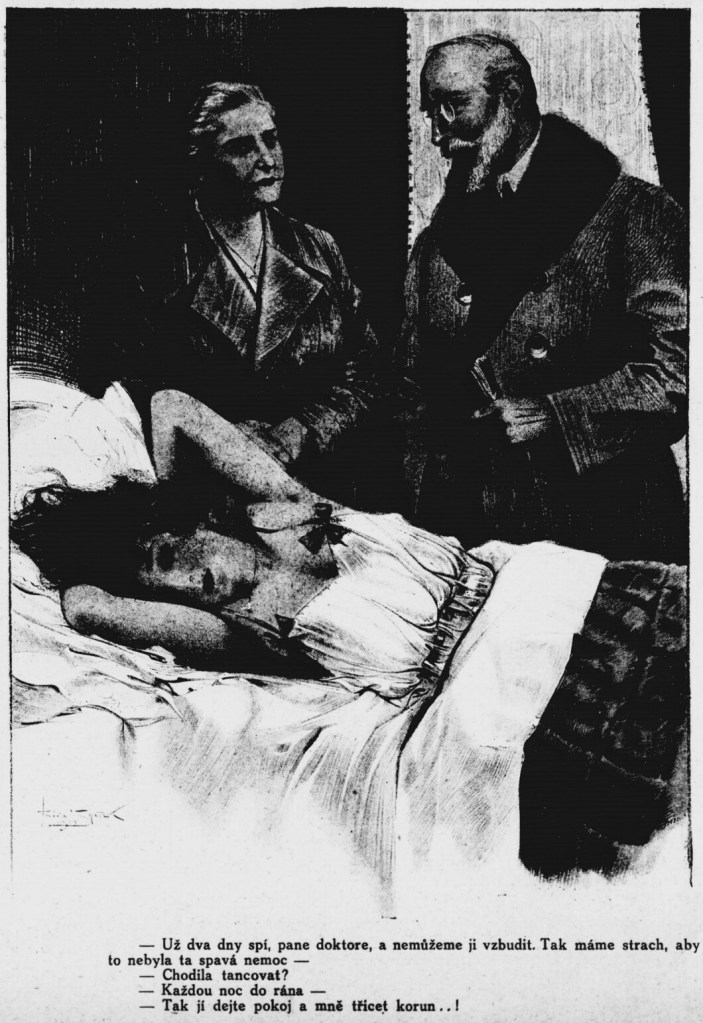
“She’s been sleeping for two days, Doctor, and we can’t wake her. So we’re afraid she’s got the sleeping sickness.”
“Has she been going dancing?”
“Every night until morning.”
“Then leave her alone and give me thirty crowns…!”
(Humoristické listy, Prague, 1924)
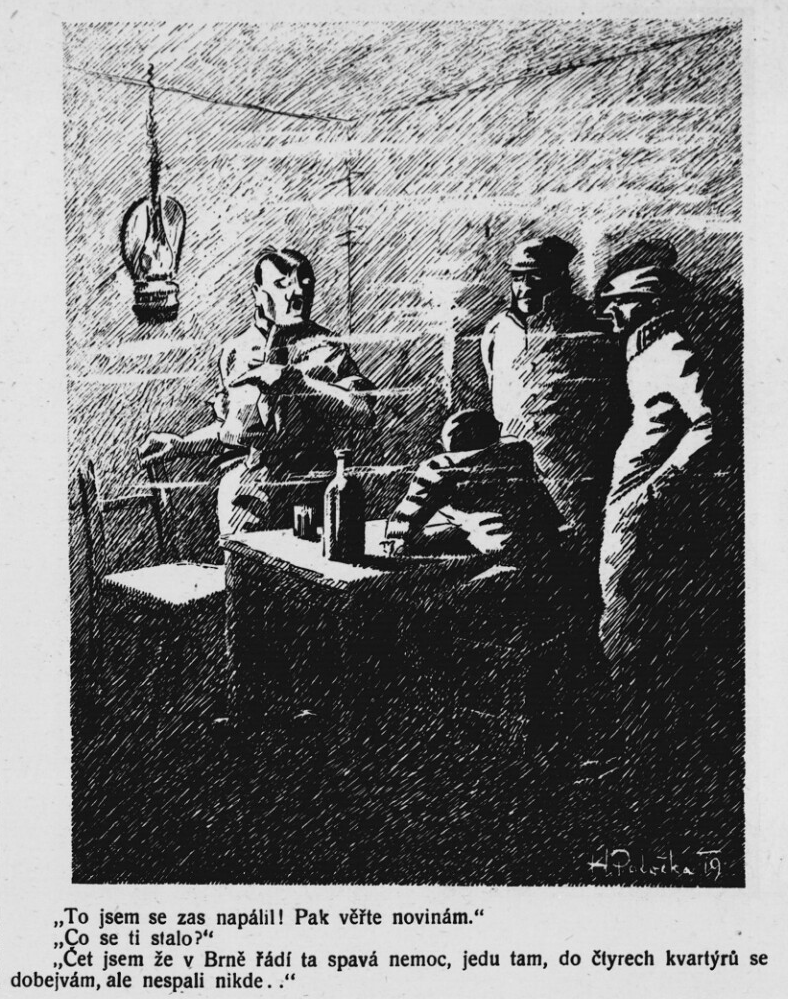
“I fooled myself again. Then you should trust the news.”
“What happened?”
“I read that the sleeping sickness is raging in Brno, I head there, I get into four apartments, but nobody was sleeping anywhere…”
(Humoristické listy, Prague, 1920)
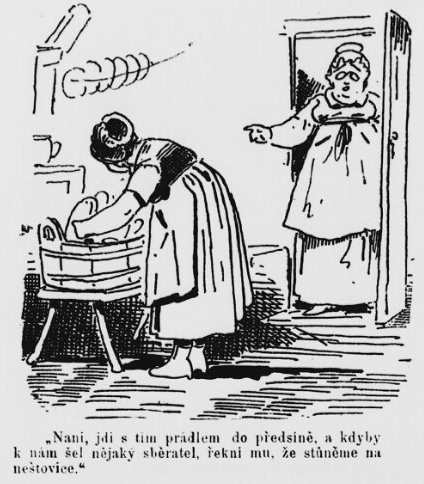
“Nani, go into the entryway with that laundry, and if a collector comes to us, tell him we’ve got smallpox.”
(Humoristické listy, Prague, 1880)
The former Austrian foreign minister, Count Beust, had clashed with the French foreign minister, the Duc de Gramont, in the lead-up to the Franco-Prussian War in 1870. This cartoon from early 1873 followed upon Beust’s attempt to settle accounts by publishing letters from that period. Though this is straight politics, I include it because of the clystères, an ongoing theme. (See also this Mexican example from 1886, also a cholera year.)
(Humoristické listy, Prague, 1873)

From Humoristické listy, Prague, 1890.
“Hey you, ‘borrow’ a magazine somewhere.”
“You wanna entertain yourself with politics?”
“Hah! I would just like to know if they also shut down criminals now like they do schools. Then there would be something more to do.”

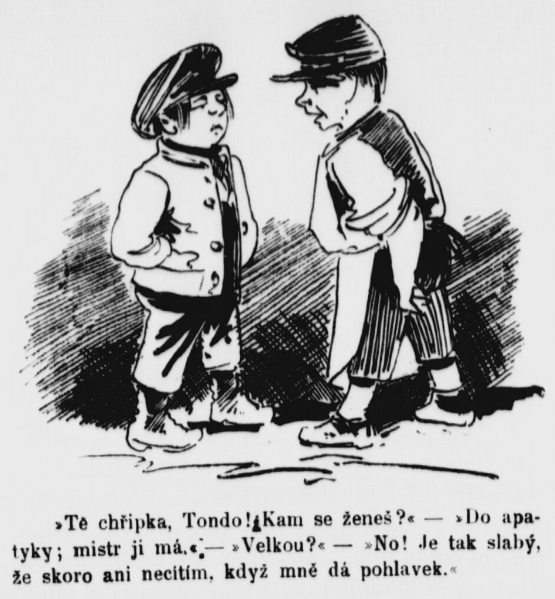
“You’ve got the flu, Tony! Where are you going?”
“To the pharmacy; the master has it, too.”
“Is that so great?”
“No! He’s so weak that I can’t even feel him slapping me.”
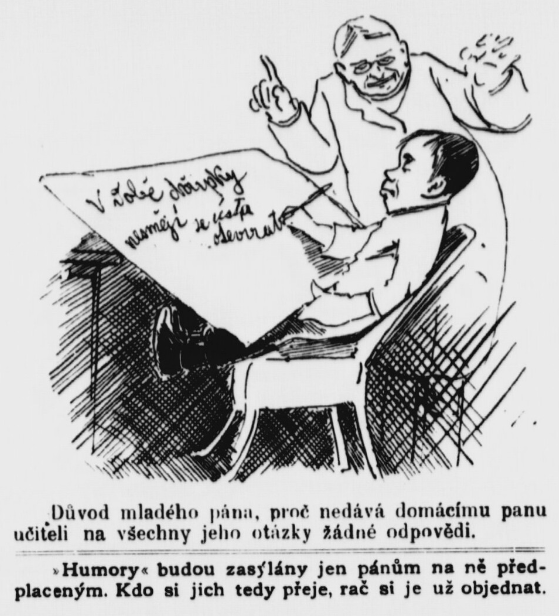
(Child writing on school desktop: “During the flu mouths must not be opened”)
The young man’s reason for not giving the teacher any answers to all his questions.
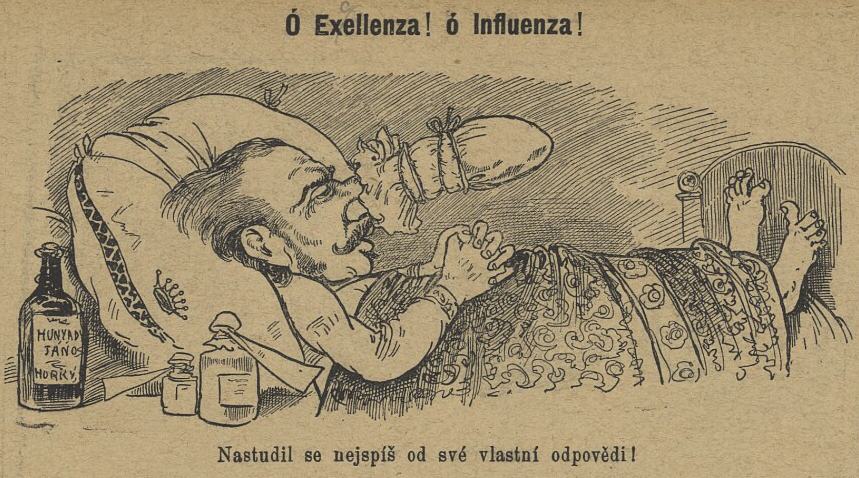
“He probably caught cold from his own response!”
The visual joke here is quite simple, with the title punning on the original Italian sense of influenza as influence. Yet the underlying source of its amusement to contemporaries is not readily apparent to us today. The bedridden figure depicted is Austrian Minister-President Count Taaffe, who came down with a mild case of influenza late in December 1889, at the height of the European epidemic that winter. A masterful coalition-building aristocrat who had balanced Austro-German nationalism against Bohemian-Czech nationalism for much of the 1880s, mostly in service to conservative Liberal and noble landowning interests, Taaffe had finally been stymied by the Bohemian diet elections a few months earlier, when the Young Czech nationalists gained the upper hand. Taaffe’s failing confidence in his own rhetorical ability to sustain coalition politics seems to be the central object of the satire here. At his bedside is a bottle of János Hunyadi Bitters, a real product borrowing on the fame of a fifteenth-century Hungarian military hero–a marvelous touch.
(Šípy, Prague, 1889)
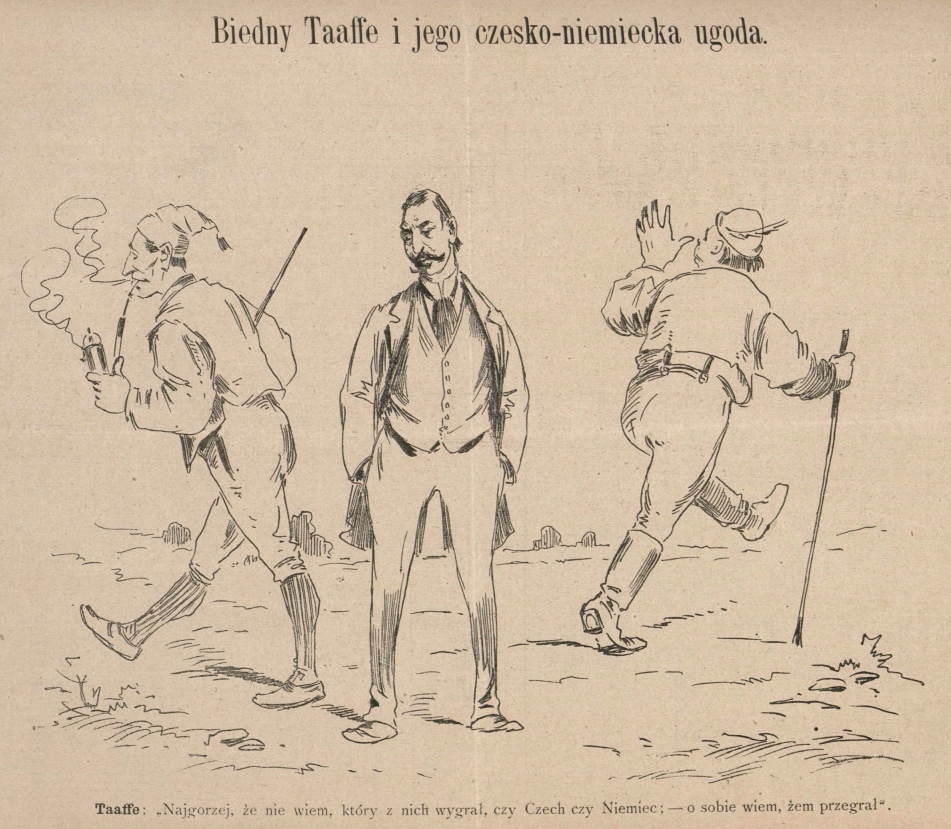
Taaffe’s declining fortunes are satirized in the Polish magazine Szczutek (Lwów, 1892):
You know what, Mr. Housemaster: if the lord of the manor wants to have cleanliness in the house for the sake of cholera, then let’s wash out your filthy mouth first.
(Humoristické listy, Prague, 1883)

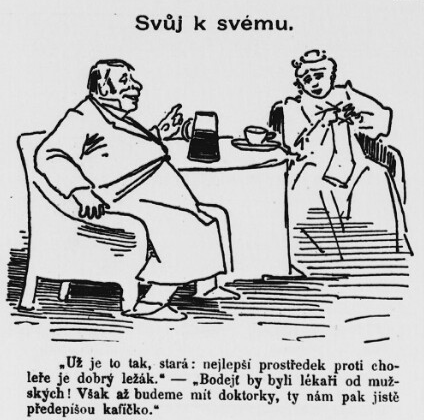
“That’s right, old girl: the best remedy for cholera is a good lager.”
“That would be coming from male doctors! But when we have female physicians, they will surely prescribe us coffee.”
(Humoristické listy, Prague, 1892)
 Sic Transit Pestilentia