“Listen, overseer: since my son got his medical degree yesterday, let the tenants know that I am adding a dozen crowns to all their rents; because when cholera really breaks out, it’s a great advantage to have a doctor in the house.” (Humoristické listy, Prague, 1892)
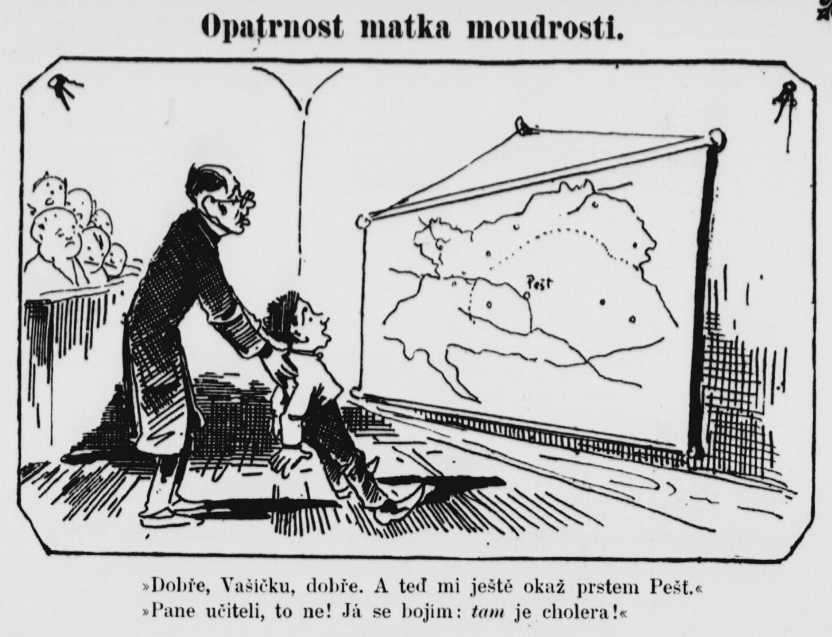
“Good, Vasicka, good. And now point your finger at Pest.” “Teacher, not that! I’m afraid that there it’s cholera.” (Humoristické listy, Prague, 1886) (A nearly identical French cartoon.)
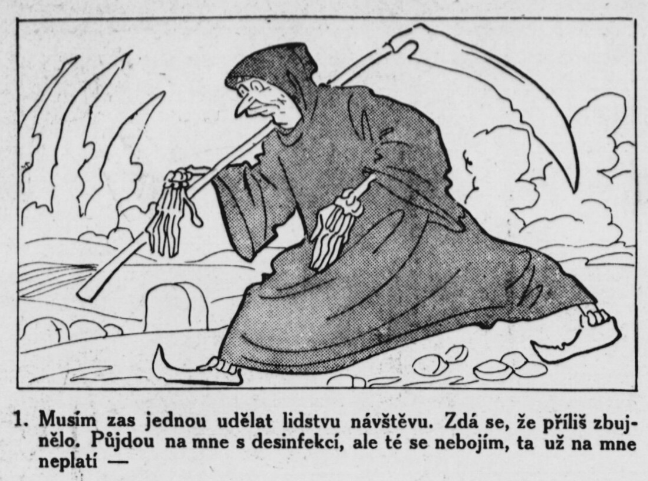
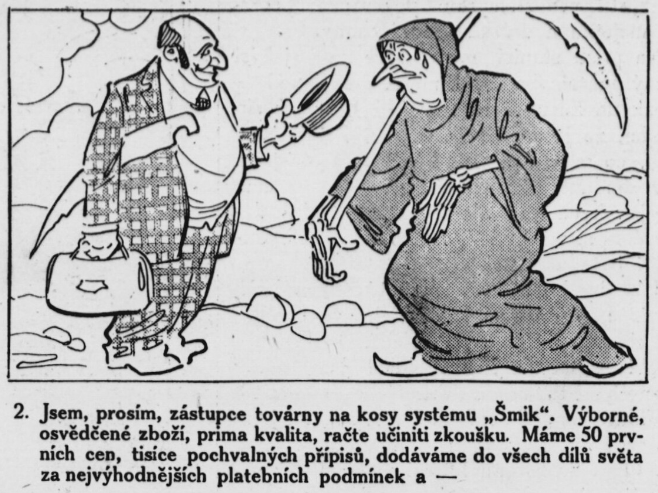
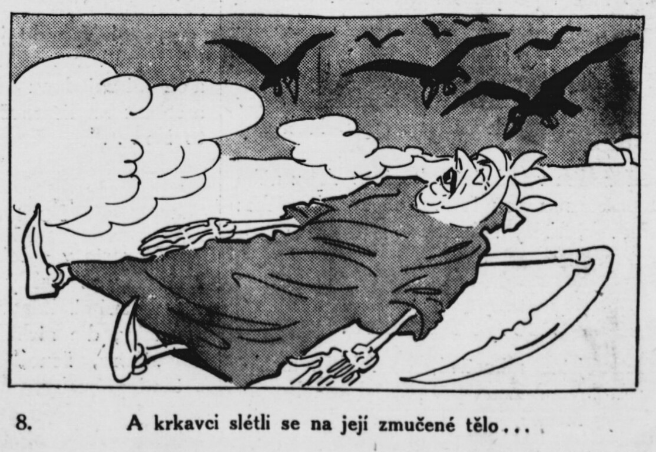
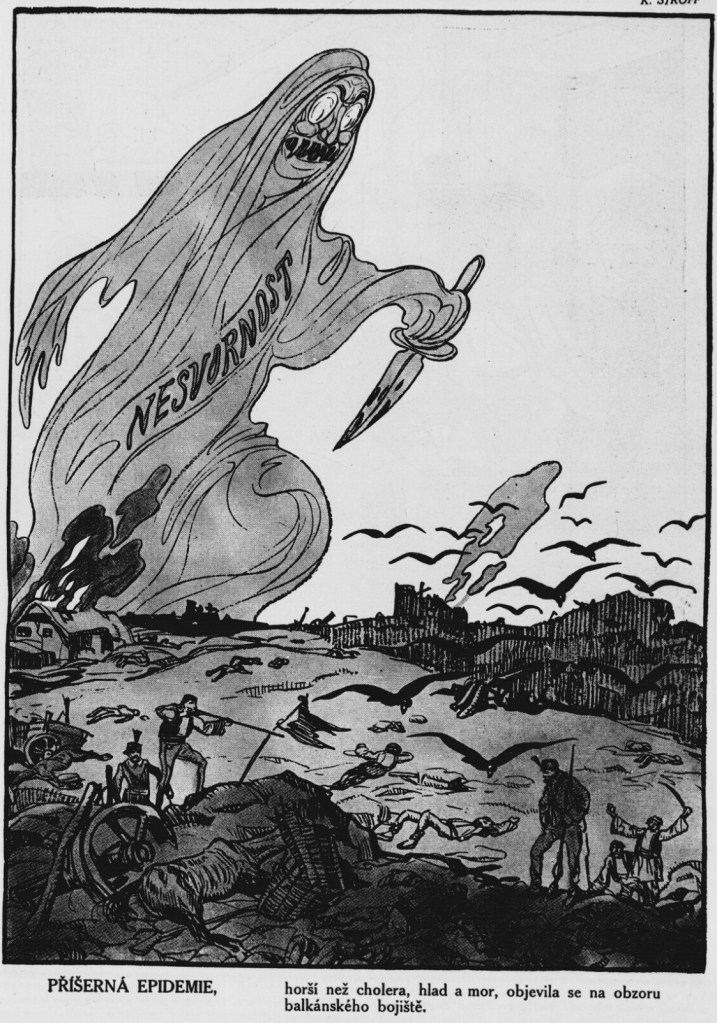
A multi-panel cartoon by Karel Stroff from Humoristické listy (Prague, 1910)
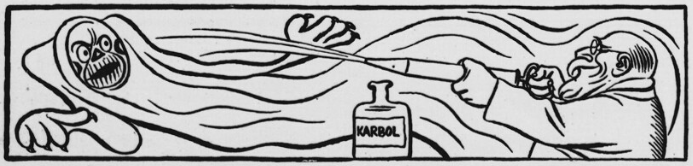
I must visit humanity again. It seems to have become too wanton. They will come after me with disinfectants, but I’m not afraid of that, it no longer applies to me.
Czech cholera cartoon
Pardon me, I am a representative of the “Chiseler”* scythe factory. We have excellent, proven wares of great quality, please give it a test. We have fifty first-prize awards, thousands of commendations, we deliver to all parts of the world under the most advantageous payment terms and — *(very loosely; no bonus for noticing the ethnic stereotype employed)
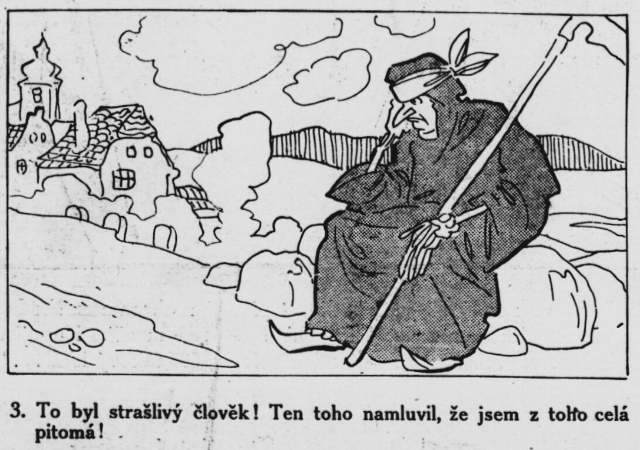
That was a terrible man! He spoke to me as if I was completely stupid!
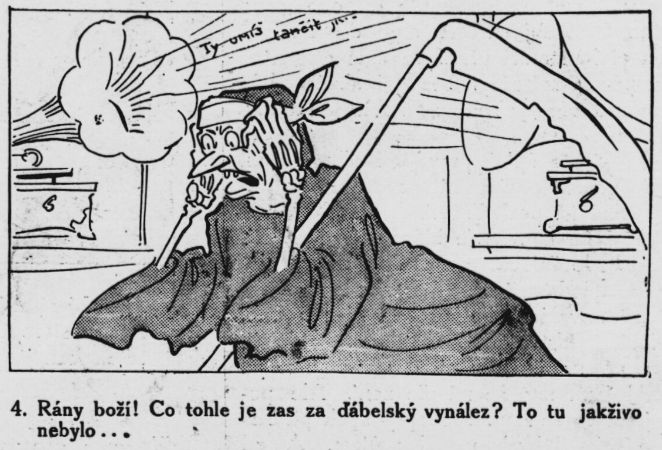
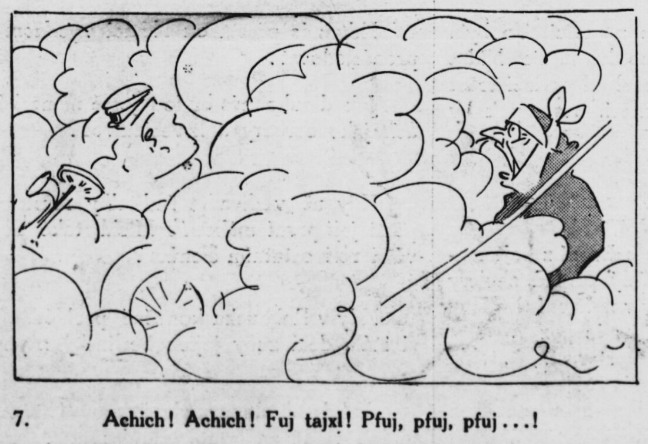
Zounds! What kind of diabolical invention is this? There has never been such a thing…
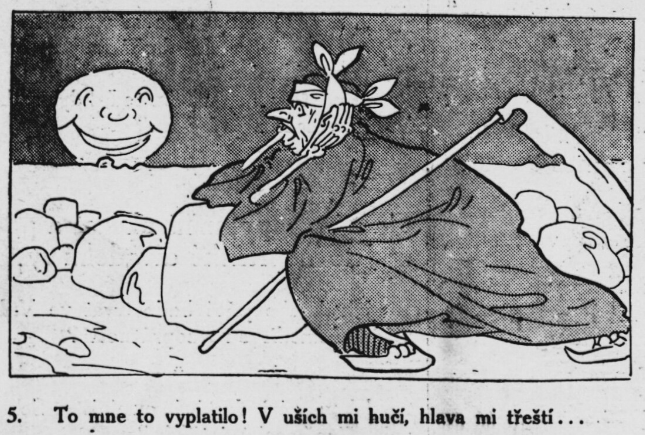
That cost me dearly! My ears are buzzing, my head is splitting…
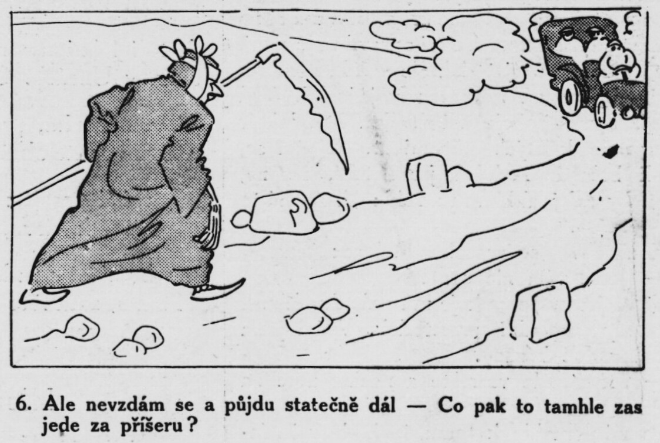
But I will not give up and I will bravely go on — What kind of monster is going over there?
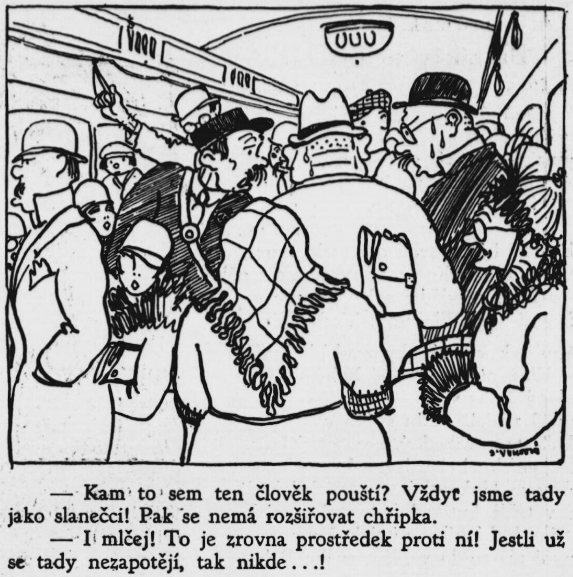
Ticket-taker on tram: “Where do you let this man go? After all, we’re packed like herrings in here. That way the flu does not spread.” “And be quiet! This is exactly the remedy against it. If you don’t sweat here anymore, then you won’t anywhere…” (Humoristické listy, Prague, 1927)
“I say, hubby, when that wretched cholera came and I got it: weren’t you afraid of me?” “What a foolish idea! It’s different now that you’re completely healthy.” (Humoristické listy, Prague, 1893)
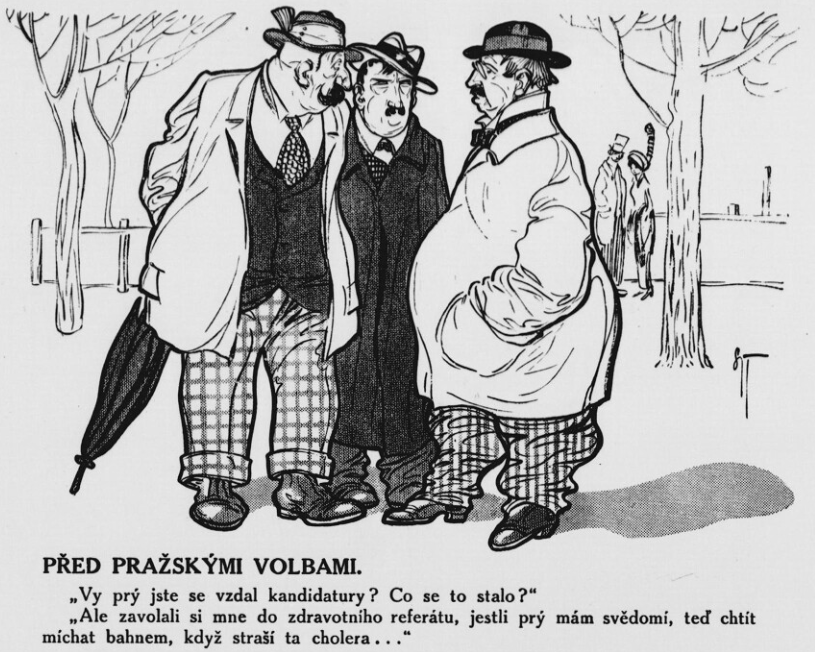
“Are you supposed to give up your candidacy? What happened?” “But they summoned me to the medical department, if I have any scruples, now they want me to get down in the mud when the cholera is frightening us…” (Meaning, you can get dirty in politics or in fighting an epidemic, but not both at the same time? This wants improvement.) (Humoristické listy, Prague, 1913)
Detail from a humorous story in Moravian Illustrated Reporter, subtitled “A few words about flu heroes.” Spraying catarrh (i.e., snot) in the tram: “Oh, please, what are you looking at? Haven’t you ever seen anyone sneeze?” (Moravský illustrovaný zpravodaj, Prague, 1933)
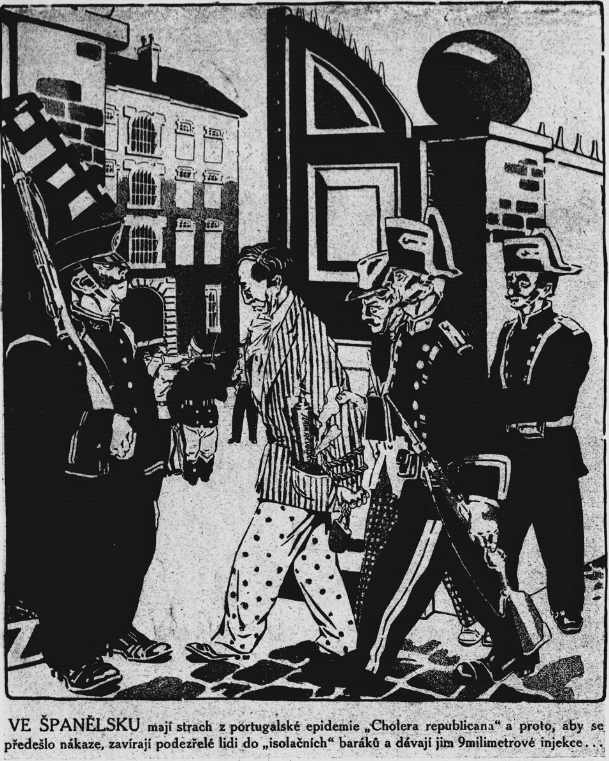
In Spain, they are afraid of the Portuguese epidemic of Cholera republicana, and in order to prevent infection, they lock the suspects in isolation barracks and give them 9-millimeter injections… (Not sure what the object in the prisoner’s pocket is, but it says “Glory to the Republic.”) (Humoristické listy, Prague, 1910)
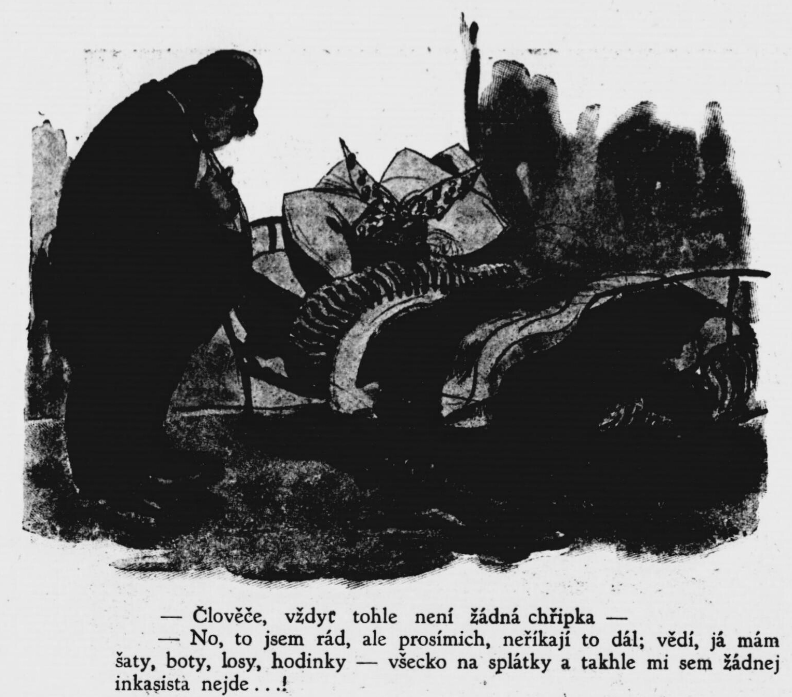
“Man, this is not the flu after all.” “Well, I’m glad, but please, don’t tell anyone else; they know I have clothes, shoes, lottery tickets, watches, everything in installments, and no collector can come here while I’m like this…” (Humoristické listy, Prague, 1927)
(in closing) “So that fine kettle of fish is already here.” “What? You mean cholera?” “Something worse! Only a few of us would be taken by cholera, but this is an official [Austro-Hungarian] census. Some Czechs would fall victim to it…” (Humoristické listy, Prague, 1910)
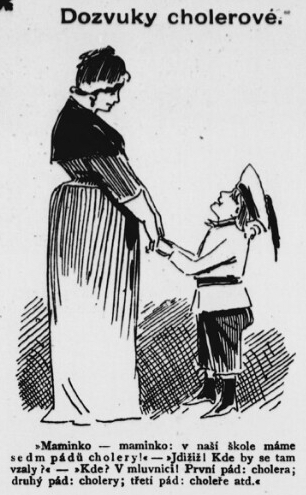
(This will make sense for those who appreciate grammatical cases in Slavic languages) “Mommy, mommy: we have seven cases of cholera in our school!” “Come now! Where did they all come from?” “Where? In grammar! First case: cholera [nom.]; second case: cholera [acc.]; third case: cholera [dat.], etc.” (Humoristické listy, Prague, 1892)
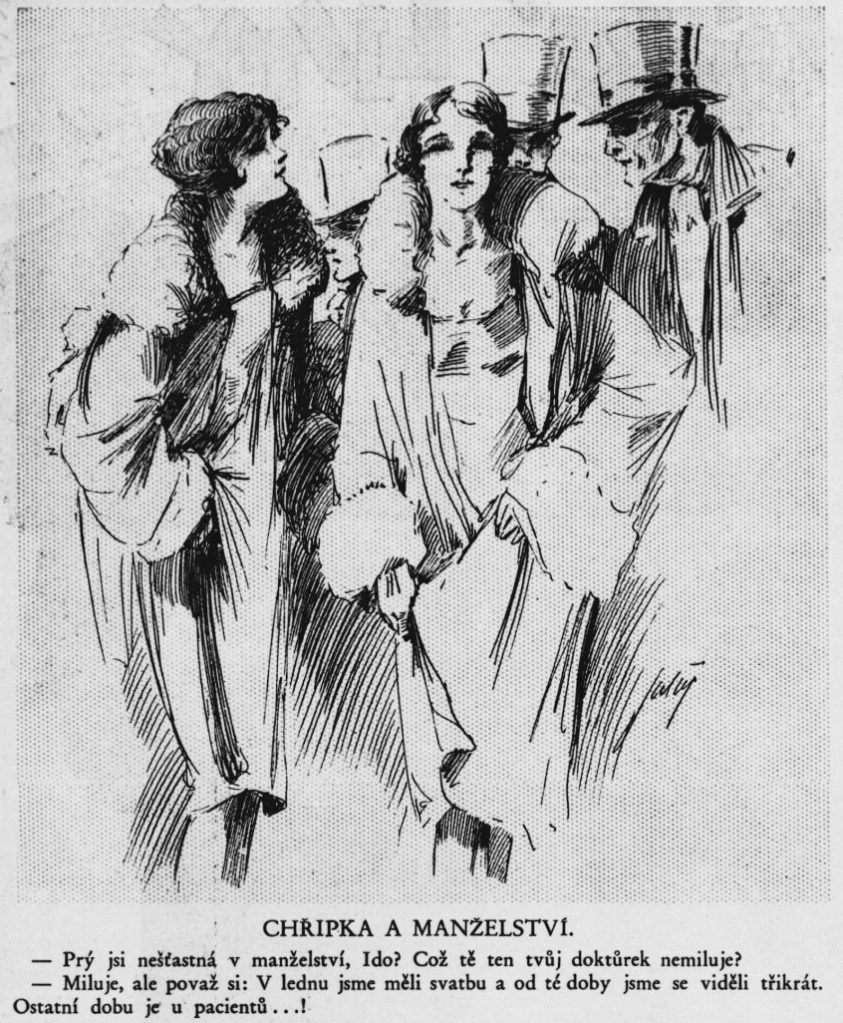
“Are you unhappy in your marriage, Ido? Doesn’t your doctor husband love you?” “He loves me, but consider: Our wedding was in January, and we’ve seen each other three times since then. The rest of the time he’s with his patients…!” (Humoristické listy, Prague, 1929)
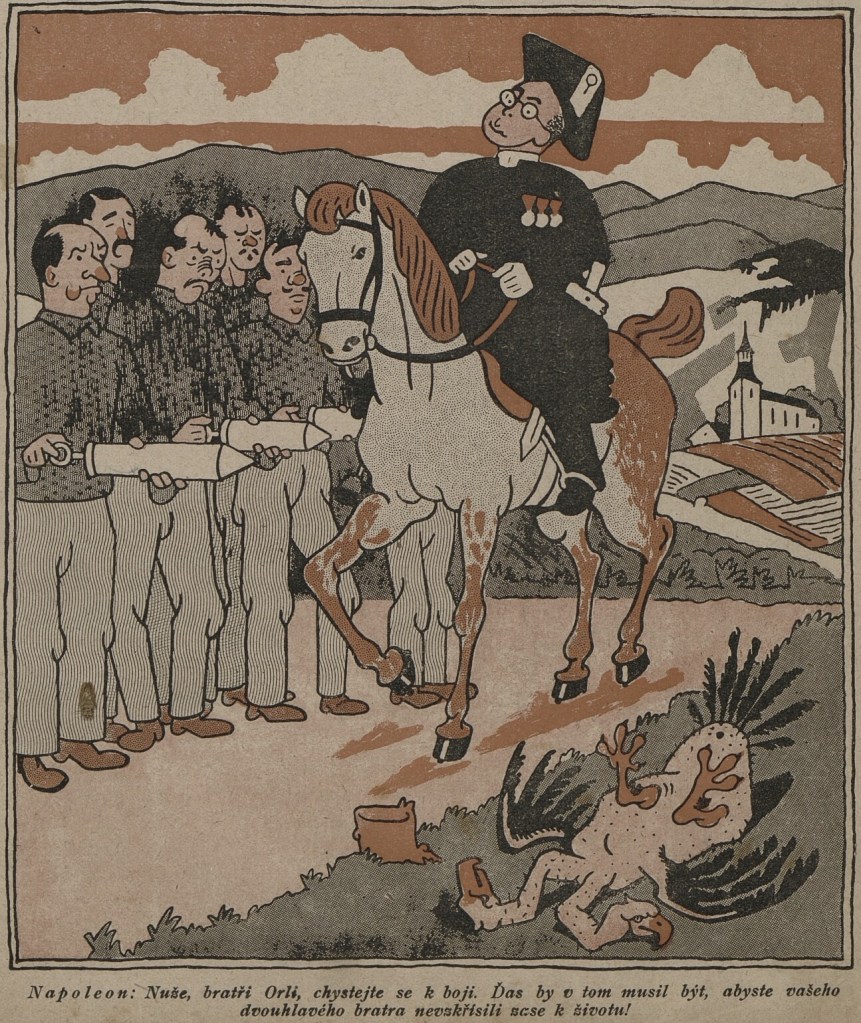
This image is taken a bit out of context. It is mocking the supposedly Napoleonic ambitions of a Moravian nationalist and Catholic literary figure named Karel Dostál-Lustinov, who was the driving figure behind a fraternal gymnastics movement known as the Eagles (think of parallels with the YMCA). What is striking for present purposes is that the Eagles are being called to prepare for battle (against the Republic?), and they are doing so with disinfection spritzers. (In Czech the verb seems to hint at an adjacent meaning of “cleansing.”) (Rašple, Brno, 1920)




 Sic Transit Pestilentia