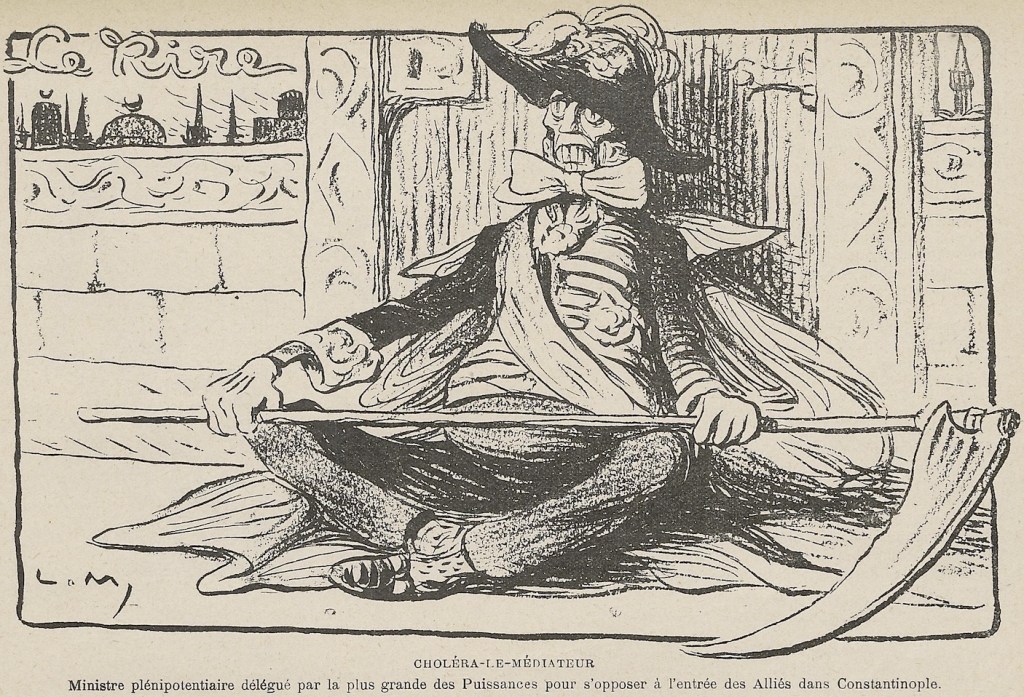
Minister plenipotentiary delegated by the Great Powers to oppose the entry of the Allies in Constantinople.
(Le Rire, Paris, 1912) (See also the Austrian and German entries on this topic.)
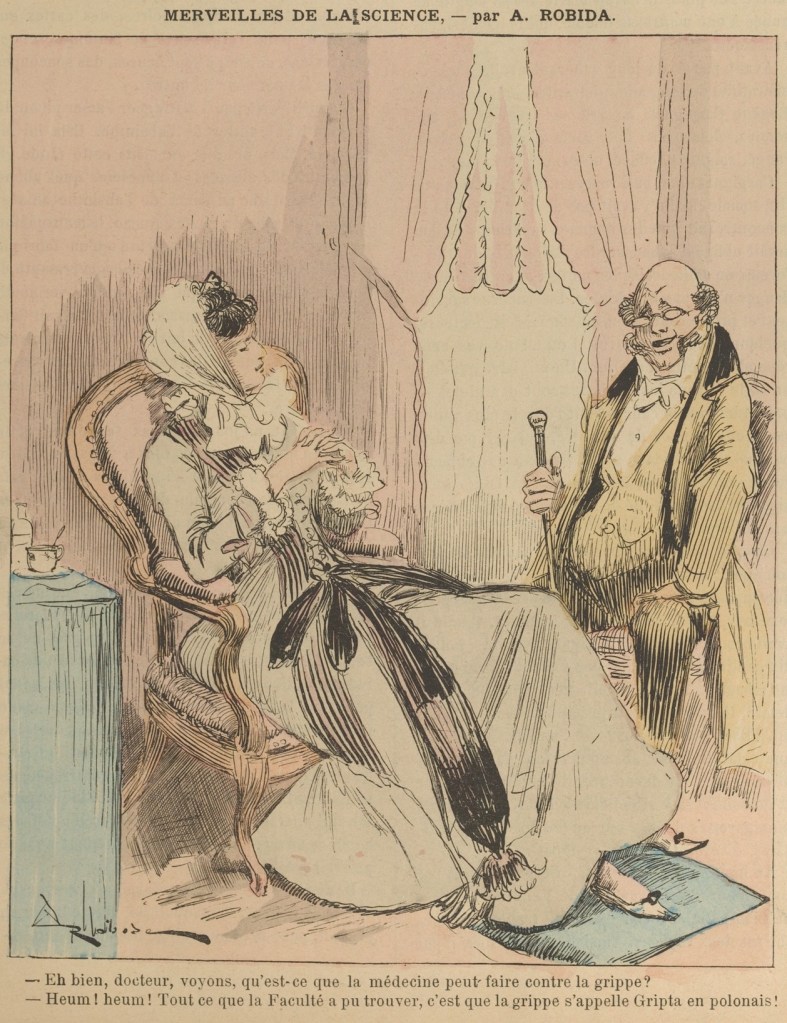
“Well, doctor, let’s see, what can medicine do about the flu?”
“Hum! hum! All that Medical Faculty could find is that the flu is called Gripta in Polish!”
(Le Monde comique, Paris, 1888)
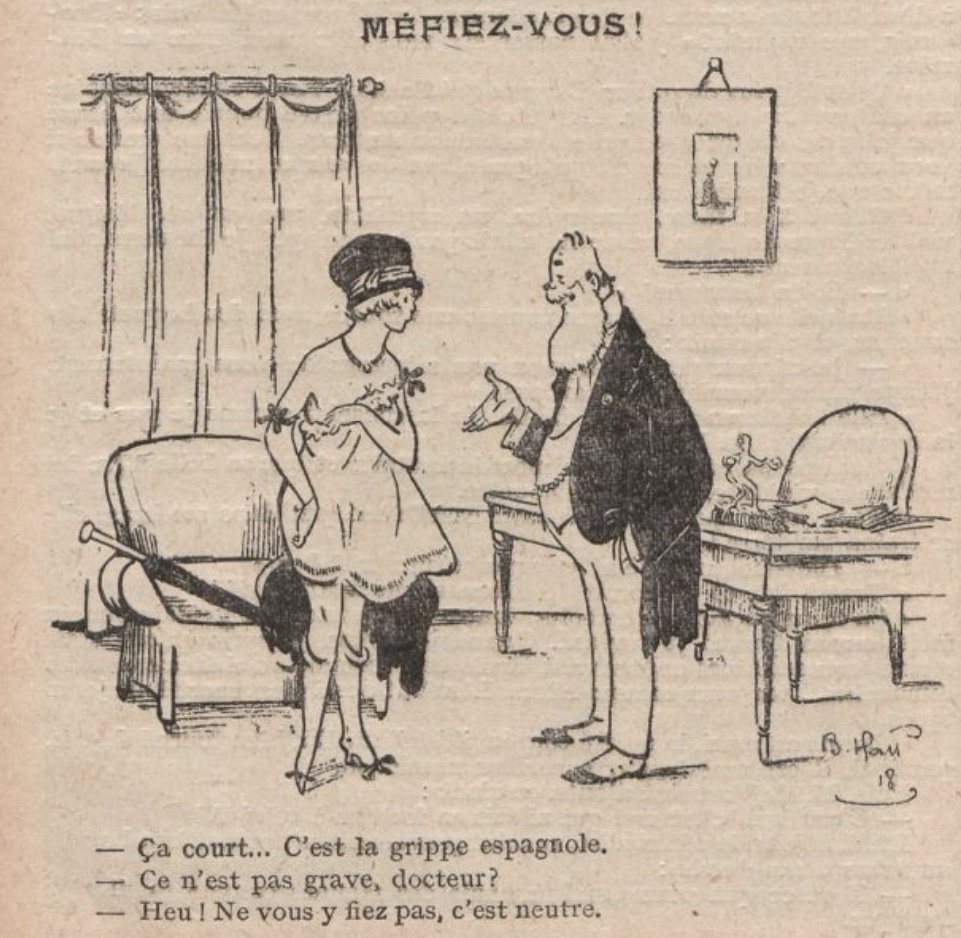
Yet another French pun about Spanish neutrality during the war:
“It won’t last long… It’s the Spanish flu.”
“It’s not serious, is it, doctor?”
“Heh! Don’t be fooled, it’s neutral.”
(Le Régiment, Paris, 1918)
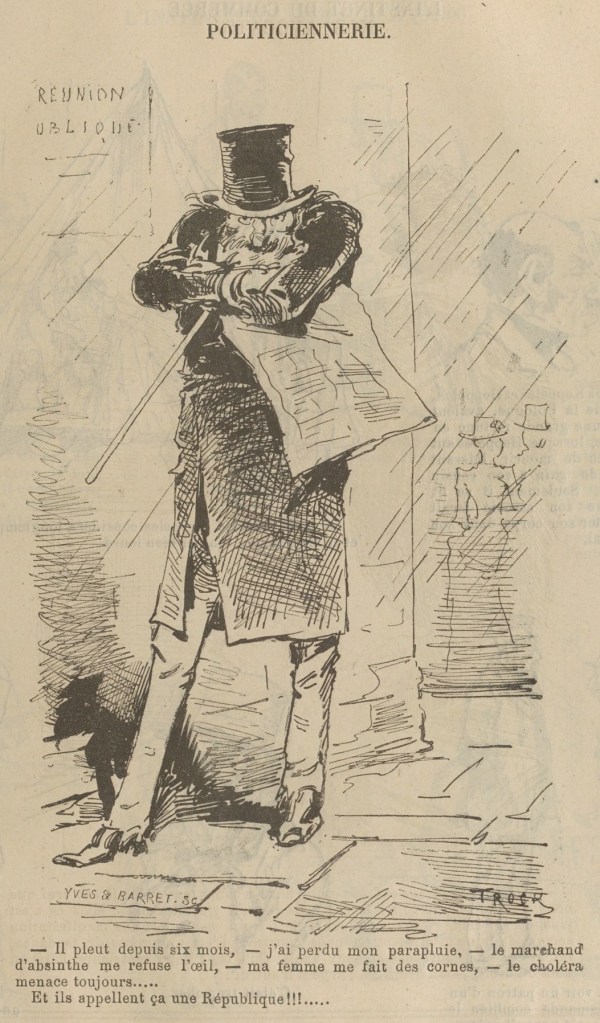
It has been raining for six months, I lost my umbrella, the absinthe merchant refuses to look me in the eye, my wife is stepping out on me, cholera is still threatening…
And they call this a Republic!!!
(Le Monde comique, Paris, 1884)
(Le Régiment, Paris, 1919) (Sexist fare for the troops.)
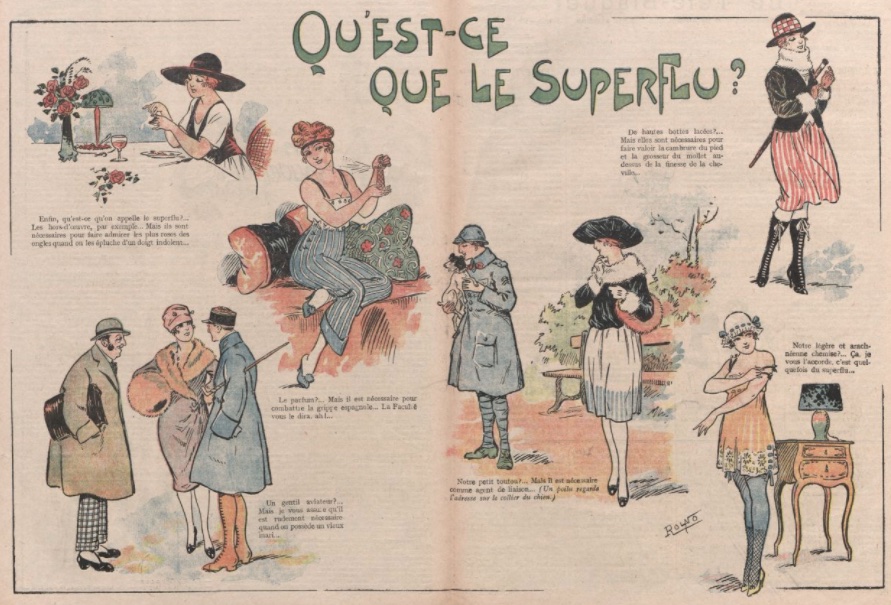
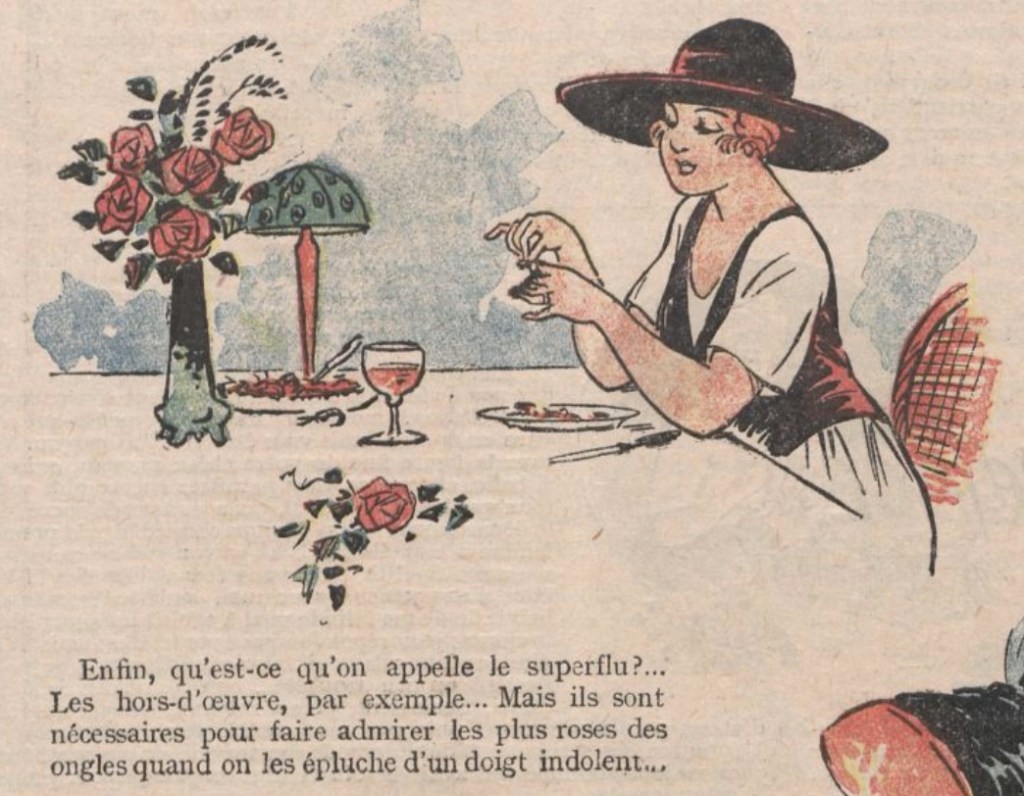
Finally, what do we call superfluous?… Hors-d’oeuvre, for example… But they are necessary to admire the most rosy of the nails when they are unwrapped with an indolent finger…
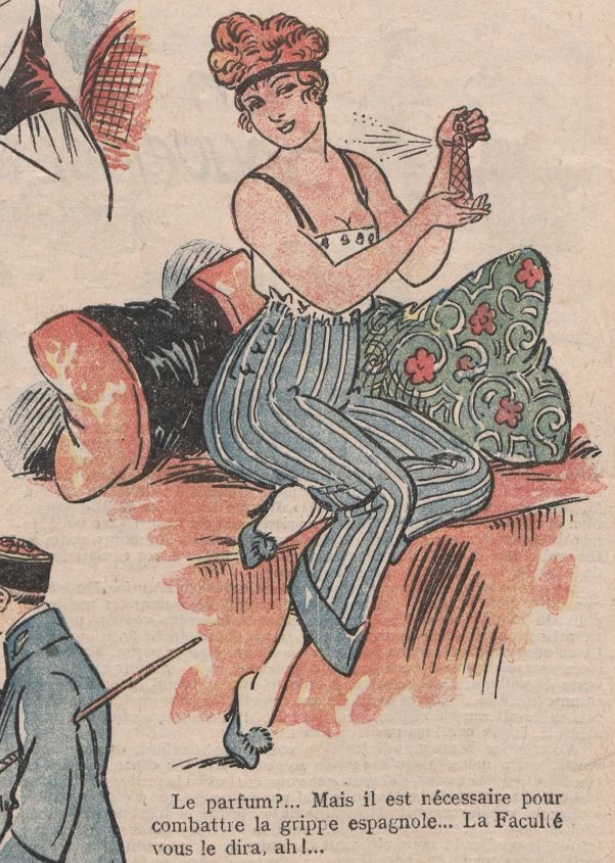
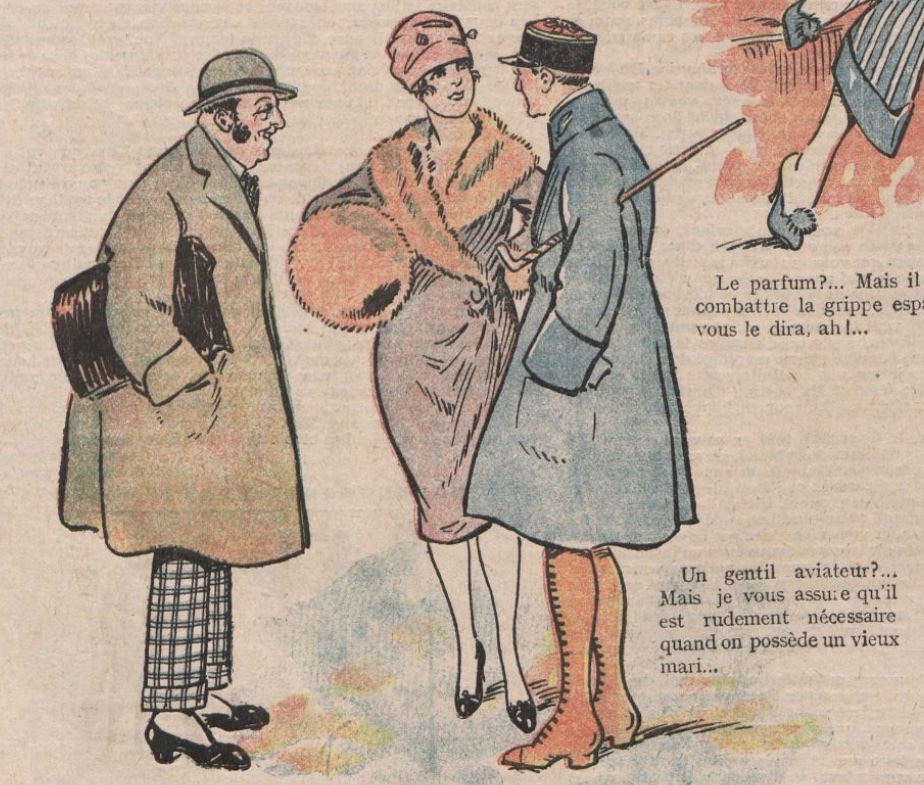
Perfume?… But it is necessary to fight the Spanish flu… The [Medical] Faculty will tell you, ah!…
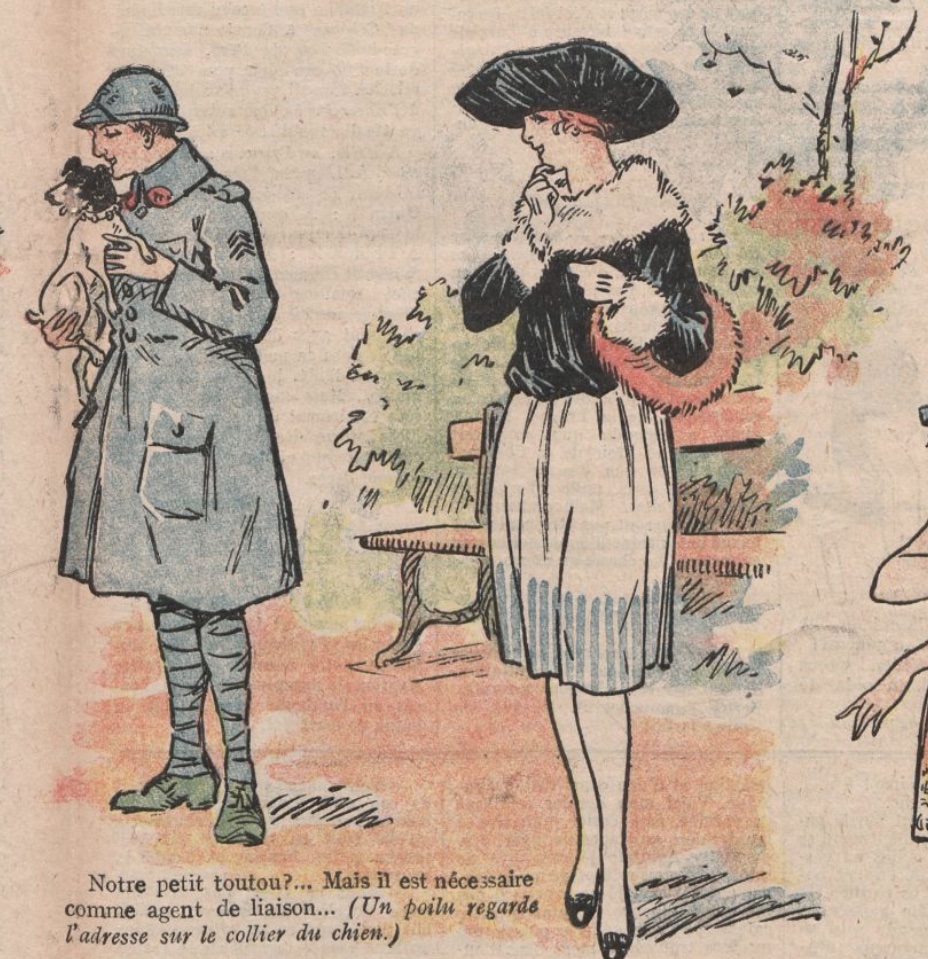
Our little doggie?… But he is needed as a liaison… (A war veteran looks at the address on the dog’s collar.)
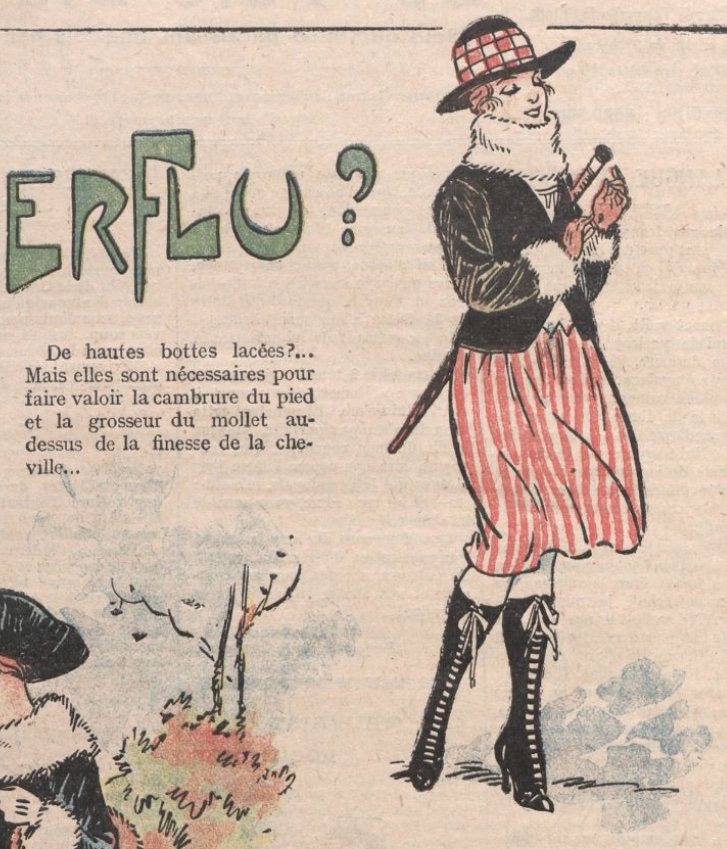
High laced boots?… But they are necessary to emphasize the arch of the foot and the size of the calf above the thinness of the ankle…
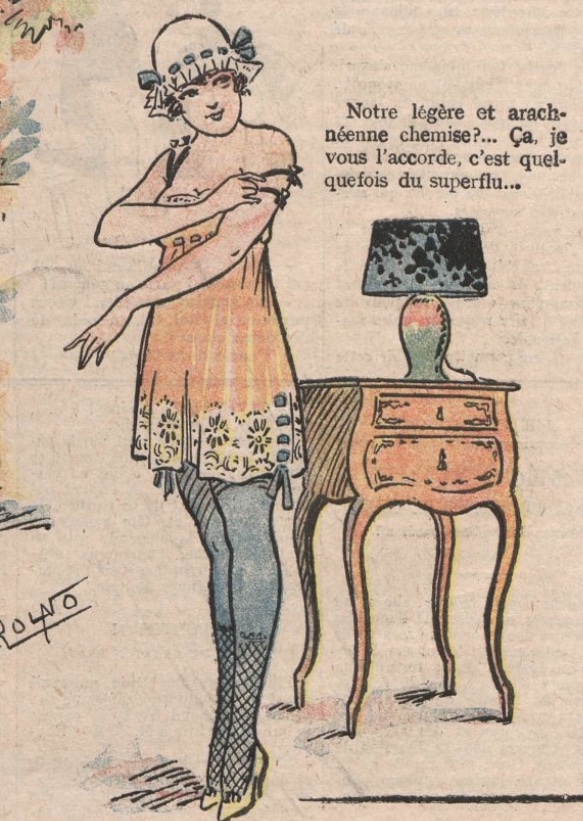
Our light and scanty chemise?… That, I grant you, is sometimes superfluous…
A nice aviator?… But I assure you that it is badly necessary when you have an old husband…
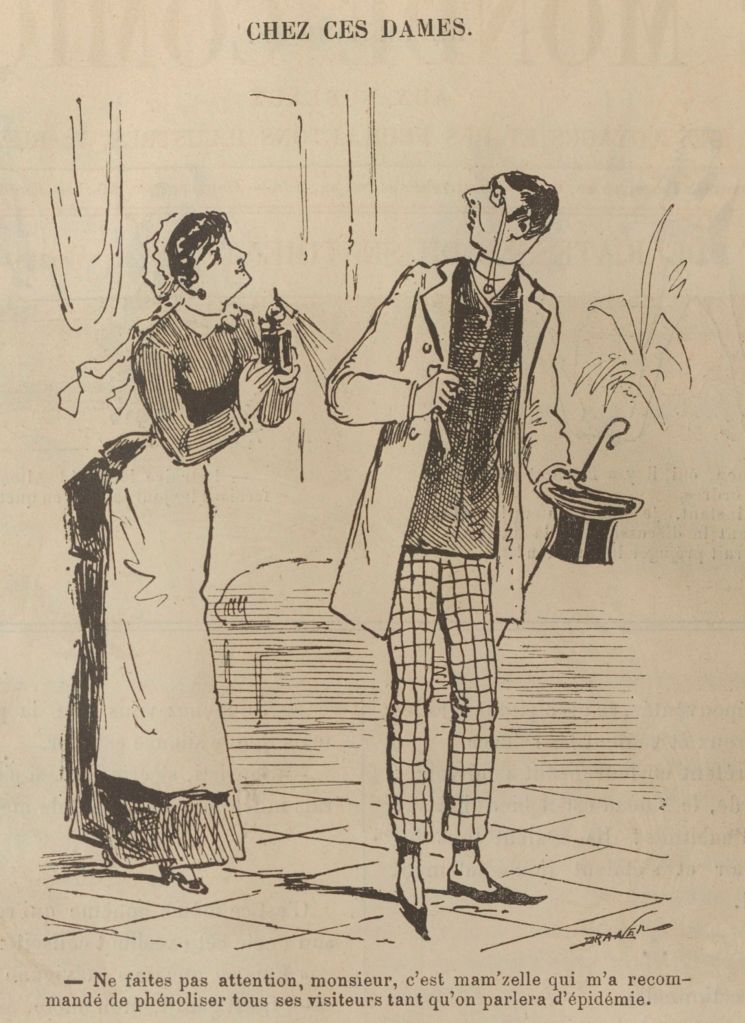
“Pay it no mind, sir, it’s the missy who recommended that I phenolize all her visitors as long as there’s talk of an epidemic.”
(Le Monde comique, Paris, 1884)
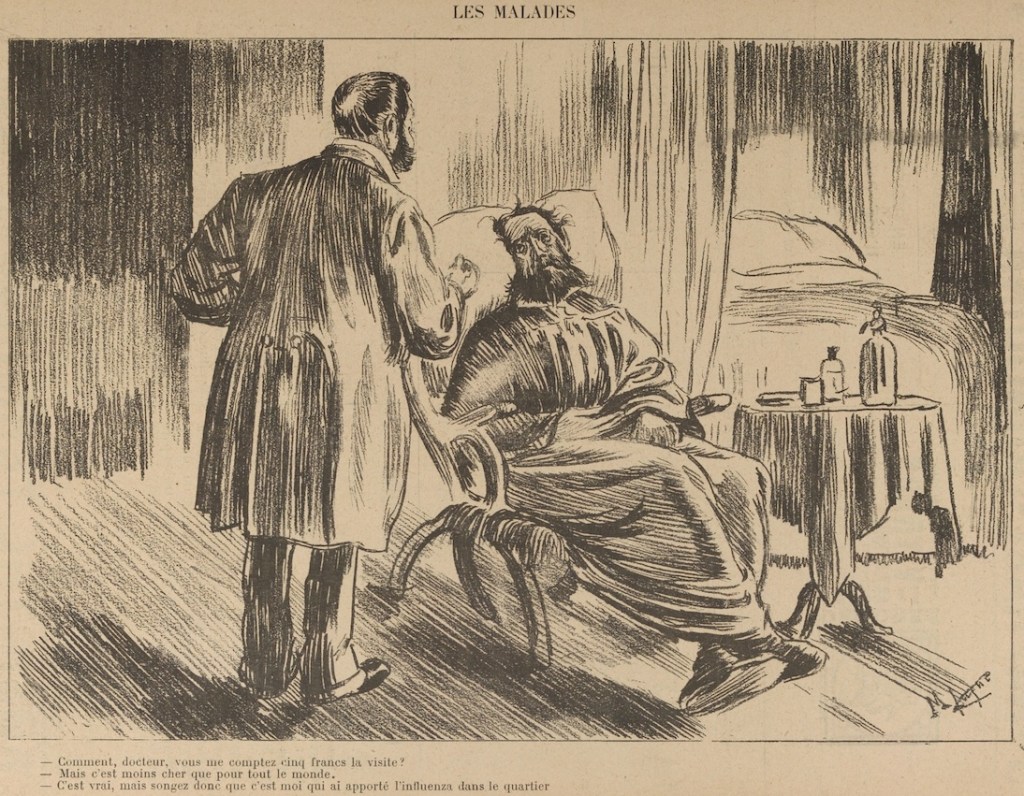
“Doctor, how are you charging me five francs for the visit?”
“But that’s cheaper than for everyone else.”
“That’s true, but think about the fact that I was the one who brought the influenza to the neighborhood.”
(Le Monde comique, Paris, 1896) (See this similar German cartoon as well as this nearly identical French cartoon three decades later.)
“It is frightening, my dear; it seems that the plague is approaching us.”
“Your mother is coming to see us?”
(Le Monde comique, Paris, 1879)

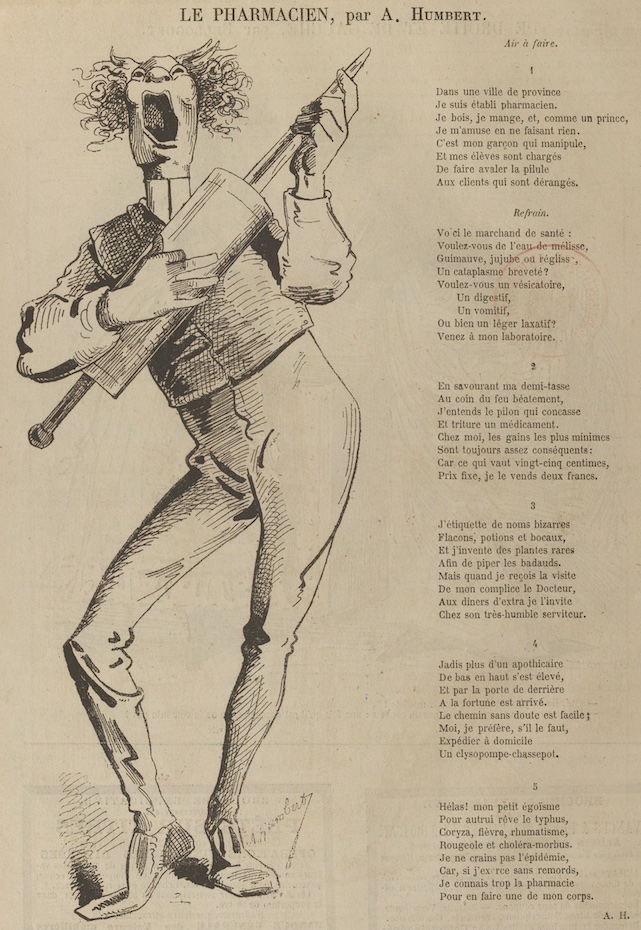
Continuing our clystère theme, a few verses from Le Monde comique (Paris, 1869).
In a provincial town
I am an established pharmacist.
I drink, I eat, and, like a prince,
I have fun doing nothing.
It’s my boy who manipulates [the clystère],
And my students are charged
With getting the pill swallowed
In customers who are upset.
Alas! my little selfishness
For others dreams of typhus,
Coryza, fever, rheumatism,
Measles and cholera morbus.
I am not afraid of the epidemic,
Because, if I carry on without remorse,
I know the pharmacy too well
To make one [an epidemic?] of my body.
(Le Régiment, Paris, 1919)
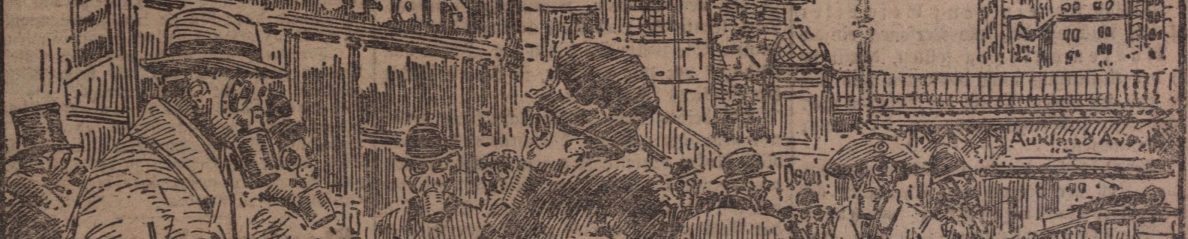
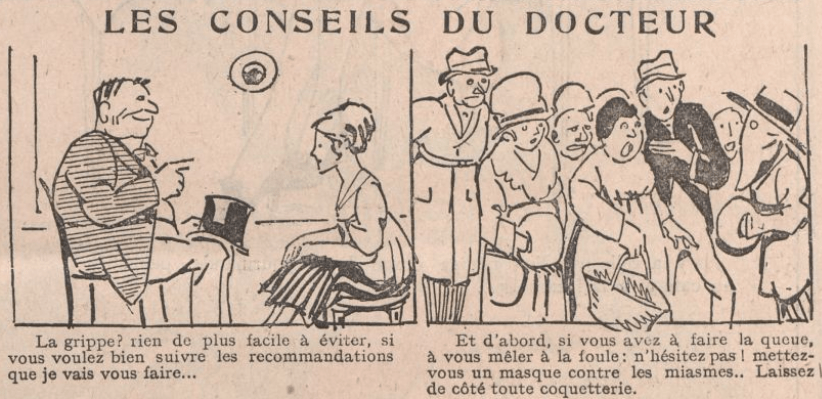
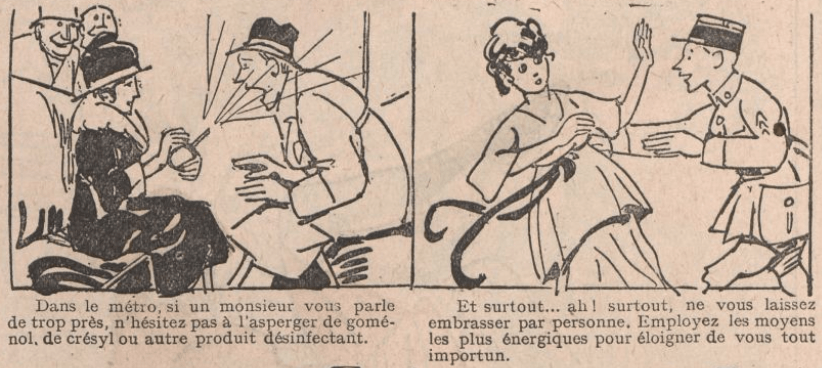
The flu? Nothing could be easier to avoid, if you would follow the recommendations I’m making for you…
And first of all, if you have to get in line, to join the crowd: don’t hesitate! Put on a mask against the miasma… Leave all coquetry aside.
In the subway, if a man speaks too close to you, do not hesitate to spray him with Goménol, Cresyl, or other disinfectant products.
And above all … ah! above all, don’t let anyone kiss you. Use the most energetic means to drive any intrusive person away from you.
Take baths of phenic acid solution, phenol, and other horrors.
Ah! no, no, rather a hundred times the flu: kiss me quickly, my darling… all night long I’m going to have nightmares about the idea of everything I would have to do not to catch it!
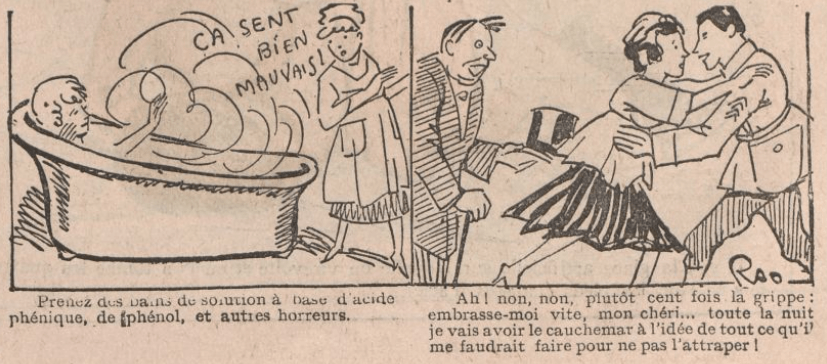
(Le Régiment, Paris, 1919)
We could very well have taken hill 304… but not be able to take the Metro.
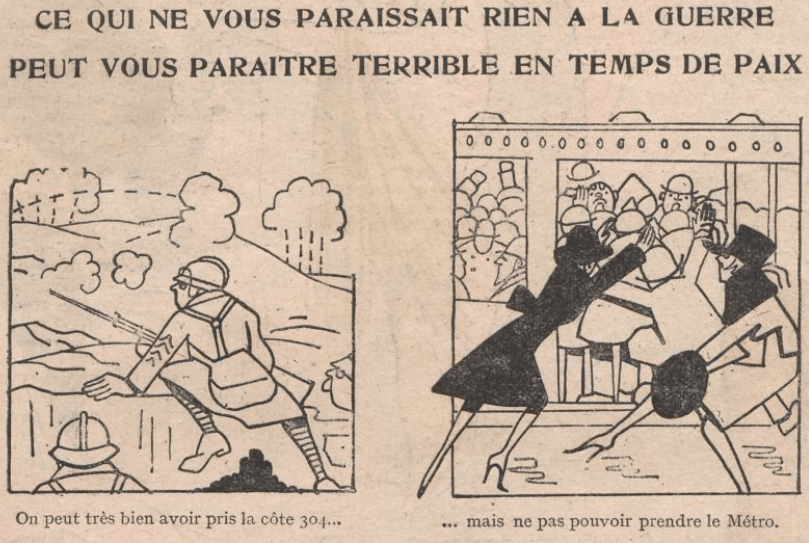
One may have resisted Kraut attacks… …but not resist French attacks.

There are the exploding bombs we escape… We are killed by certain explosions… of endearment.
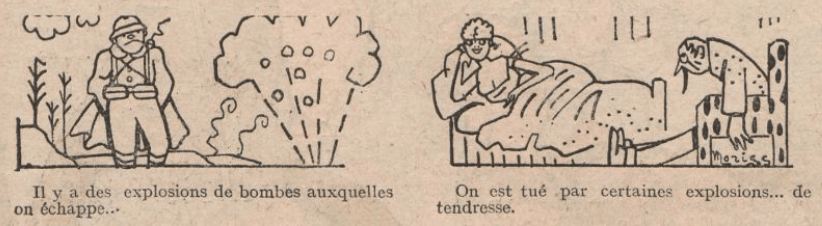
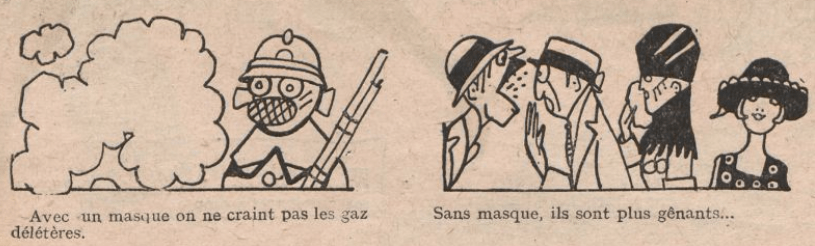
With a mask we are not afraid of noxious gases. Without a mask, they are more annoying…
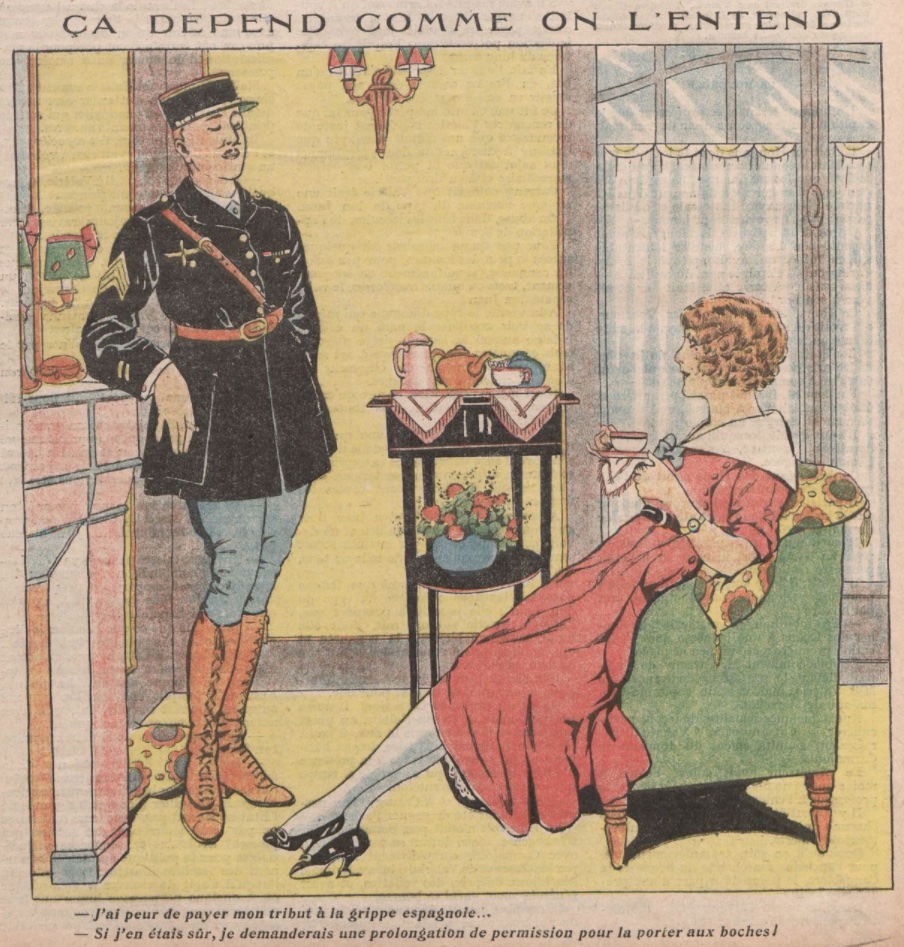
“I’m afraid to pay my tribute to the Spanish flu…”
“If I was sure, I would ask for an extension of permission to carry it to the Krauts!”
(Le Régiment, Paris, 1918)
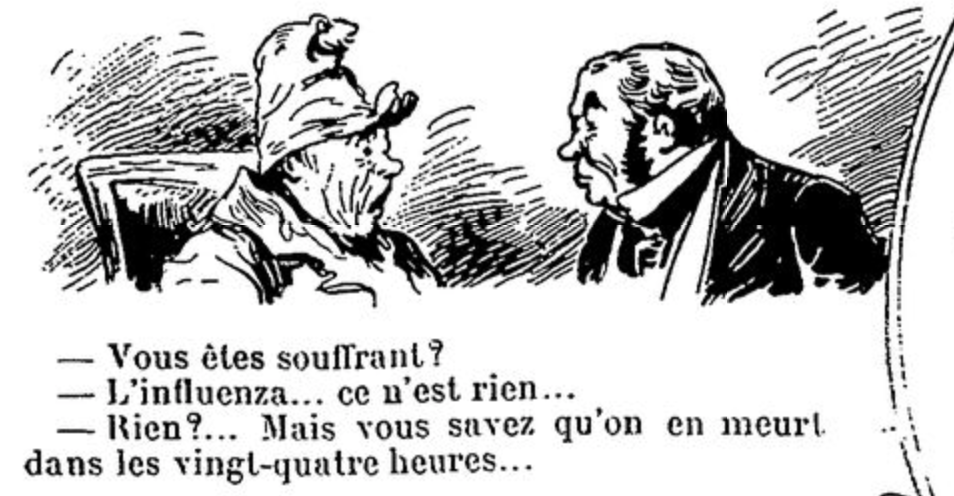
“What are you ailing from?”
“Influenza… it’s nothing…”
“Nothing?… But you know that one dies within twenty-four hours…”
(Le Journal amusant, Paris, 1892)
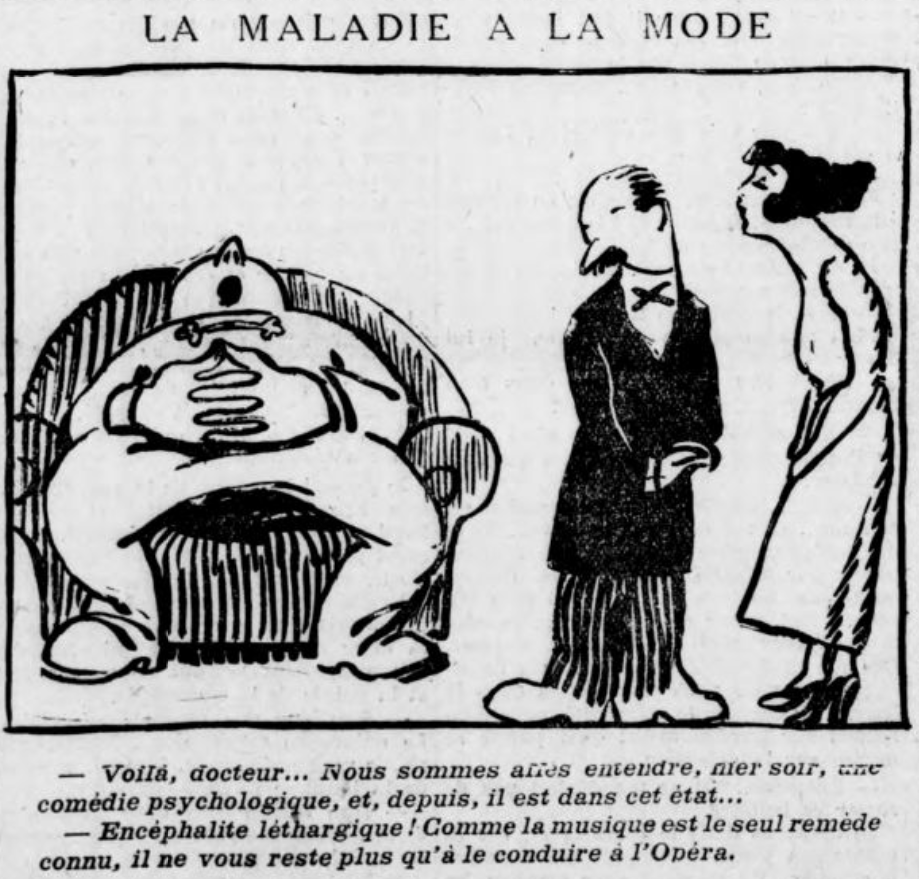
“There you are, doctor… We went to attend a psychological comedy last night, and since then he has been in this state…”
“Encephalitis lethargica! Since music is the only known cure, all you have to do is take him to the opera.”
(L’Avenir, Paris, 1920)
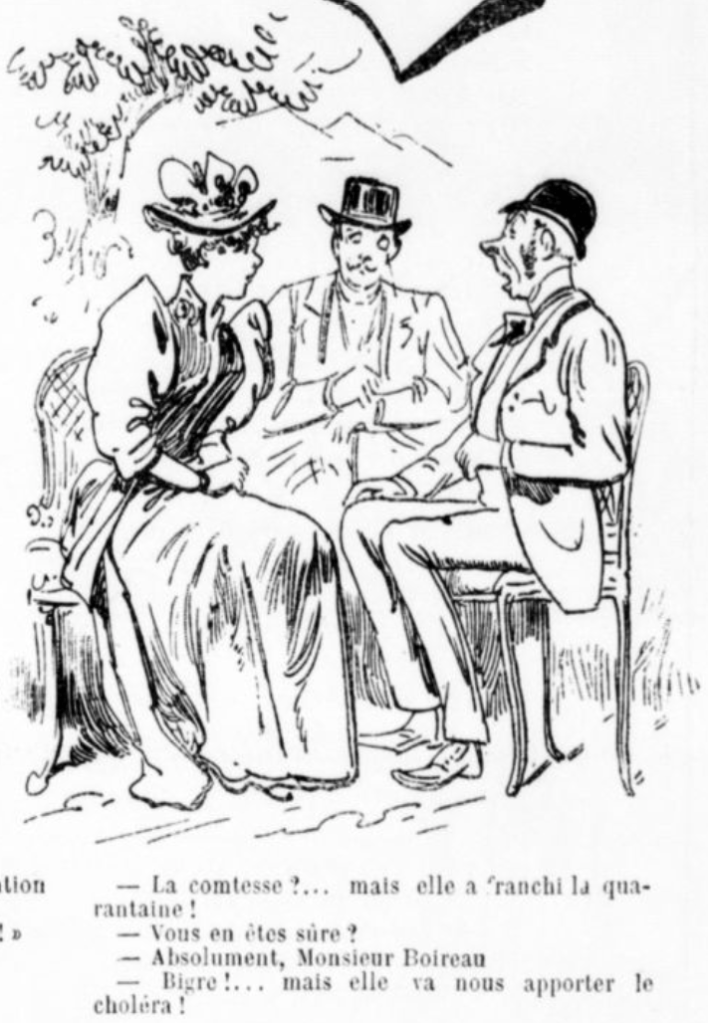
“The countess?… but she was put in quarantine!”
“Are you sure?”
“Absolutely, Mr. Drinker.”
“Damn!… but she will bring us cholera!”
(Le Triboulet, Paris, 1892)
 Sic Transit Pestilentia