“He says he has yellow fever, only the major doesn’t want to acknowledge it.”
“Nothing special, a blue [rookie] with yellow fever, he should be all green!”
(Le Régiment, Paris, 1915)
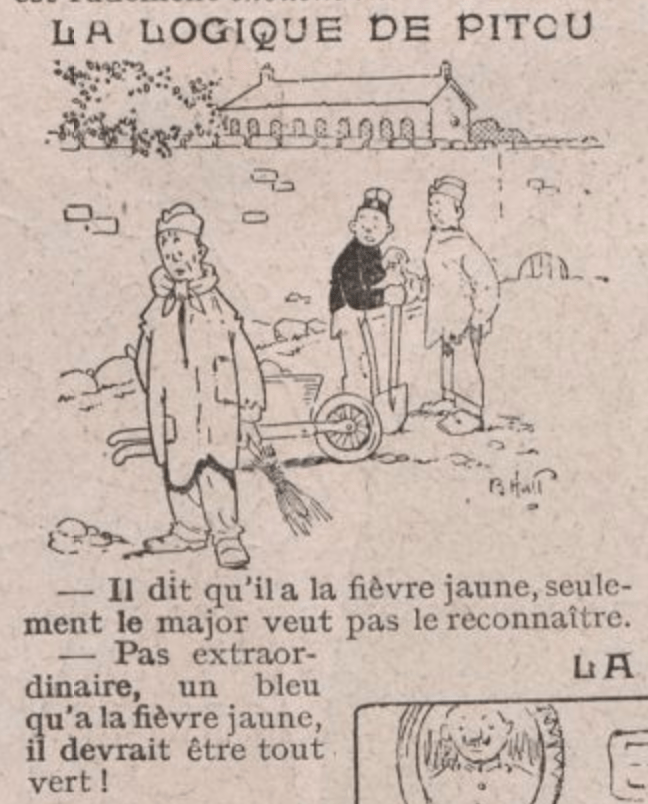
“He says he has yellow fever, only the major doesn’t want to acknowledge it.”
“Nothing special, a blue [rookie] with yellow fever, he should be all green!”
(Le Régiment, Paris, 1915)
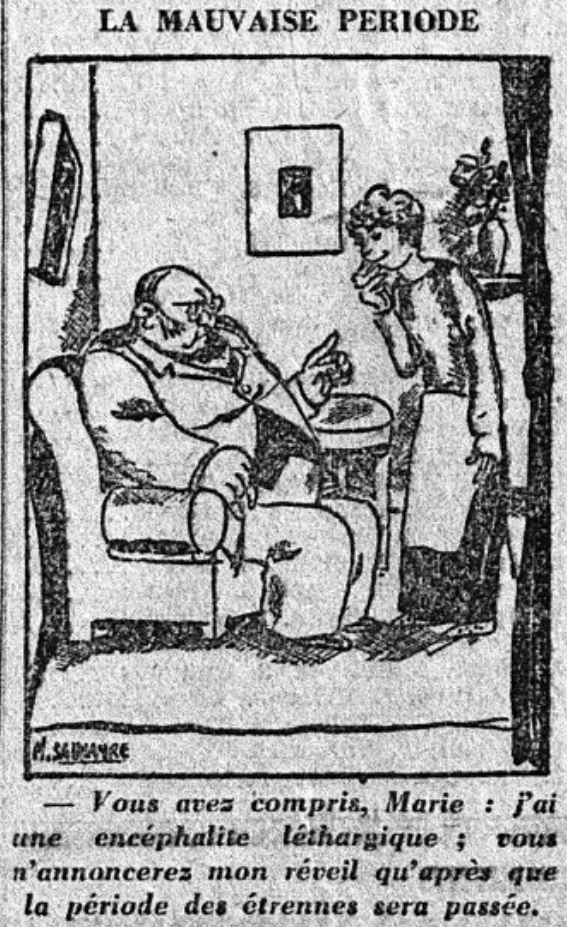
Make sure you’ve understood, Marie: I have encephalitis lethargica; you will not make any wake-up calls until after the end of the holiday season.
(Le Siècle, 1926)
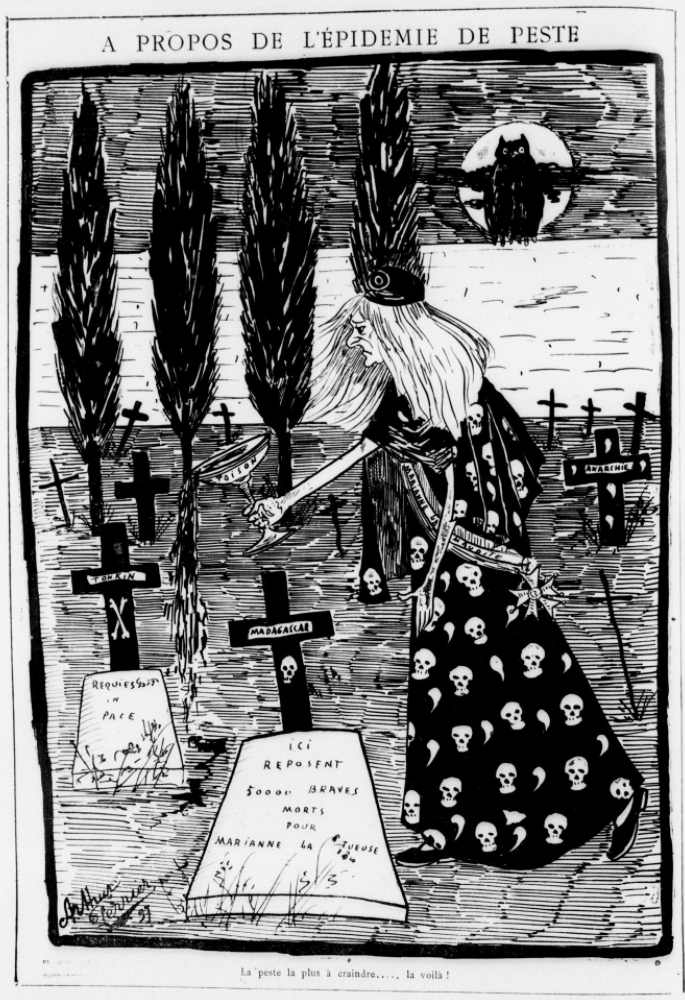
“The plague to fear the most… here it is!”
(The woman’s sash reads “Marianne the cursed,” and given the tombstones, this seems like a gesture toward the costs of French colonialism. In 1897 there was news of an outbreak of plague in India, sparking fears that it would make an appearance in Europe. The tenth international sanitary conference was held in Venice that same year, devoted to discussion of bubonic plague.)
(Le Triboulet, Paris, 1897)
(Le Journal, Paris, 1920)
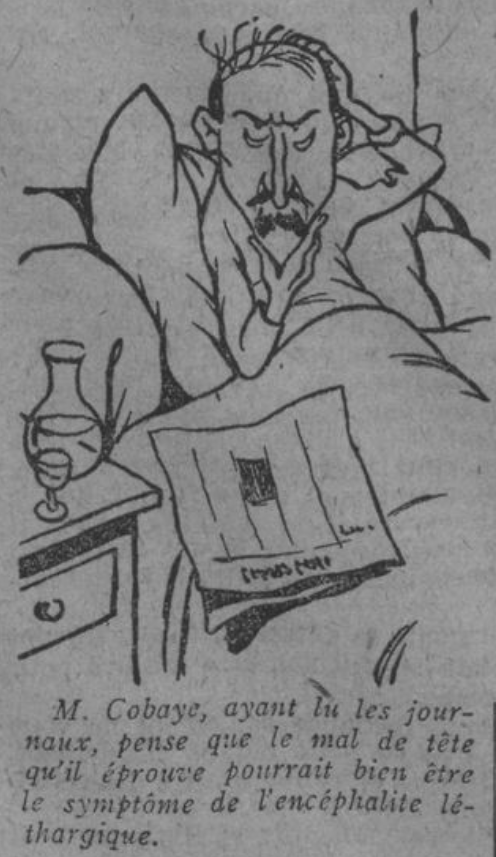
Mr. Guineapig, having read the newspapers, thinks that the headache which he is experiencing could well be the symptom of encephalitis lethargica.
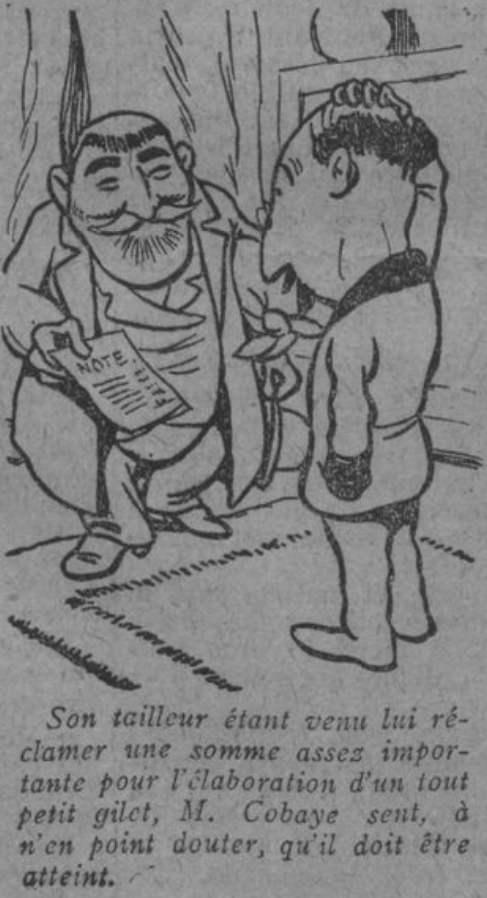
His tailor having come to ask him for a fairly large sum for developing a very small waistcoat, Mr. Guineapig feels, without a doubt, that he must be suffering from it.
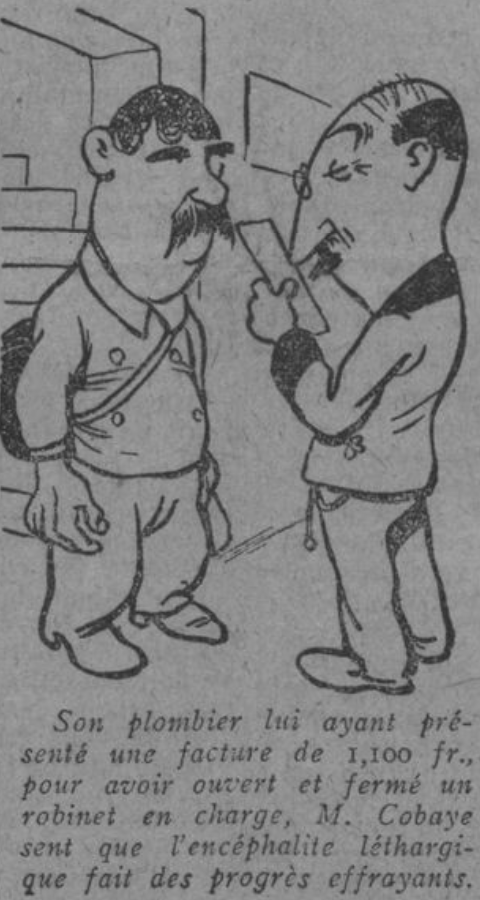
His plumber having presented him with an invoice for 1,100 francs, responsible for having opened and closed a faucet, Mr. Guineapig feels that encephalitis lethargica is making frightening progress.
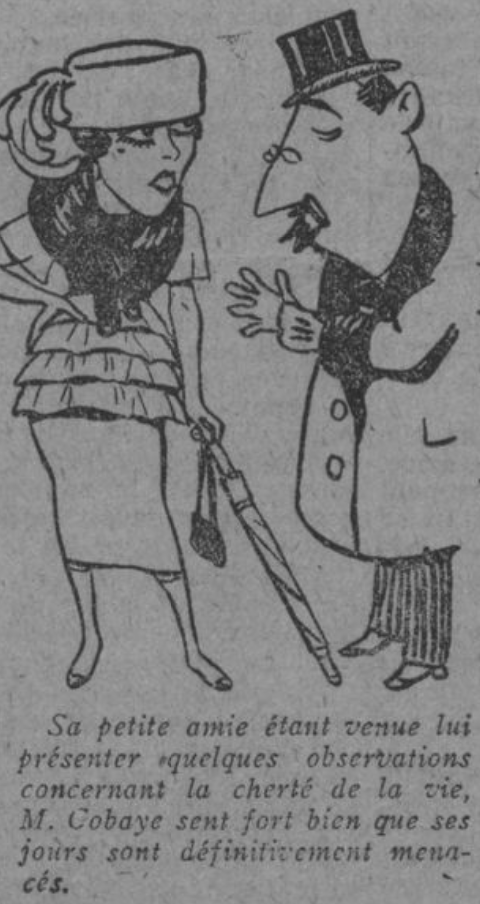
His girlfriend having come to present him with some observations concerning the high cost of living, Mr. Guineapig feels quite sure that his days are definitely numbered.
Fortunately, having received a visit from a debtor who brought him a small deposit, Mr. Guineapig feels that encephalitis lethargica is not so dangerous and that it can be cured very well in some cases.
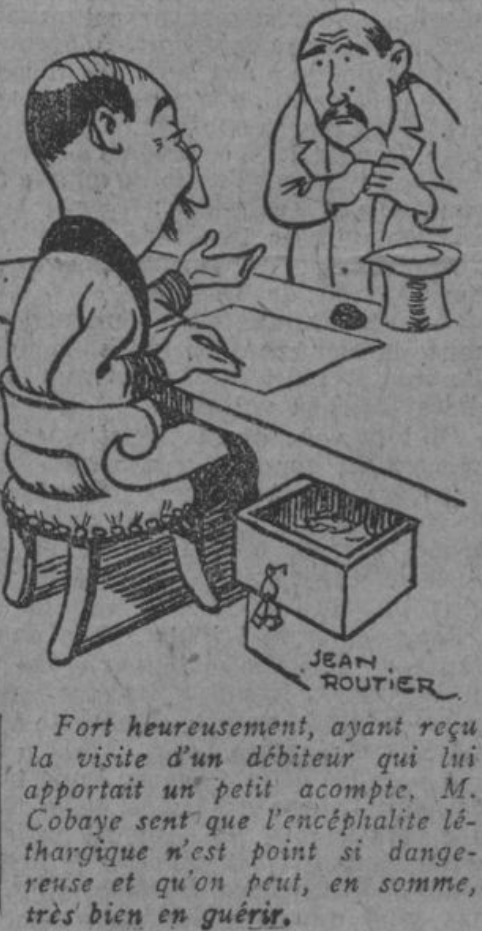
(Le Journal amusant, Paris, 1929) (French stereotypes are alive and well here.)
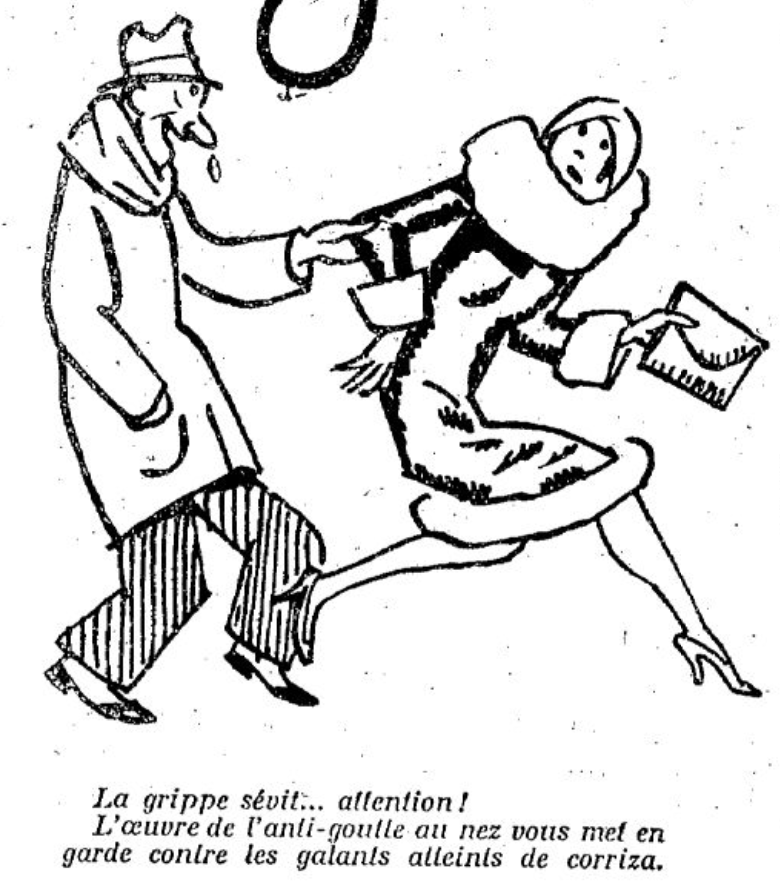
The flu is waning … beware!
The work of the anti-drip on the nose warns you against the gallants suffering from coryza.
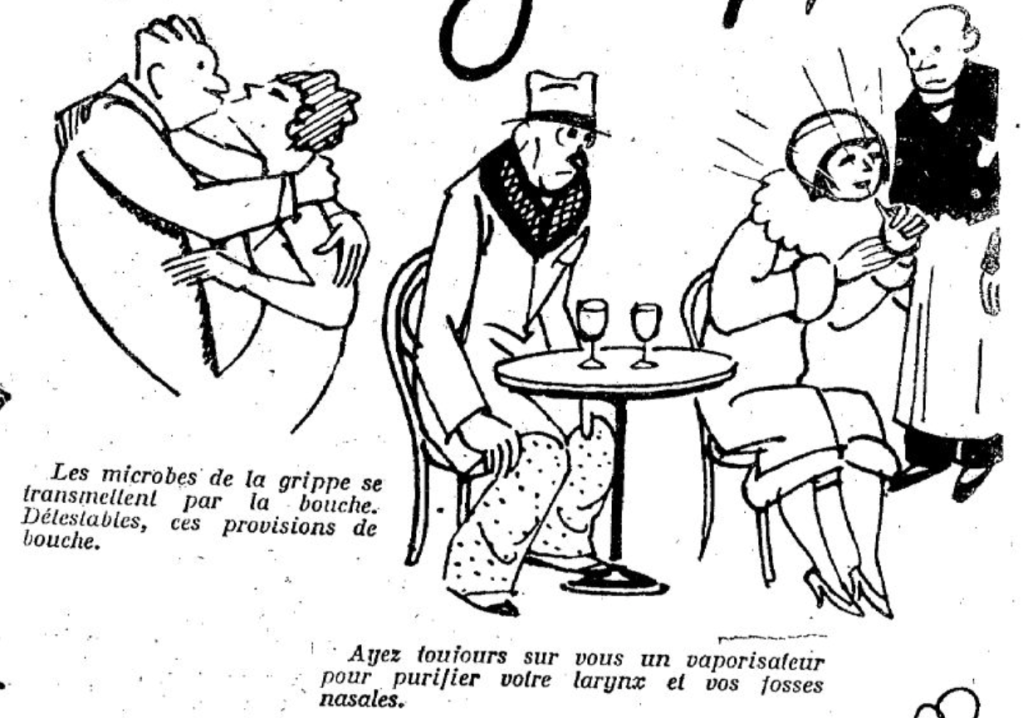
The flu germs are transmitted by the mouth. Detestable, these supplies of mouth.
Always carry a vaporizer to clean your larynx and nasal passages.
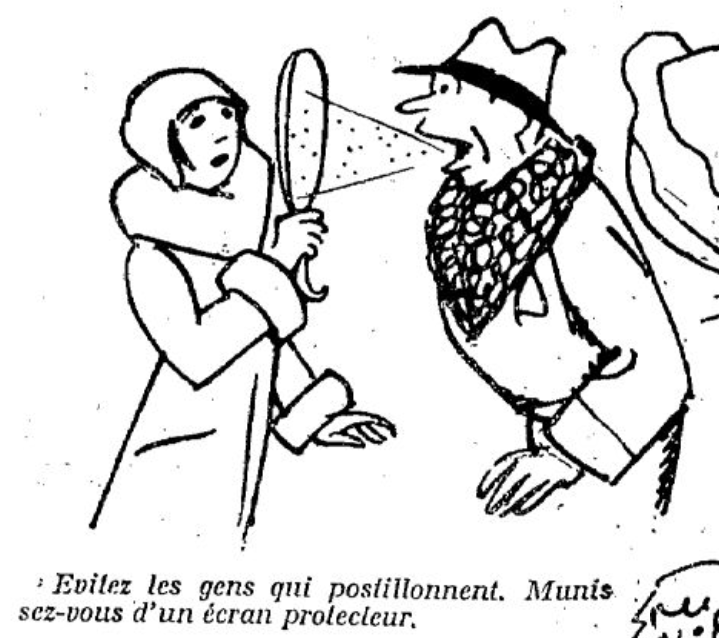
Avoid people who sputter. Use a protective screen.
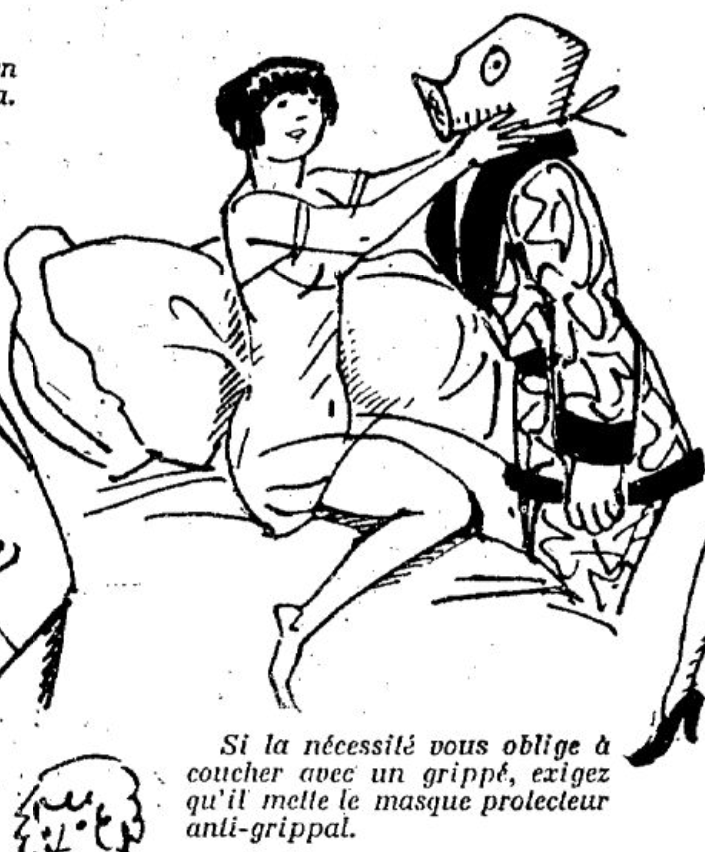
If you must sleep with someone who has the flu, demand that he wear a protective mask.
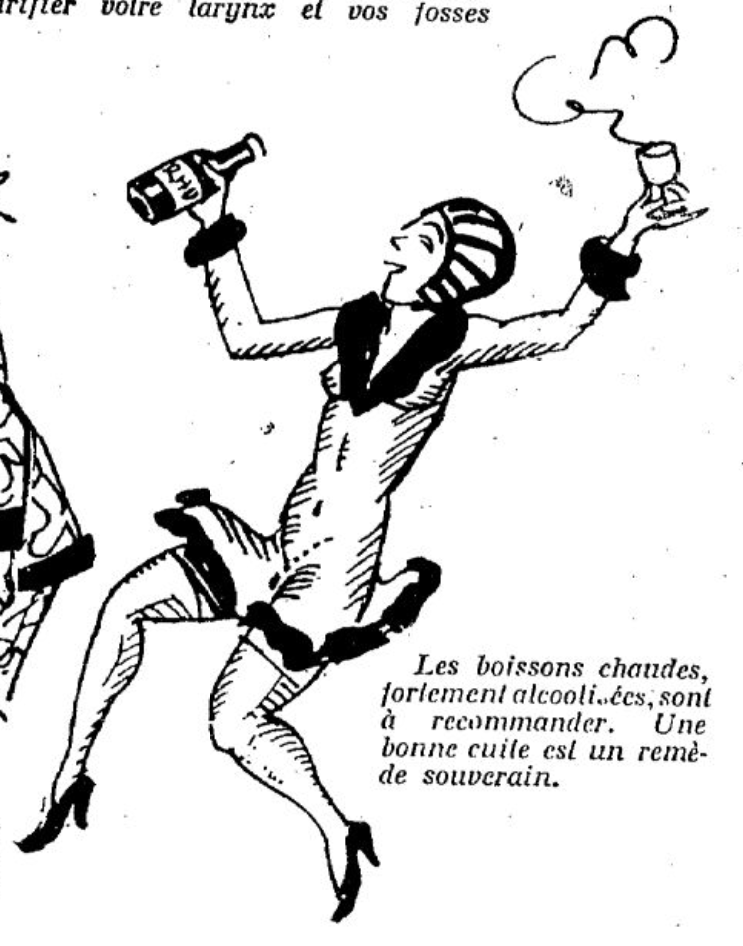
Hot drinks, strongly alcoholic, are recommended. A good meal is a sovereign remedy.
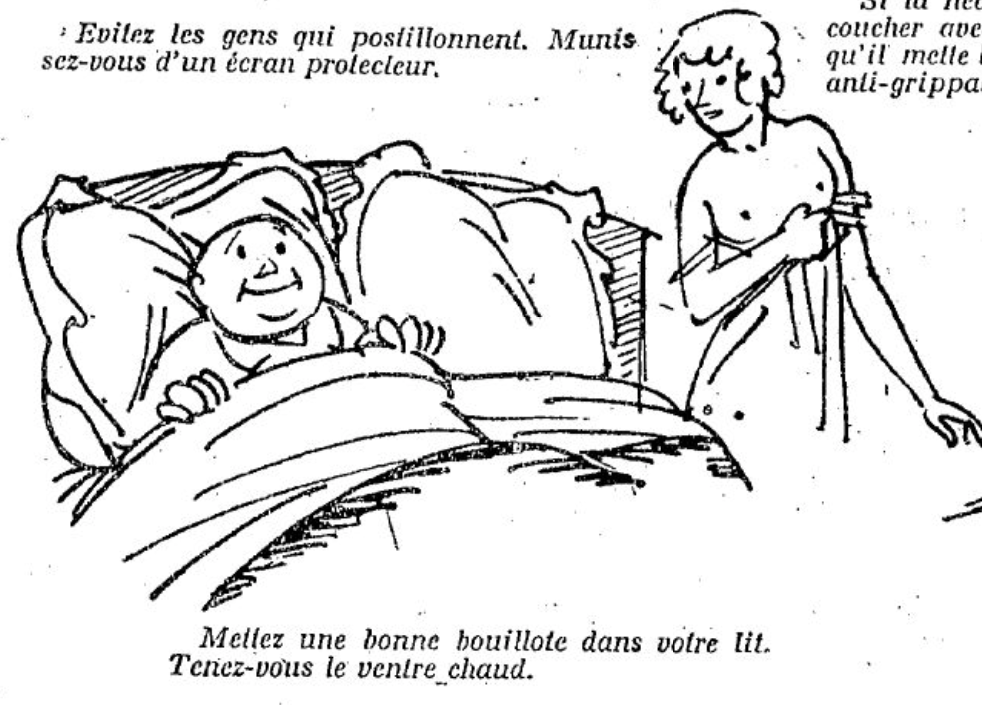
Put a good hot water bottle in your bed. Keep your stomach warm.
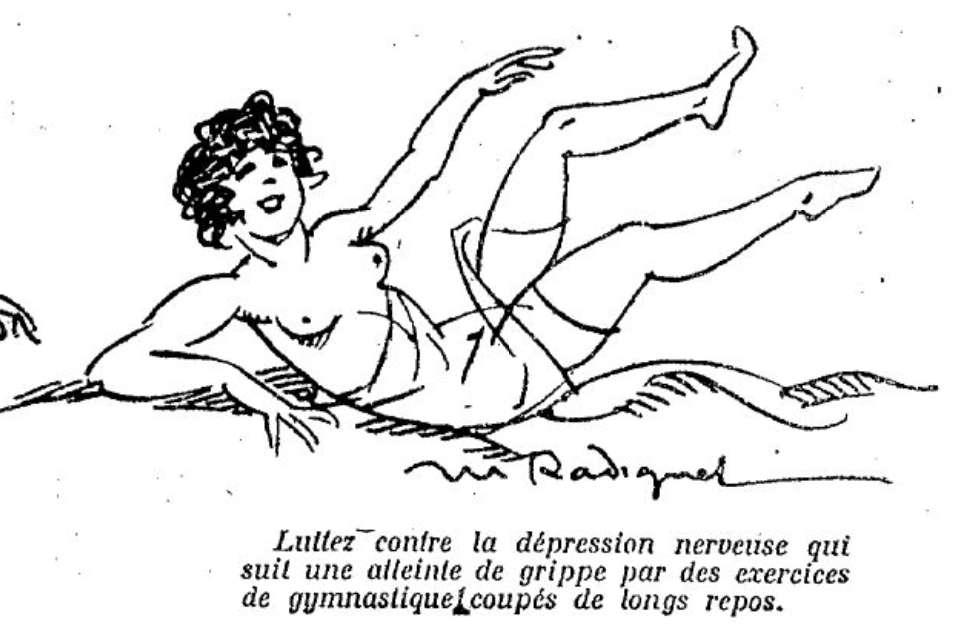
Fight against the nervous breakdown which follows a flu attack through gymnastic exercises broken by long rests.
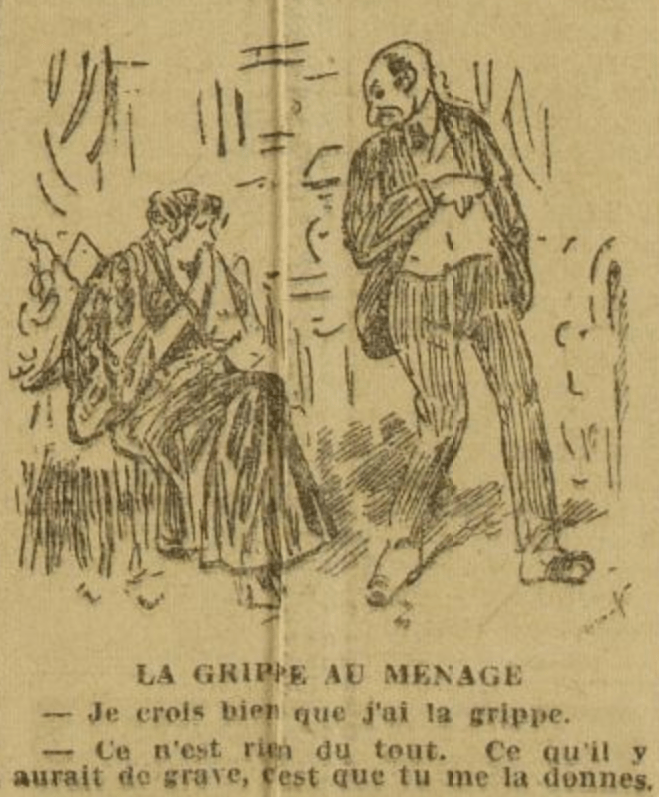
“I’m pretty sure I have the flu.”
“It’s nothing at all. What would be serious is if you were to give it to me.”
(La Dépêche, Toulouse, 1933)
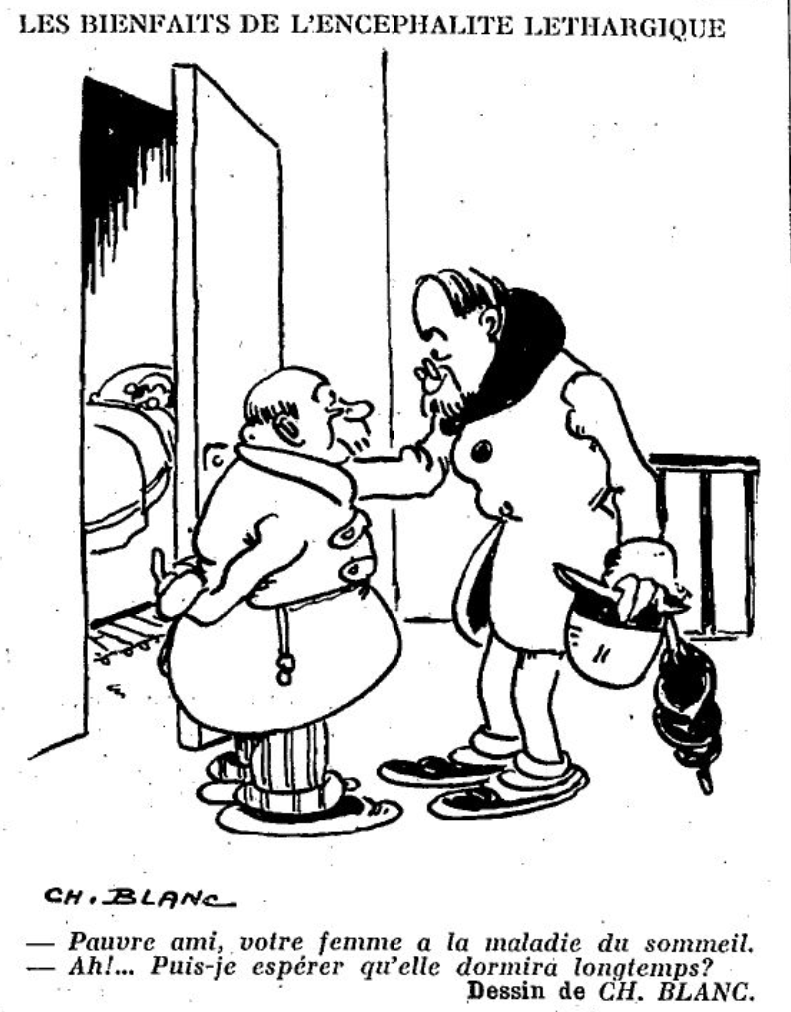
“Poor fellow, your wife has the sleeping sickness.”
“Ah!… Can I hope that she will sleep for a long time?”
(Le Journal amusant, Paris, 1920)
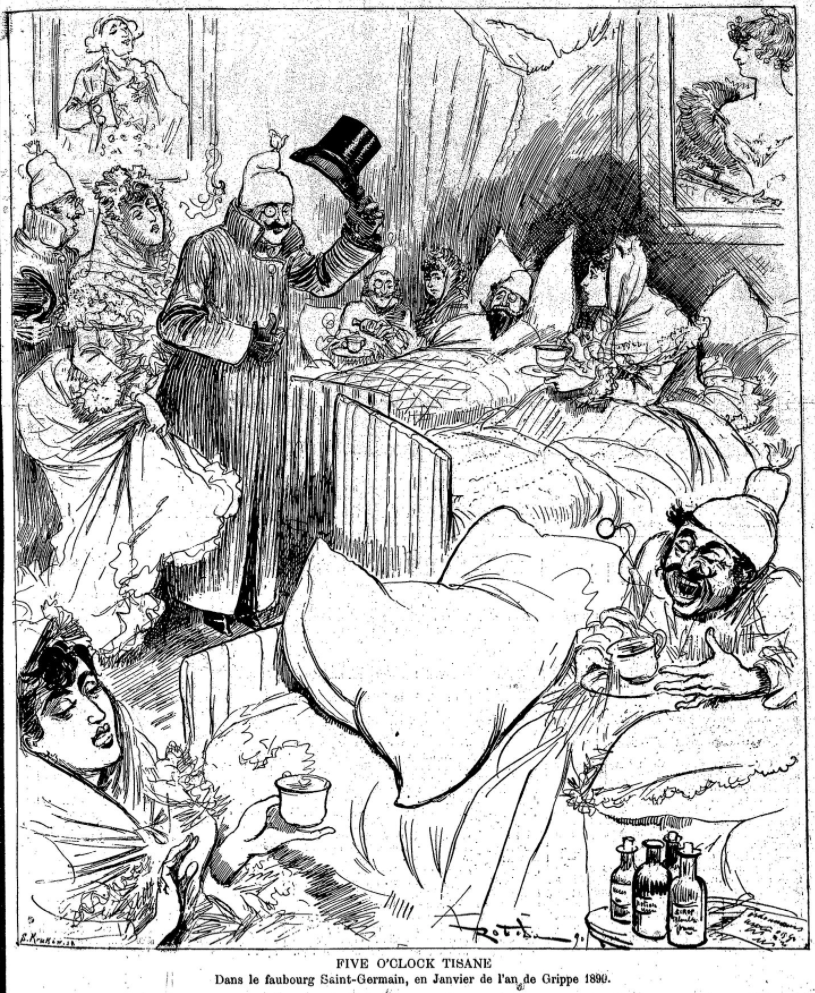
in the faubourg Saint-Germain, in January in the year of the Flu 1890
(La Caricature, Paris, 1890)
(Le Triboulet, Paris, 1884)
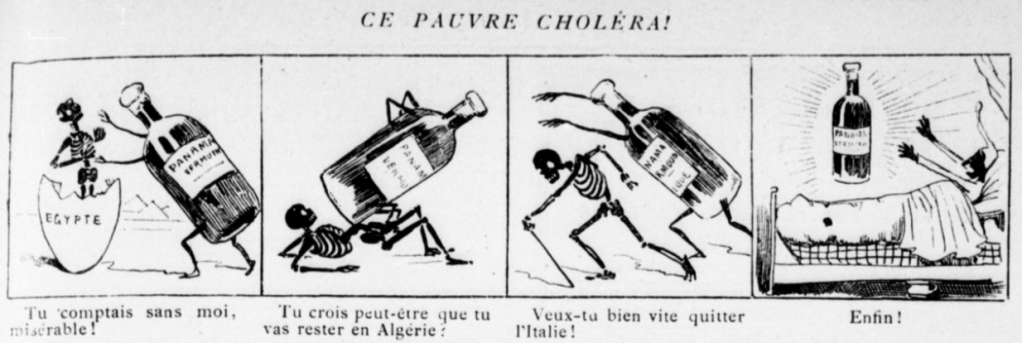
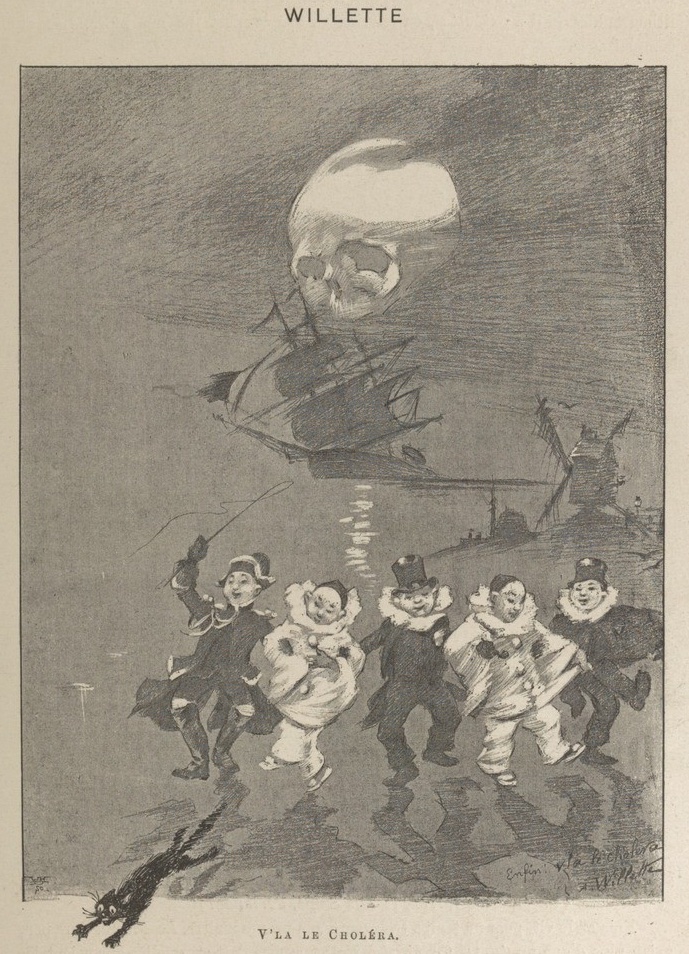
You didn’t count on me, wretch!
You thought you might be able to take a break in Algeria?
Would you like to leave Italy soon!
Finally! (What the Panama Vermouth pursuing the cholera figure is meant to signal is not entirely clear to me, but at the height of French attempts to dig a canal through Panama, huge quantities of quinine were consumed to fight tropical diseases, and it was common to dissolve sulphate of quinine in vermouth for consumption every morning before breakfast.)
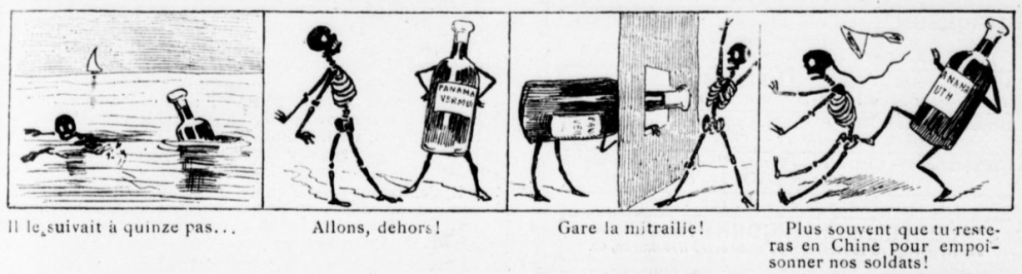
He followed him fifteen paces behind…
Come on, outside!
Beware of the grapeshot!
More often than you will stop in China to poison our soldiers!

(The “anticholera Panama Vermouth” would appear to confirm the assumption above.)
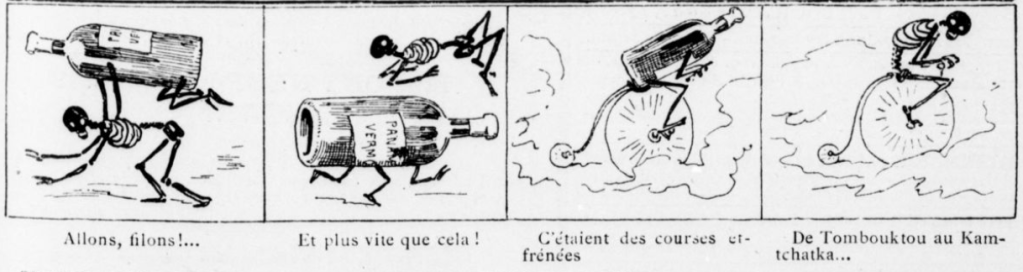
Come on, let’s get away!…
And faster than that!
They were frantic races
from Timbuktu to Kamchatka…
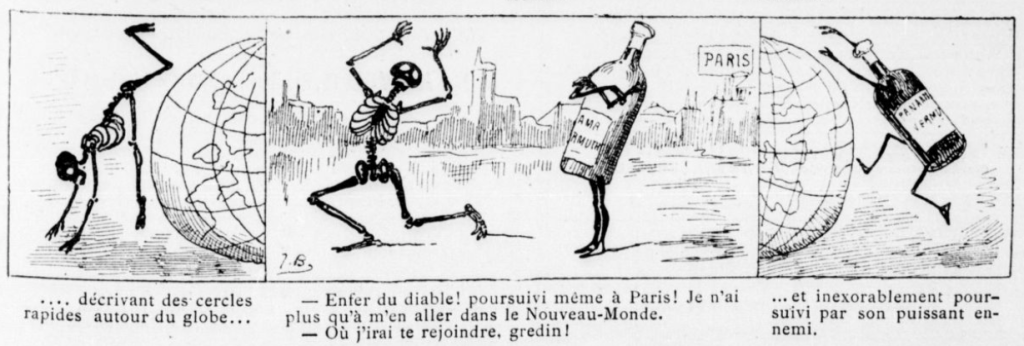
…describing rapid circles around the globe…
“What the hell! Chasing me even to Paris! I’ll just have to go to the New World.”
“Where I will join you, rascal!”
…and inexorably pursued by his powerful enemy.
(A cartoon by Adolphe Willette in Arsène Alexandre, L’art du rire et de la caricature, 1892)
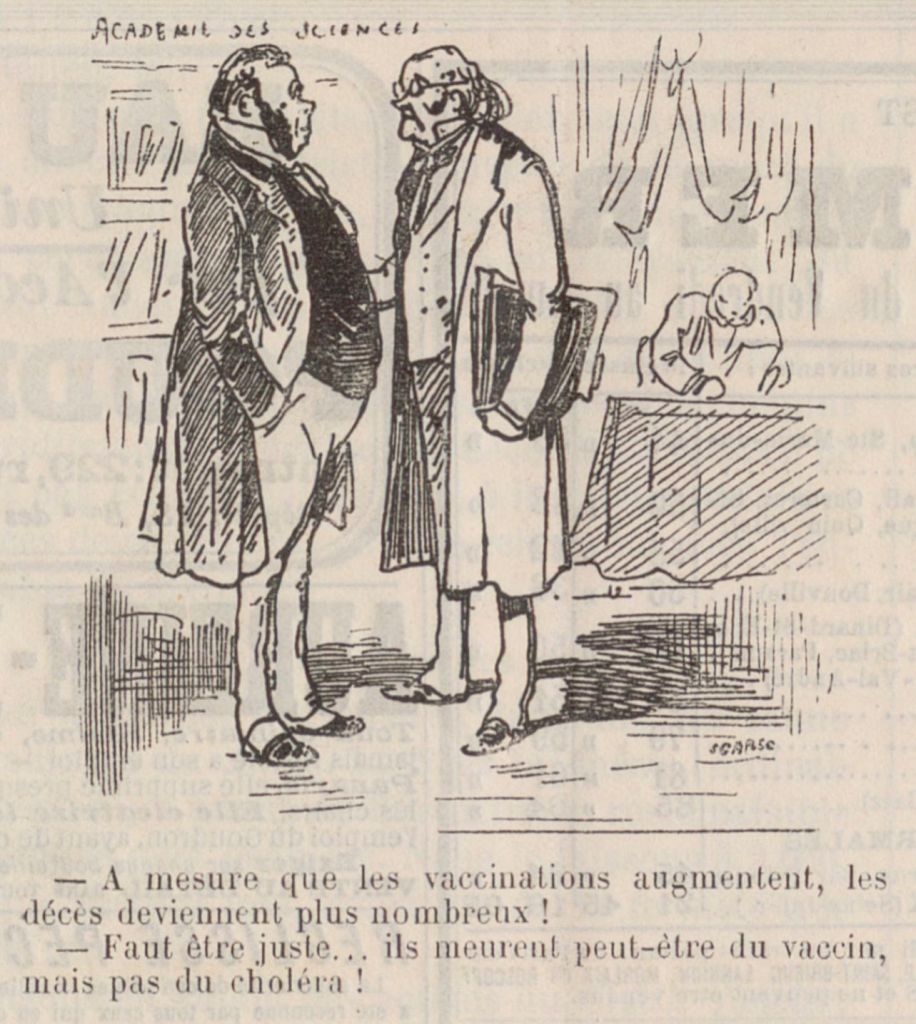
“As vaccinations increase, deaths are becoming more numerous!”
“You have to be fair… they might be dying from the vaccine, but not from cholera!”
(Le Charivari, Paris, 1885)
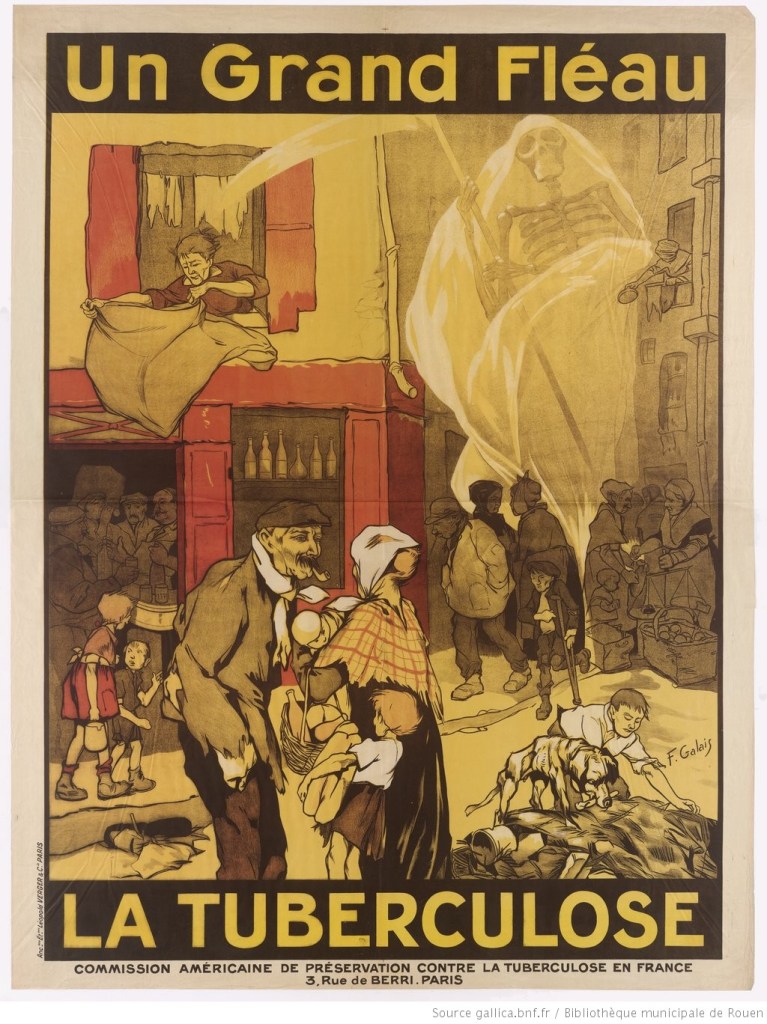
F. Galais, 1918, via Gallica.
An early cartoon condemning the atheism and hostility to the aristocracy manifest in the French Revolution. “If all this is so, as we unfortunately could not call into doubt, plague, war, and famine are much less formidable than the plague known today in all of Europe under the name of French disease. Those attack only the current generation, this one [i.e., Revolution] tends to rot its way down to our last heirs. The author of the cartoon is therefore right to say in this sense that it is clear that the new regime is tipping the balance.”
(Jacque-Marie Boyer-Brun, Histoire des caricatures de la révolte des Français, Paris, 1792)

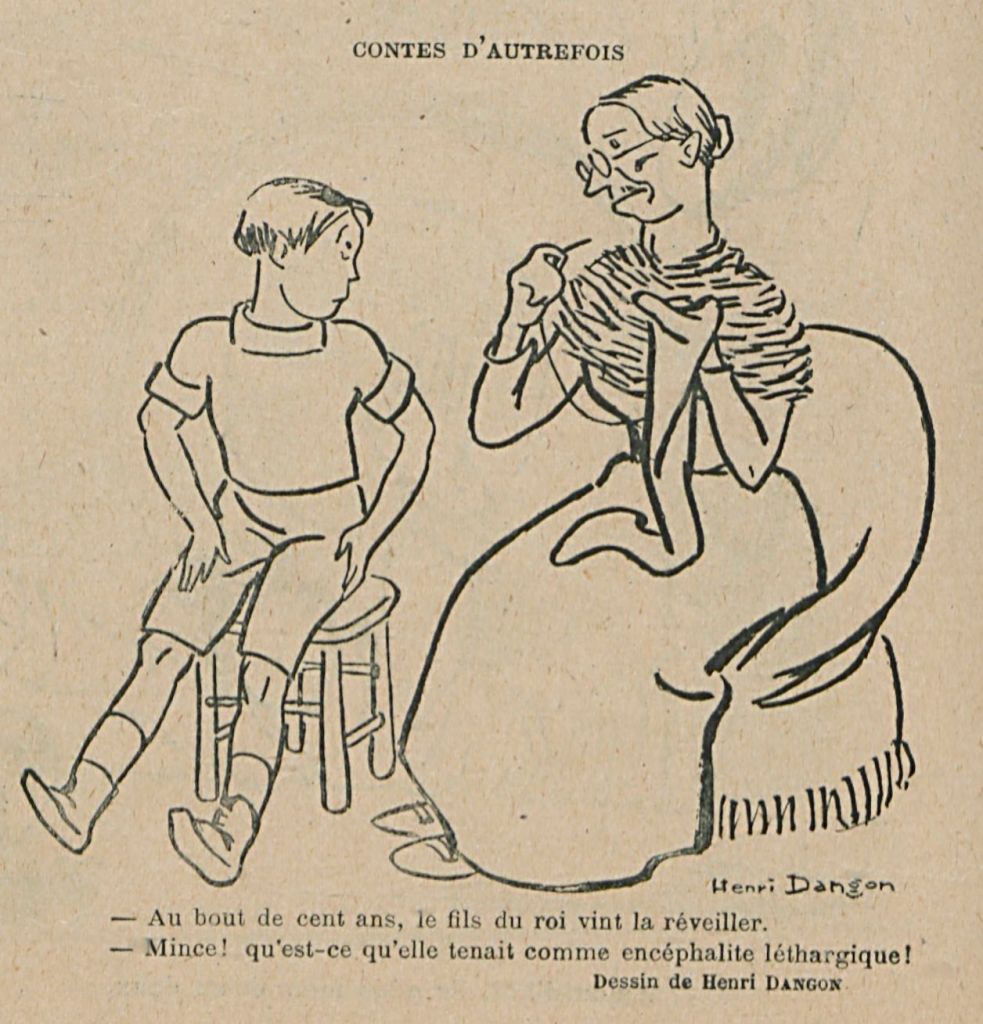
“At the end of a hundred years, the king’s son came to wake her up.”
“Darn! It’s like she had sleeping sickness!”
(Le Rire, Paris, 1920) (reproduced in Caras y Caretas)
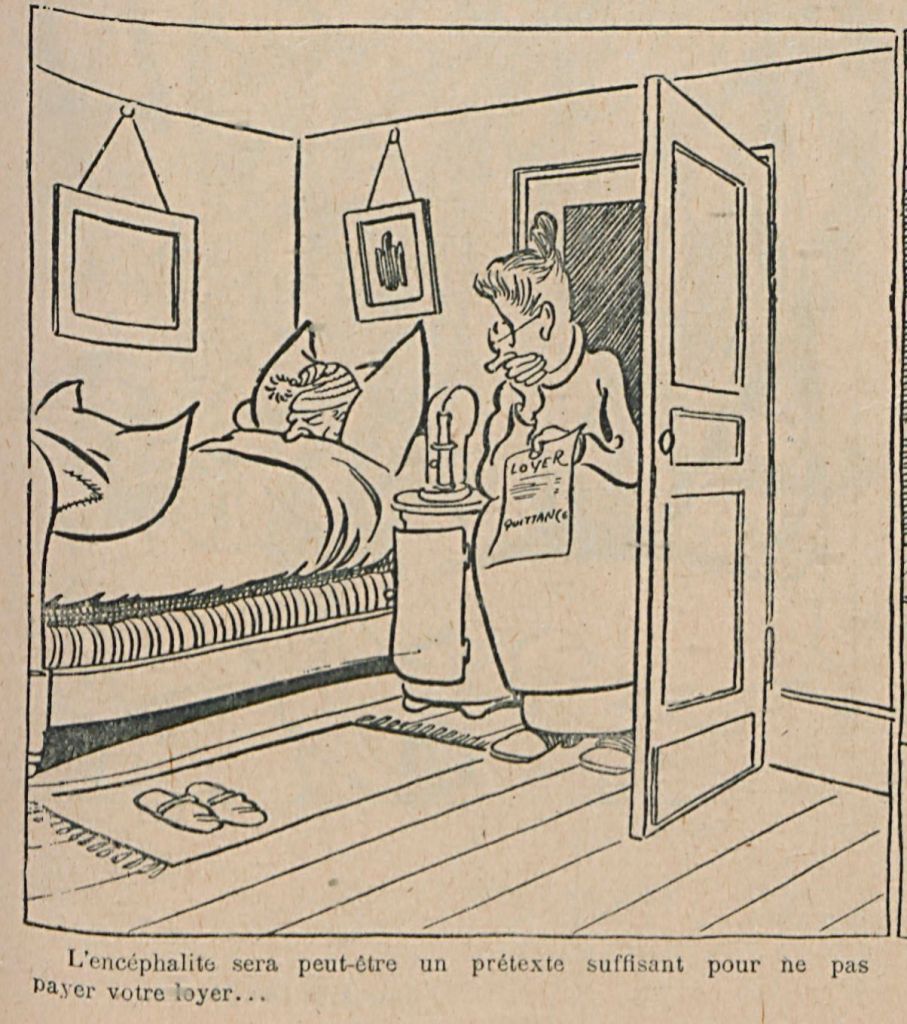
“Encephalitis might be a sufficient pretext for not paying your rent…”
(Le Rire, Paris, 1920)
 Sic Transit Pestilentia