“It’s true in comparison to that smell, nothing smells worse!”
(Le Charivari, Paris, 1849)
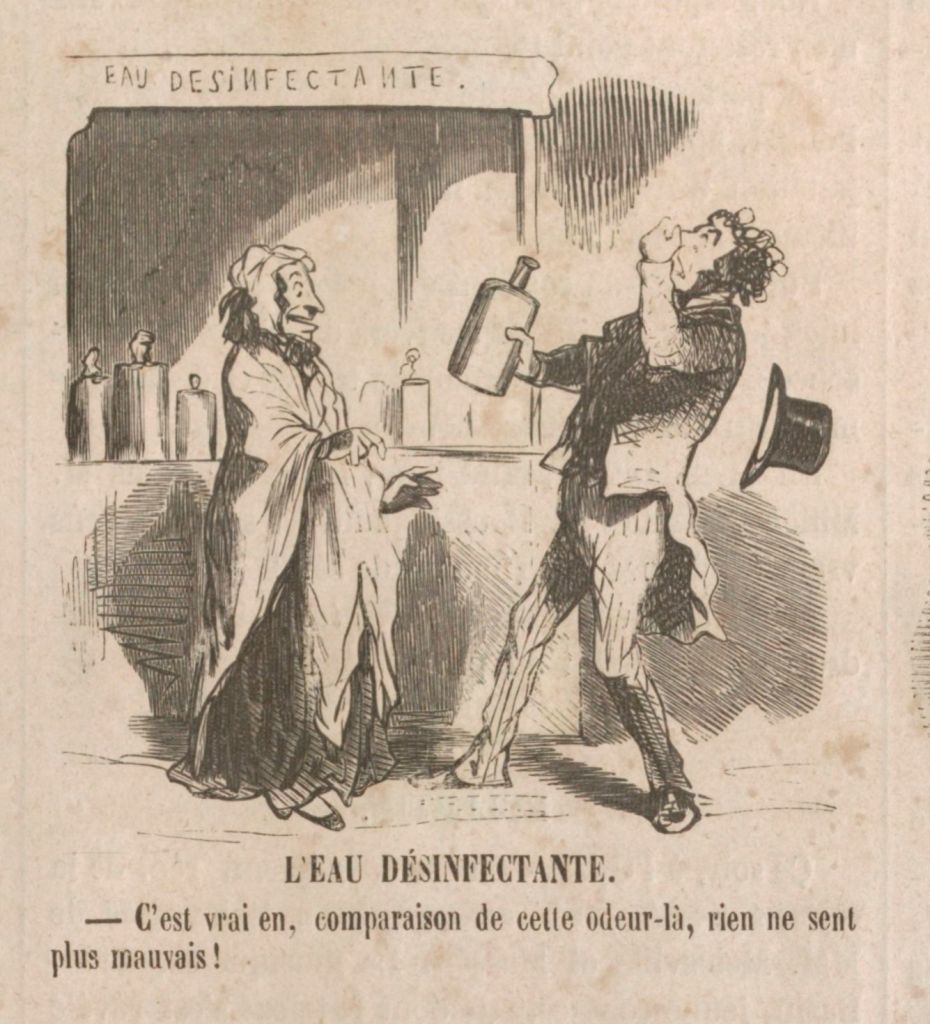
“It’s true in comparison to that smell, nothing smells worse!”
(Le Charivari, Paris, 1849)
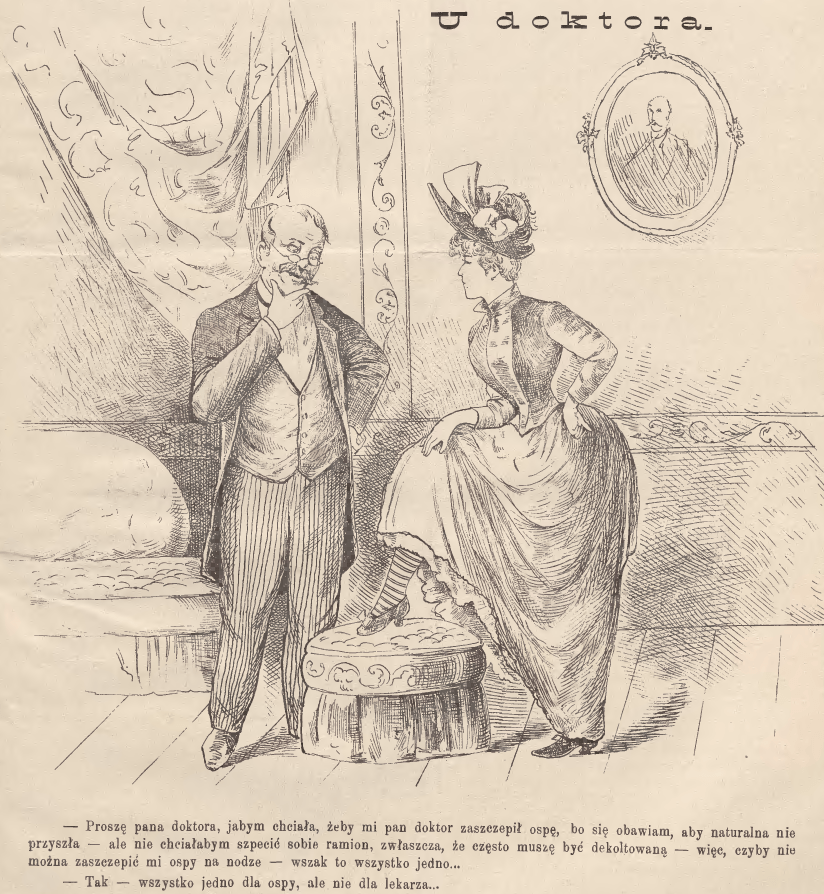
“Please, doctor, I would like you to inoculate me with [attenuated] smallpox, because I am afraid of getting the real thing. But I wouldn’t want to disfigure my shoulders [with a vaccination scar], especially since I often have to show décolletage. So can’t I be inoculated for smallpox on my leg? After all, it is all the same thing…”
“Yes, it’s all the same for the smallpox, but not for the doctor…”
(Goniec i iskra, Lwów, 1891)
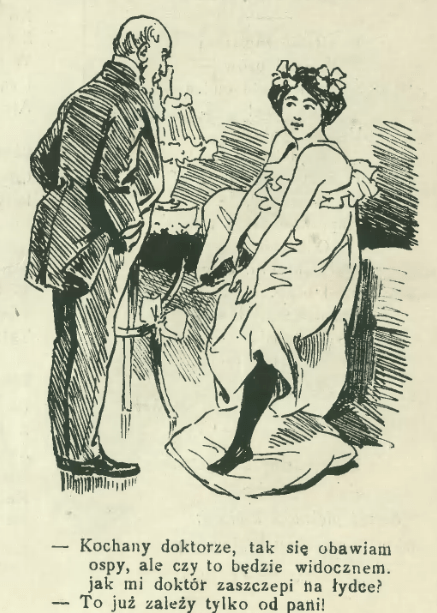
And a similar cartoon some years later:
“Dear doctor, I am so afraid of smallpox, but will it be visible when you inoculate on my calf?”
“It only depends on you!”
(Kolce, Warsaw, 1908)
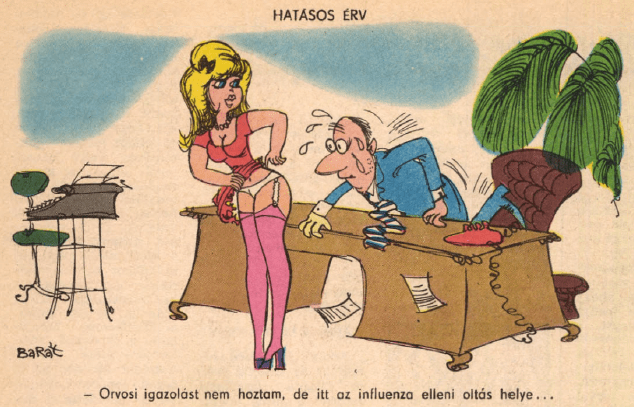
In the same sexist vein, a Hungarian cartoon:
Effective argument
“I didn’t bring the medical certificate, but here is the location for the flu vaccination…”
(Ludas Matyi, Budapest, 1974)
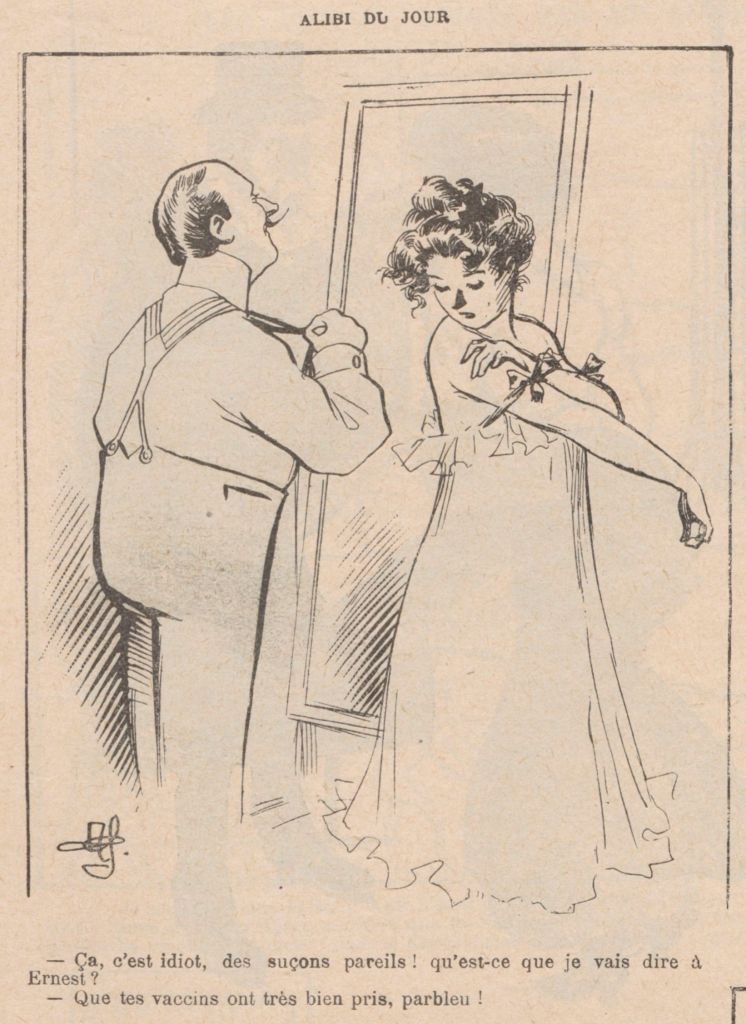
Or another twist:
Alibi ju jour
“This is silly, hickeys like that! What am I going to tell Ernest?”
“That your vaccines have taken very well, by Jove!”
(Le Rire, Paris, 1907) (Another French cartoon with related themes. And another from 1920.)
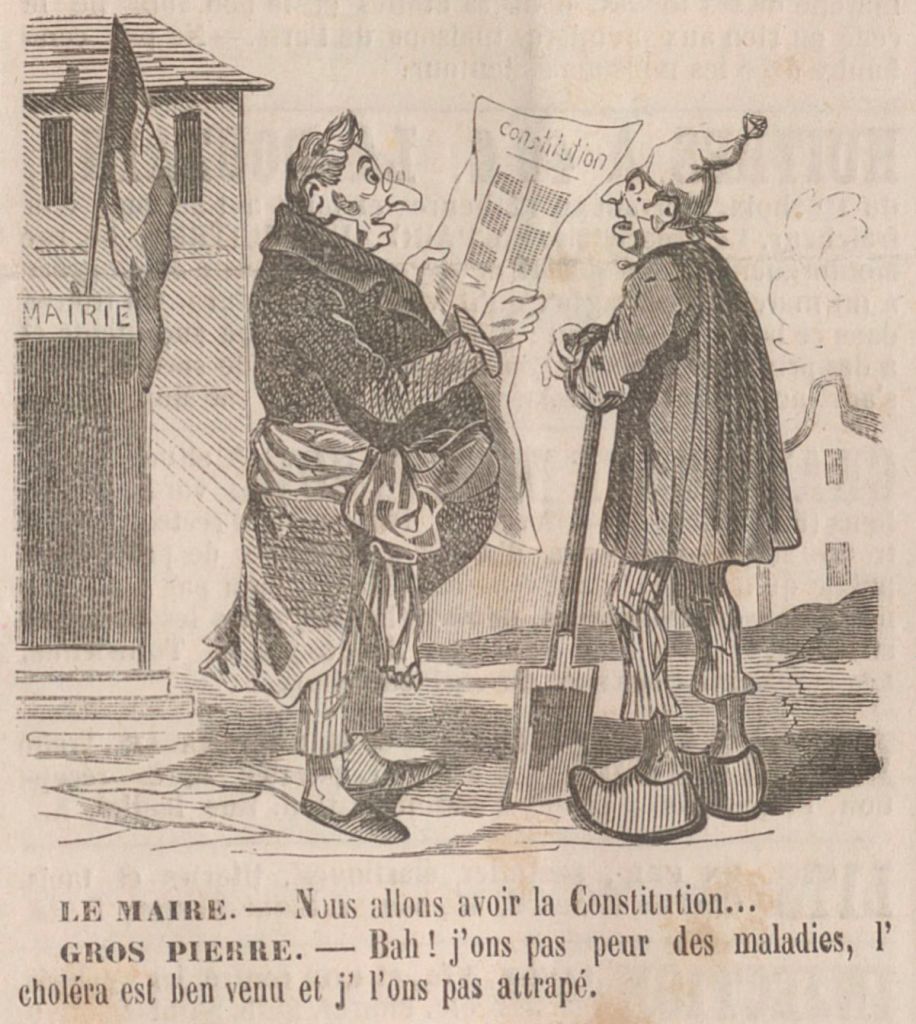
(Following months of revolutionary activities throughout France and Europe, the National Assembly adopted a constitution in November 1848. Scarcely three years later, Napoleon Bonaparte’s coup d’état was soon followed by another constitution establishing the Second Empire.)
The Mayor: “We will have the Constitution…”
Big Pierre: “Bah! I’m not afraid of such maladies, cholera has come along and I haven’t caught it.”
(Le Charivari, Paris, 1848)
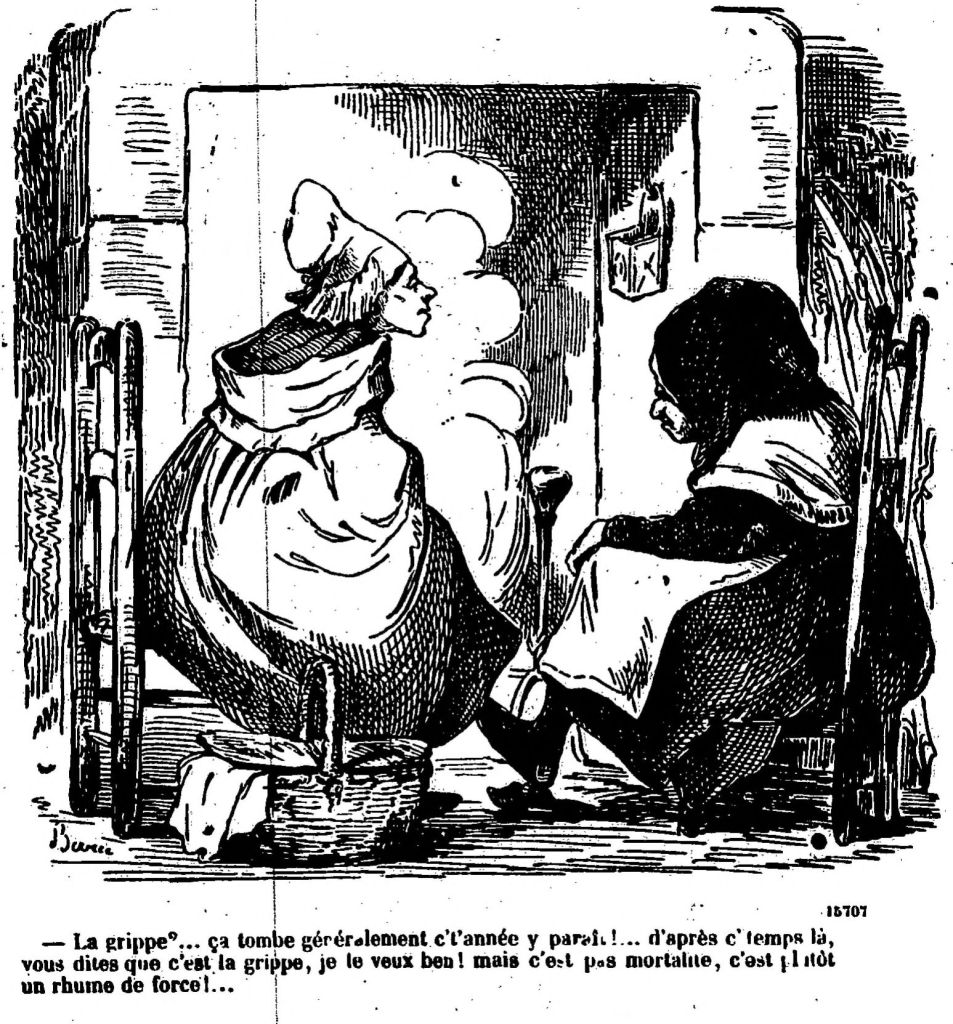
“The flu?… it seems to be getting out of control this year!… after that time, you say it’s the flu, I don’t mind! but it’s not fatal, it’s rather a powerful cold!…”
(Le Journal amusant, Paris, 1859) (Clearly I could use help with the idiom.)
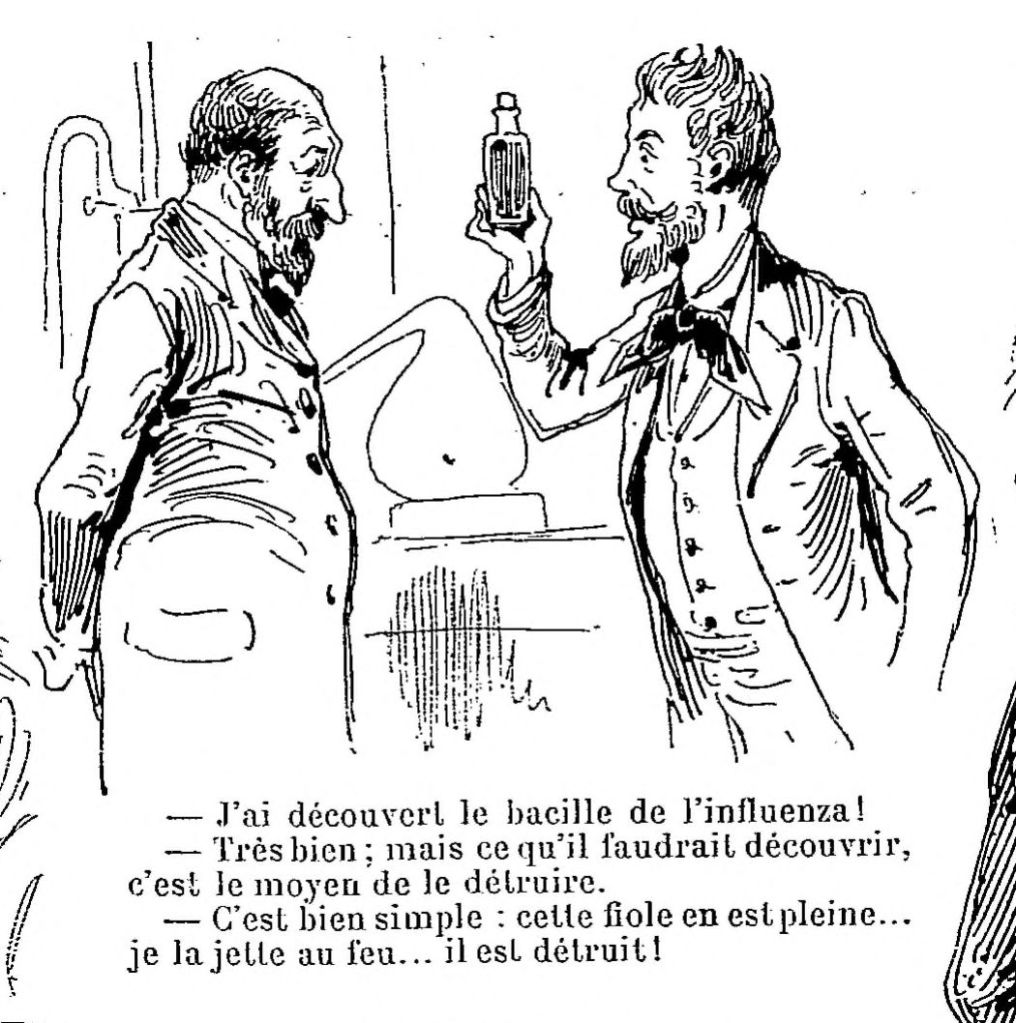
“I’ve discovered the influenza bacillus!”
“Very good; but what needed to be discovered is the means to destroy it.”
“It’s very simple: this vial is full… I throw it into the fire… it is destroyed!”
(Le Journal amusant, Paris, 1892)
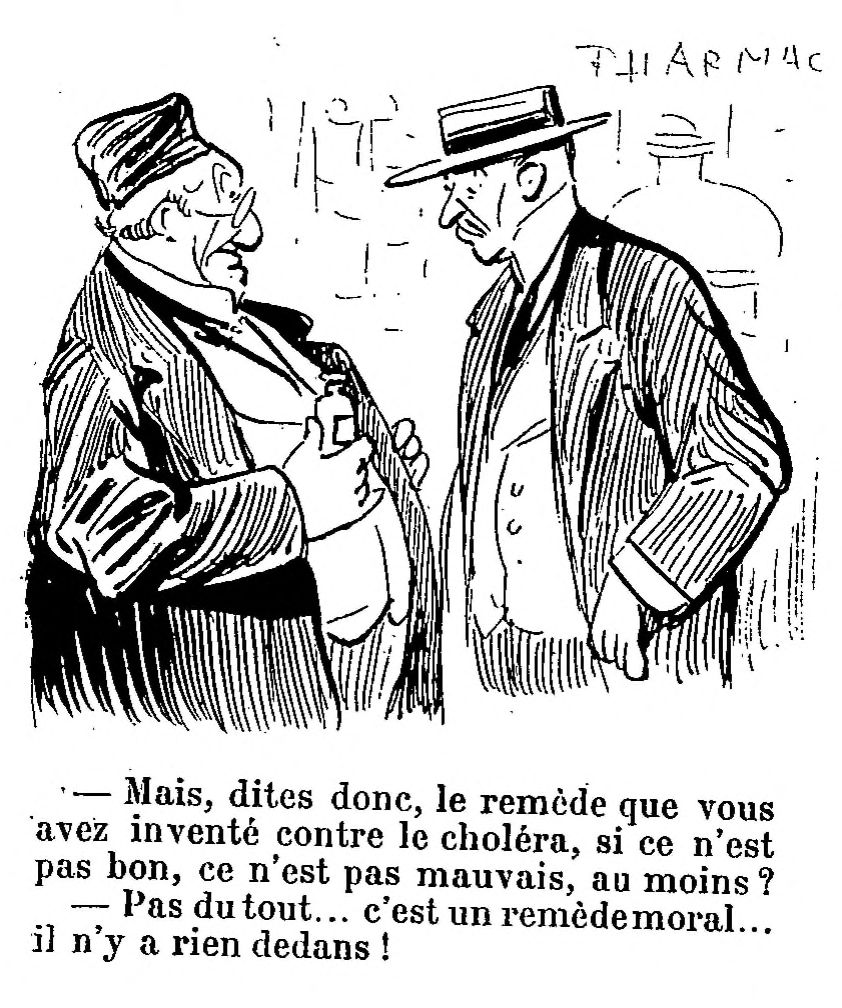
“But tell me then, the remedy that you invented against cholera, if it is not good, at least it’s not bad?”
“Not at all… it’s a moral remedy… there’s nothing in it!”
(Le Journal amusant, Paris, 1911)
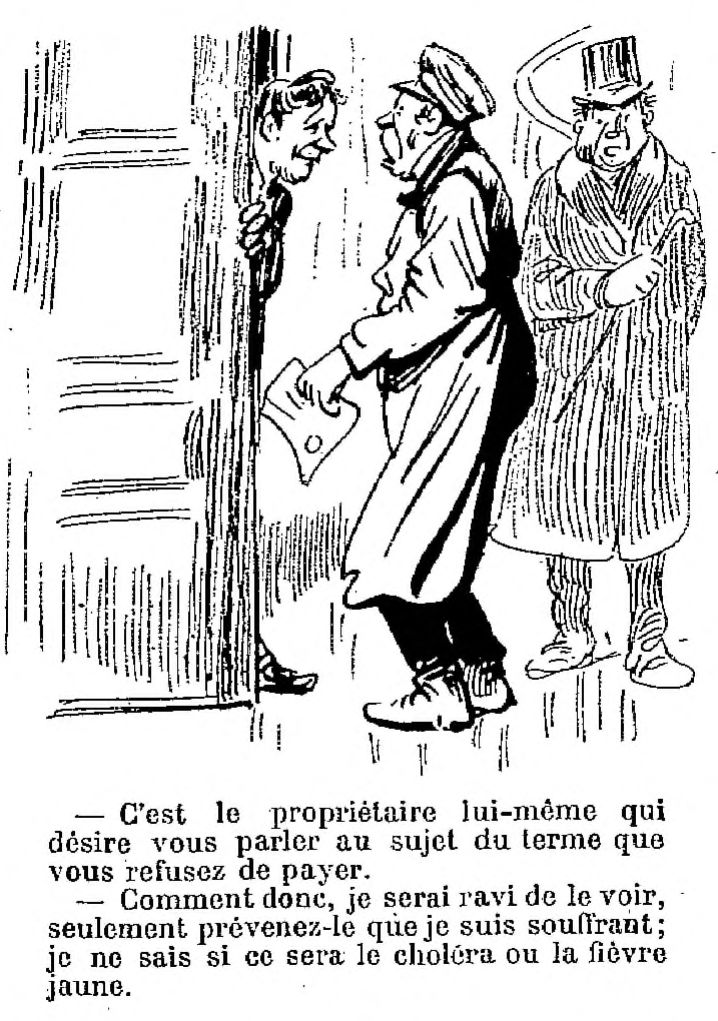
“It is the owner himself who wishes to talk to you about the bill you refuse to pay.”
“Whaddya mean, I will be delighted to see him, only warn him that I am suffering; I don’t know if it will be from cholera or yellow fever.”
(Le Journal amusant, Paris, 1908)
(“Frenchmen are quarreling with their government about their daily bread,” reported The New York Times in October 1910. “Dissatisfaction regarding their wages translates into dissatisfaction with the Republic.” French railway men went on strike, and “before it has lasted a single day, it is discussed whether or not it is revolutionary in character.” Prime Minister Briand managed to quash the strikes, earning him the enmity of former allies among the socialists.)
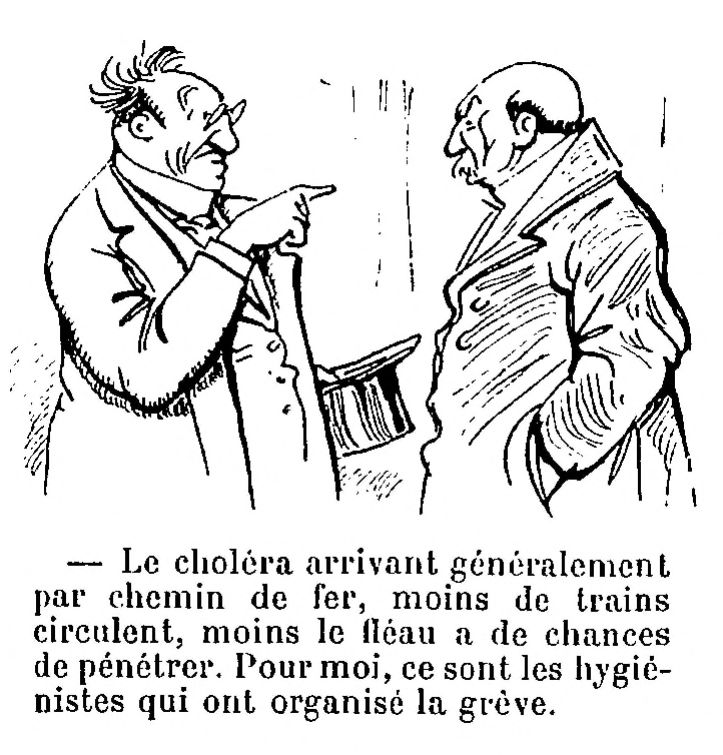
“Cholera generally arrives by trains, the fewer trains are running, the less chance the scourge will get in. As far as I’m concerned, it’s the hygienists who are organizing the strike.”
(Le Journal amusant, Paris, 1910)
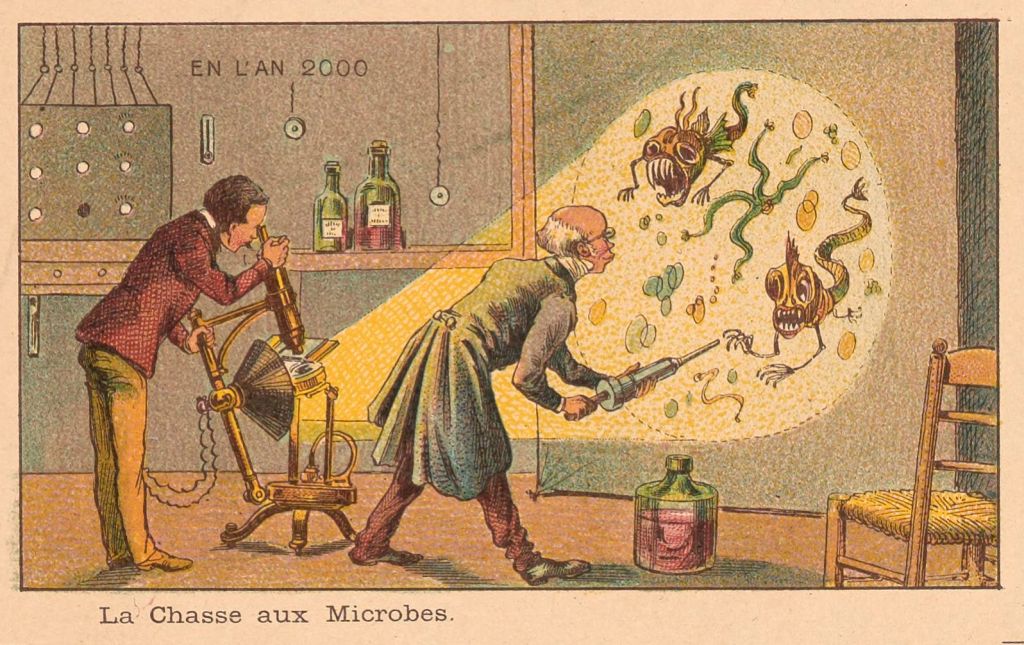
From Jean-Marc Côté, In the Year 2000 (Paris, 1910). (Note the familiar clystère seen in many other settings. Thanks to Theresa Levitt for directing me to this image.)
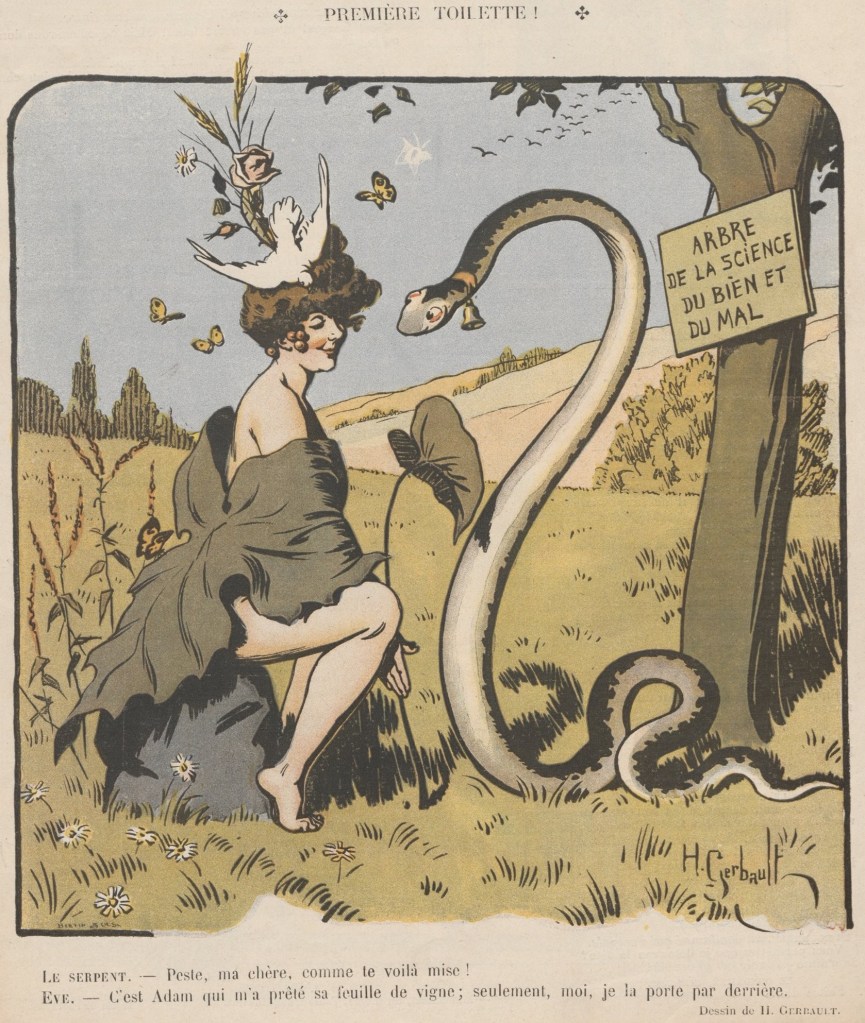
(Under the Tree of the Knowledge of Good and Evil.)
The serpent: “My dear pest, look at how you are arrayed!”
Eve: “It was Adam who lent me his fig leaf; it’s just that I carry it from behind.”
(Le Rire, Paris, 1906) (OK, this is a stretch, since it is not literally about the plague, but in a quirky way it seems to connect original sin with unpleasant modes of disease transmission. Perhaps I am committing the sin of Freudian overinterpretation. Or more likely my grasp of French idiom is not adequate to this case.)
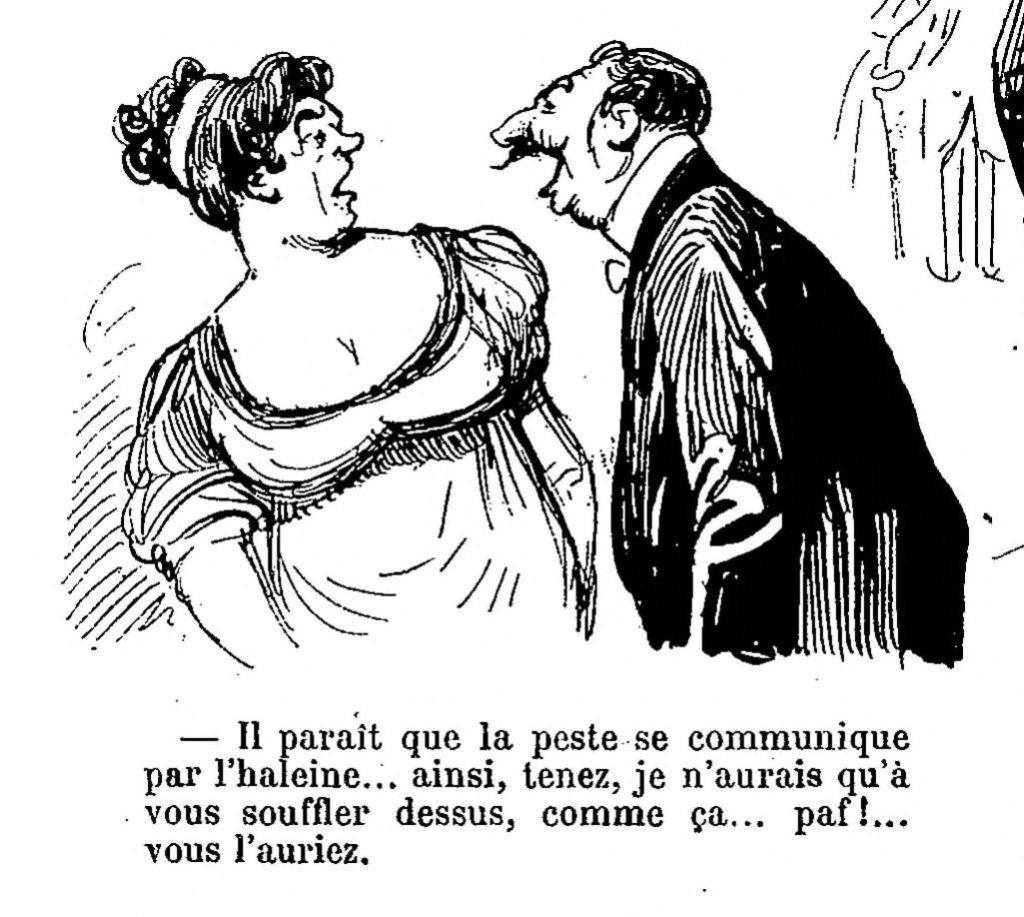
“It seems that the plague is communicated by the breath… well, here, I would only have to blow on you like that… poof!… you would have it.”
(Le Journal amusant, Paris, 1911)
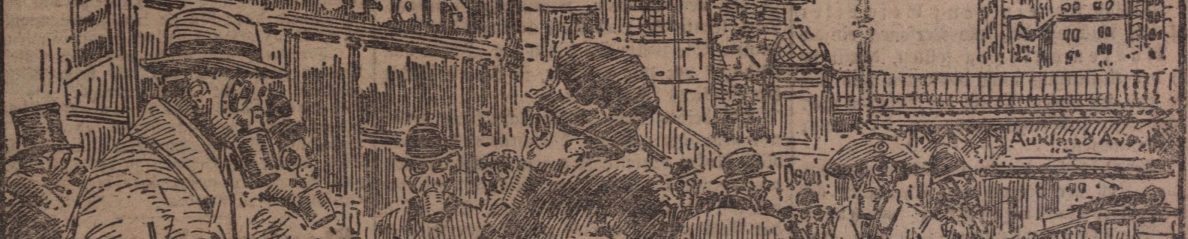
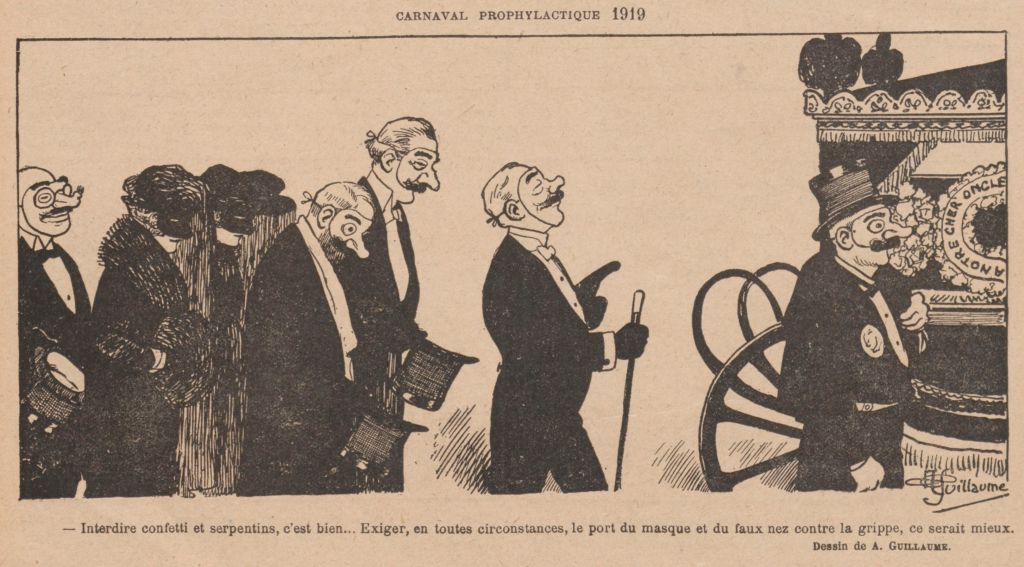
Banning confetti and streamers is good… Requiring the wearing of a mask and false nose against the flu in all circumstances would be better.
(Le Rire, Paris, 1919)
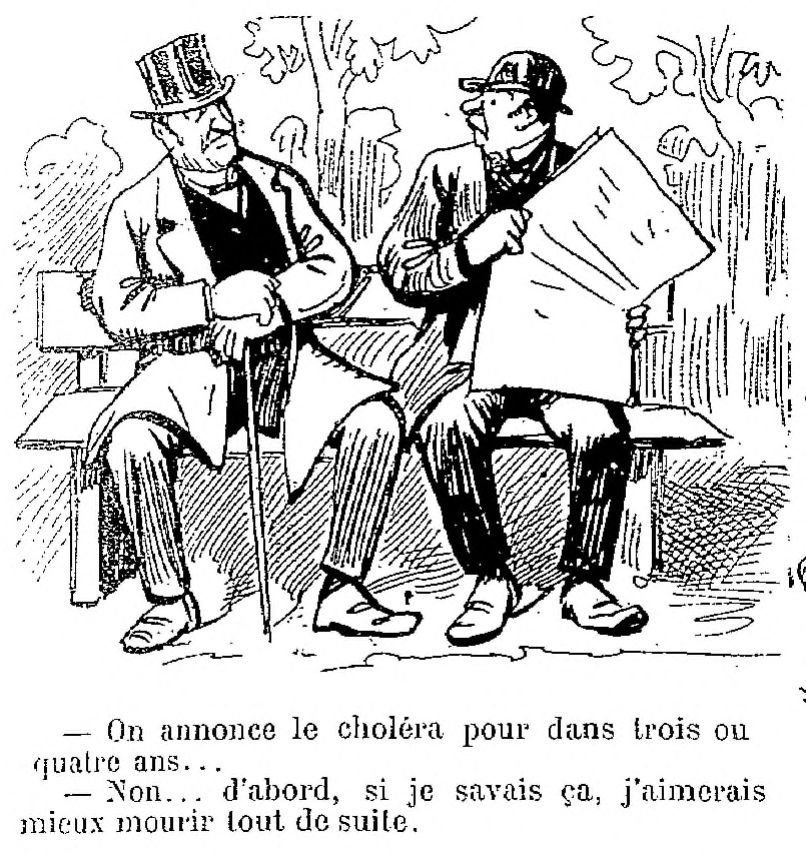
“They’re announcing that cholera will be back within three or four years…”
“No… first of all, if I knew that, I’d rather die right away.”
(Le Journal amusant, Paris, 1905)
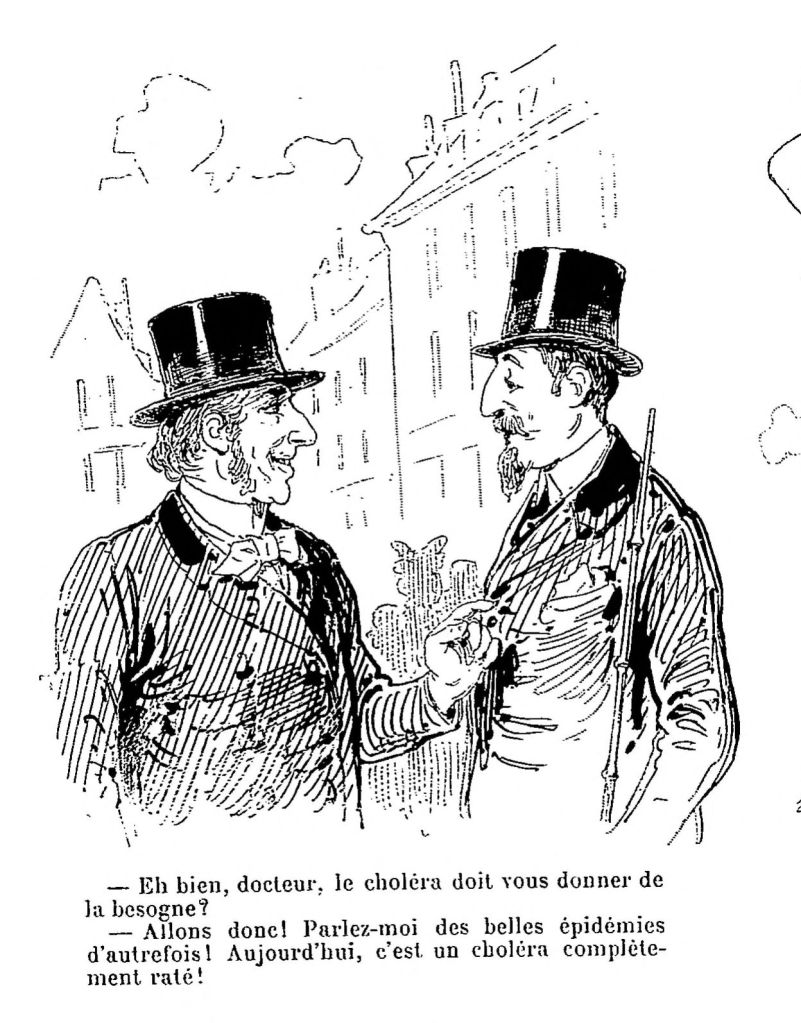
“Well, doctor, the cholera must be making work for you?”
“Come on! Tell me about the beautiful epidemics of yesteryear! Today it’s a completely failed cholera!”
(Le Journal amusant, Paris, 1892)
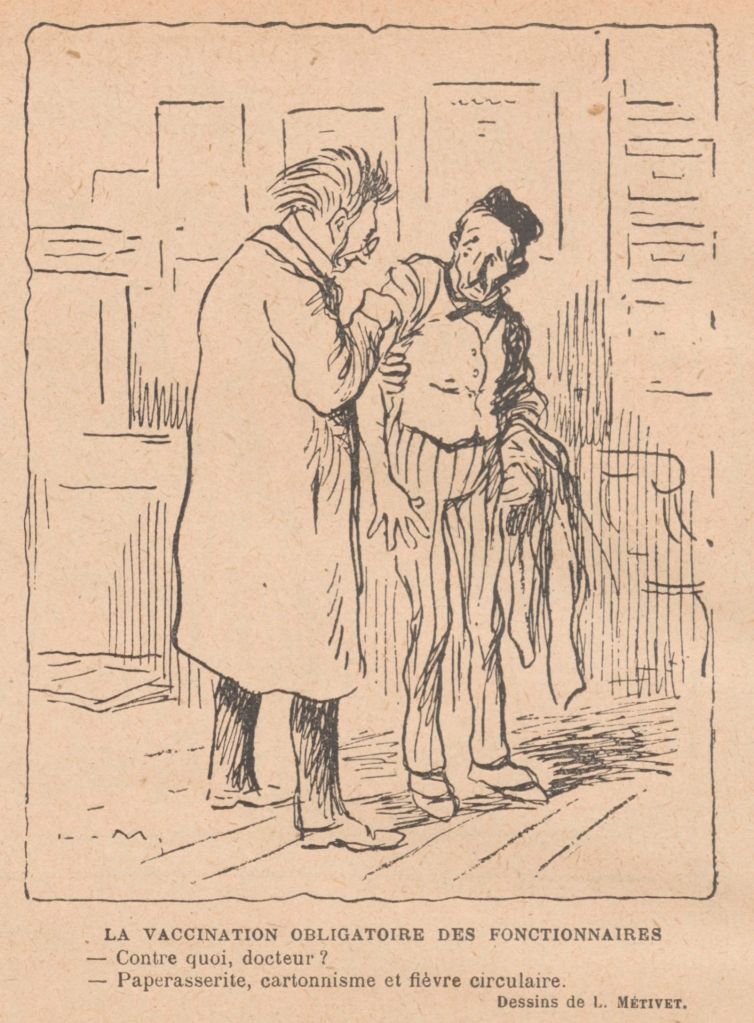
“Against what, doctor?”
“Paperworkitis, file-ism, and memo fever.”
(Le Rire, Paris, 1918)
 Sic Transit Pestilentia