An undated drawing (probably 1830s) available at the National Libary of Medicine. This would appear to be a Dutch version of a German print by Peter Carl Geissler. See also the Portrait of a man protected against cholera.
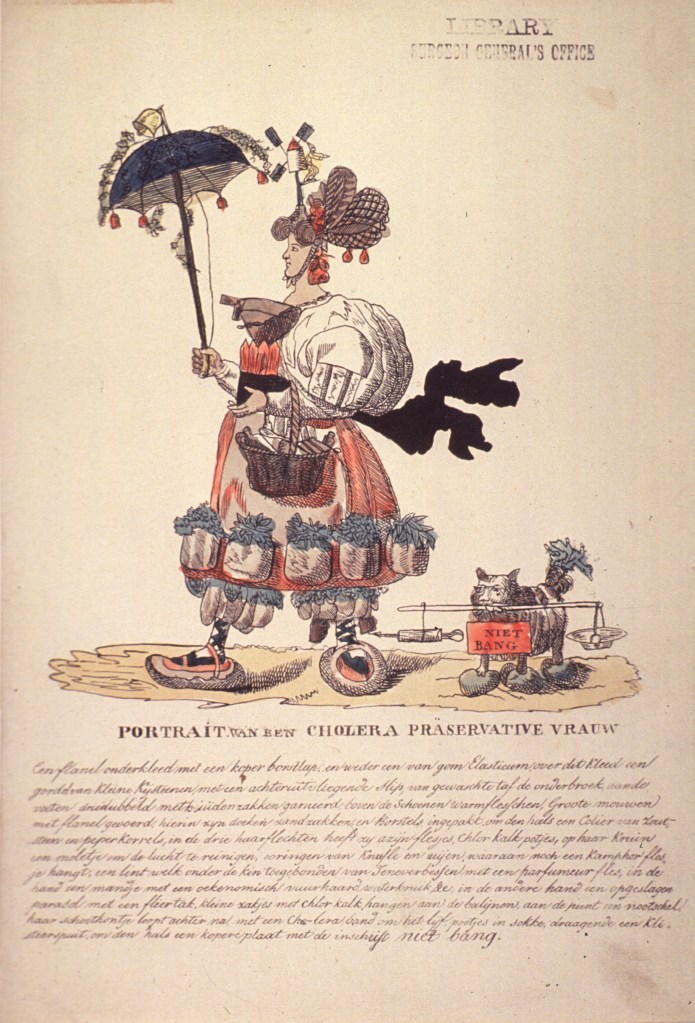
An undated drawing (probably 1830s) available at the National Libary of Medicine. This would appear to be a Dutch version of a German print by Peter Carl Geissler. See also the Portrait of a man protected against cholera.
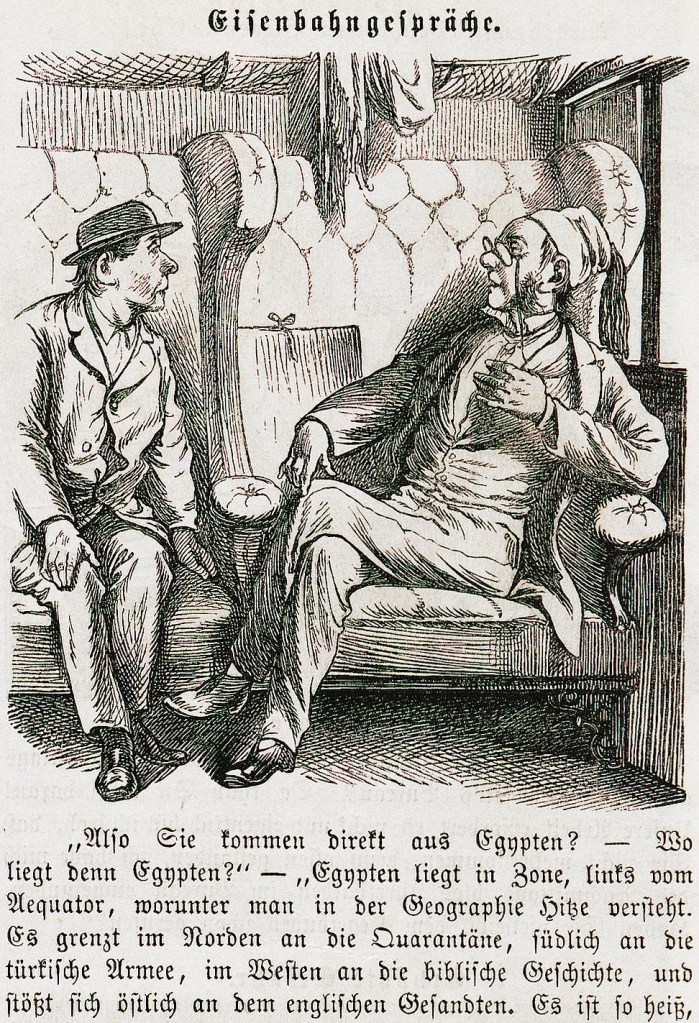
“So you’re coming directly from Egypt? Where is Egypt again?”
“Egypt lies in the zone left of the equator which is called heat in geography. It borders in the north on the quarantine, in the south on the Turkish army, in the west on biblical history, and runs into the English ambassador in the east.” (Remaining text continues in this vain, mocking the traveller’s false erudition.)
(Fliegende Blätter, Munich, 1869)
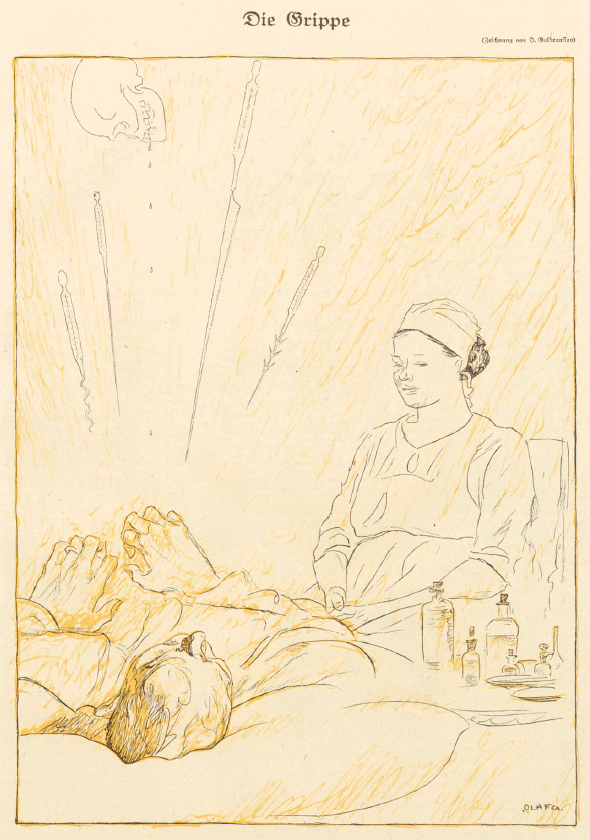
Simplicissimus no. 44 (Munich, 1922)
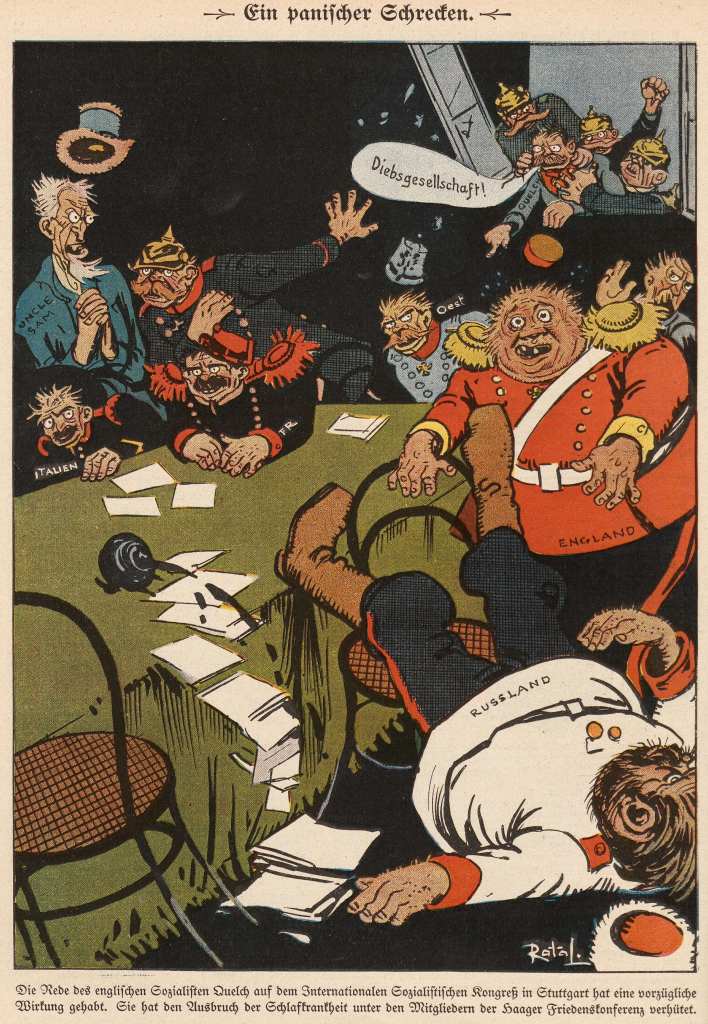
The speech of the English socialist Quelch at the International Socialist Congress in Stuttgart had an excellent effect. It prevented the outbreak of sleeping sickness among the members of the Hague Peace Conference.
(Der wahre Jacob, Berlin, 1907)
(Harry Quelch was famously expelled from Germany for referring to the Hague Peace Conference as a “thieves’ supper.”)
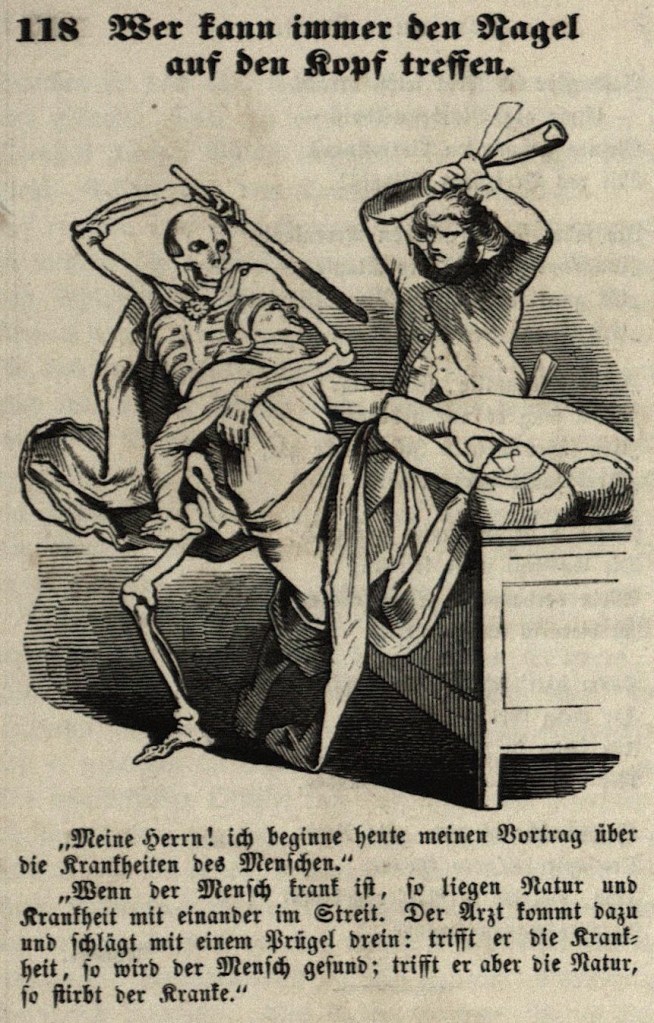
“Gentlemen! I begin today’s lecture on human illnesses.”
“If a person is sick, then Nature and illness are at odds with each other. The physician comes in and hits it with a club: if he hits the illness, then the person becomes healthy; but if he hits Nature, then the sick person dies.”
(Fliegende Blätter, Munich, 1847) (A British print in a similar vein.)
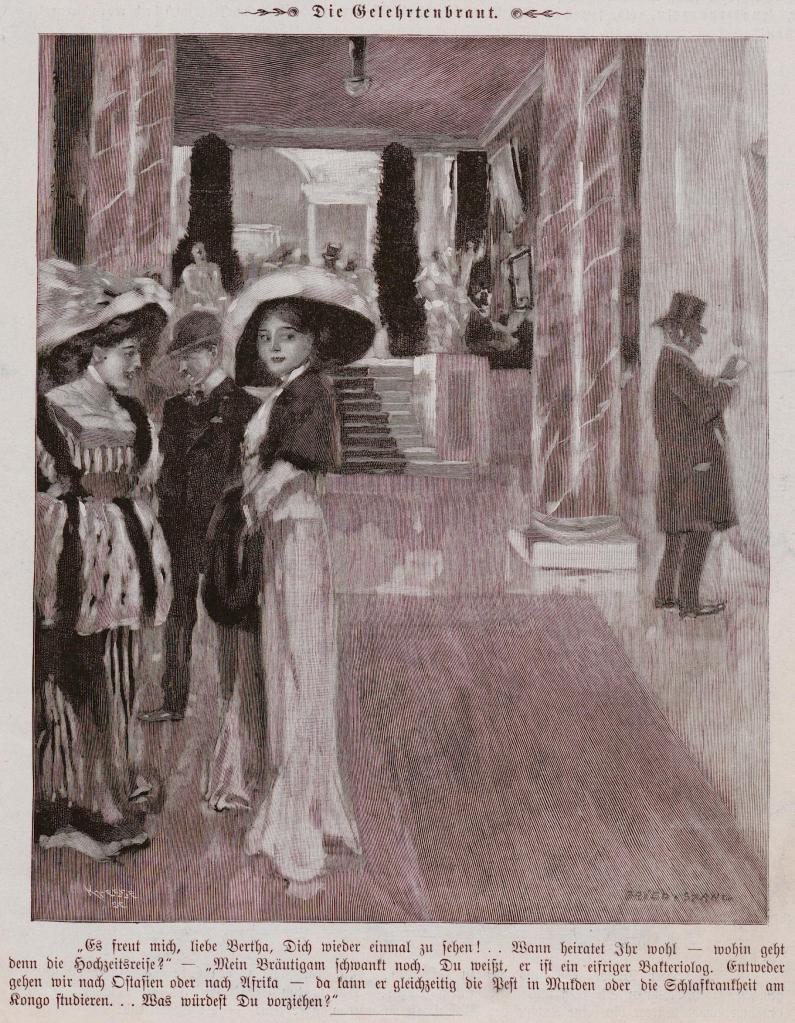
“I am so glad to see you again, dear Bertha!… When will you get married, where are you going for your honeymoon?”
“My bridegroom is still wavering. You know he’s an avid bacteriologist. We are going either to East Asia or to Africa. He can just as well study plague in Mukden or sleeping sickness in the Congo… Which would you prefer?”
(Fliegende Blätter, Munich, 1911) (See also this French version.)
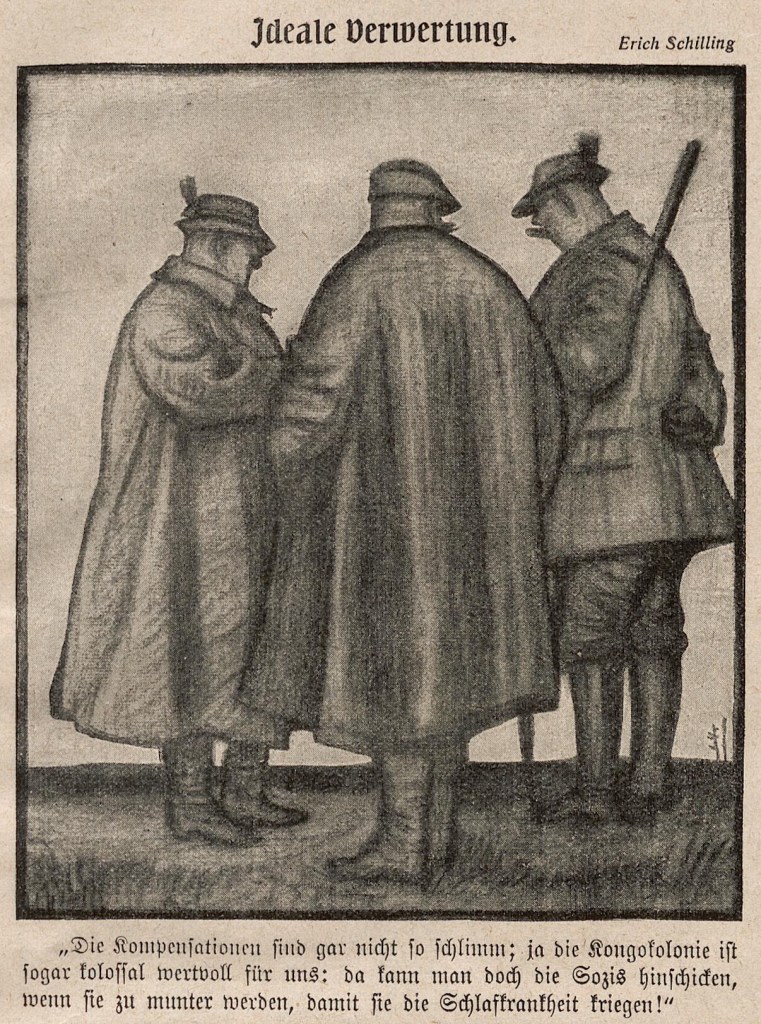
“The compensations aren’t that bad; the Congo Colony is indeed extremely valuable to us: you can send the socialists there if they get too lively, so that they get sleeping sickness!”
(Der wahre Jacob, Stuttgart, 1911)
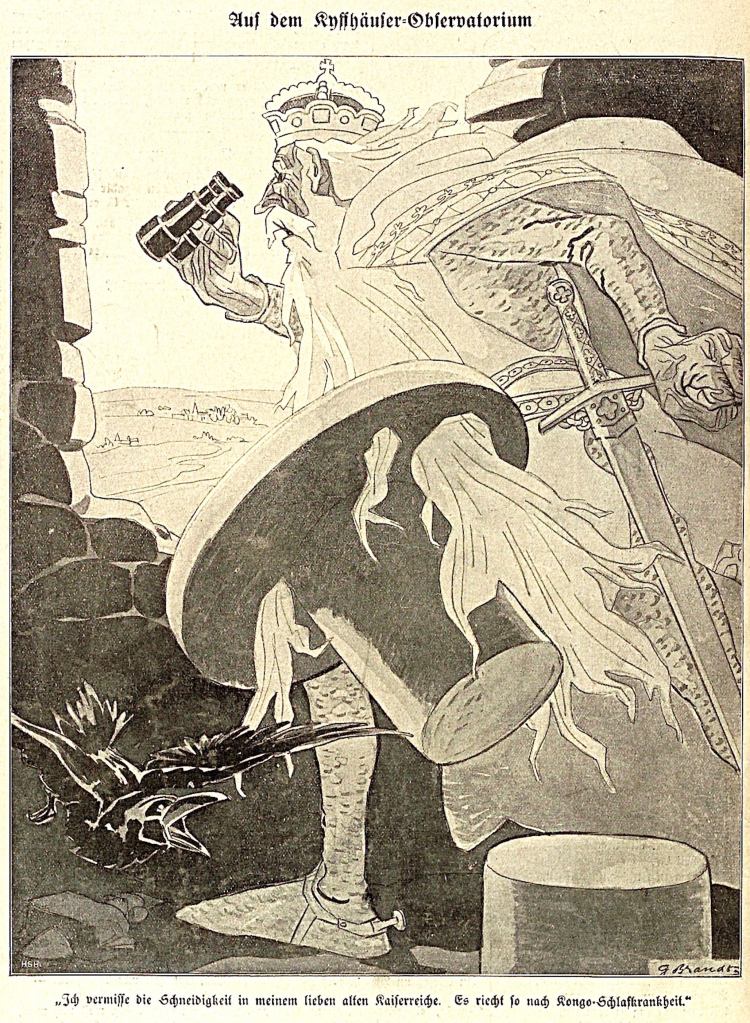
At Kyffhäuser on the northern border of Thuringia in Germany lies a giant modern monument to the Holy Roman Emperor Frederick I (“Barbarossa”), also the site of an ancient astronomical observatory. This image was published more or less at the height of the Second Reich’s modest colonial ventures in Africa.
“I miss the edginess in my dear old empire. It smells so much like Congo sleeping sickness.”
(Kladderadatsch, Berlin, 1911)
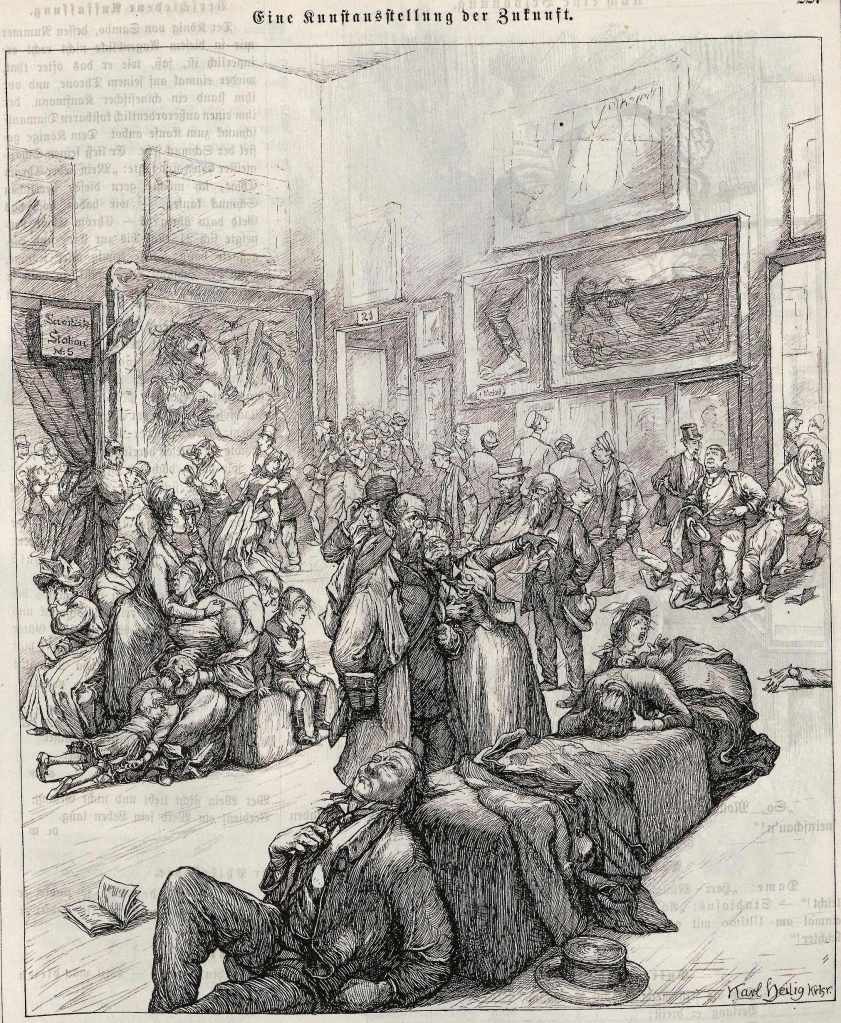
(With a flu epidemic underway late in 1889, this image signaled the duress not only in the grim artworks on the walls and the ailing visitors sprawled around the exhibition space. On the left one can see a sign for “Hygiene Station No. 5,” a deft reminder of our present dilemmas.)
(Fliegende Blätter, Munich, 1889)
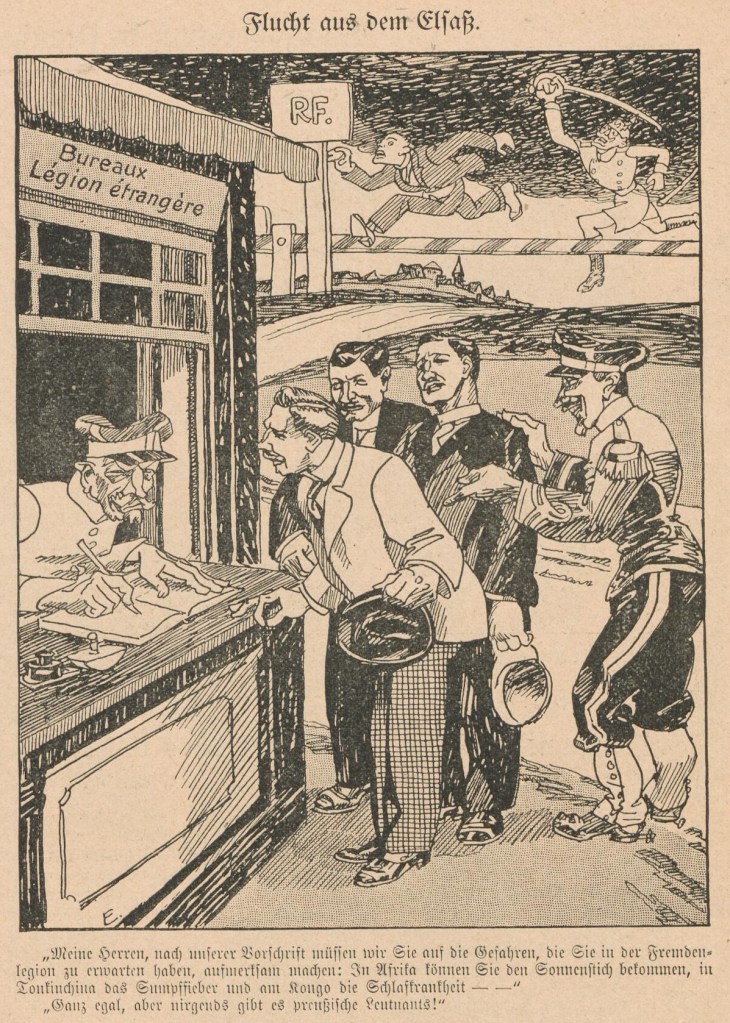
(At the French Foreign Legion Offices)
“Messieurs, according to our rules, we must draw your attention to the dangers that you can expect in the Foreign Legion: you can get sunstroke in Africa, malaria in Tonkin China, and sleeping sickness in the Congo…”
“It doesn’t matter, just so there are no Prussian lieutenants anywhere!”
(Der wahre Jacob, Stuttgart, 1914)
In hypnosis Lachen links [~ “laughing on the left”] is making the most epochal discoveries. Thus the pathogens of the following illnesses are discovered:
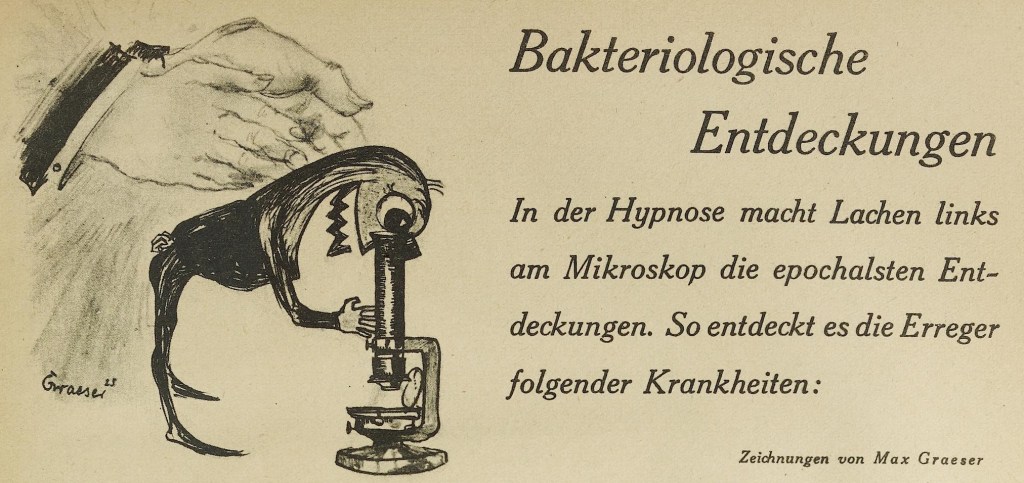
Nine panels follow, of which I include three here. Sleeping sickness:

Hunger typhus [“tariff” vibrios]:
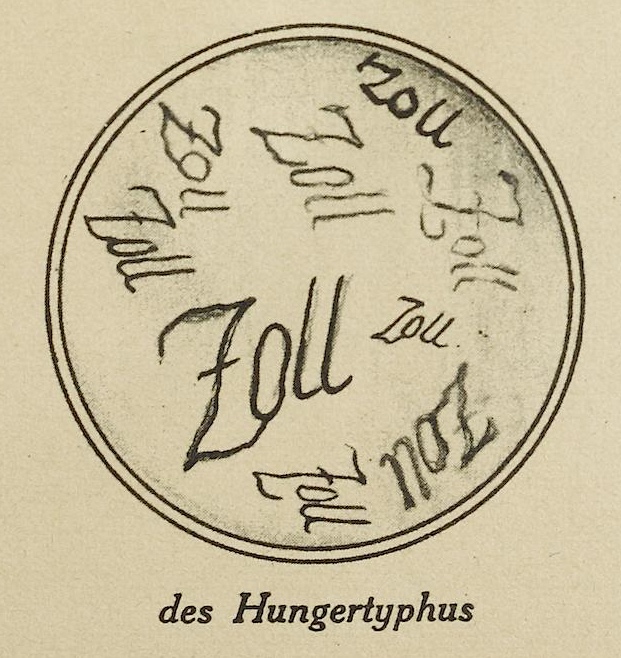
Judicial cholera:
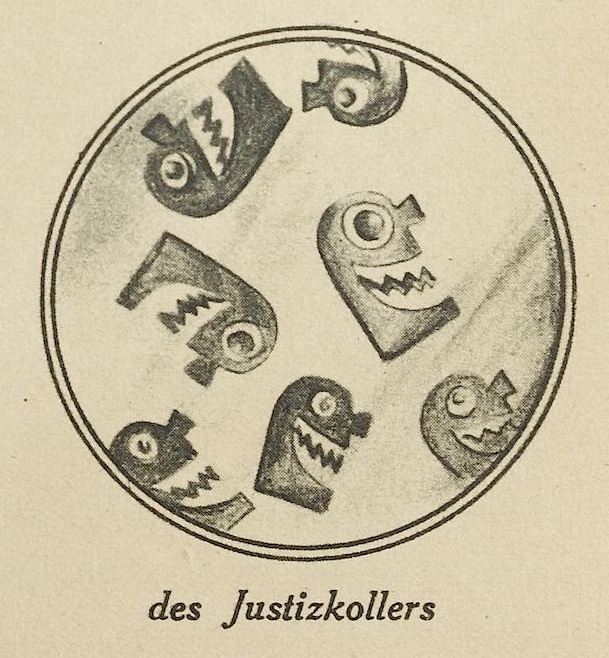
(Lachen links, Berlin, 1926)
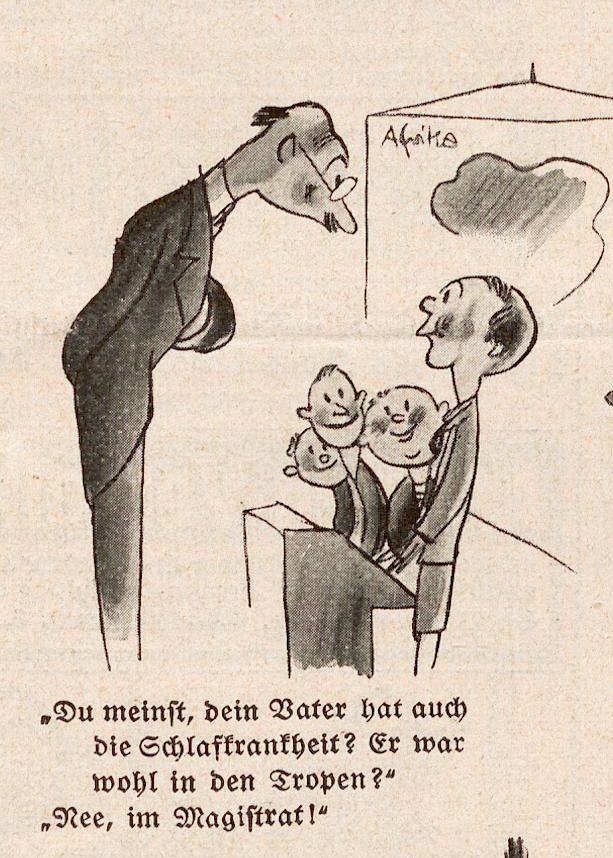
“You mean your father has sleeping sickness, too? Was he in the tropics?”
“Nope, at the municipal authorities!”
(Fliegende Blätter, Munich, 1929)
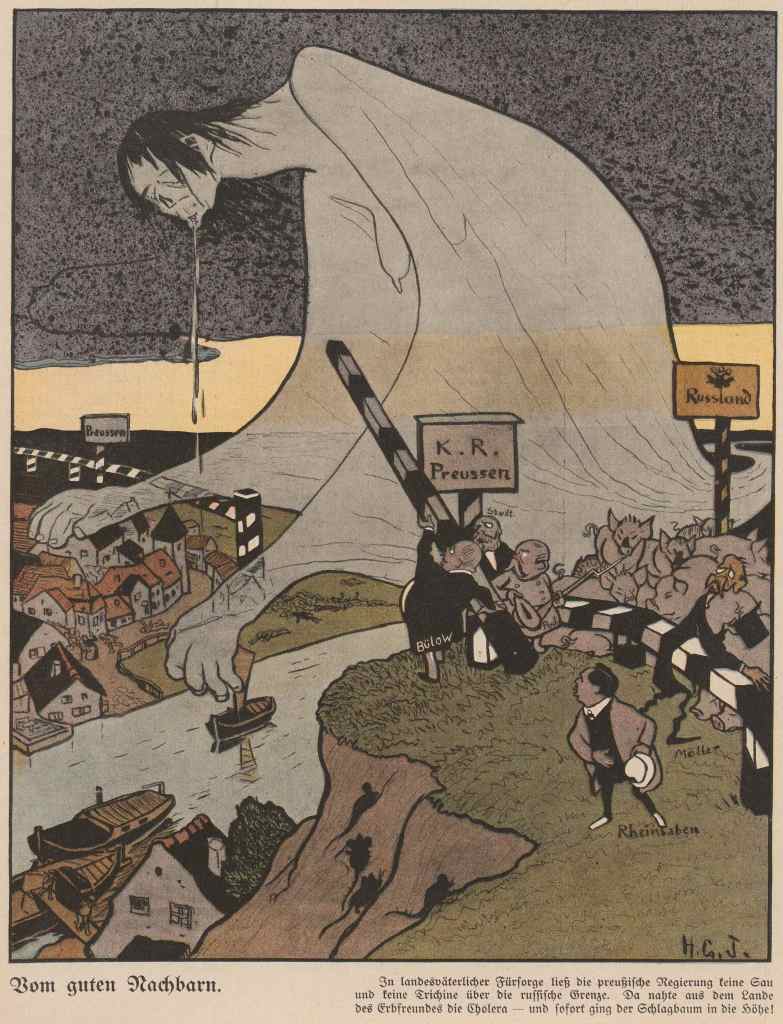
Out of paternal concern for the country, the Prussian government did not let swine and trichina across the Russian border. Then cholera was approaching from the land of the hereditary friend — and immediately the barrier was lifted!
(Der wahre Jacob, Stuttgart, 1905) (With thanks to Alexander Maxwell.)
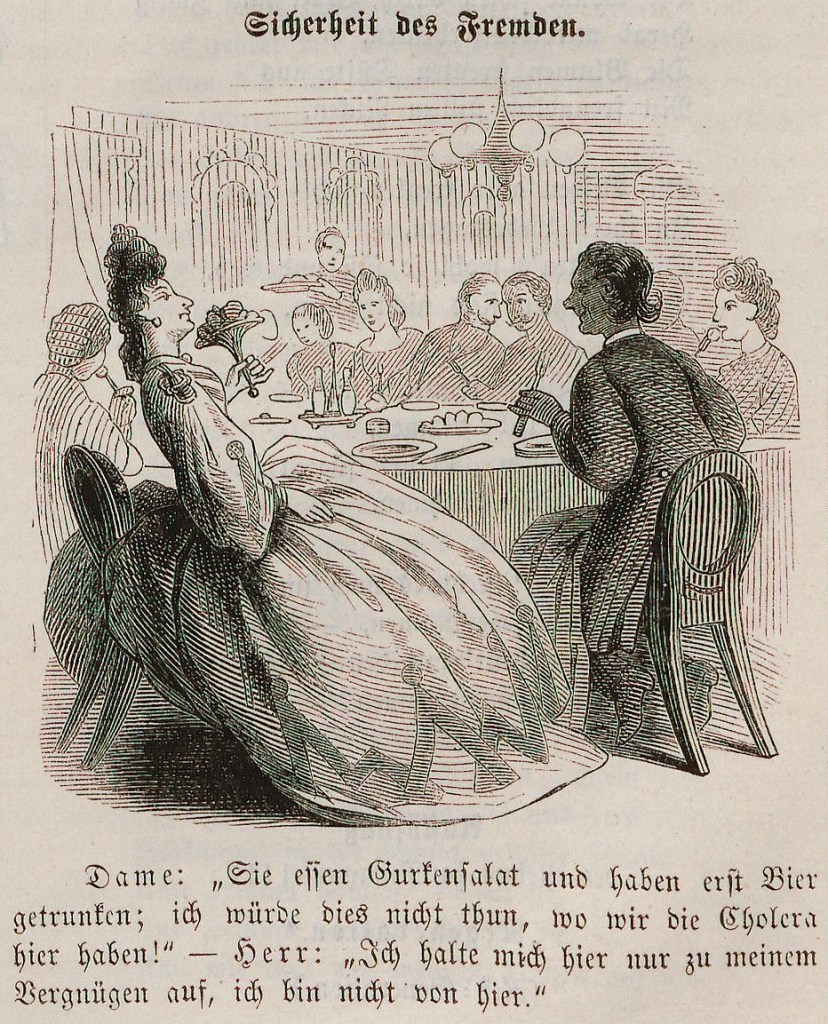
Lady: “You are eating cucumber salad and drank your beer first; I wouldn’t do that here where we have the cholera!”
Gentleman: “I am only staying here for my pleasure, I’m not from here.”
(Fliegende Blätter, Munich, 1866)
 Sic Transit Pestilentia