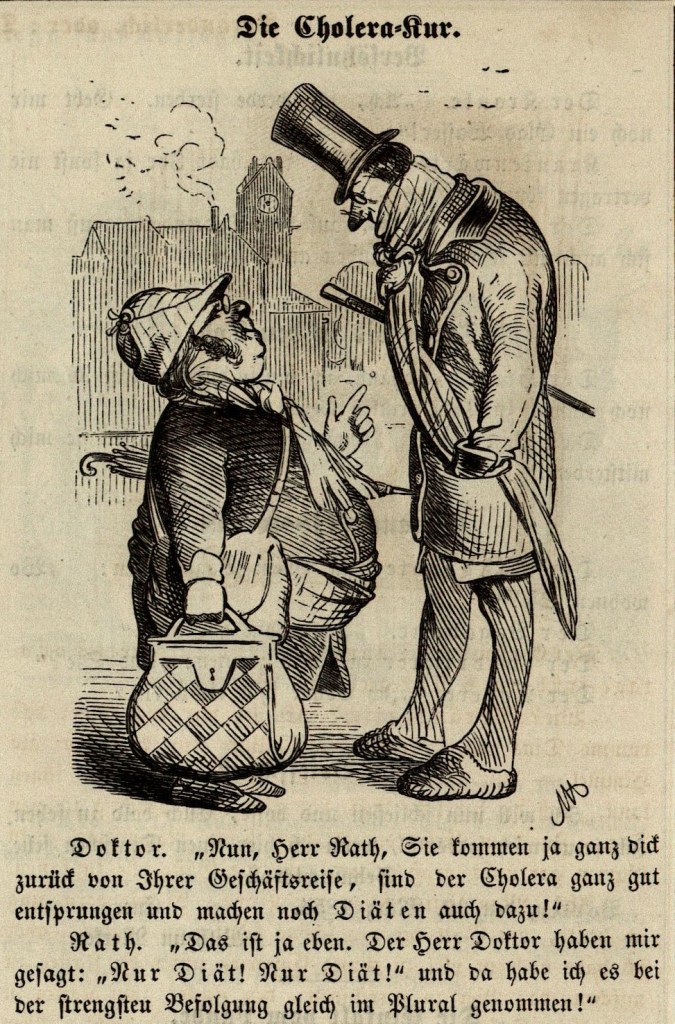
Doctor: “Well, Herr Councillor, you have returned from your business trip quite corpulent, you’ve bounced back from cholera quite well and are making improvements to your diet!” Councillor: “That’s just it. Herr Doctor told me: ‘Only diet! Only diet!’ and right away I followed it strictly in the plural!” (Fliegende Blätter, Munich, 1855)
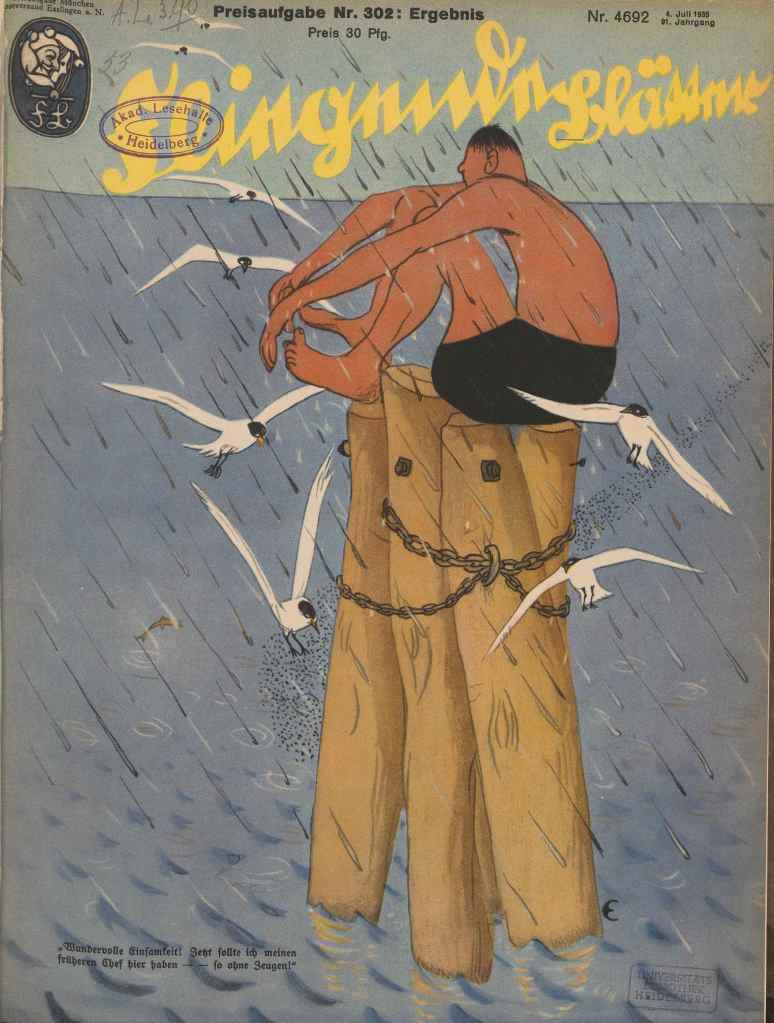
“Wonderful solitude! Now if I just had my old boss here — without witnesses!” (Fliegende Blätter, Munich, 1935) OK, it’s off topic, but I dare say physical distancing fosters many off-kilter fantasies.
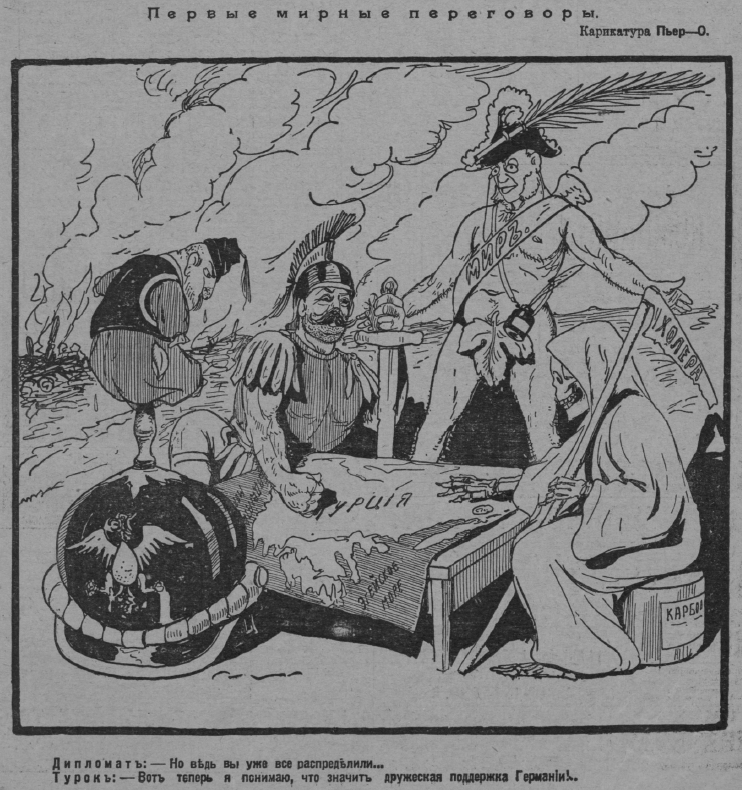
Mars negotiates the breakup of Ottoman Turkey with Cholera, seated on a barrel of carbolic acid. Peace the Diplomat approaches the table. Diplomat: “But you’ve already divided up everything.” Turk (perched on German Pickelhaube): “Well now I understand what the friendly support of Germany means!” Russian satirical magazine Ogonek no. 49, 1910.
“Confound it!” As the fourth global cholera epidemic swept through Bavaria, a recovering victim contemplated the difficulty of returning to normal food consumption, having improvised ways to cushion the blows to his bodily orifices wrought by cholera’s violent dehydrating symptoms. (Die Bremse, Munich, 1873)
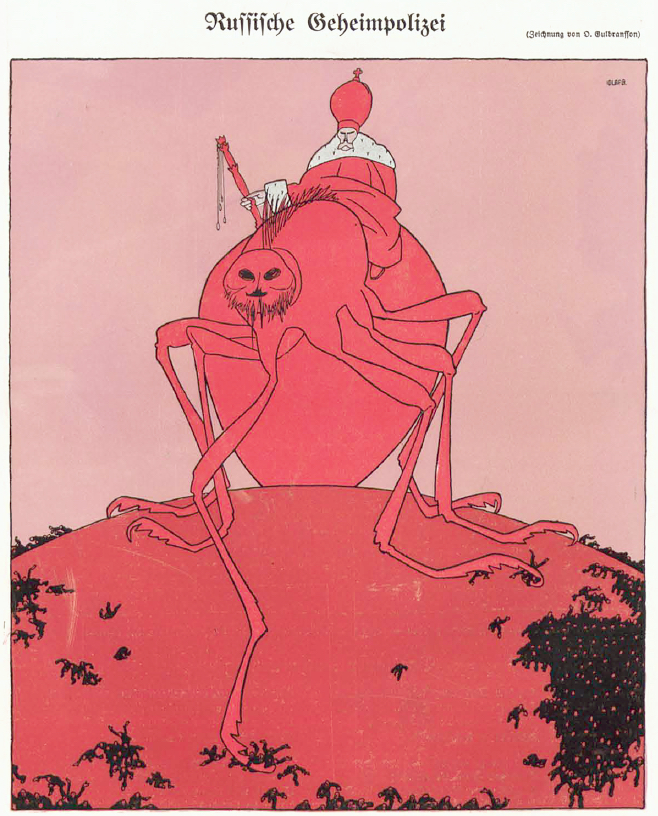
In 1908 a typhus epidemic began spreading from the northern Caucasus and southern Russia to the more densely populated northwestern districts of the Romanov Empire. By and large the epidemic failed to reach further west in Europe, but that did not prevent the German magazine Simplicissimus from offering this curious variant of the classic trope of disease as invasive agent. (Simplicissimus no. 24, 1909)
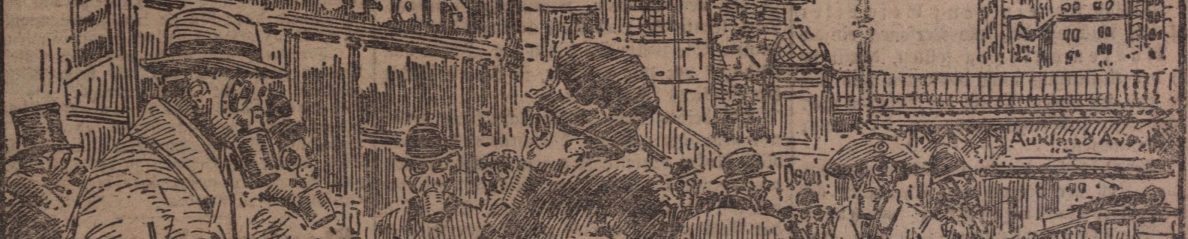
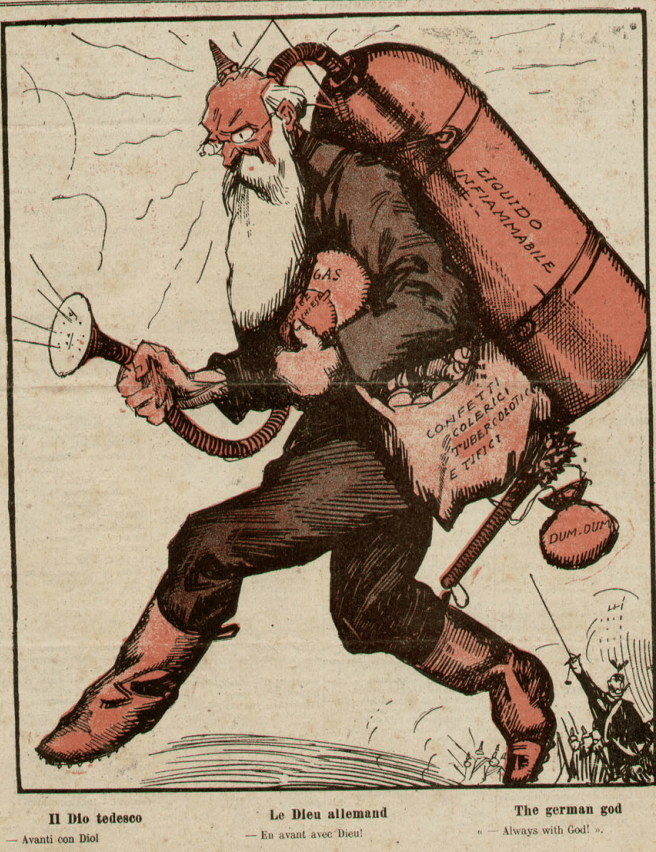
“Always with God!” Note the conflation of poison gas with spreading bacterial contagion. The man is carrying inflammable liquid along with cholera, tuberculosis, and typhus “confetti.” (L’Asino, Rome, 1918)
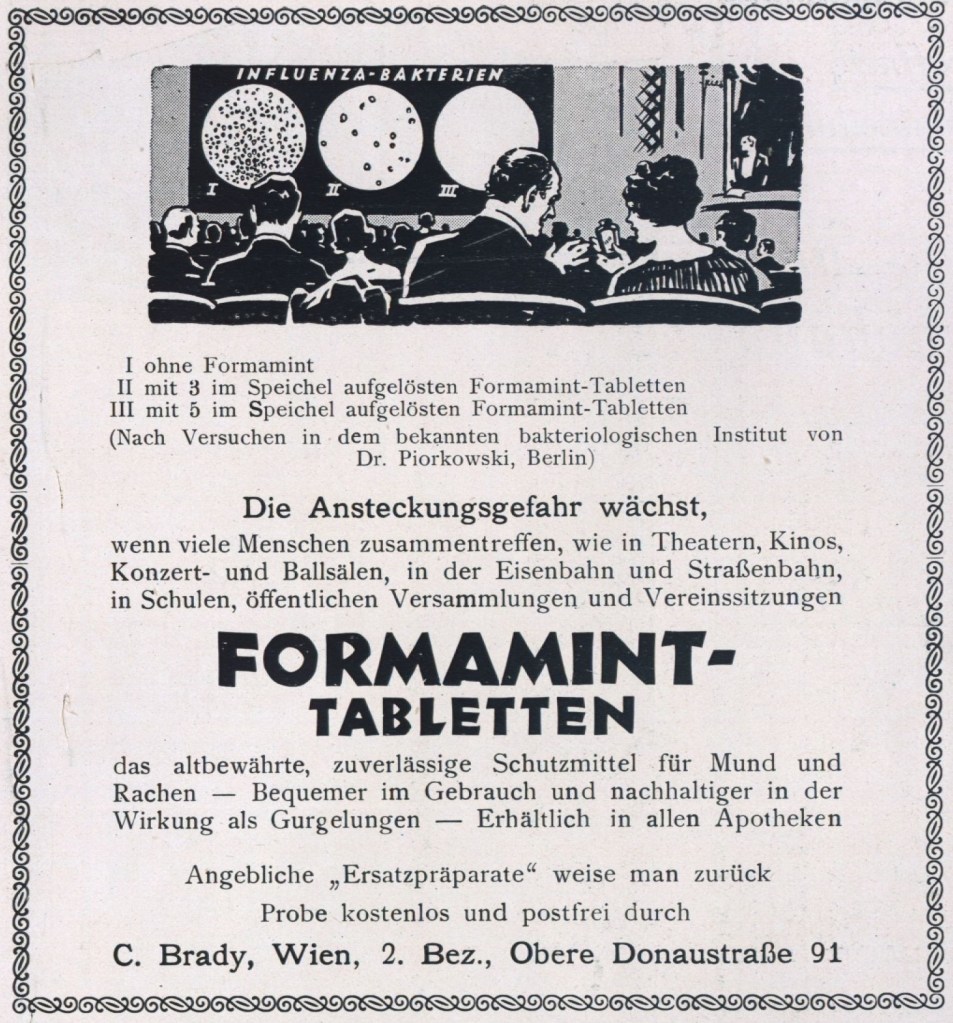
This advertisement from 1927 for Formamint lozenges nicely captures some present dilemmas. The Berlin bacteriologist Max Piorkowski developed these anti-bacterial pills before World War I, when they were already widely marketed. During the 1918 influenza pandemic, when very little was known about the properties of viruses, the overwhelming cause of death was secondary infection stemming from bacterial pneumonia. Formamint was then sold for its antiseptic properties as an aid to avoiding contagion risks. The active ingredient was formaldehyde (now thought to be a carcinogen at higher exposures), bound with sugar and citric acid for convenient oral administration. Notice how the advertisement conflates the site of risk—a crowded movie theater—with the site of the didactic commercial insight. “The risk of contagion grows if many people gather, such as in theaters, cinemas, concert halls, on trains and trams, in schools, public assemblies and associations.” The screen depicts three different slide cross-sections of “influenza bacteria” (sic). The first slide, full of bacteria, did not have the benefit of Formamint. The second slide shows the reduction in bacteria by ingesting three lozenges, while the third slide, free of bacteria, comes courtesy of five lozenges. The obvious implication: take a lozenge to assuage your public health anxiety. If someone asks, “What have you got to lose?“, exercise caution before taking magic pills. (Austrian National Library) (Compare also this earlier advertisement in English. It would seem that it had a strong market among war veterans.) On the more complex reasons for imputing the disease to Bacillus influenzae during the war, see Michael Bresalier, “Fighting flu: Military pathology, vaccines, and the conflicted identity of the 1918-19 pandemic in Britain,” J. Hist. Med. 68 (2013).
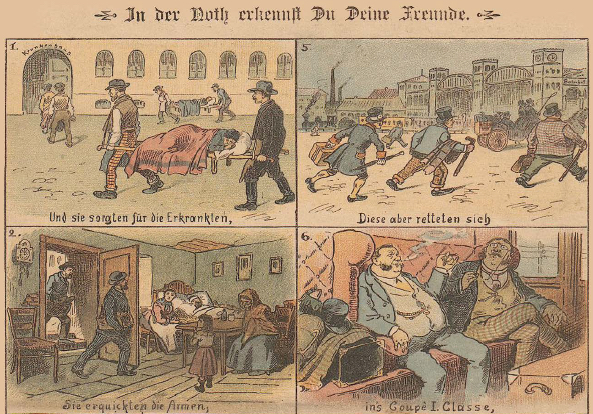
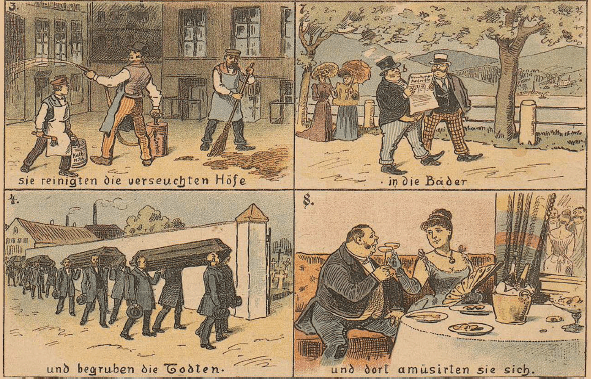
From Der wahre Jacob no. 162, Stuttgart, 1892: 1. And they cared for the sick, 2. they comforted the afflicted, 3. they cleaned the infected courtyards 4. and buried the dead. 5. Yet these saved themselves 6. in first class, 7. in the spas 8. and enjoyed themselves there.
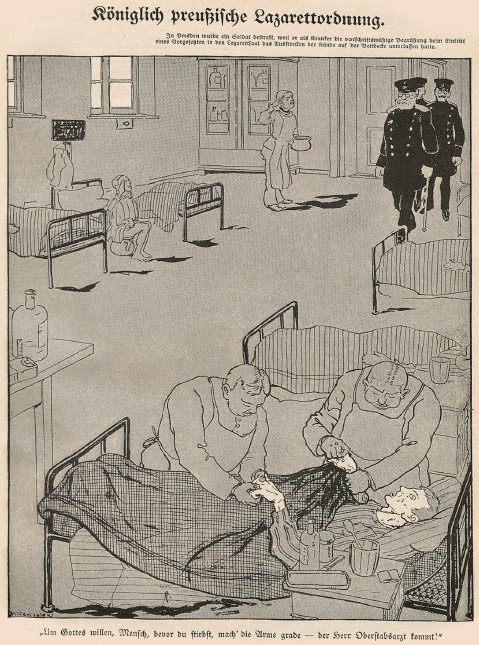
“In Dresden a soldier was fined because while a patient he had failed to salute in the regulated fashion at the entrance of a superior officer in the hospital ward and left his hands on the bedcovers.” (Der wahre Jacob no. 616, Stuttgart, 1910)
“For God’s sake, man, before you die, straighten your arm — the senior staff physician is coming!”
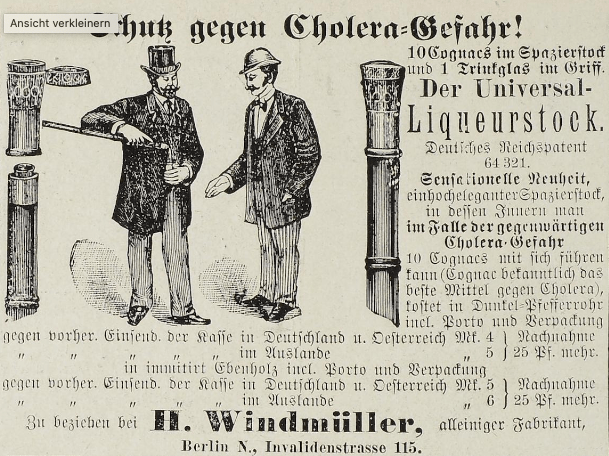
If you are anxious about venturing out in these pandemic times, may I suggest Mr. Windmüller’s “highly elegant” Liquor Cane (German patent 64321), which holds ten shots of cognac to protect you against disease. (Meggendorfers Humoristische Blätter, 1892)
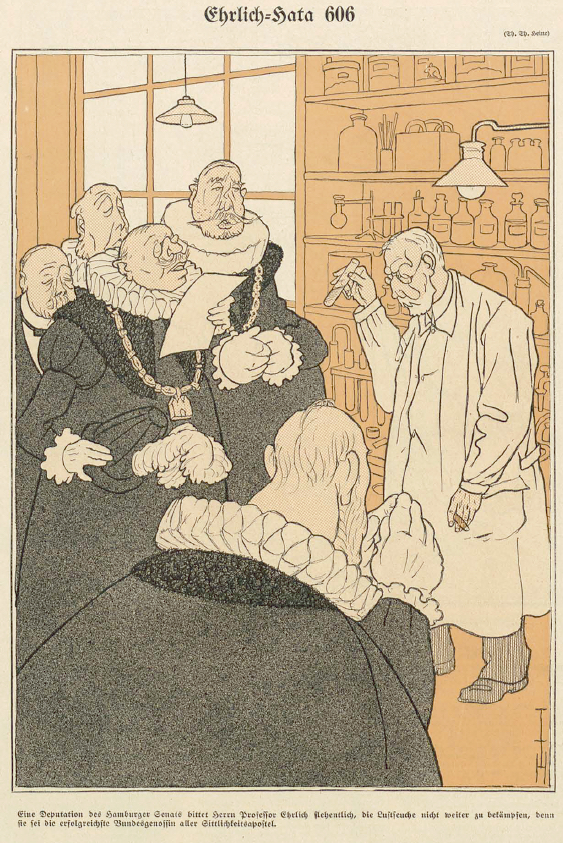
German satirical magazine Simplicissimus, 1910. A deputation of the Hamburg Senate implores Professor Ehrlich not to do battle with venereal disease any longer, for it is the most successful ally of all apostles of morality.
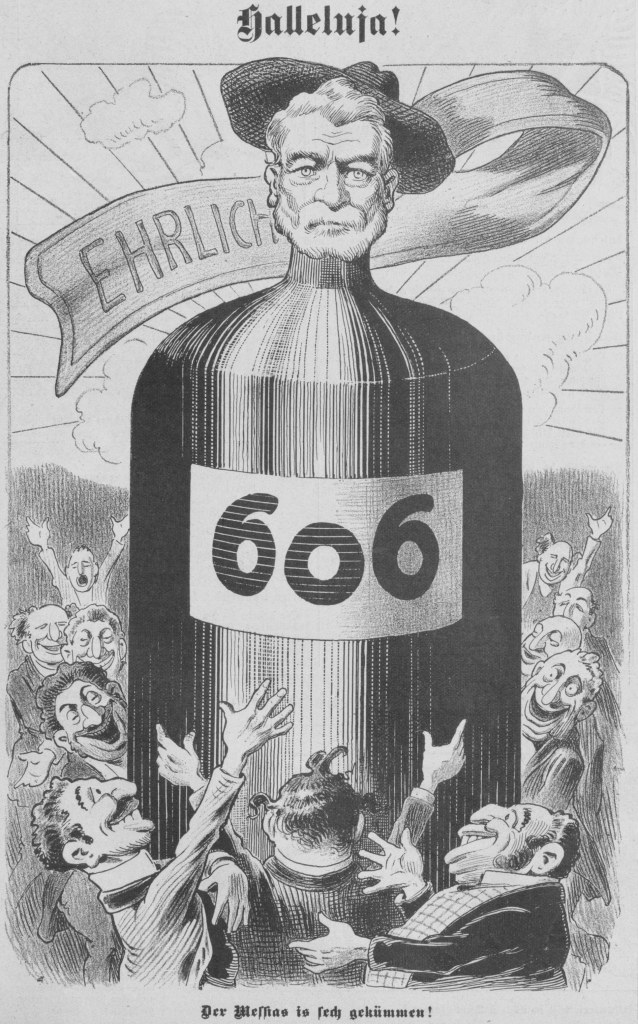
In 1910 German bacteriologist Paul Ehrlich became world famous when Hoechst AG began marketing Salvarsan, or “compound 606,” the first organic anti-syphilitic drug. Ehrlich’s laboratory colleague Sahachiro Hata first noted its toxicity to the syphilis spirochete, but Ehrlich’s “magic bullet” strategy for fighting epidemic diseases was what captured public attention. (Kikeriki, 1910) If you look carefully at this Tolstoy image from another post, you will see that Salvarsan is the connection.

 Sic Transit Pestilentia