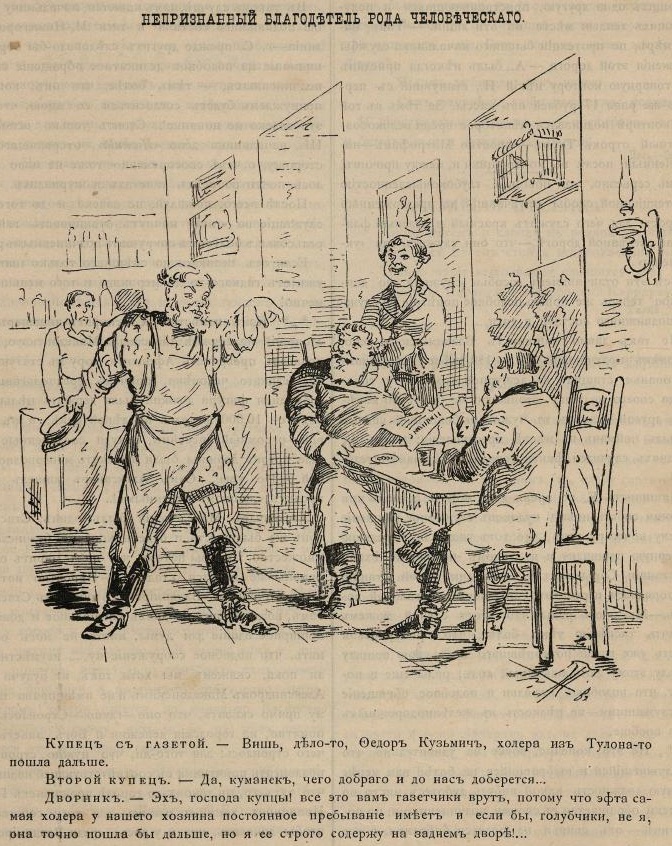
Merchant with newspaper: “Didya see the business, Fedor Kuzmich, about cholera going beyond that Toulon thing.” Second merchant: “Yes, kinsman, what good thing ever makes its way to us…” Yardman: “Hey, mister merchants! The newspaper types are all lying to us, because the same cholera is constantly here at our owner’s place and if it weren’t for me, duckies, it would have gone further, but I keep it strictly in the back yard!” (Razvlechenie, Moscow, 1884)
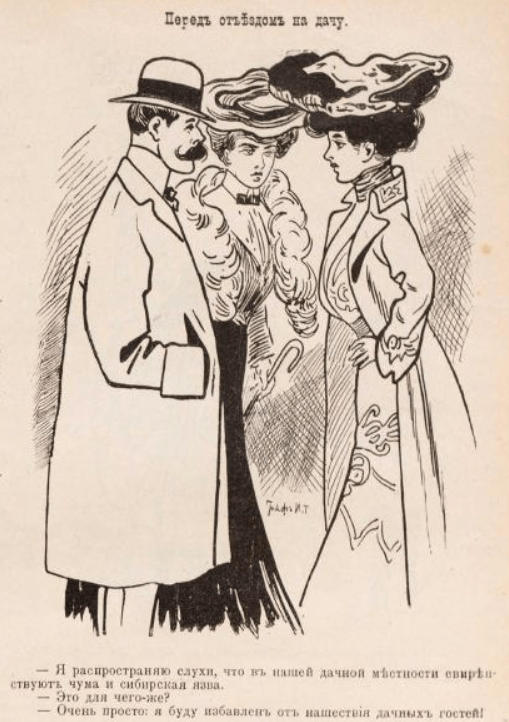
“I’m spreading rumors that plague and anthrax are raging in the vicinity of our dacha.” “What in the world for?” “It’s very simple: I’ll be spared the onslaught of dacha guests!” (Razvlechenie, Moscow, 1907)
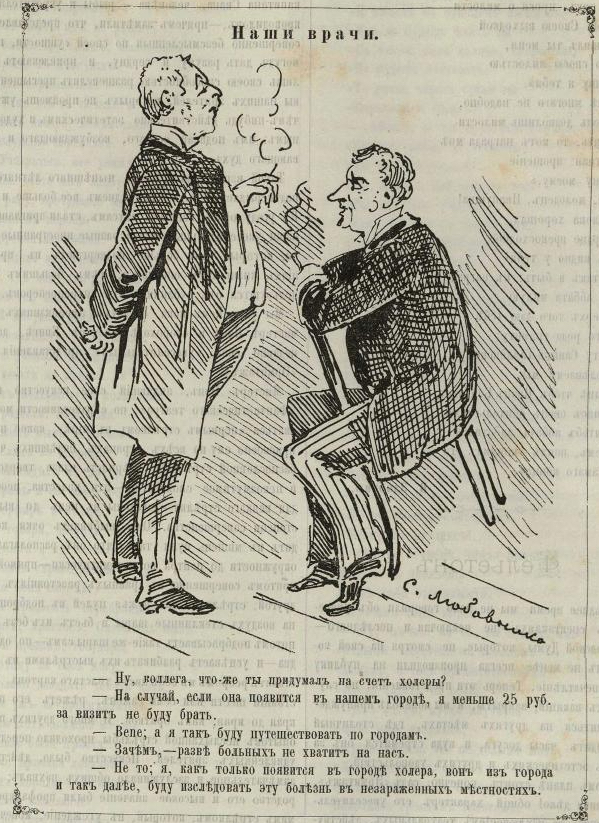
“So, colleague, what have you come up with regarding cholera?” “In case it appears in our city, I won’t take less than 25 rubles for a visit.” “Bene; and that’s how I’ll travel around the cities.” “What for, won’t there be enough patients for both of us.” “It’s not that. As soon as cholera appears in the city, I’ll skip town and keep studying this disease in uninfected locales.” (Razvlechenie, Moscow, 1883)
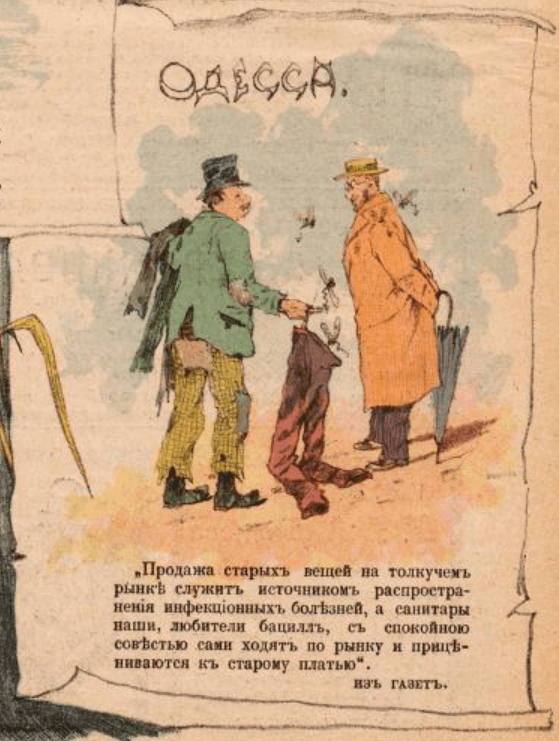
From the newspapers: “The sale of old items at the flea market is a source of the spread of infectious diseases, yet our public health workers, these lovers of bacilli, themselves frequent the market with clean conscience and ask about the price of old clothes.” (Razvlechenie, Moscow, 1897)
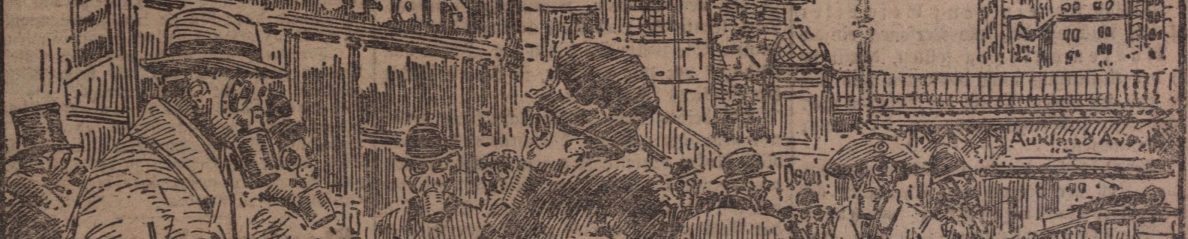
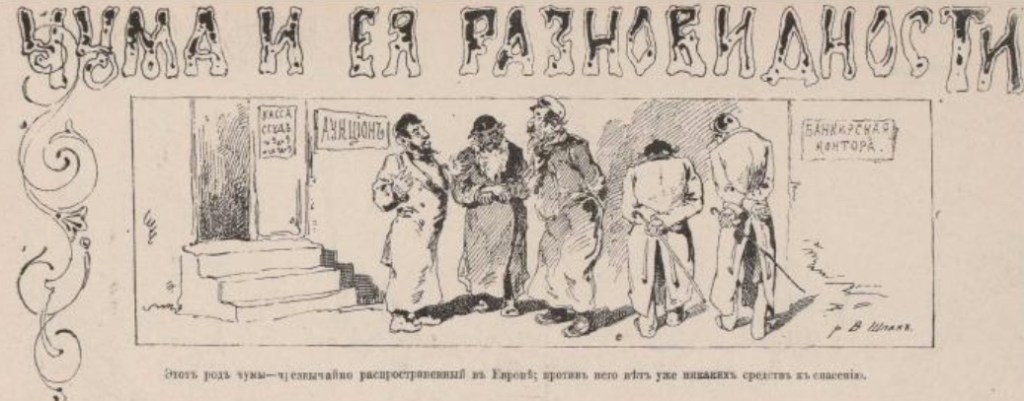
(Strekoza, St. Petersburg, 1879) (Some very unpleasant metaphors on display here.)
(Auction; bank offices) This kind of plague is widely dispersed in Europe; there are not yet any remedies against it.
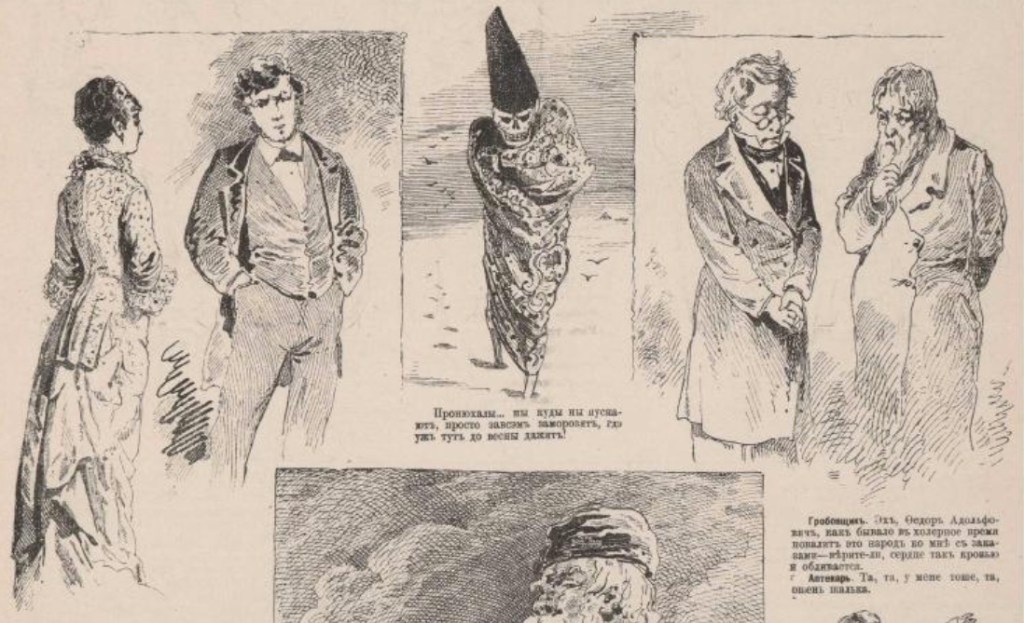
Left: “Oh! I’m terribly afraid of plague!” “We ought to send you to some kind of Vetlianka [in the Astrakhan region, where the plague outbreak originated in 1878] like I have at home, it would be cleaner than the Astrakhan one…” “How’s that?” “It’s very simple: a wife is cholera, a mother-in-law is worse than plague! You’ll get along fine there.”
Center: “They sniffed us out… they don’t let us anywhere, just completely freeze us, where to live until spring!”
Right: Undertaker: “Eh, Fedor Adolfovich, just like when there was cholera, people are overwhelming me with orders, believe me, my heart is just overflowing.” Pharmacist [of German heritage]: “Ja, ja, same with me, ja, ist a pity.”
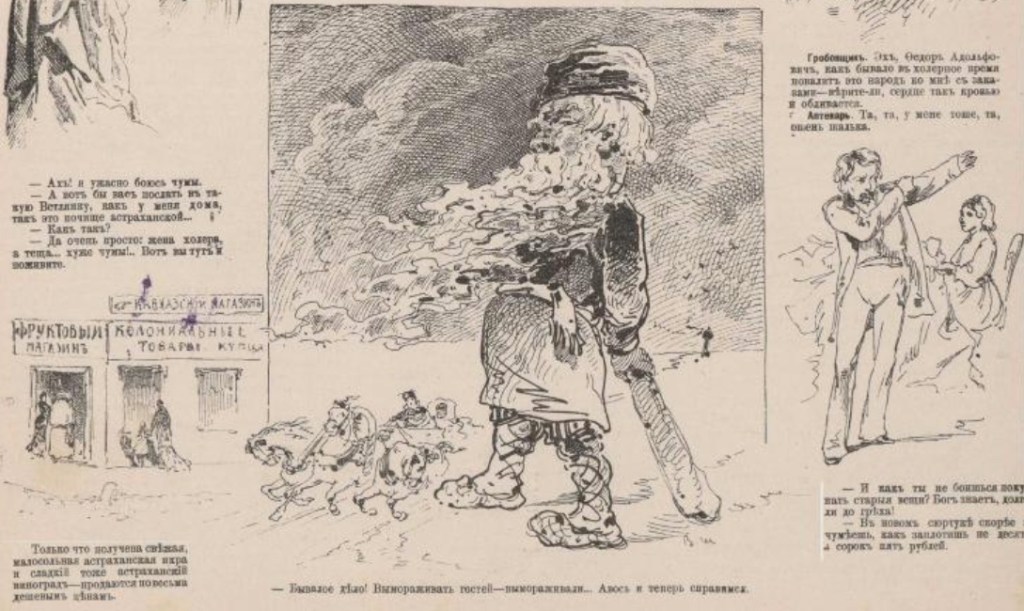
Russian plague cartoon
Left: (Fresh groceries, imported goods) “We’ve just gotten in fresh, low-salt Astrakhan caviar and sweet Astrakhan grapes, now being sold at extremely low prices!”
Center: “It’s happened! Freeze the guests — now they’re freezing… Maybe now we can handle it.”
Right: “How are you not afraid of buying old things? Who knows how long until they spoil!” “In a new frock coat you will sooner get sick [“get the plague”] dropping not ten, but forty-five rubles.”
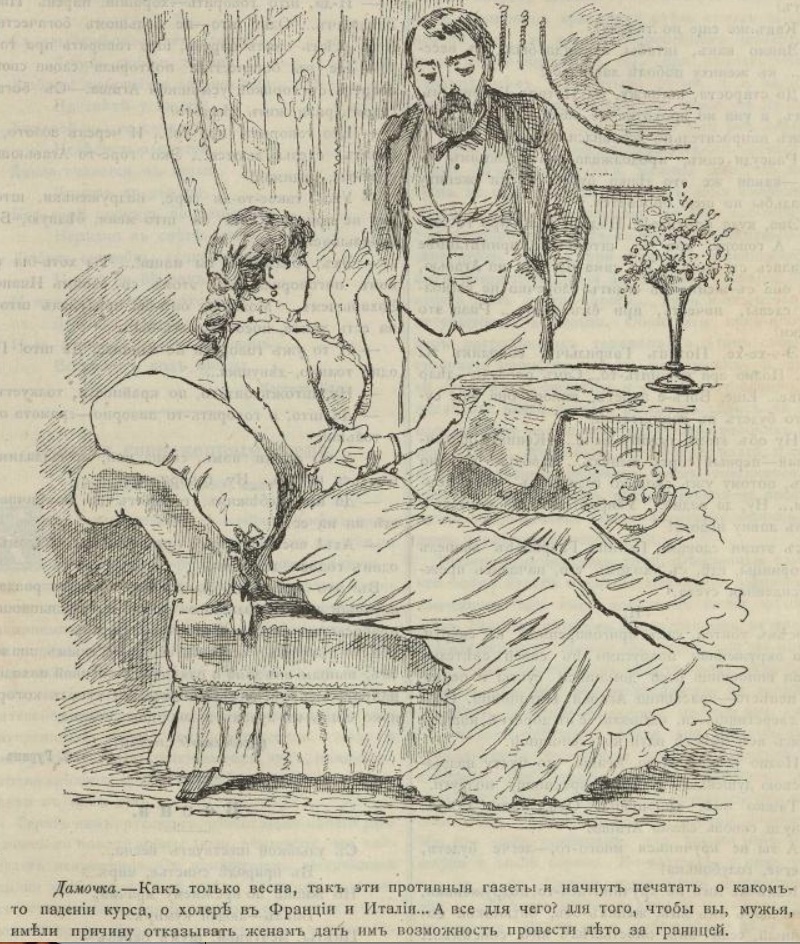
Little lady: “As soon as it’s spring, these awful newspapers will start printing things about the falling exchange rate, about cholera in France and Italy… And what for? So that you men will have an excuse to deny wives the chance to spend the summer abroad.” (Razvlechenie, Moscow, 1885)
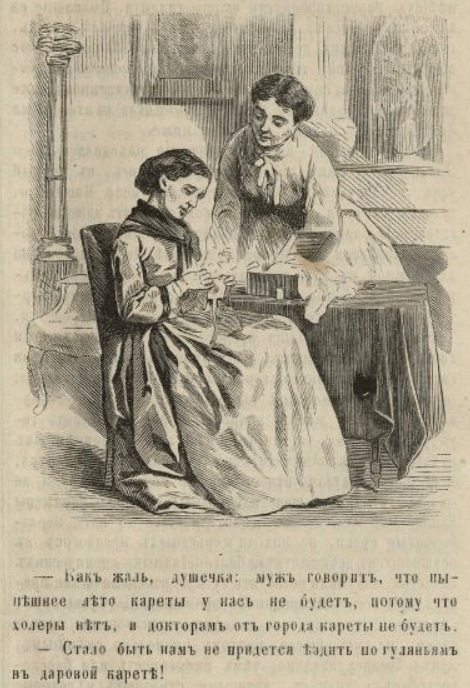
“What a pity, darling: my husband says that this summer we won’t have a carriage, because there is no cholera, and there won’t be carriages to take doctors from the city.” “So you’re saying we won’t have to go on our promenades in a donated carriage!” (Razvlechenie, Moscow, 1874)
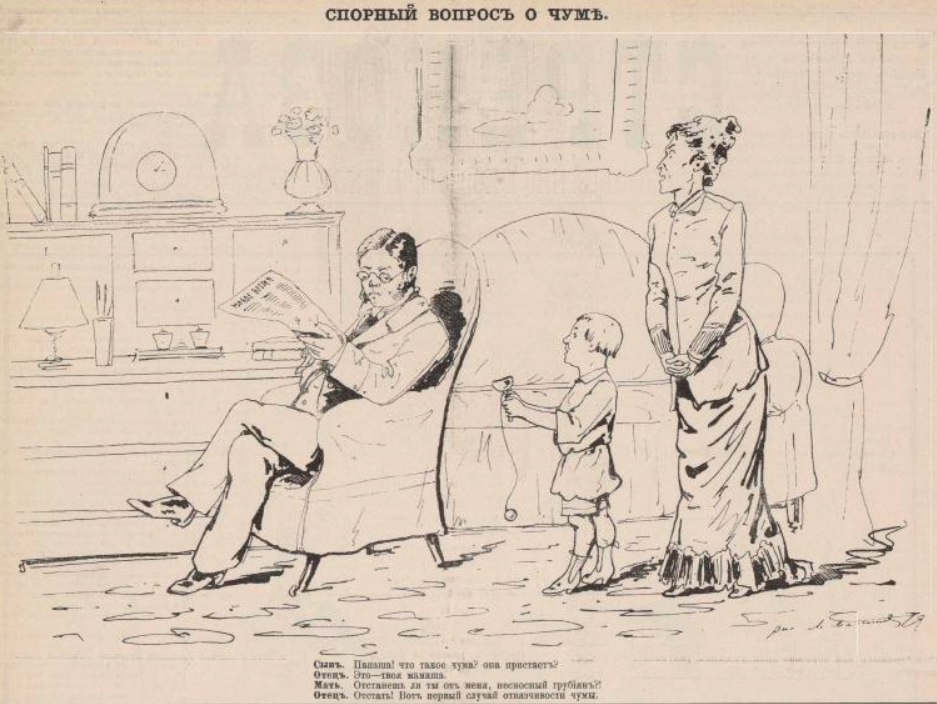
Son: “Papa, what’s plague? Is it pestering us?” Father: “It’s your mama.” Mother: “Will you leave me alone, you obnoxious brute?!” Father: “Leave alone! There’s the first instance of the unobtrusiveness of the plague.” (Strekoza, St. Petersburg, 1879) (Notwithstanding the flatfooted sexism of this cartoon, there was a recurrence of actual plague in Russia at this time.)
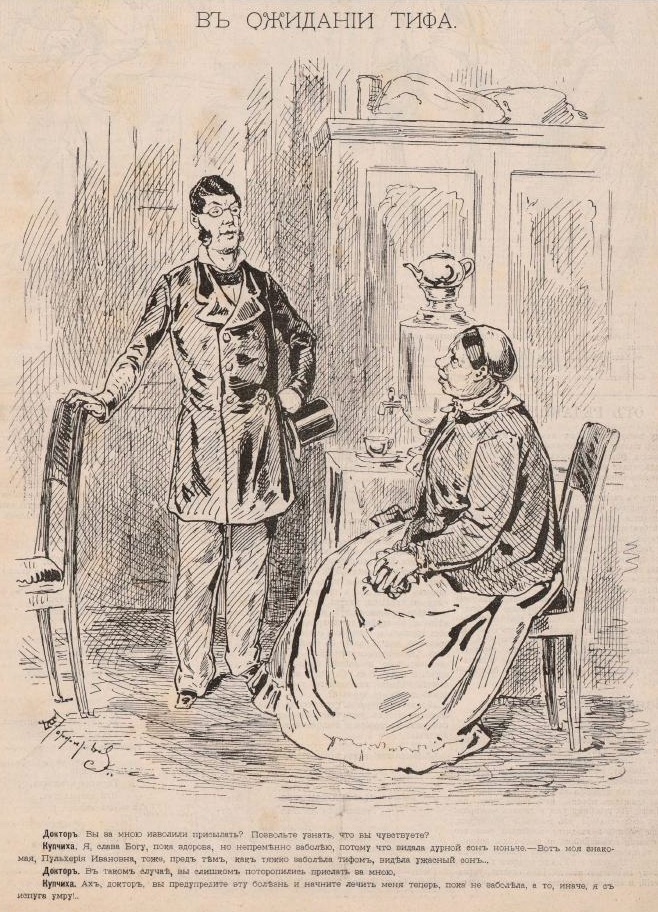
Doctor: “You called for me? Tell me what you’re feeling.” Merchant’s wife: “Thank God I’m healthy for now, but I’m taking ill immediately, because I had a bad dream today. An acquaintance of mine, Pulkheria Ivanovna, also had a terrible dream before she took ill with typhus…” Doctor: “In that case it was premature to summon me.” Merchant’s wife: “Oh, doctor, you’ll anticipate this sickness and start to cure me now, while I haven’t taken ill, otherwise I’ll die of fright!” (Strekoza, St. Petersburg, 1878)
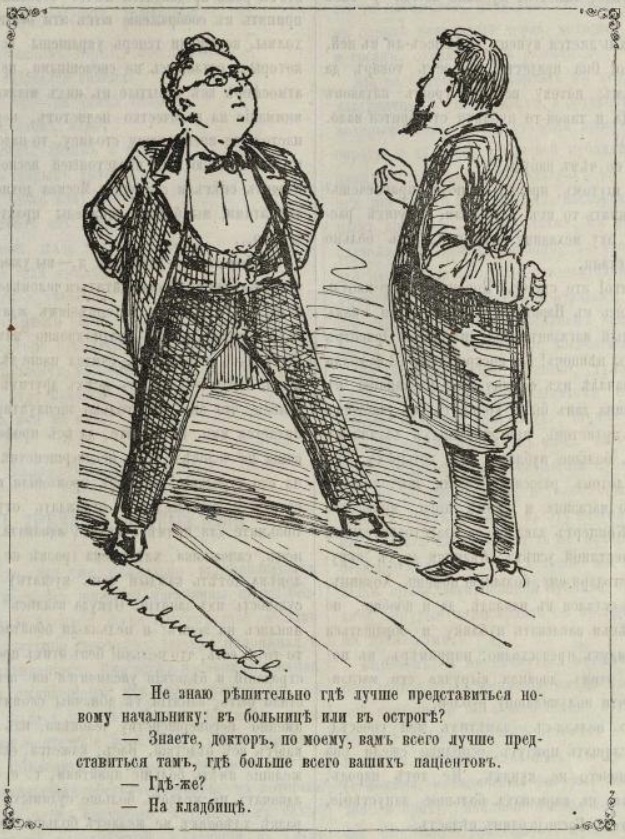
“I’m not entirely sure where it would be best to introduce myself to the new boss: at the hospital or at the prison?” “You know, doctor, I think it would be best to introduce yourself where most of your patients are.” “Where do you mean?” “At the cemetary.” (Razvlechenie, Moscow, 1883)
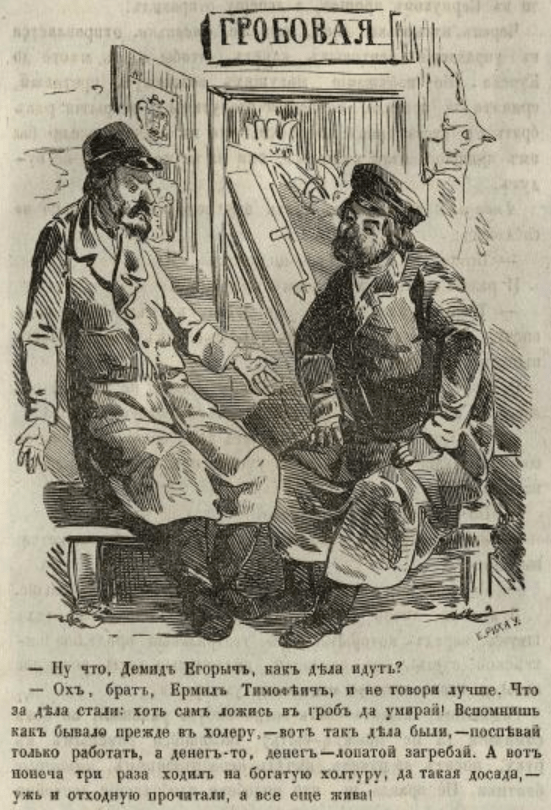
“Hey, Demid Egorovich, how are things going?” “Oh, brother, Ermil Timofeich, better not to talk about it. It’s gotten to the point that you might as well lie down in the grave yourself and die! You remember how it was earlier with cholera, that’s the way things were, you just keep on working and the money, you’re raking in money by the spadeful. But these days you go out three times for a rich quickie, yeah, it’s such a shame, they’re already reading the last rites, but she’s still alive!” (Razvlechenie, Moscow, 1861)
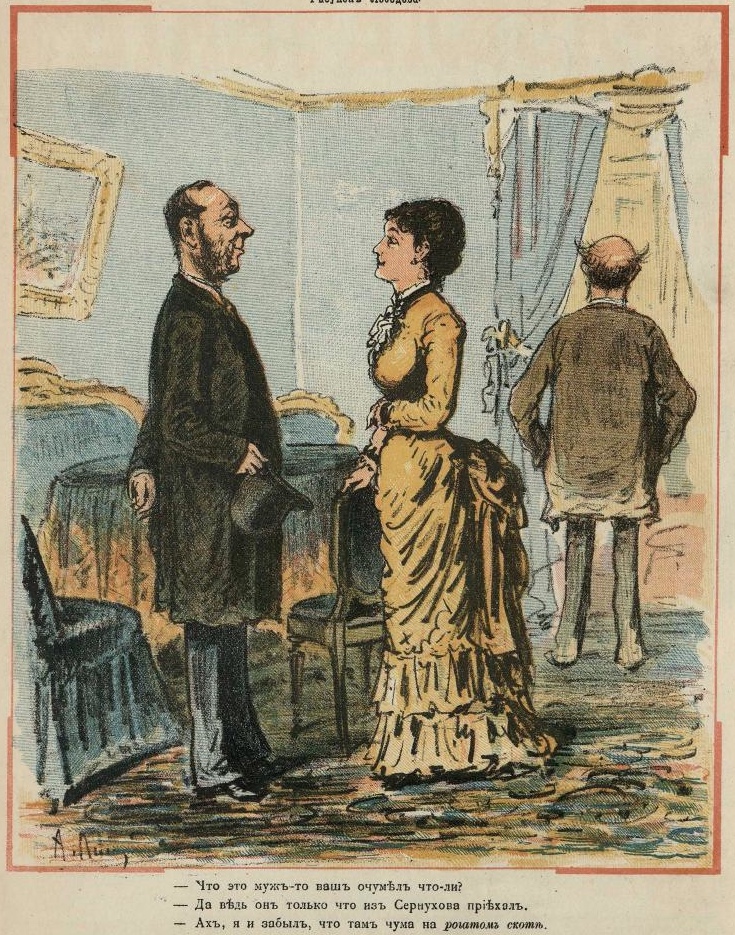
“What’s going on, did your husband get the plague?” “Yes, he just got back from Serpukhov.” “Oh, I forgot that the plague there is in the cattle.” (Razvlechenie, Moscow, 1885)
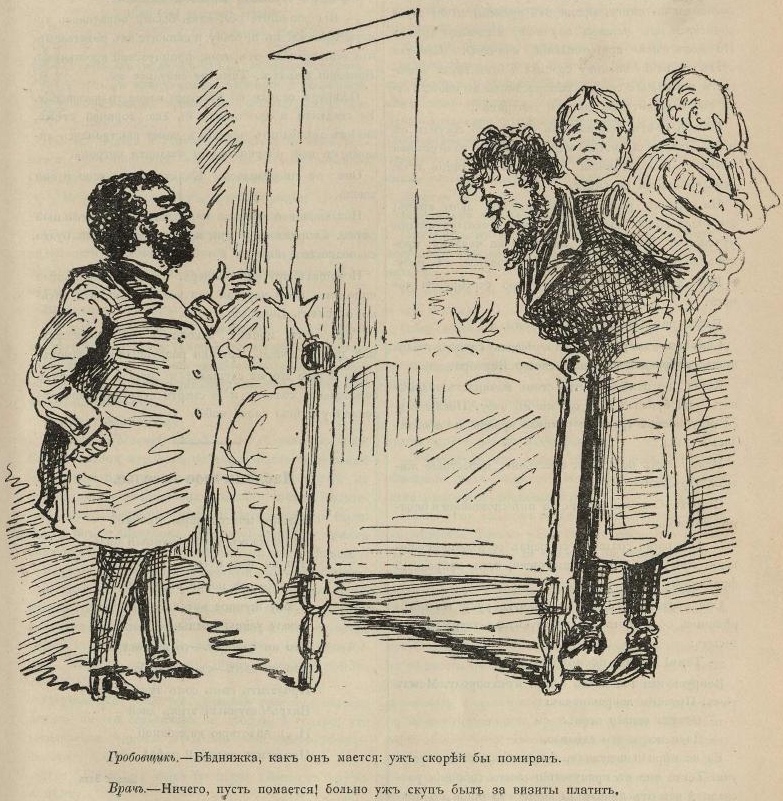
Undertaker: “Poor thing, he’s wearing himself out. Better he should die.” Doctor: “It’s nothing, let him get worn out! He was too stingy to pay for the visit.” (Razvlechenie, Moscow, 1885)
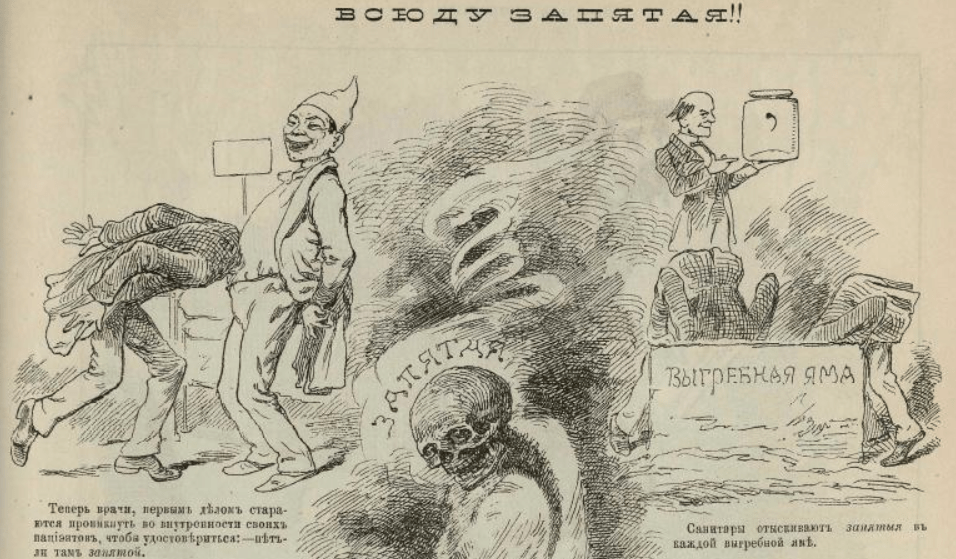
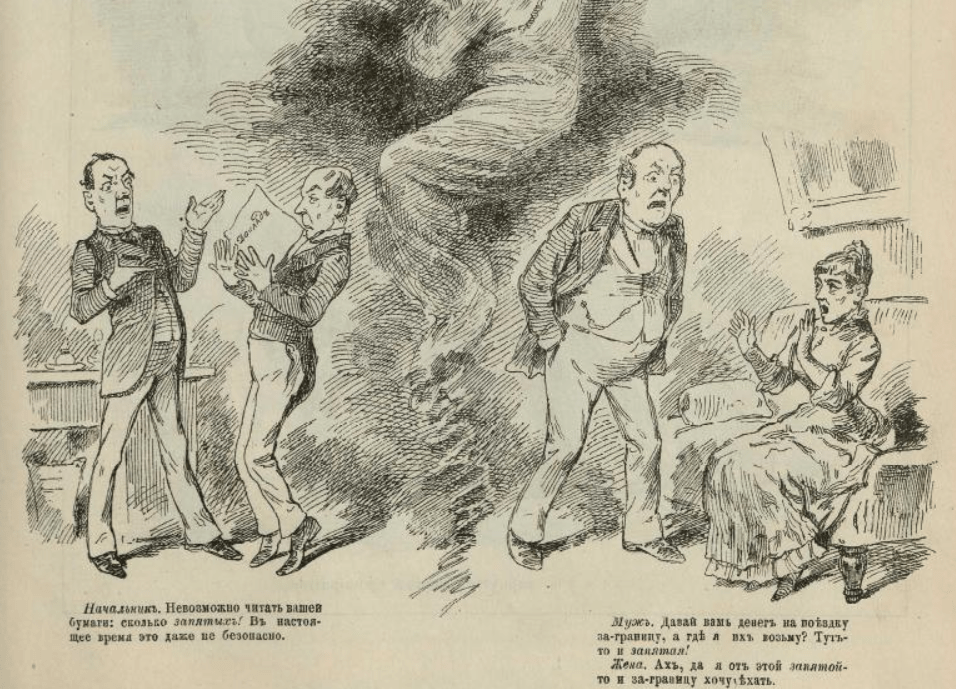
(The specter in the center is labeled “Comma,” signifying the cholera vibrio.) Upper left: Now physicians are trying to do the right thing and penetrate inside their patients in order to ascertain whether they have the comma. Upper right: Public health workers are searching for commas in every cesspool. (Razvlechenie, Moscow, 1885)
Lower left: The Boss: “I can’t read your documents, there are so many commas! Right now it’s not even safe.” Lower right: Husband: “Give you money to travel abroad, and where will I get it? The comma is there, too!” Wife: “Oh, I want to go abroad to get away from this comma, too”
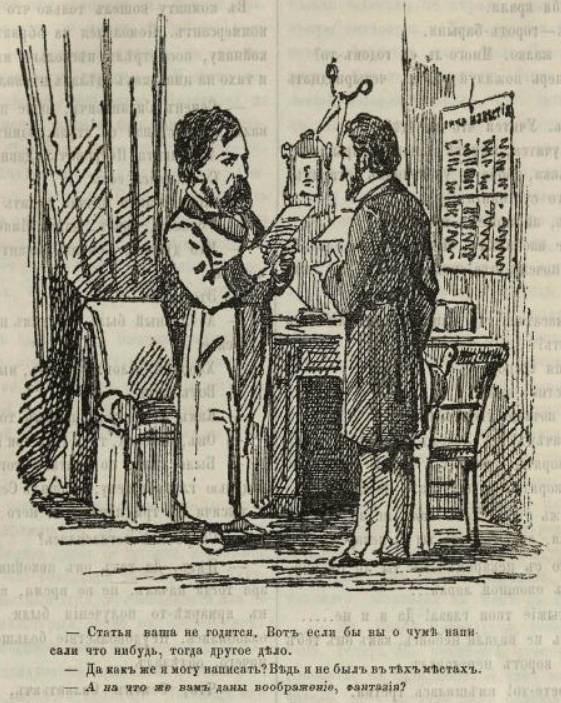
“Your article isn’t suitable. If you had written something about plague, then it would be another matter.” “But how can I write that? I haven’t been in those locales.” “Then what’s your imagination for?” (Razvlechenie, Moscow, 1879)
 Sic Transit Pestilentia