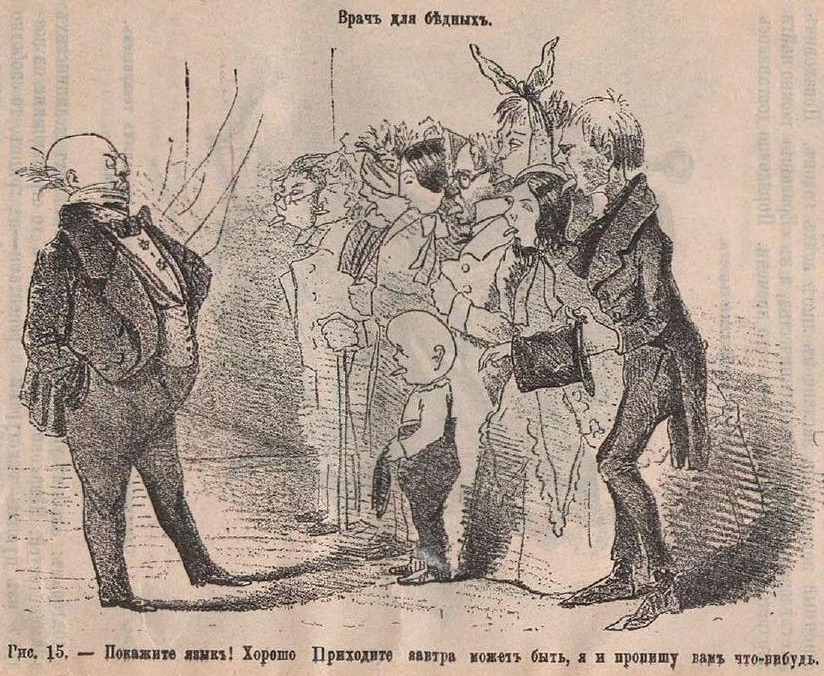
“Stick out your tongue! Fine. Come tomorrow, perhaps I’ll prescribe something for you.” (Both influenza and cholera were present in St. Petersburg when this was published in one of Russia’s first illustrated satirical journals.) Mikhail Nevakhovich in Yeralash, c. 1848. (Reprinted in Aleksandr Shvyrov’s Illustrated History of Caricature, 1903)
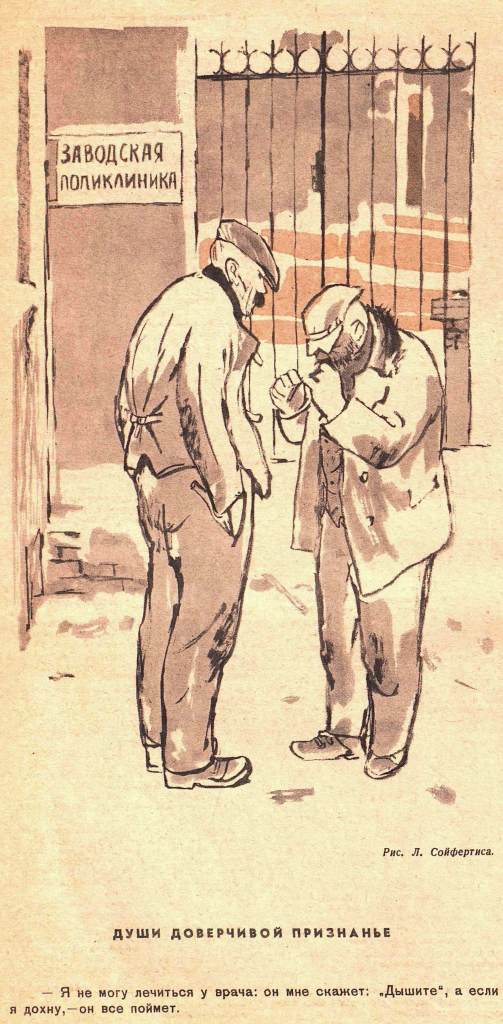
At the factory clinic. “I can’t get treatment from the doctor; he’ll tell me, “Take a deep breath,” and if I exhale, he’ll catch it all.” (Krokodil, Moscow, 1939)
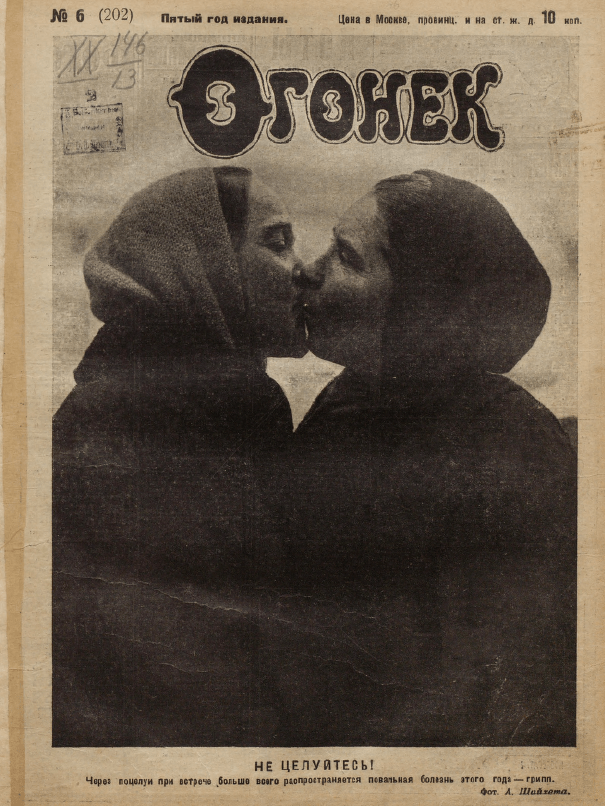
The infectious disease of the year, the flu, is transmitted most of all via kissing when greeting each other. (Ogonek no. 6, Moscow, 1927) (Though I took the image from another source, I owe this to the Soviet Visuals page on Facebook.)
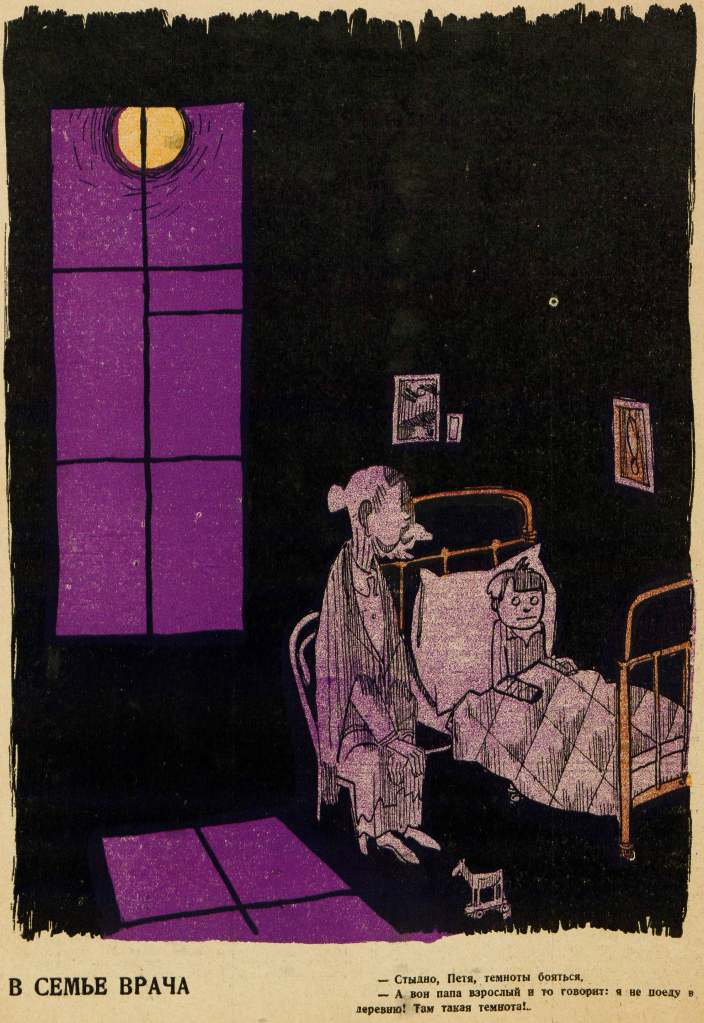
“You should be ashamed to be afraid of the dark, Pete!” “But papa’s a grownup and he says he won’t go to the countryside! There’s such darkness there!” (Chudak, Moscow, 1929)
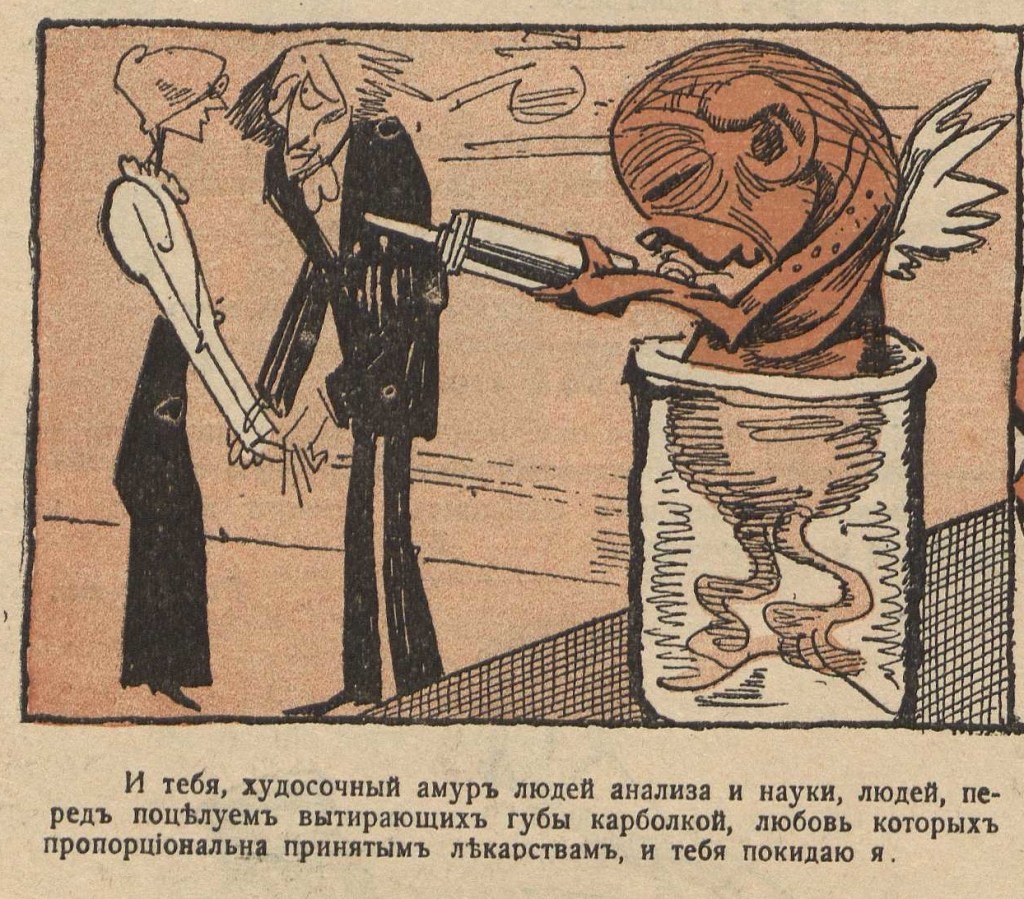
This delightfully bizarre cartoon is one panel of six celebrating the arrival of spring and the renewed efforts of Cupid. Unfortunately, Cupid has various rivals and false pretenders with agendas of their own during the long winter. In this case, our favorite clystère theme is featured. Unfortunately, the anxieties mocked in this image are very much present for us today.
“And you, the disease-wasted cupid of people of analysis and science, people who, before a kiss, wipe their lips with carbolic acid, whose love is proportional to the drugs taken, I take leave of you as well.” (Novyi Satirikon, Petrograd, 1915)
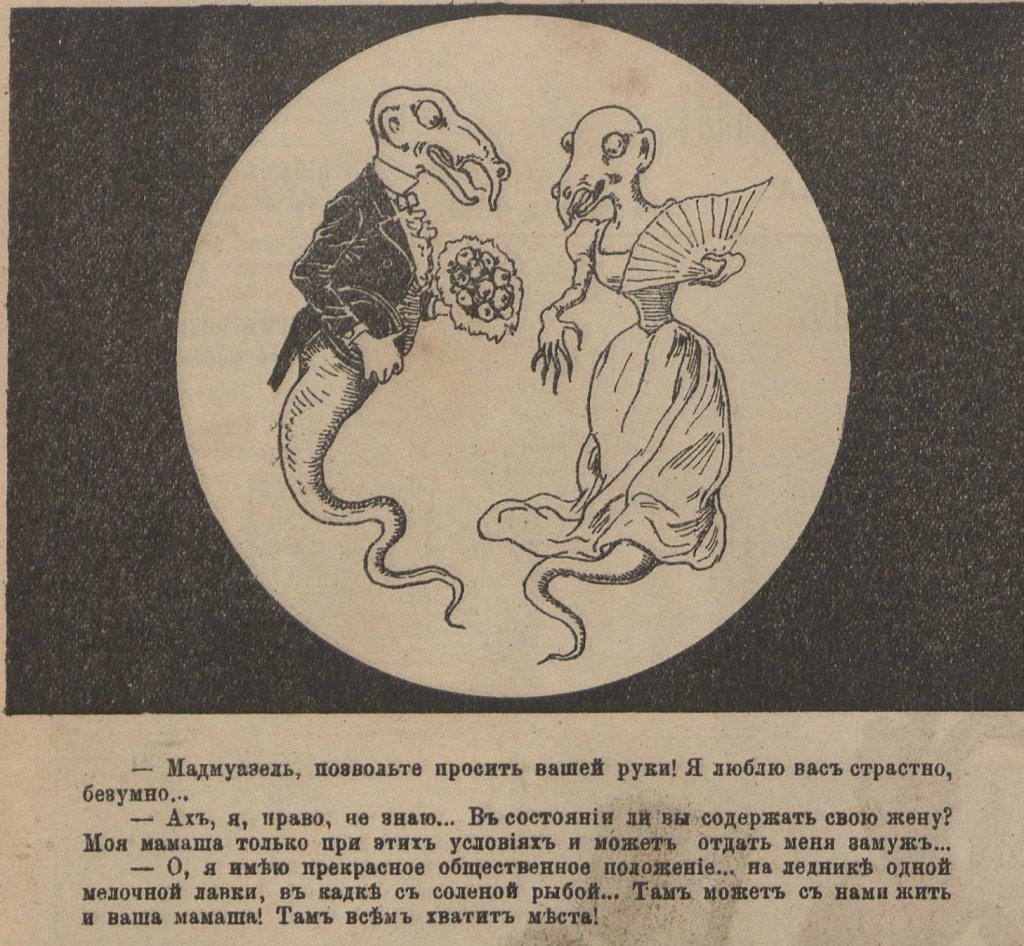
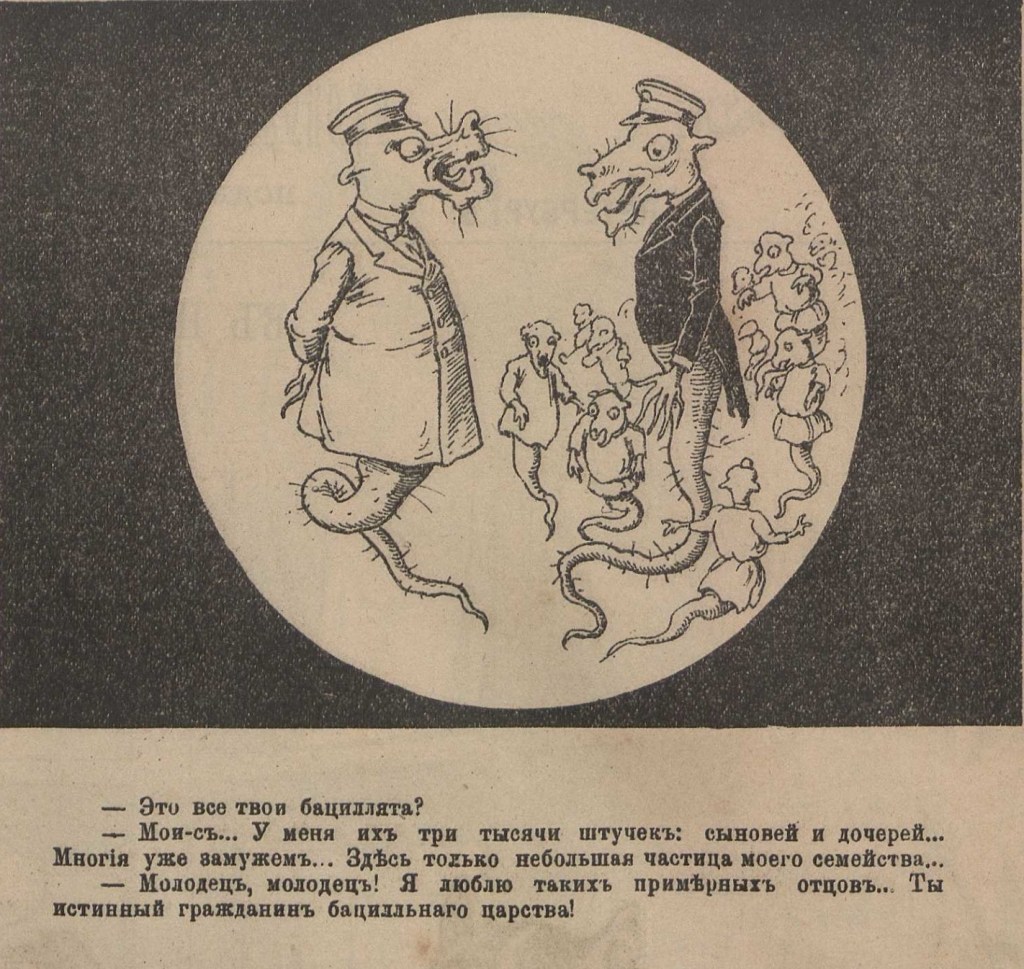
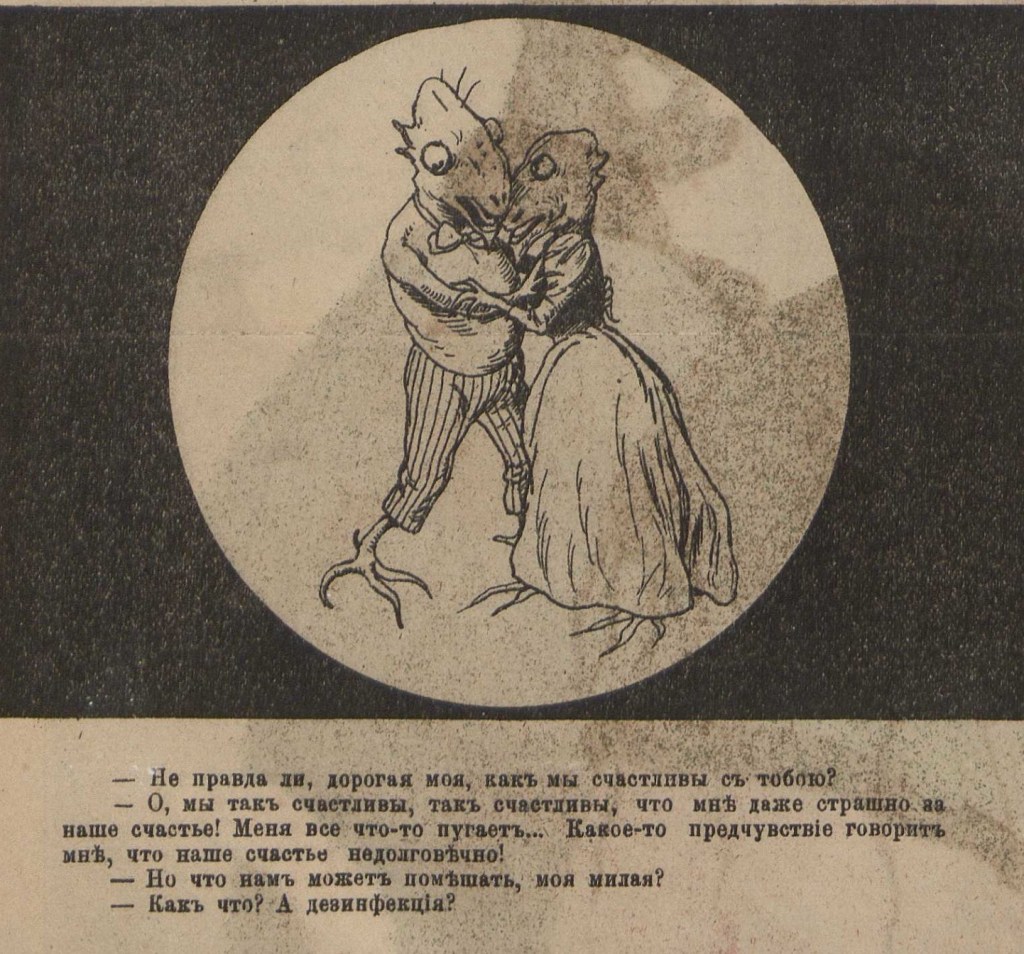
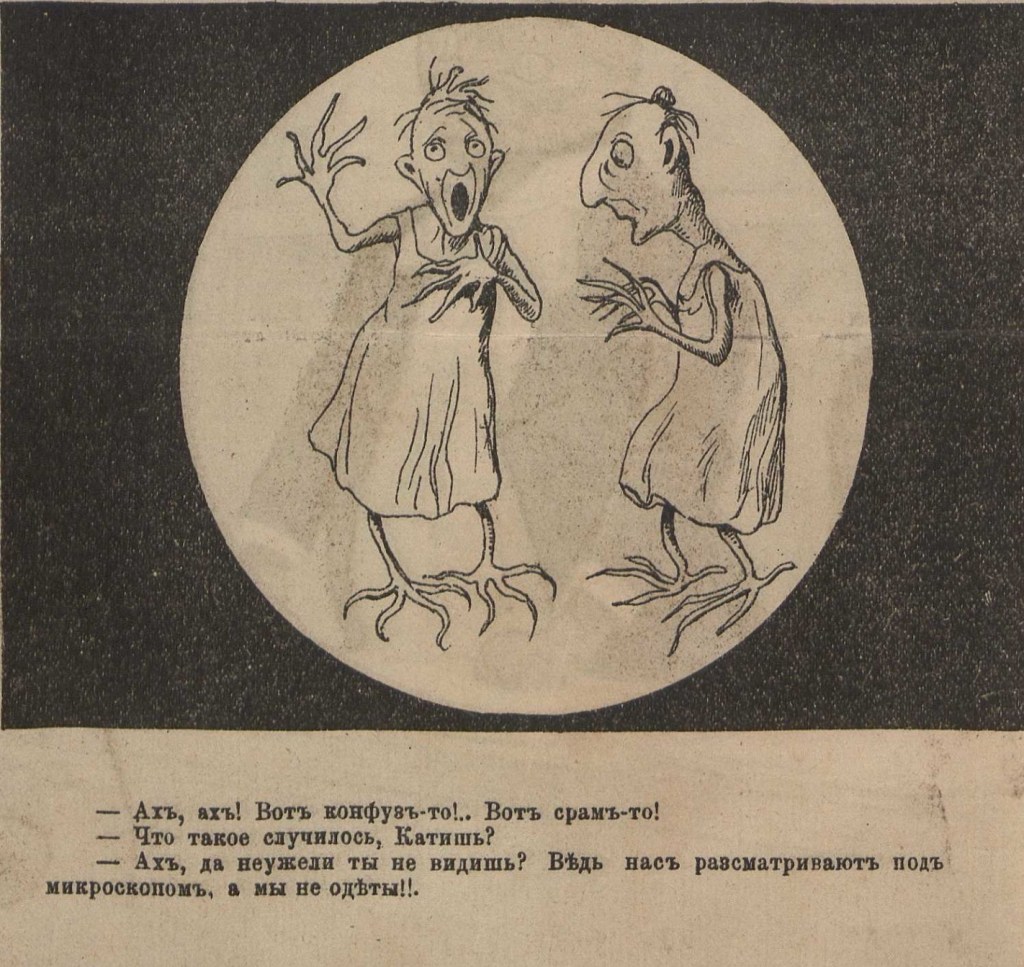
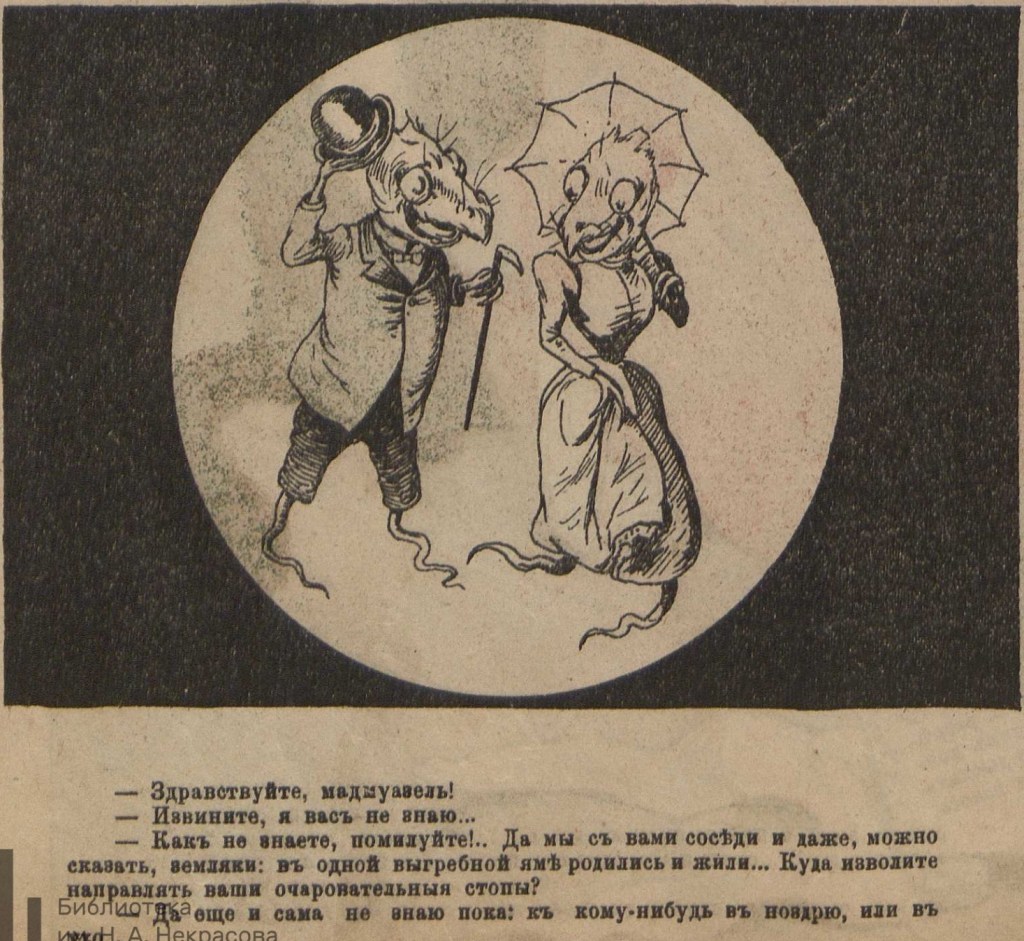
“Photographed under a microscope.” (Oskolki, St. Petersburg, 1898)
“Mademoiselle, may I take your hand in marriage! I love you passionately, madly…” “Oh my, I’m not sure… Are you in a position to keep your wife? My mommy can only let me get married under these conditions…” “Oh, I have a terrific social position… in the cooler of a small shop, in a vat with salted fish… We can live there with your mom as well! There’s room for everyone!”
“Are these all your little bacilli?” “Yes, I have three thousand of them: sons and daughters… Many are already married… This is only a small portion of my family…” “Excellent, excellent! I love such exemplary fathers… You are a true citizen of the bacillus realm!”
“My dear, aren’t we so very happy together?” “Oh, we are so happy, so happy that I’m even scared of our happiness! It all frightens me… Some sort of premonition tells me that our happiness will not last long!” “But what could interfere with us, my darling?” “What? Disinfection!”
“Oh my, oh my! This is so embarrassing!… This is so shameful!” “What happened, Katie?” “Oh my, do you mean to say you can’t see? We’re being looked at under a microscope, and we’re not dressed!”
“Greetings, mademoiselle!” “Excuse me, I don’t know you…” “What do you mean, you don’t know me!… We’re neighbors and you might even say countrymen: we were born and raised in the same cesspool… Where would you like to direct your charming feet?” “I still don’t even know myself: to someone’s nose or ear.”
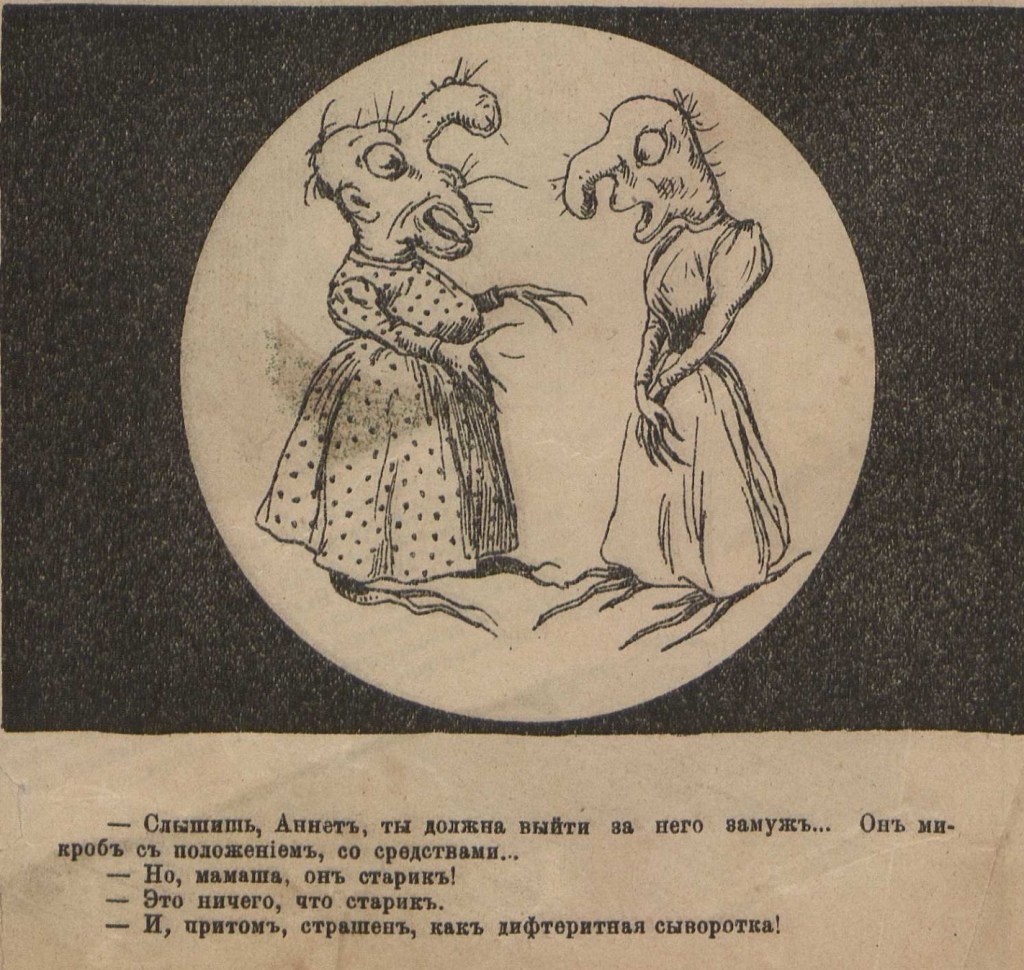
“Listen, Annette, you have to marry him… He’s a microbe with standing and means…” “But mama, he’s an old man!” “It’s nothing that he’s an old man.” “And what’s more, he’s scary like diphtheria serum!”
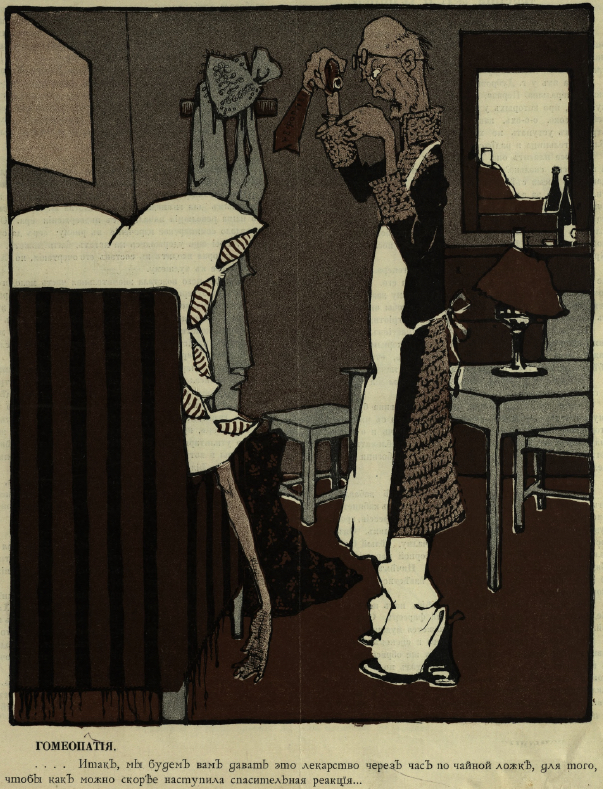
… So, we’ll give you this medicine by teaspoon in an hour, so that a salutary reaction sets in as soon as possible… (Strekoza, St. Petersburg, 1908) (This cartoon appeared before the cholera outbreak in Russia that same year.)
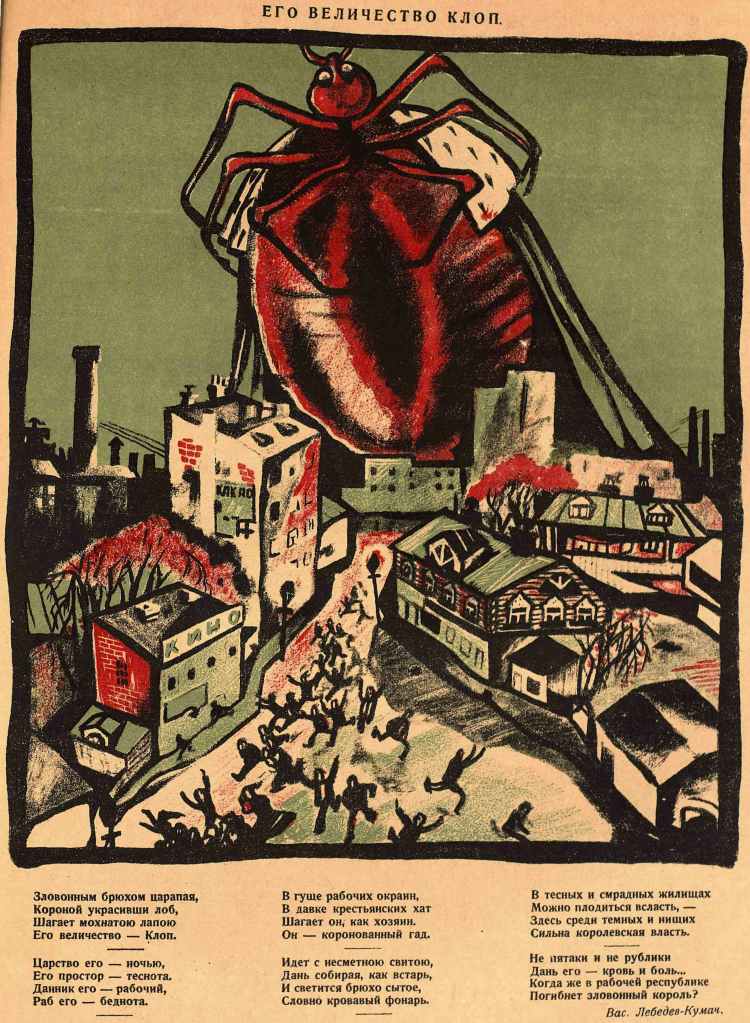
Scratching his fetid belly Adorning his forehead with a crown He strides with a hairy paw His Majesty the Bedbug. (Krokodil no. 41, Moscow, 1925)
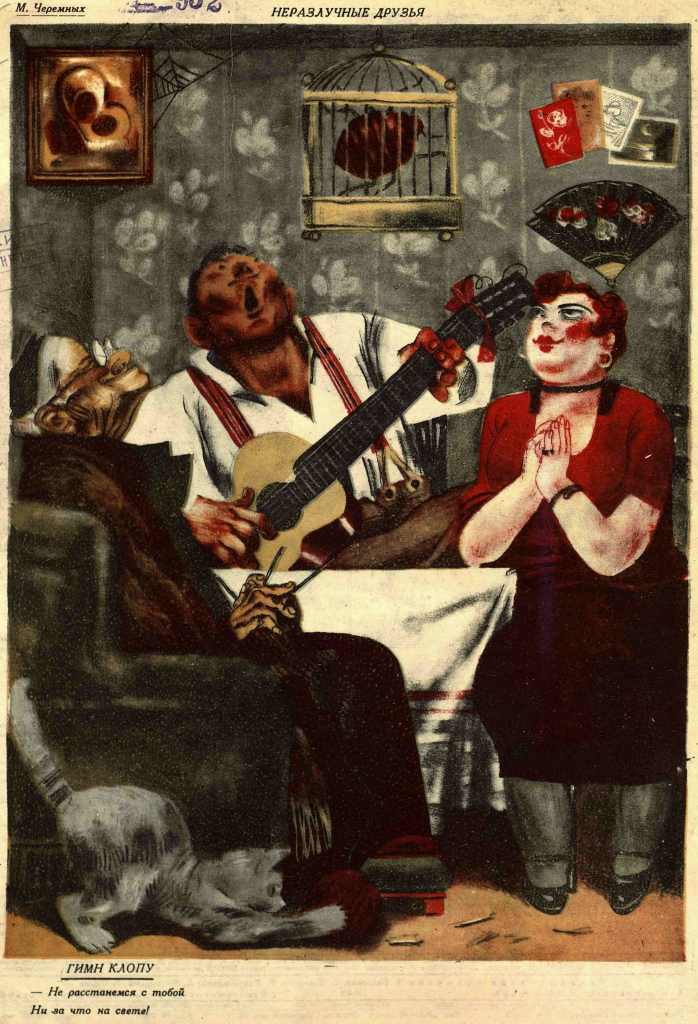
Or in the same vein: “Inseparable friends. Hymn to the bedbug.” “We’ll never part with you, not for anything in the world!” (Krokodil no. 1, Moscow, 1932)
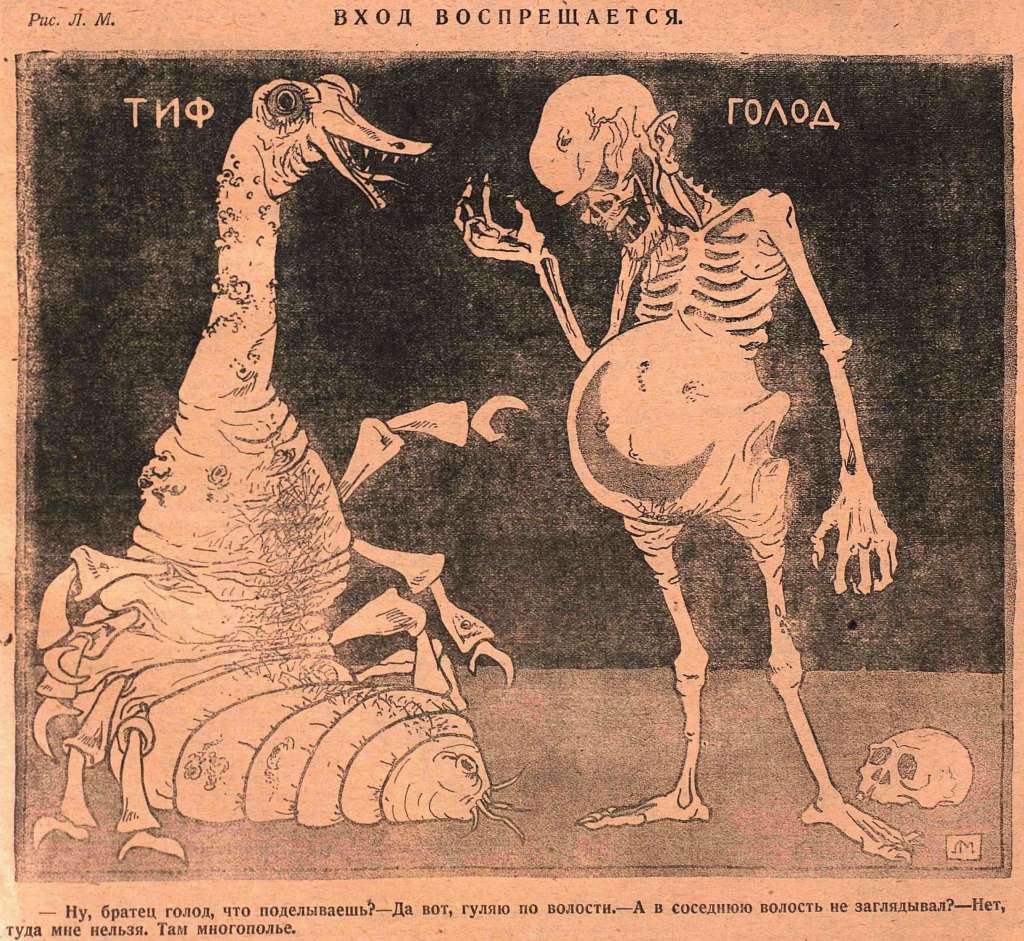
Typhus: “Well, brother famine, what are you up to?” Famine: “Here I am, wandering around the district.” Typhus: “Not taking a look at the neighboring district?” Famine: “No, I’m not allowed over there. They have the rotating crop field system there.” (Krokodil, Moscow, 1924)
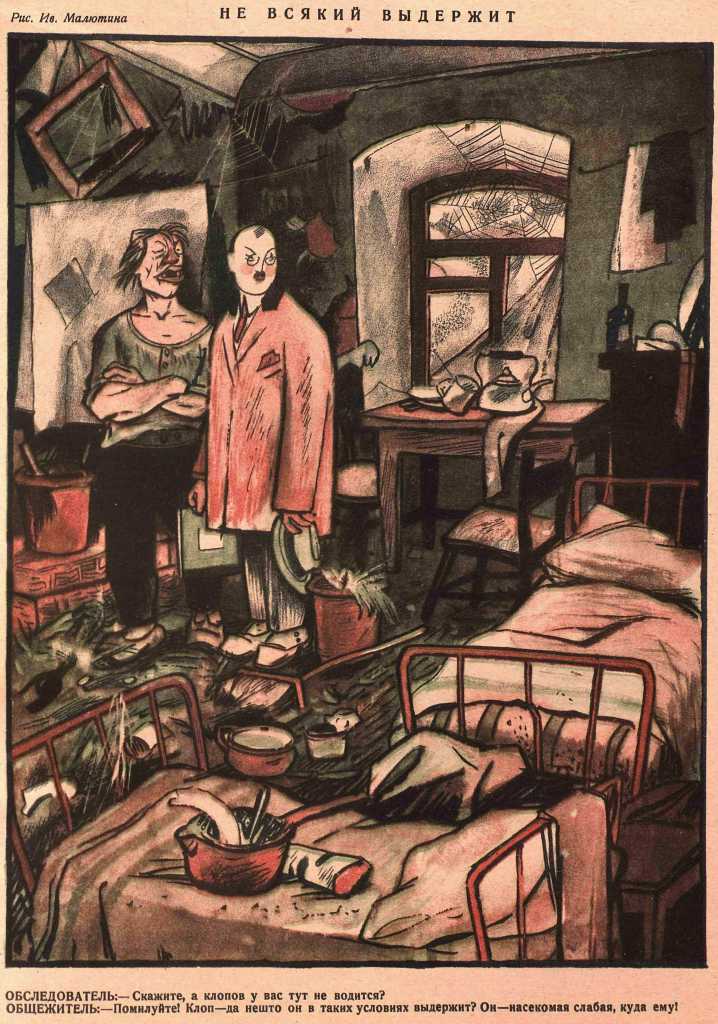
Inspector: “Say, are there any bedbugs found here?” Resident: “Mercy! Can bedbugs stand these conditions? It’s a weak insect, where would it go?” (Krokodil, Moscow, 1927)
 Sic Transit Pestilentia