Russian matryoshka doll with face mask, 1974.
(deutsche fotothek)
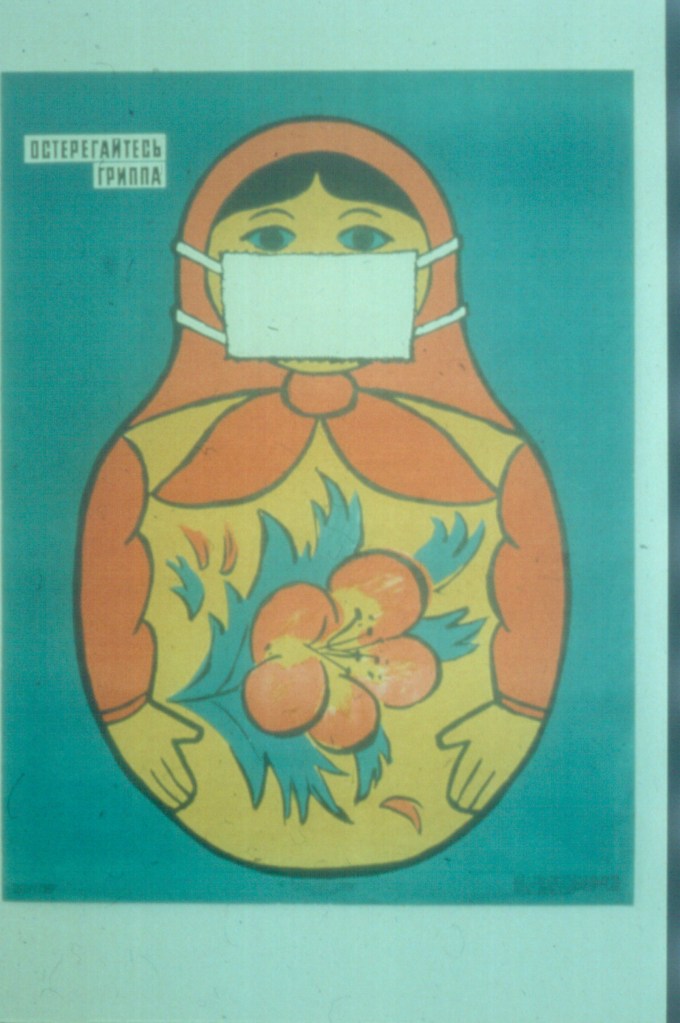
Russian matryoshka doll with face mask, 1974.
(deutsche fotothek)
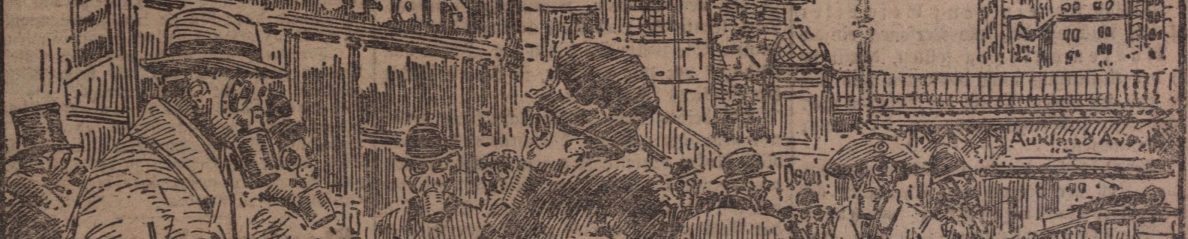
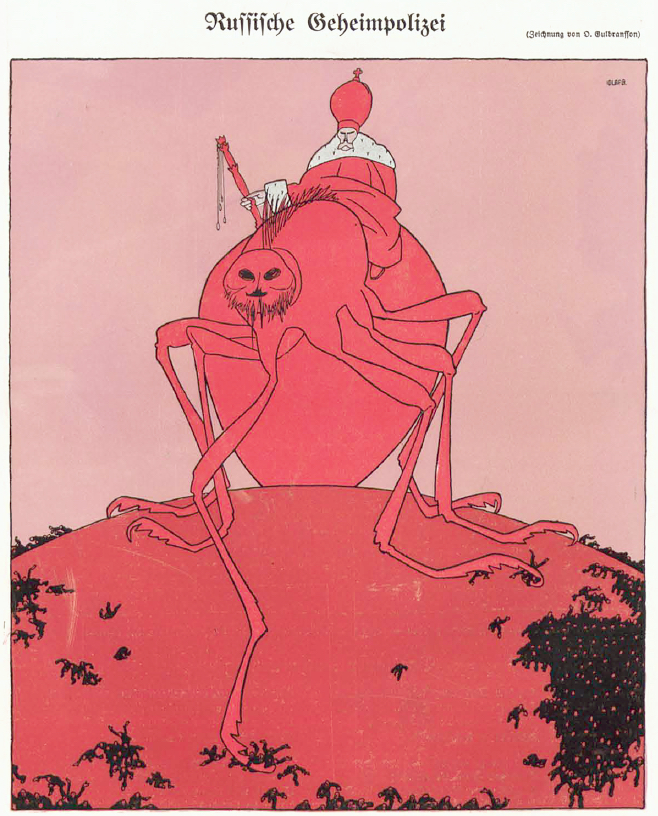
In 1908 a typhus epidemic began spreading from the northern Caucasus and southern Russia to the more densely populated northwestern districts of the Romanov Empire. By and large the epidemic failed to reach further west in Europe, but that did not prevent the German magazine Simplicissimus from offering this curious variant of the classic trope of disease as invasive agent.
(Simplicissimus no. 24, 1909)
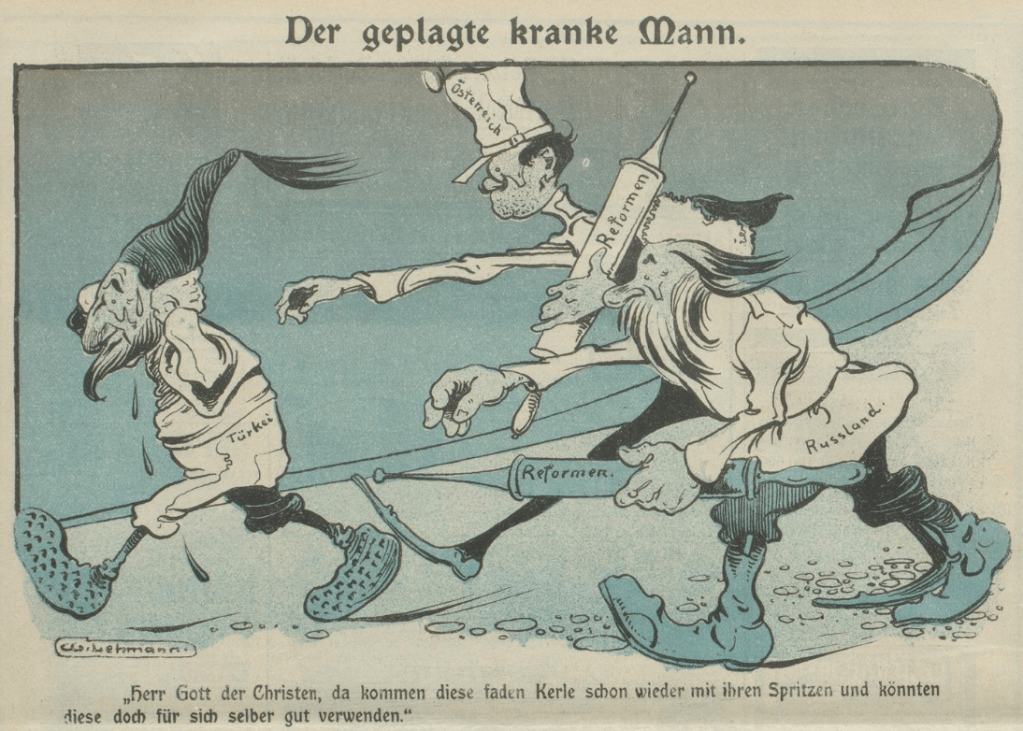
Turkey pursued by Austria and Russia with syringes full of reforms. “Lord God of the Christians, here come these stupid guys again with their syringes and yet they could put them to use for themselves.” (Included mainly for the use of the clystère theme.)
(Nebelspalter, Zurich, 1907)
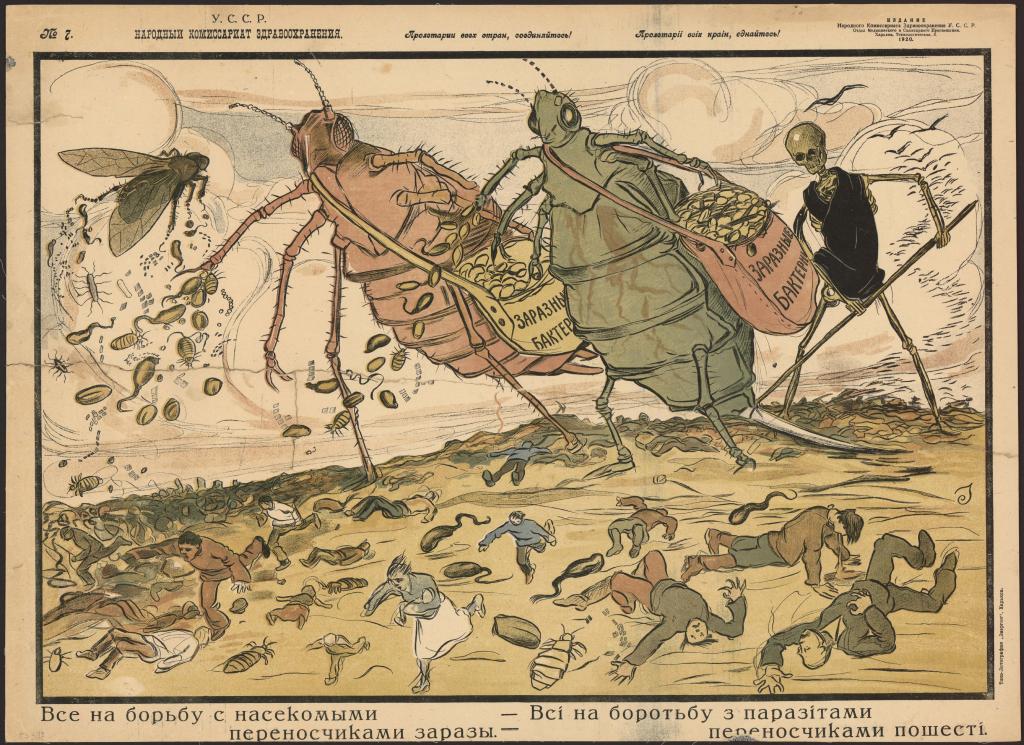
Bugs bearing bags of infectious bacteria. “Everyone to war with disease-bearing insects.” Soviet Ukrainian Commissariat of People’s Health, 1920.
(Russian State Library)
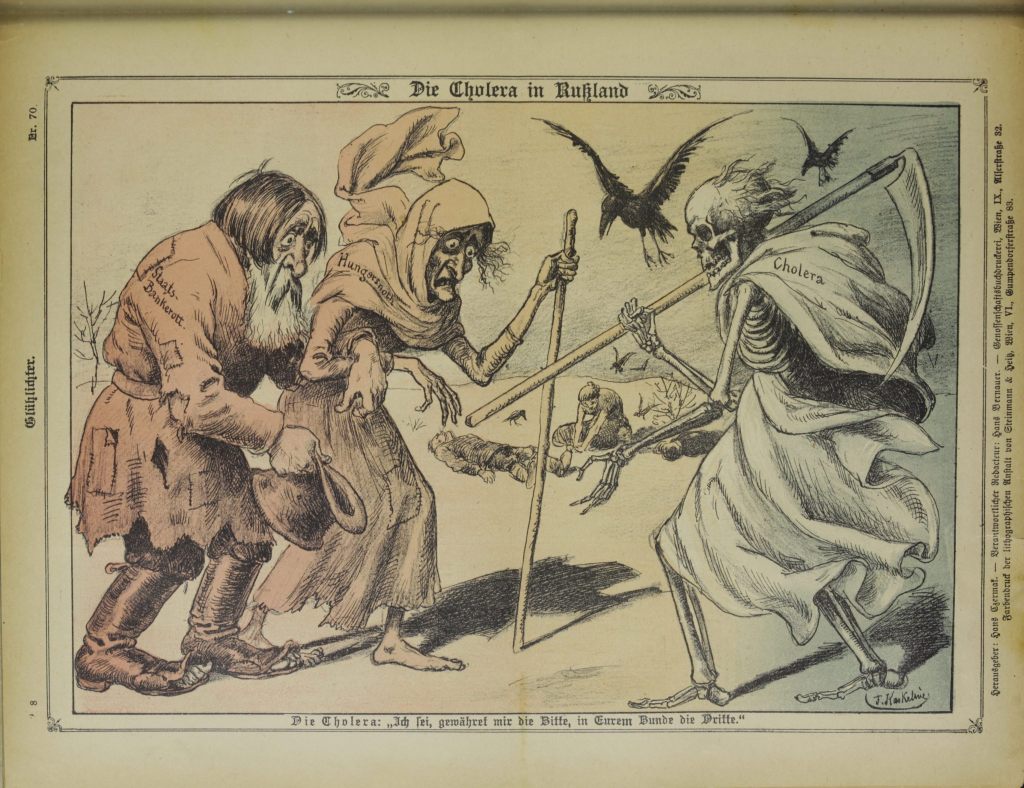
To state bankruptcy and famine: “Were you to grant my request, I would be the third member of your alliance.”
(Glühlichter, Vienna, 1892)
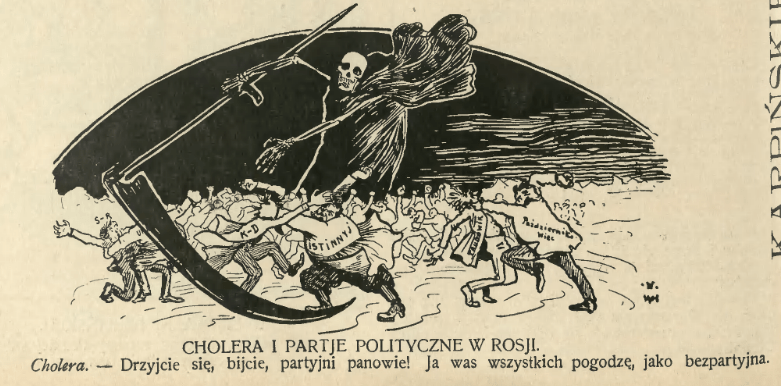
“Fear each other, fight each other as you like, party leaders! I will reconcile all of you as an independent!”
(Polish satirical magazine Mucha, Warsaw, 1908)
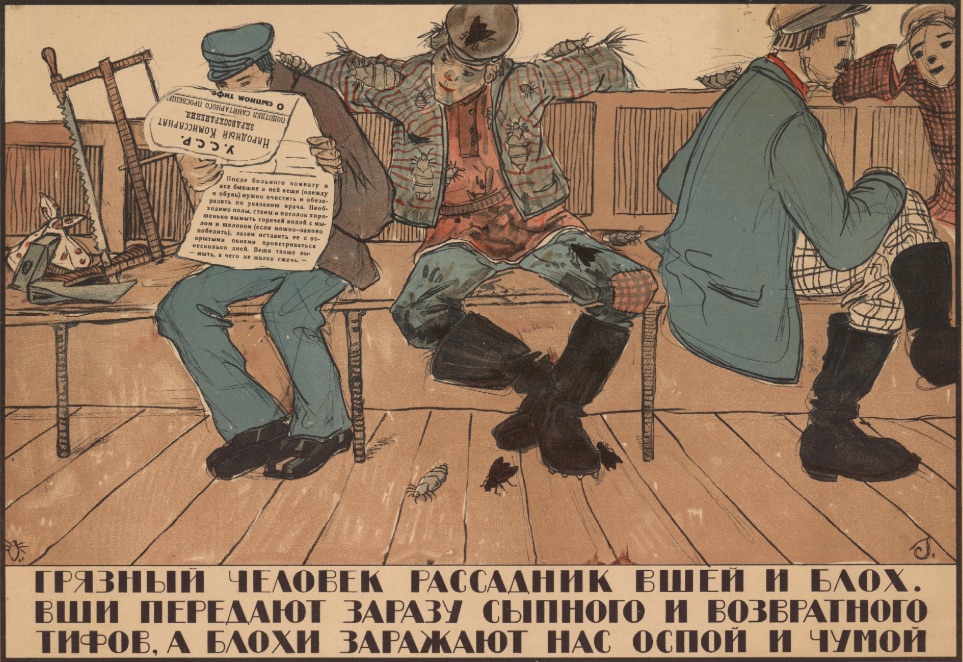
“A filthy man is a hotbed of lice and fleas. Lice transmit the typhus contagion and relapsing fever, and fleas infect us with smallpox and plague.” (Ukrainian People’s Commissariat of Health, 1920) A pity that Soviet didacticism in service to public health still managed to send mixed messages about class. (Russian State Library)
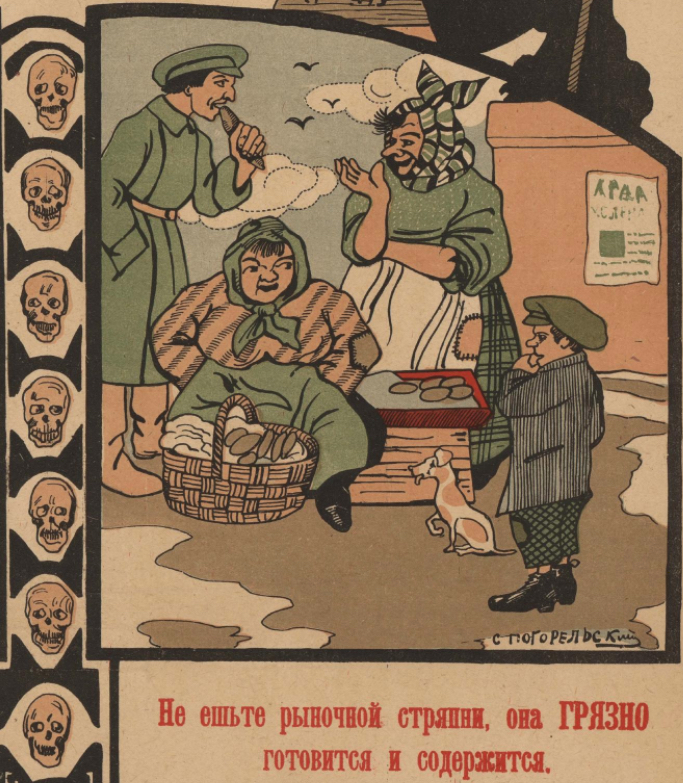
“Don’t eat street food, it’s FILTHILY prepared and stored.”
Detail from cholera public health poster, Orel, Russia, c. 1920.
(Full image at Russian State Library)
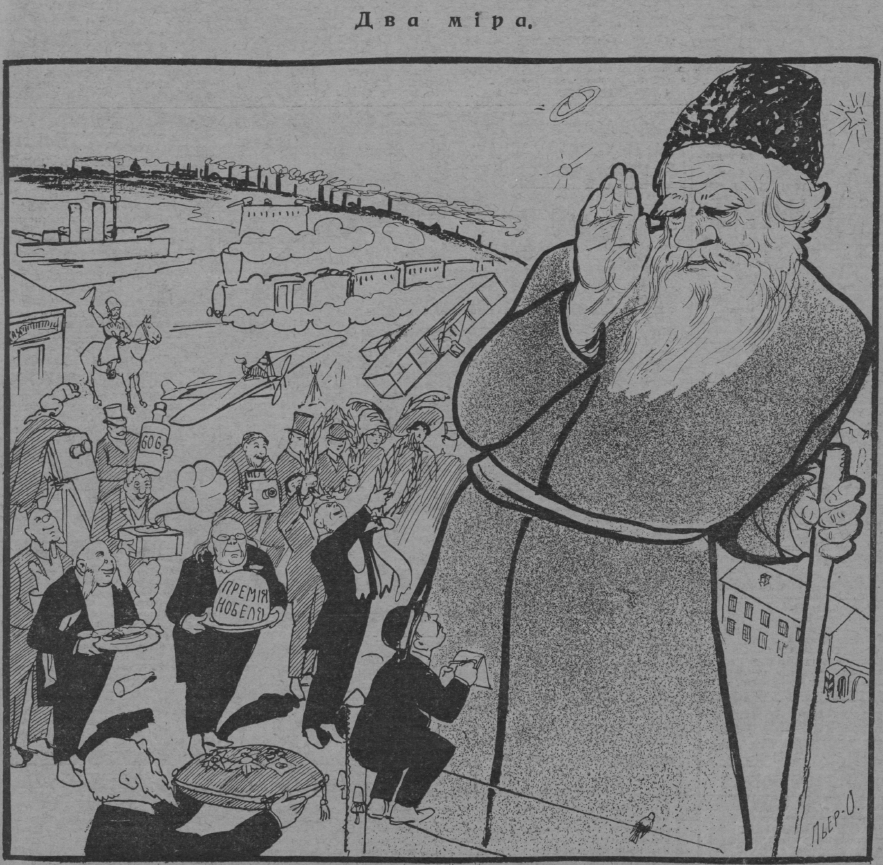
This image appeared in the Russian weekly magazine Ogonek (no. 45) on the eve of Leo Tolstoy’s death in 1910. Russia’s most famous anti-modernist is depicted turning away from the benefits and blandishments of the modern world. What is the connection between this image and our ongoing epidemic theme? (Hint: not the waiter with the tray labeled “Nobel Prize.” See this post for the answer.)
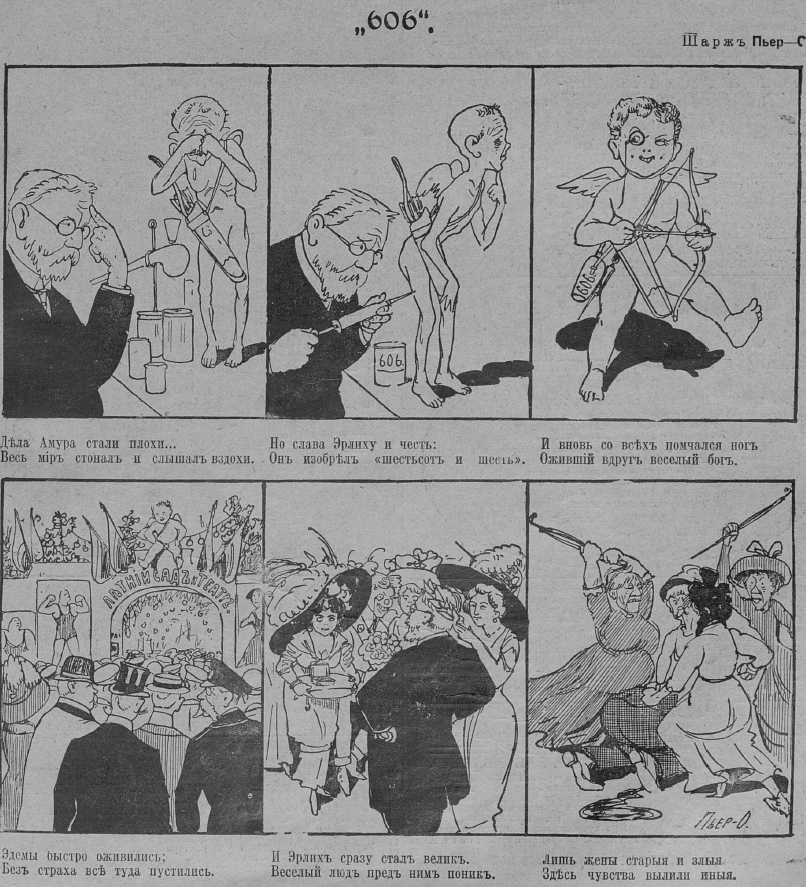
Ode to Paul Ehrlich’s “compound 606,” the magic bullet against syphilis.
Cupid’s affairs were in decline…
The whole world groaned and heard his sighs.
But glory and honor to Ehrlich:
He invented “six hundred and six.”
And suddenly back on his feet again
The merry deity was revived.
Pleasure spots quickly revived;
Everyone headed there without fear.
And Ehrlich immediately became great.
People gaily bowed before him.
Only old and malicious wives
Unleashed other feelings here.
(Ogonek no. 31, 1910)
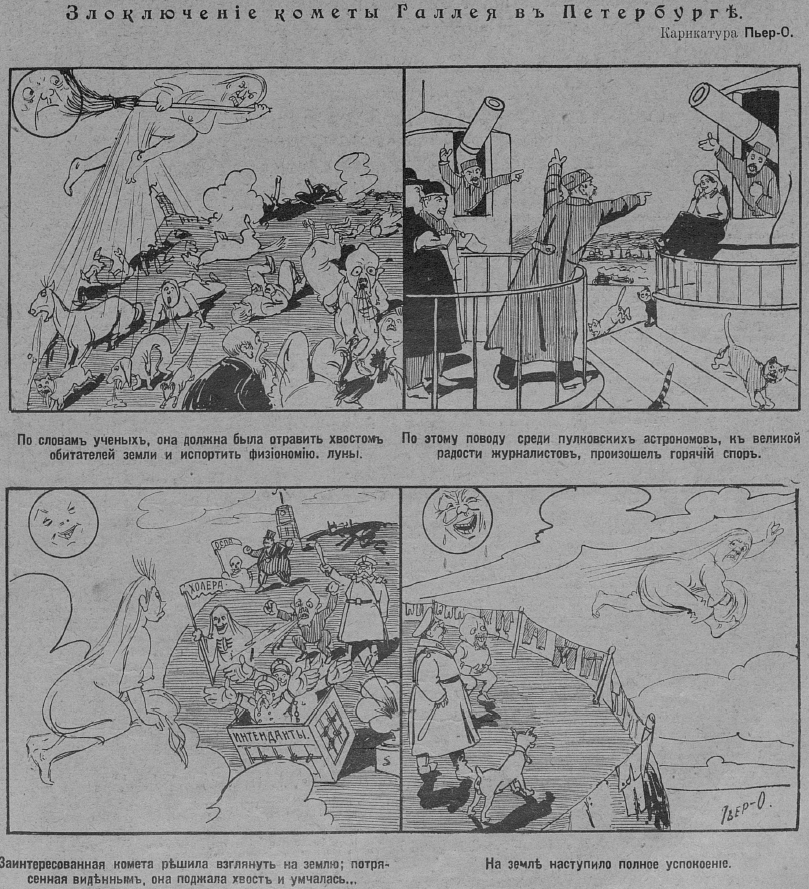
According to scientists, she was supposed to have poisoned the inhabitants of the earth with her tail and ruined the shape of the moon.
In this regard there was a heated debate among the Pulkovo astronomers, to the great joy of journalists.
Her interest piqued, the comet decided to take a look at the earth; shocked by what she saw [cholera, smallpox, quartermasters, gramophones], she pulled in her tail and sped away…
Complete calm settled upon the earth.
(Ogonek no. 20, 1910)
 Sic Transit Pestilentia