“Why are you guys clearing out? That’s a doctor coming to us, not a lecturer…”
“So much the worse! It means he’s crazy!”
(Krokodil, Moscow, 1928) (Included because the doctor is armed with a giant clystère, an ongoing theme.)
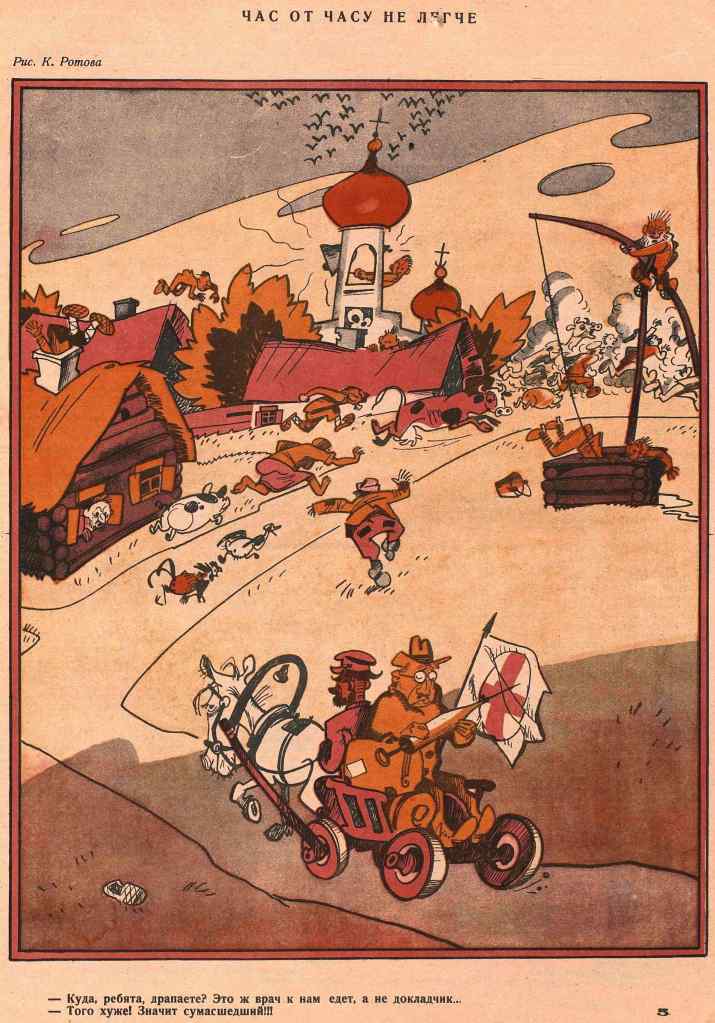
“Why are you guys clearing out? That’s a doctor coming to us, not a lecturer…”
“So much the worse! It means he’s crazy!”
(Krokodil, Moscow, 1928) (Included because the doctor is armed with a giant clystère, an ongoing theme.)
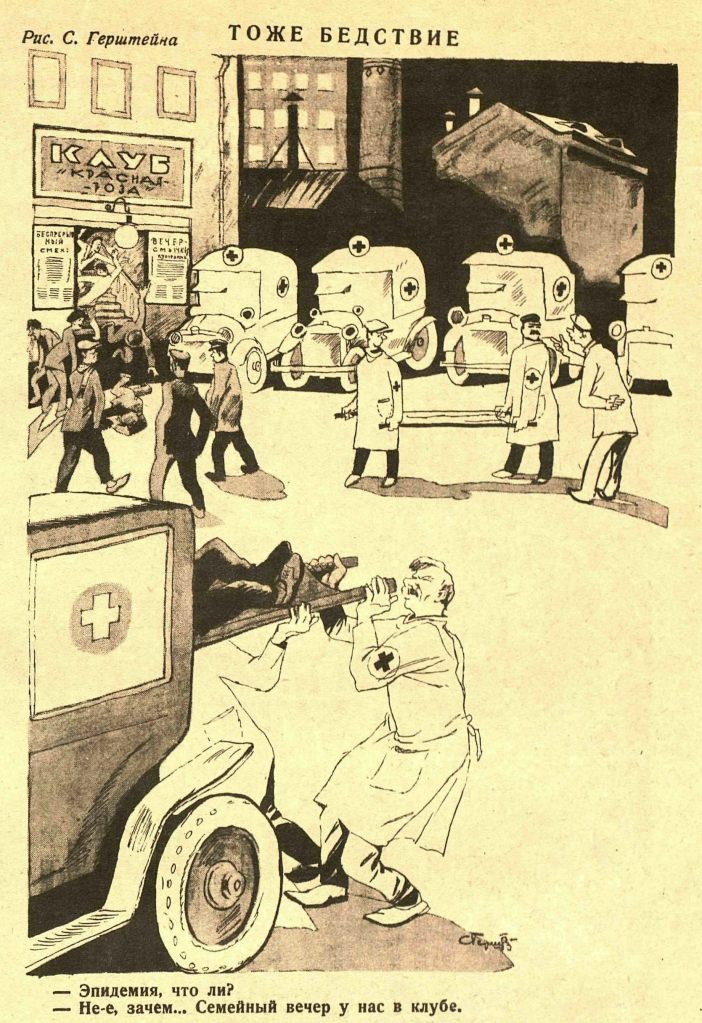
“Is that an epidemic?”
“Nah, whaddya mean… Family night at our club.”
(Krokodil, Moscow, 1928)
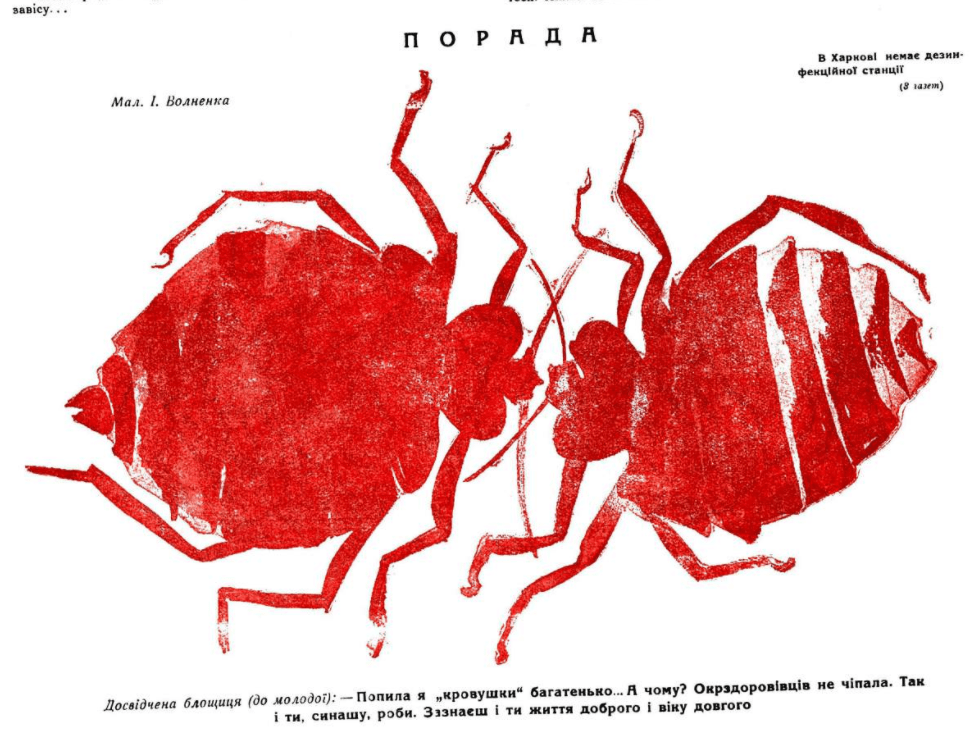
(Newspapers report there is no disinfection station in Kharkiv)
Experienced flea (to young one): “I’ve drunk my share of ‘nice blood’… And how did I manage? I didn’t bother with the district’s healthy types. Do it like that, son. You will also experience a good life and a nice old age.”
(Perets, Kharkiv, 1928)
(from life in the provinces)
“What sloppiness! What a mess here, what terrible air! Are you the chairman of the public health commission? What in the world are you looking at?!”
“Please pay it no mind, measures have been taken. Now I will sprinkle some pine water and everything will be fine.”
(Krokodil, Moscow, 1927)

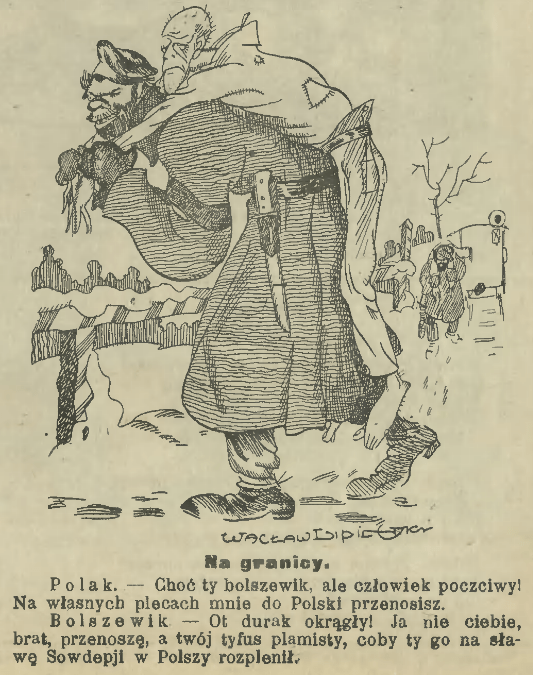
Emaciated Pole: “You may be a Bolshevik, but you are a good man. You are taking me to Poland on your own back.”
Bolshevik: “Got it backwards, fool! I’m not carrying you, brother, but your typhoid fever, so that you will spread it to the glory of Soviet power in Poland.”
(Mucha, Warsaw, 1922)
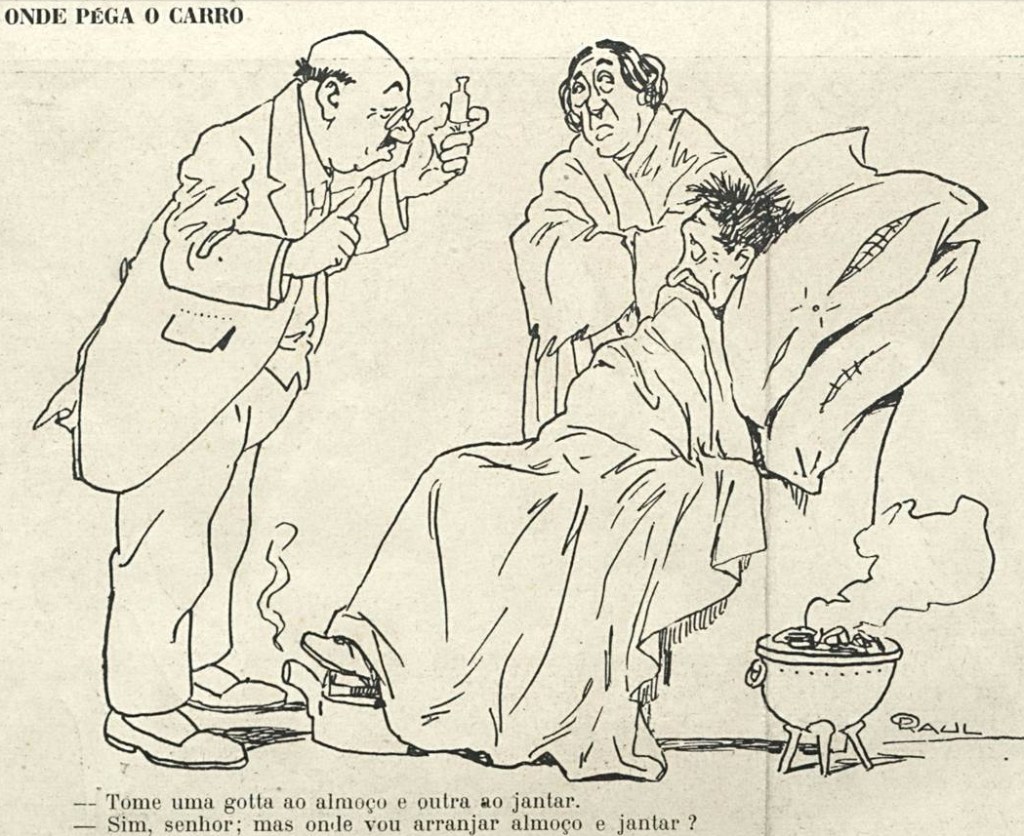
“Take one drop at lunch and another at dinner.”
“Yes, sir, but where am I going to get lunch and dinner?”
(O Malho, Rio de Janeiro, 1918) (I might have missed the idiom in the title.) (A later German cartoon with a similar motif.)
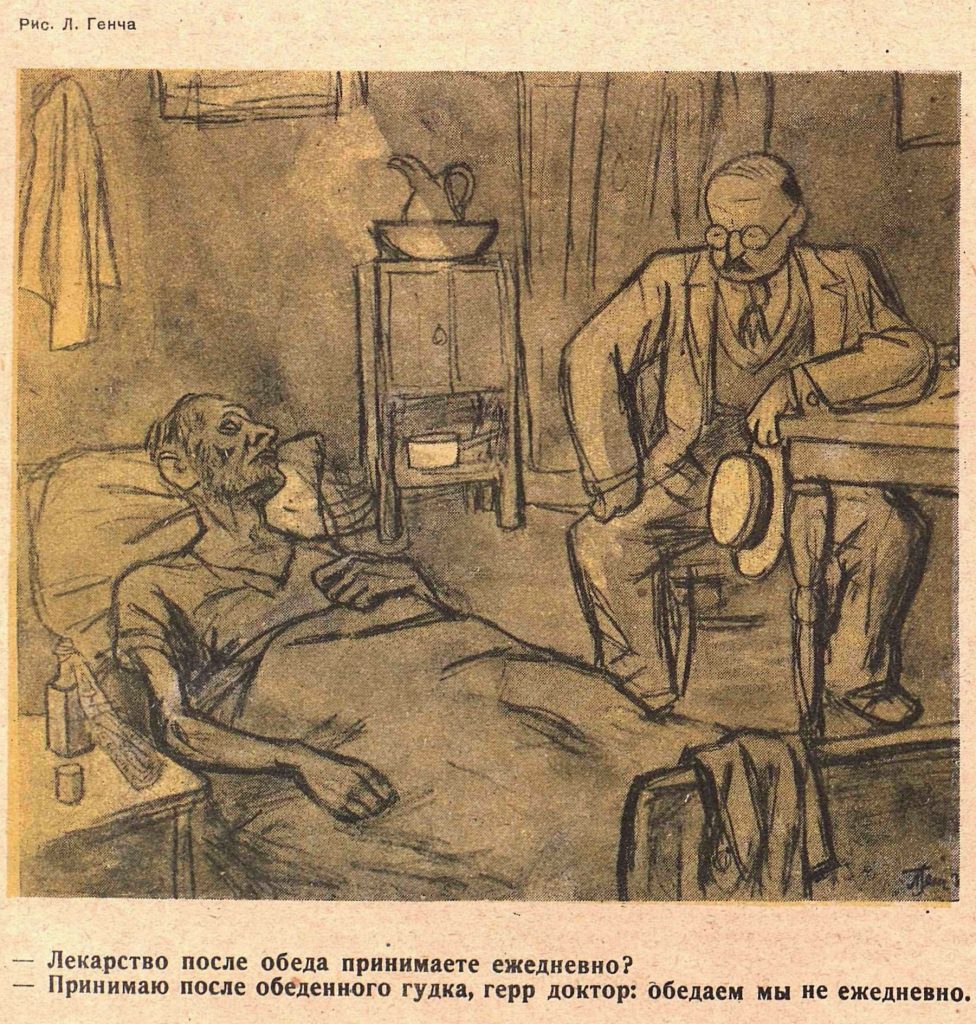
A nearly identical Soviet cartoon aimed at contemporary Germany:
“Are you taking the medicine daily after lunch?”
“I take it after the lunch bell, Herr Doctor: we don’t have lunch every day.”
(Krokokil, Moscow, 1936)
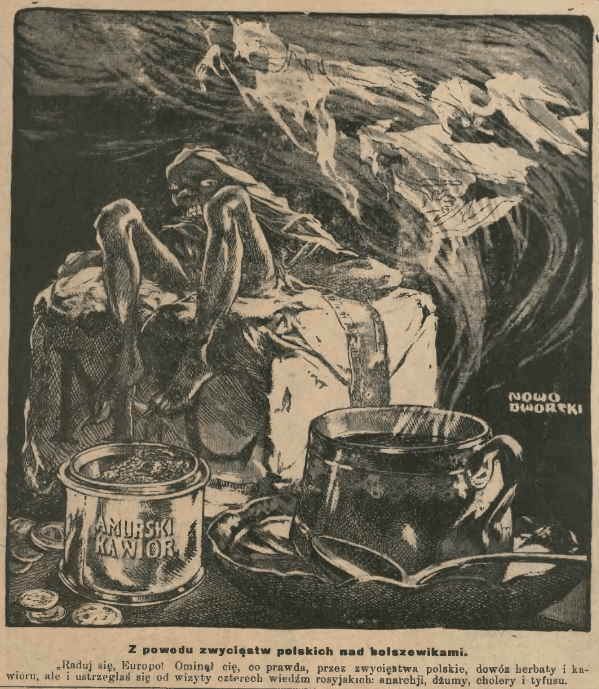
More propaganda than cartoon, this image was published during the Polish-Soviet war of 1920: “Rejoice, Europe! It’s true that because of the Polish victories you have missed the deliveries of tea and caviar, but you have also avoided the visitation of the four Russian witches: anarchy, plague, cholera, and typhus.”
(Mucha, Warsaw, 1920)
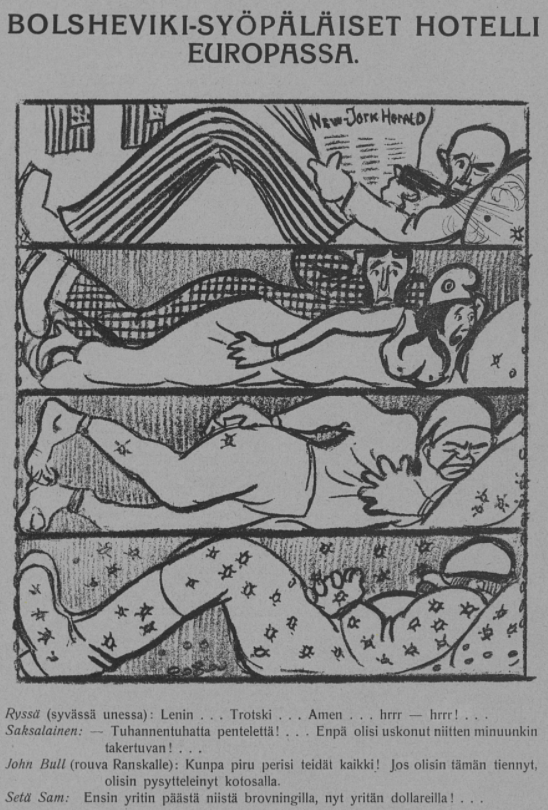
Politics-as-contagion is low-hanging fruit, to be sure, but this Finnish cartoon still warrants preservation.
Russian (fast asleep): “Lenin… Trotsky… Amen… hrrr — hrrr! …”
German: “A million spawn! … I wouldn’t have thought they would cling to me either! …”
John Bull (to Mrs. France): “The devil take you all! If I had known about this, I would have stayed at home.”
Uncle Sam: “First I tried to get rid of them with a Browning, now I’ll try with dollars! …”
(Tuulispää, Helsinki, 1919)
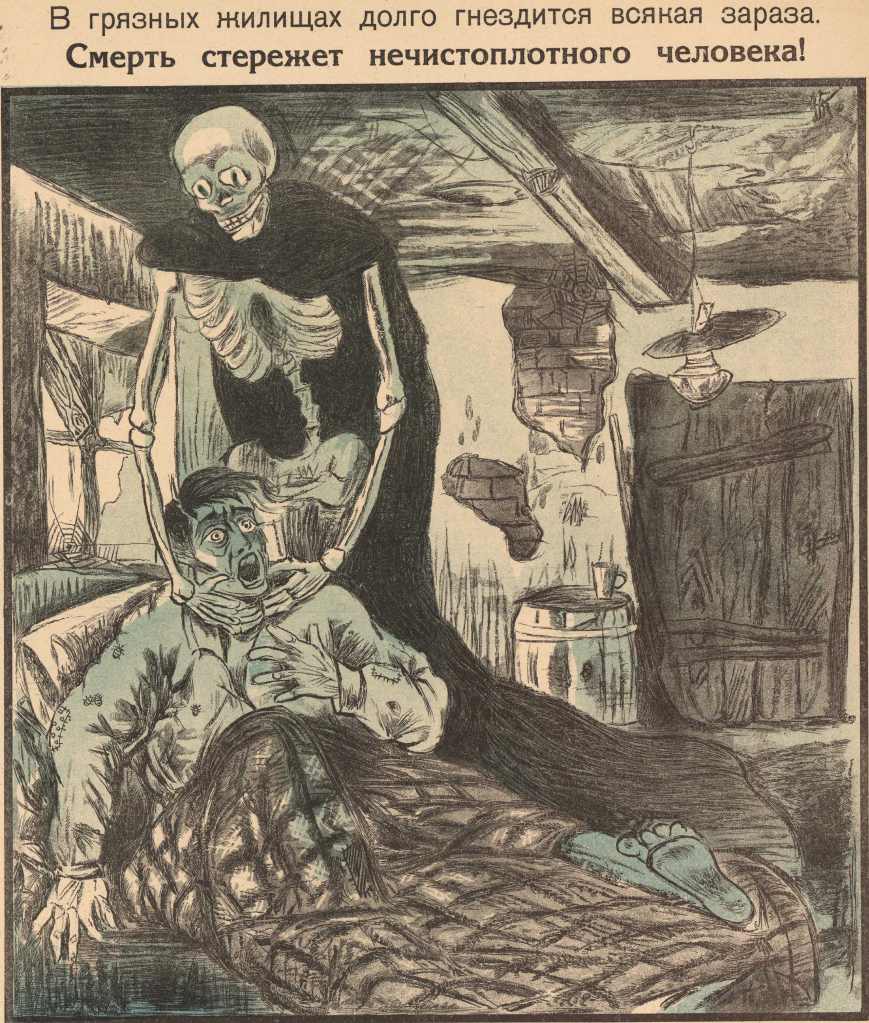
“In filthy residences any contagion can take root for a long time.” “Filth and uncleanliness are one of most important causes of our illnesses.” Detail from an educational poster by the Ukrainian People’s Commissariat of Health, 1920. (Russian State Library)
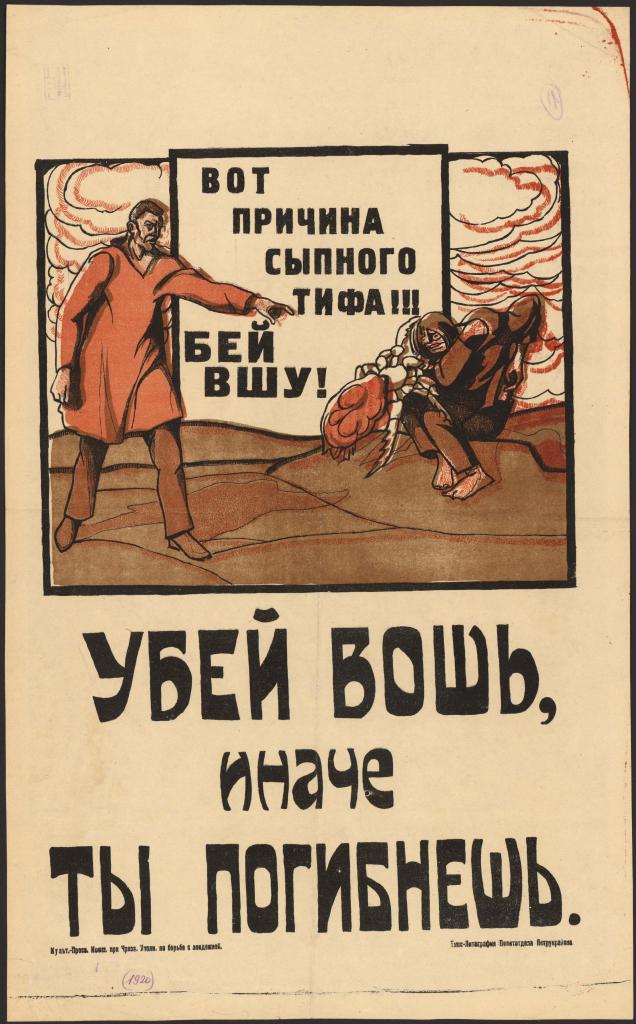
“Here is the cause of typhus!!! Beat the louse! Kill the louse or you will die.”
Soviet public health poster, c. 1920.
(Russian State Library)
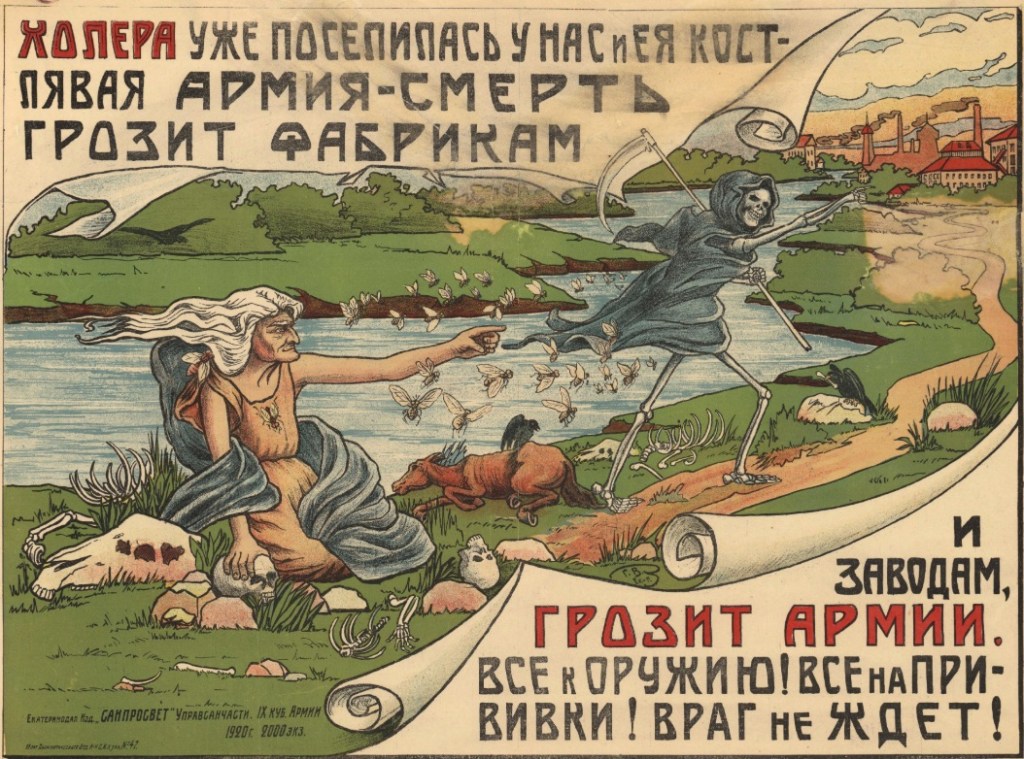
“Cholera has already taken up residence with us and her bony army of death threatens factories and plants, it threatens the army. To arms! Get vaccinated! The enemy does not wait!” (Ekaterinodar, 1920) (Russian State Library)
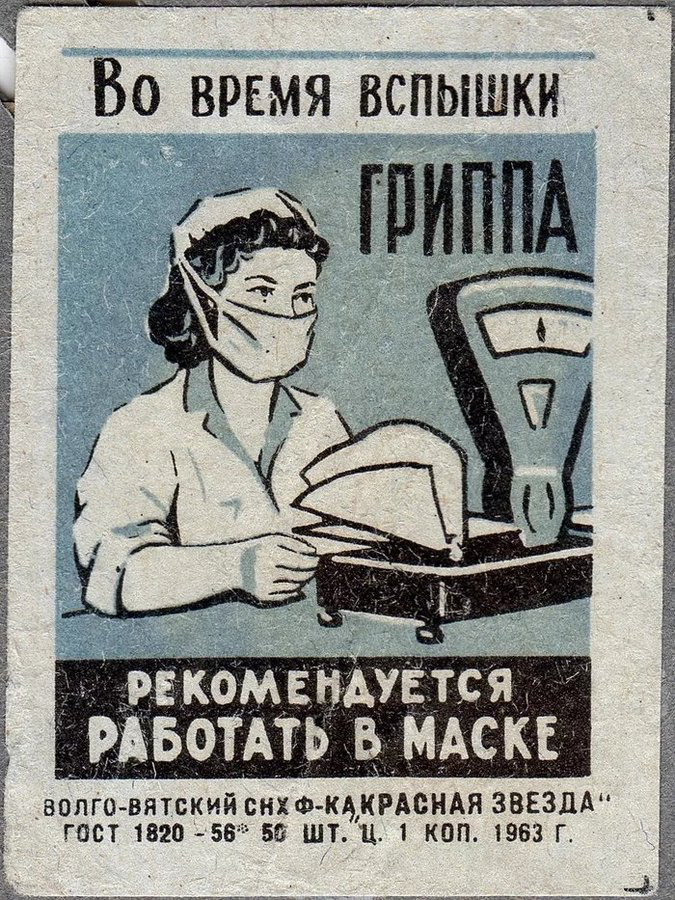
During flu outbreaks working in masks is recommended. (Soviet Union, 1963)
(State Museum of St. Petersburg History, with thanks to Svetlana Lazutina)
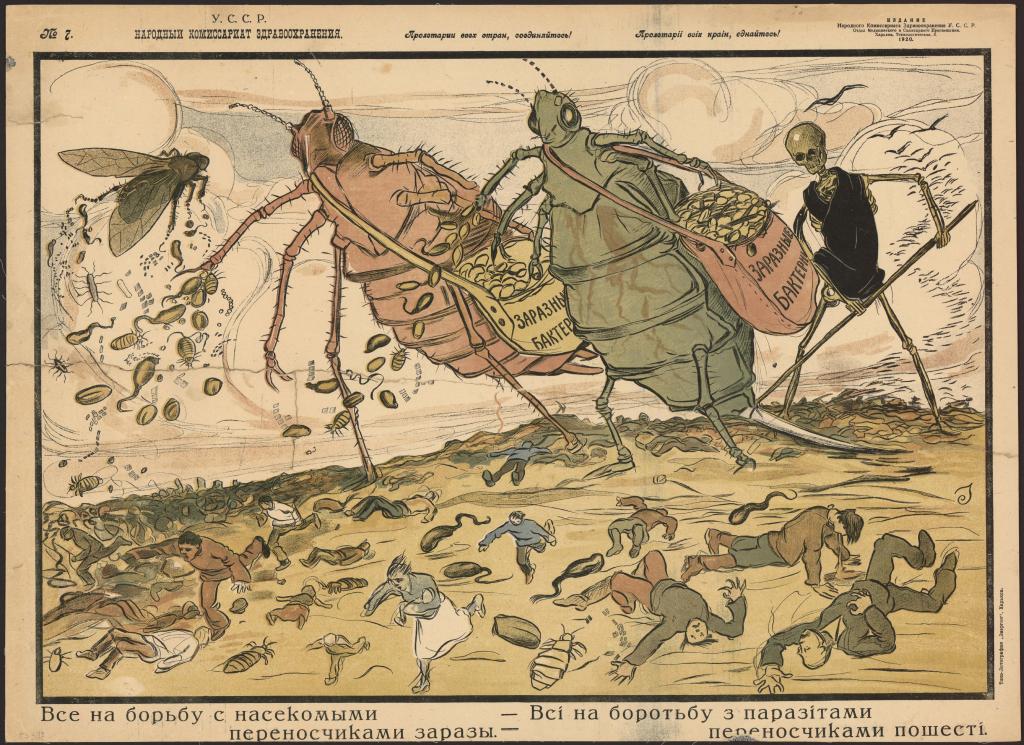
Bugs bearing bags of infectious bacteria. “Everyone to war with disease-bearing insects.” Soviet Ukrainian Commissariat of People’s Health, 1920.
(Russian State Library)
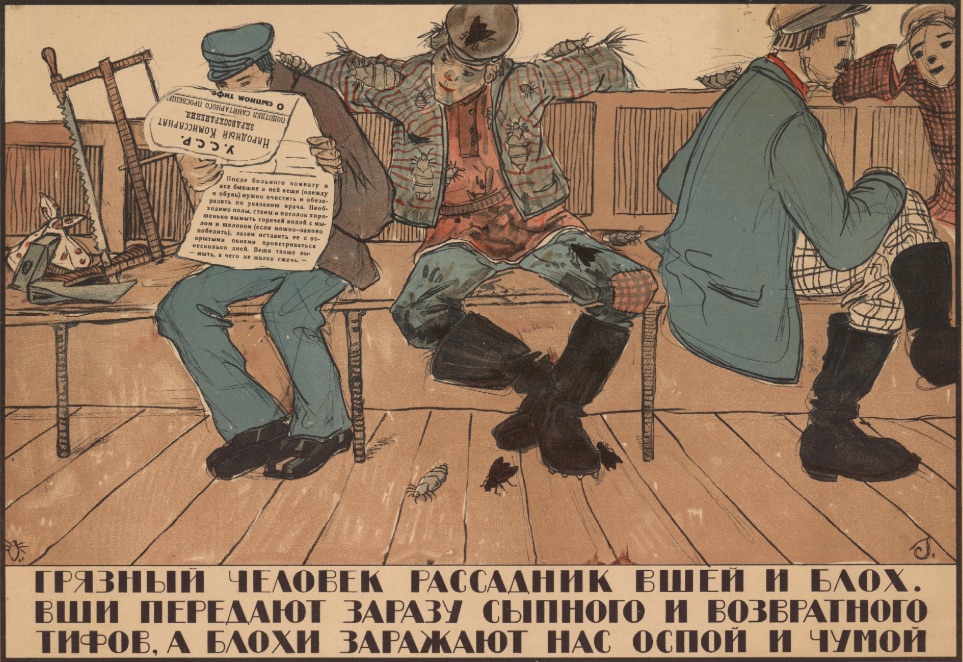
“A filthy man is a hotbed of lice and fleas. Lice transmit the typhus contagion and relapsing fever, and fleas infect us with smallpox and plague.” (Ukrainian People’s Commissariat of Health, 1920) A pity that Soviet didacticism in service to public health still managed to send mixed messages about class. (Russian State Library)
 Sic Transit Pestilentia