
On these pages I am aggregating broader themes that cannot be as conveniently selected using the Categories and Tags. Click the links to go to pages with thumbnails of all the associated images.
Social status
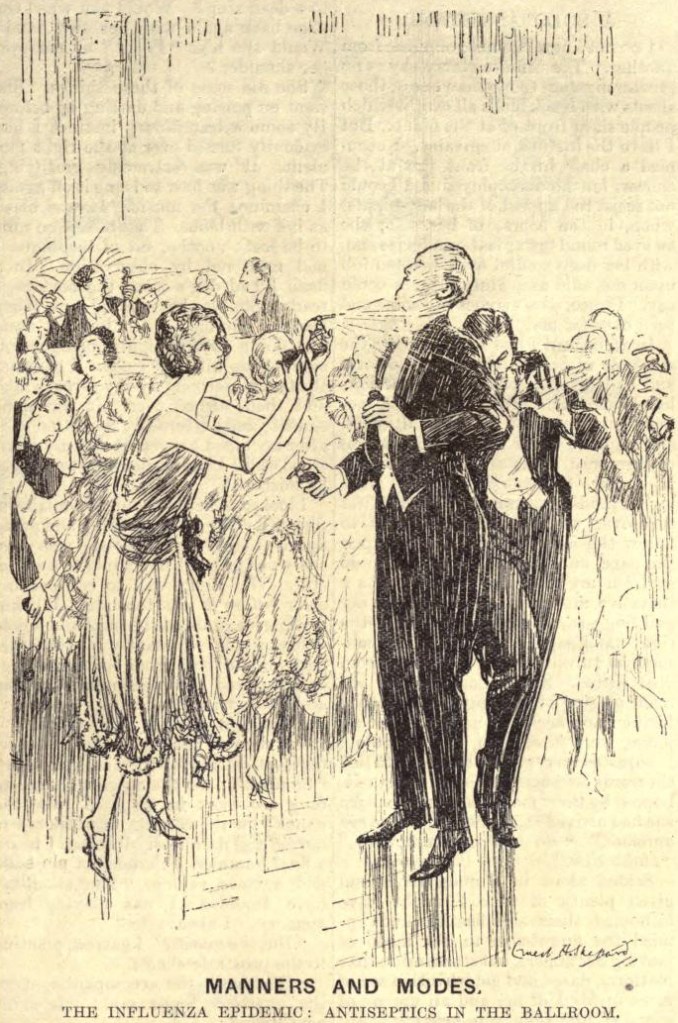
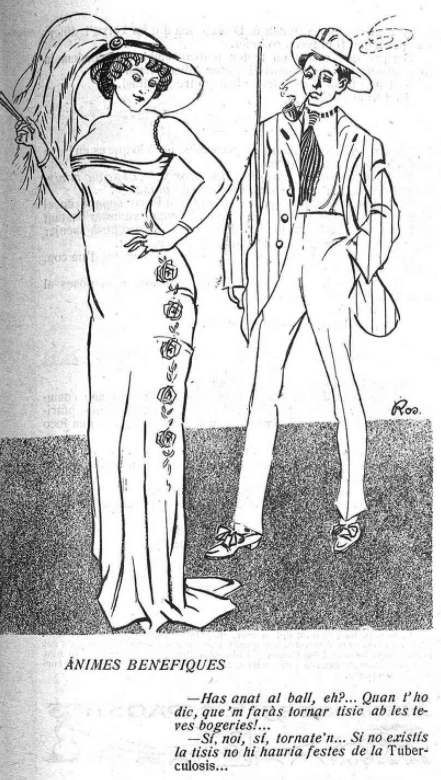
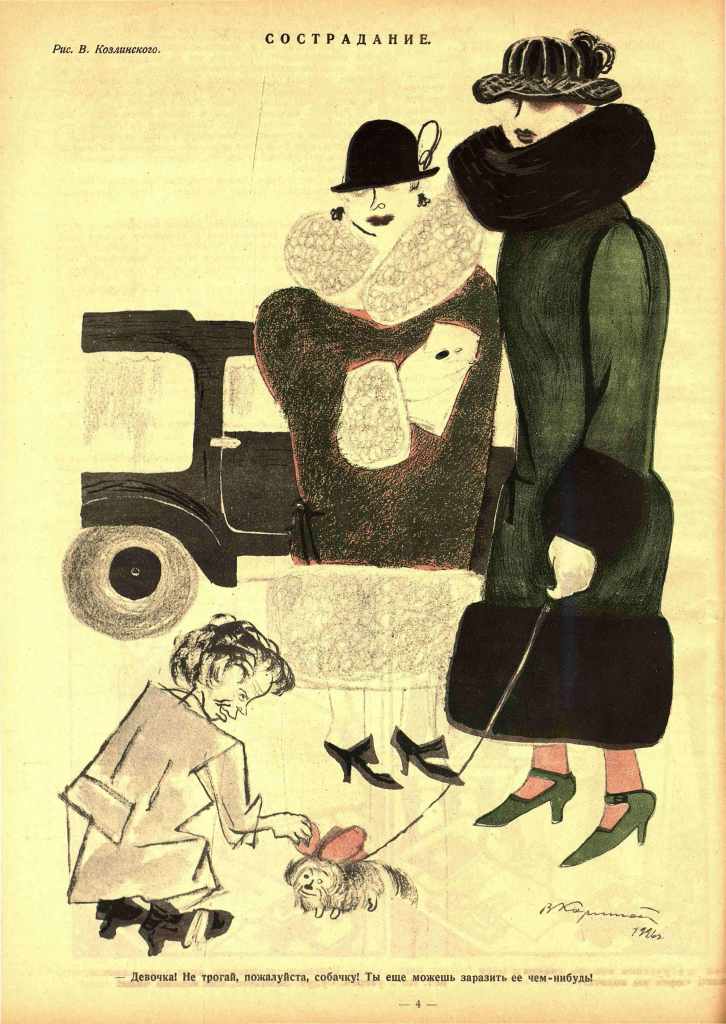
Dissimulation
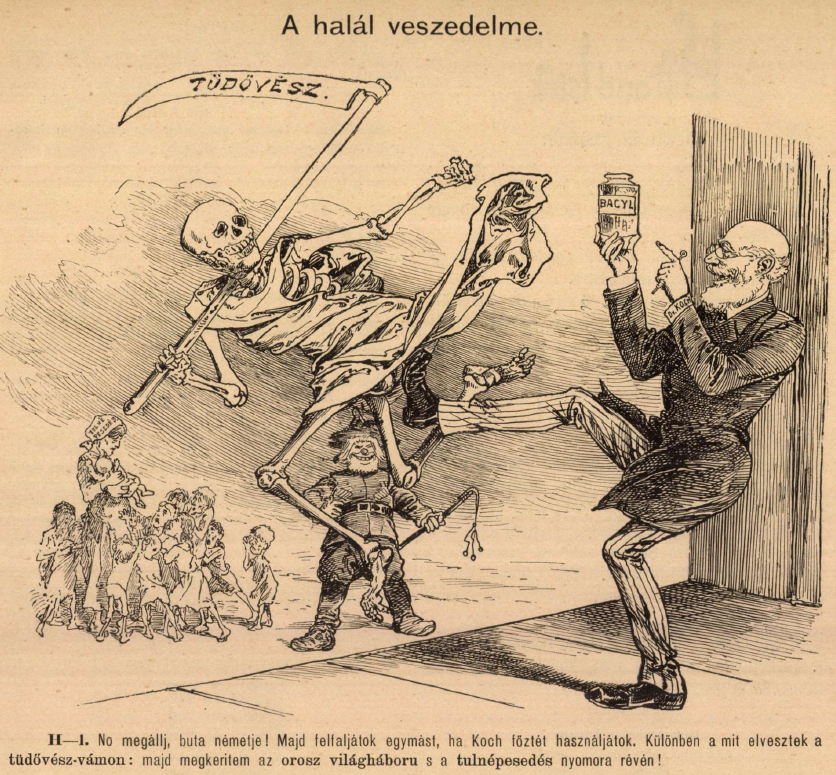
Exploiting exigencies of epidemic disease for other ends.
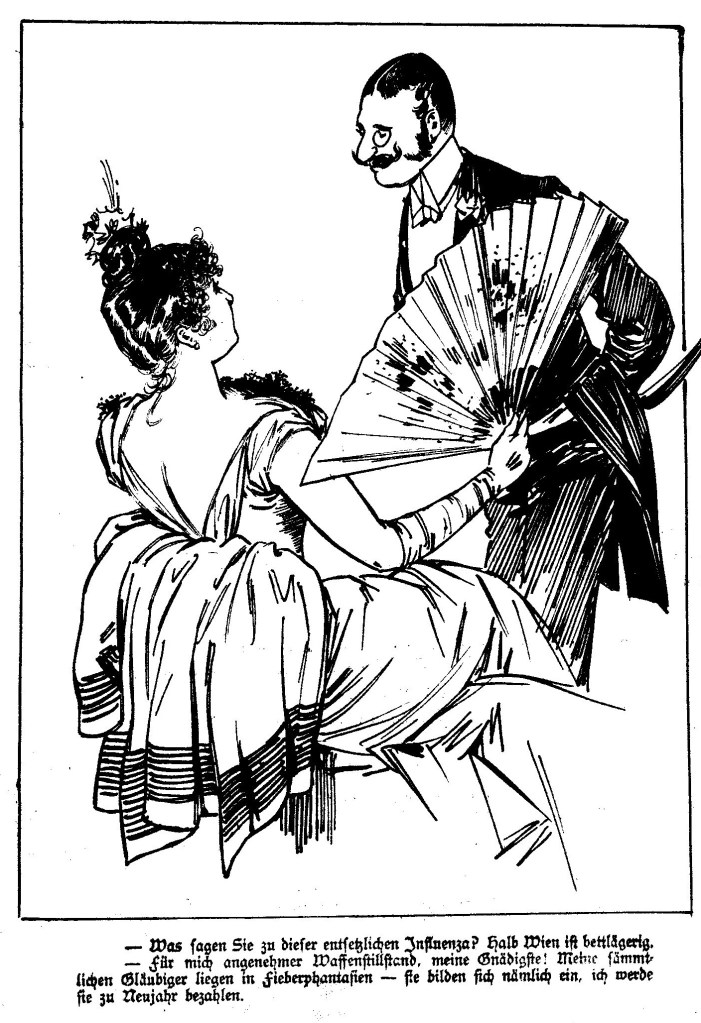
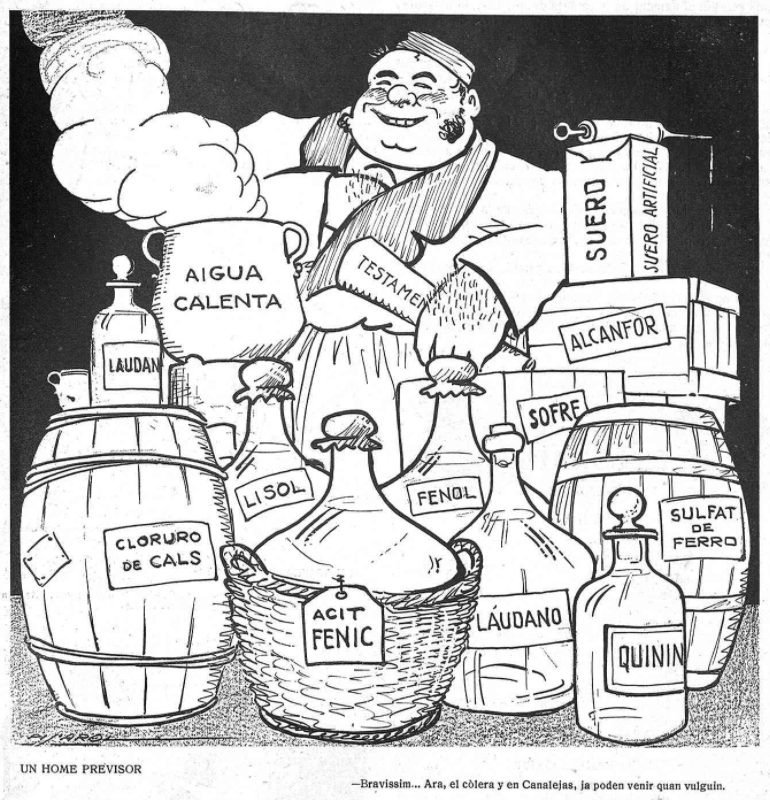

Devices
Coping with epidemic disease by whatever material means possible. If you don’t know what a clystère is, you will find several images here to entertain you.
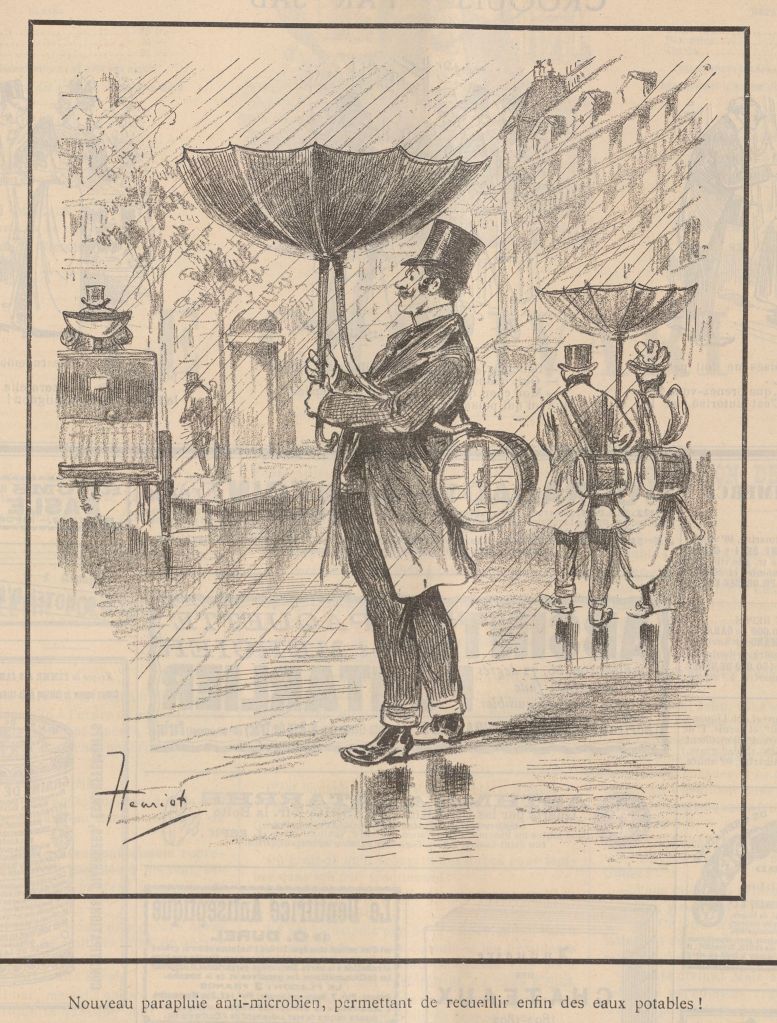

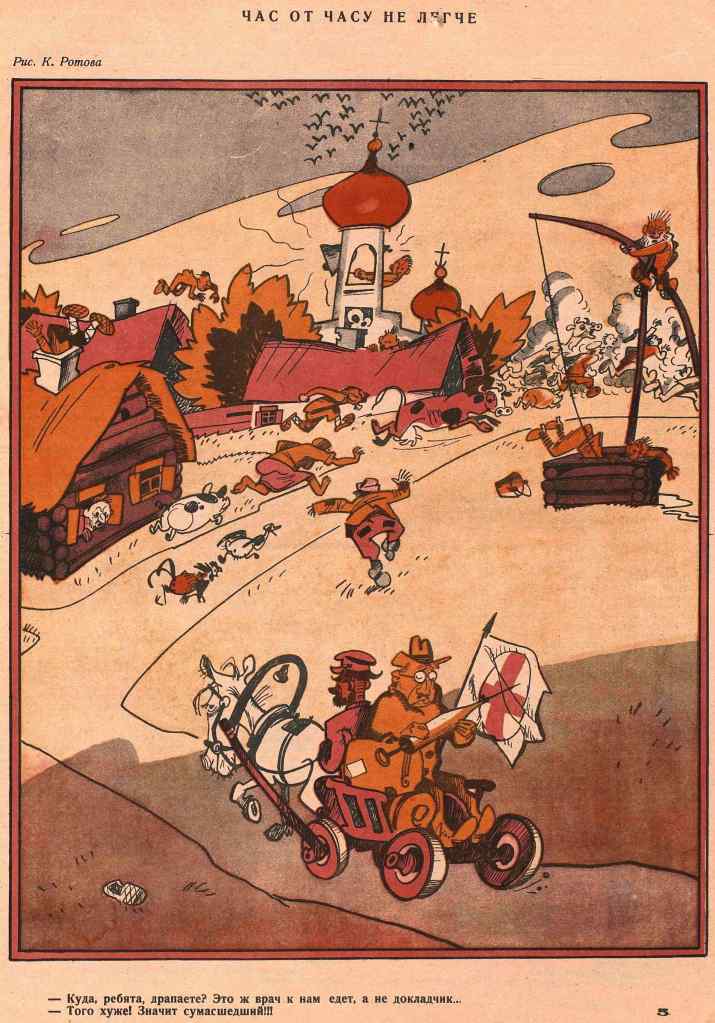
Bureaucrats are the worst
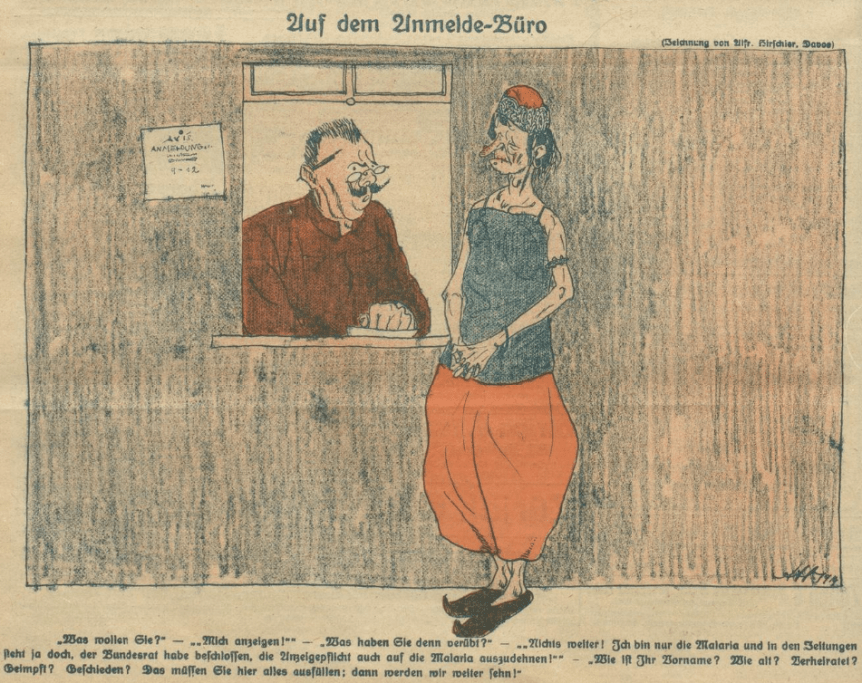
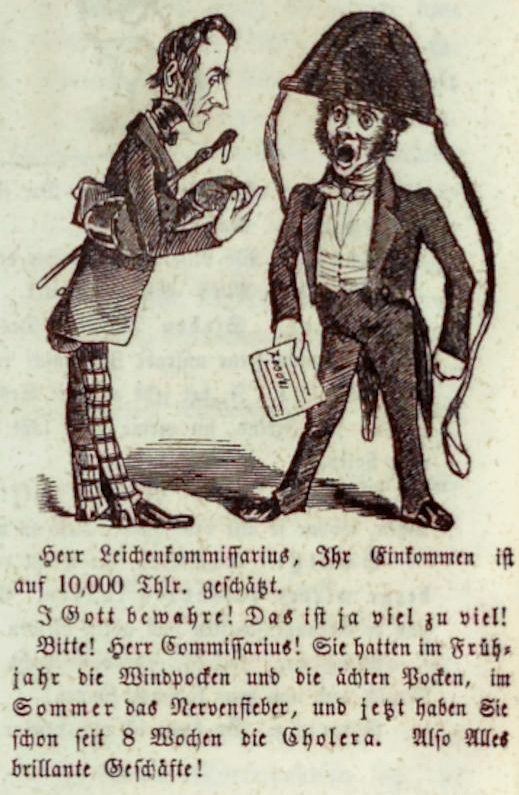
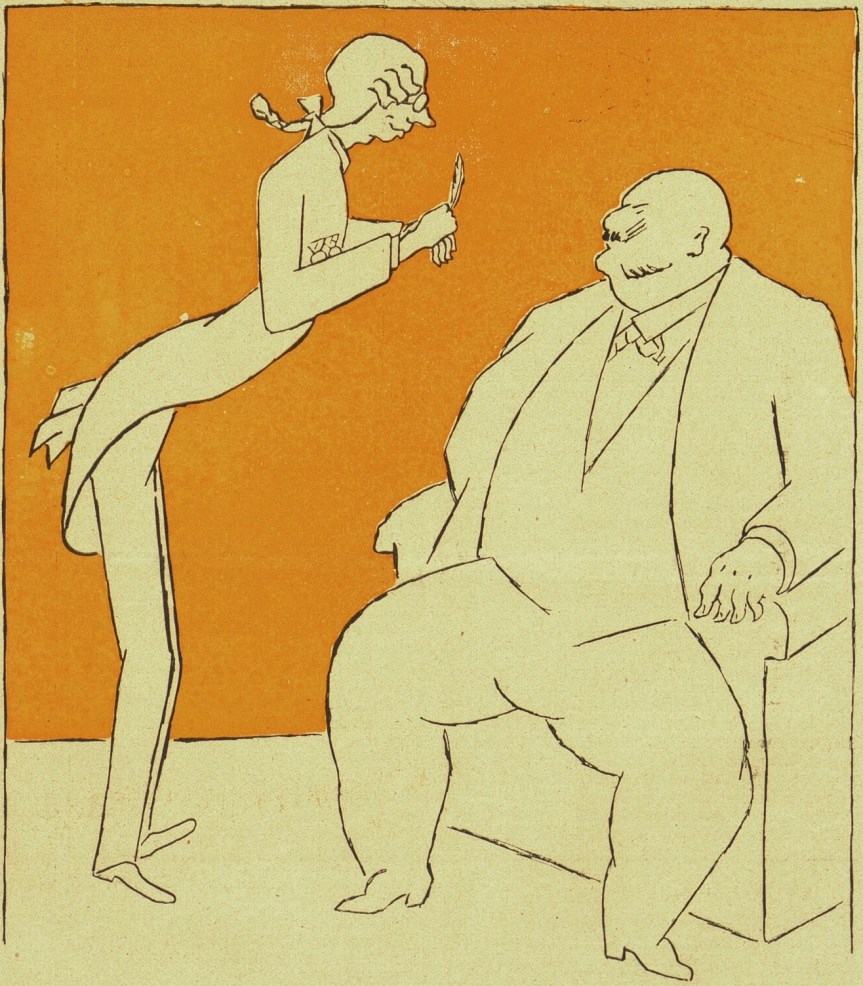
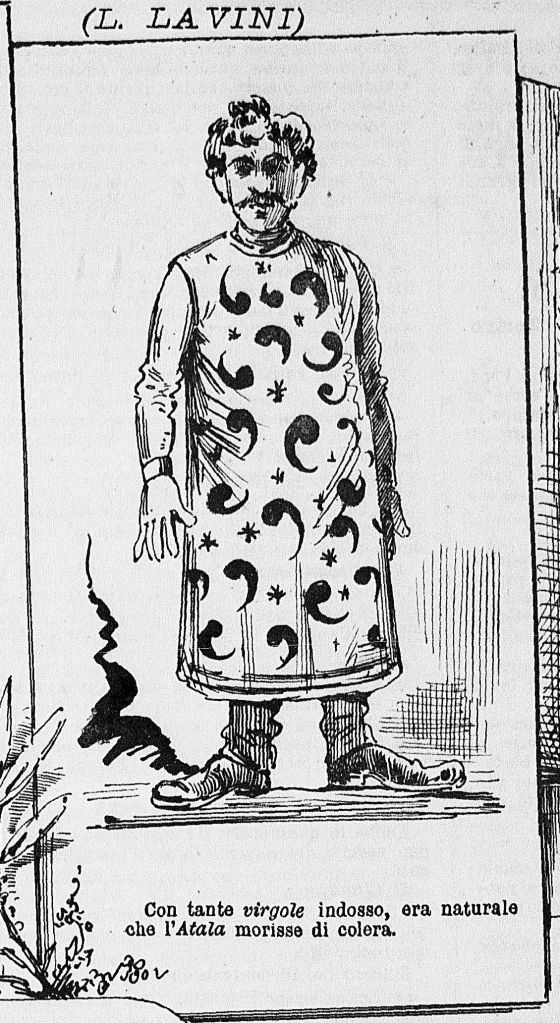
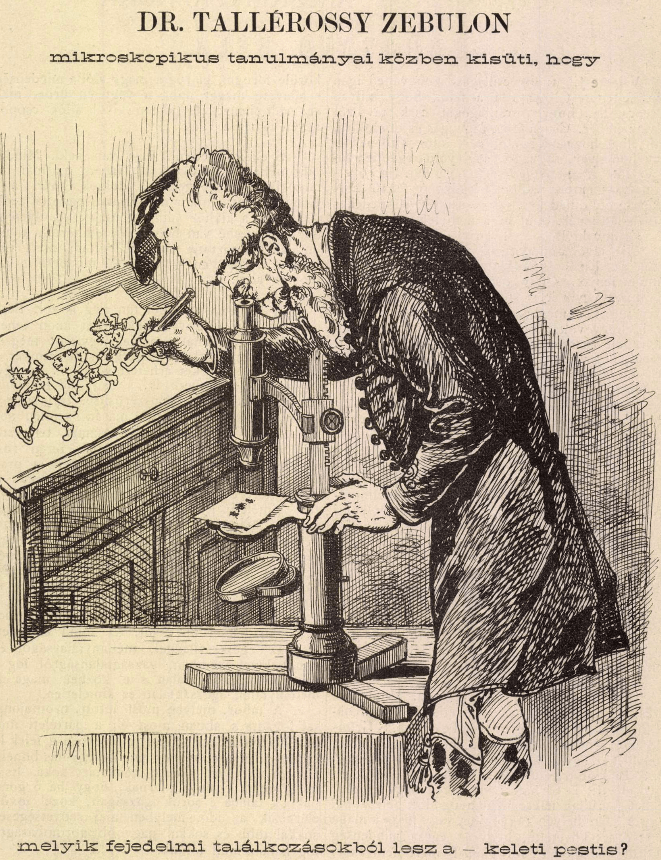
Punning
Fearless word play in the face of epidemic disease, not limited to cholera and its “comma” bacillus.
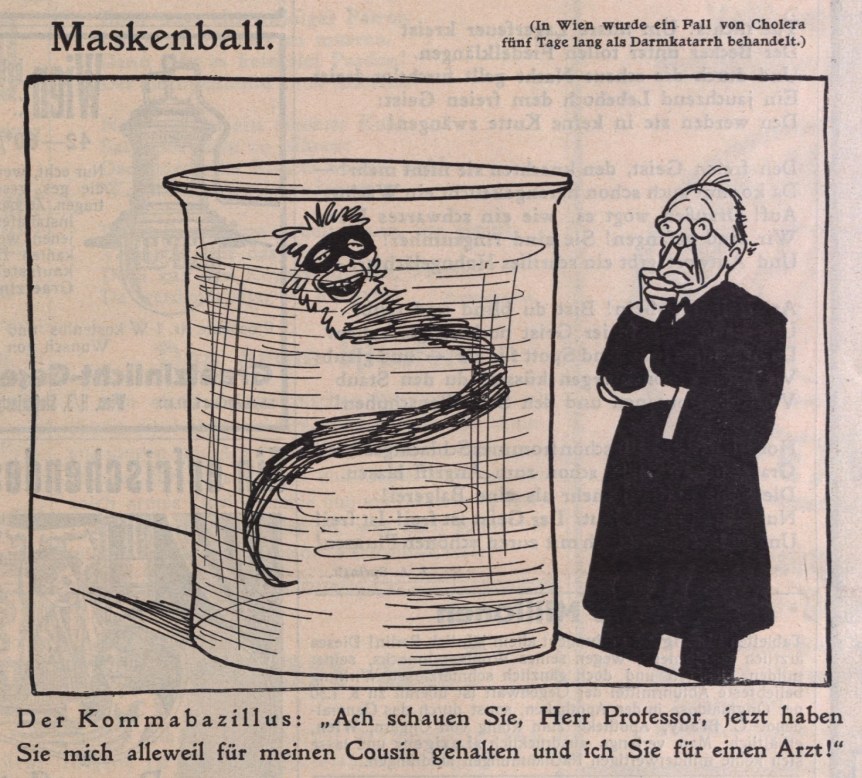
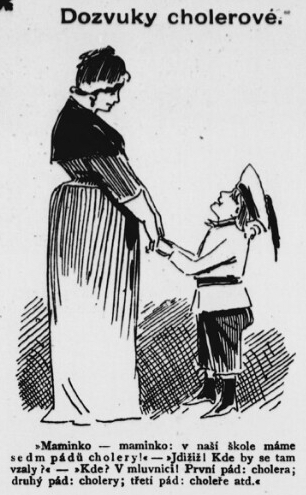
Urban versus rural
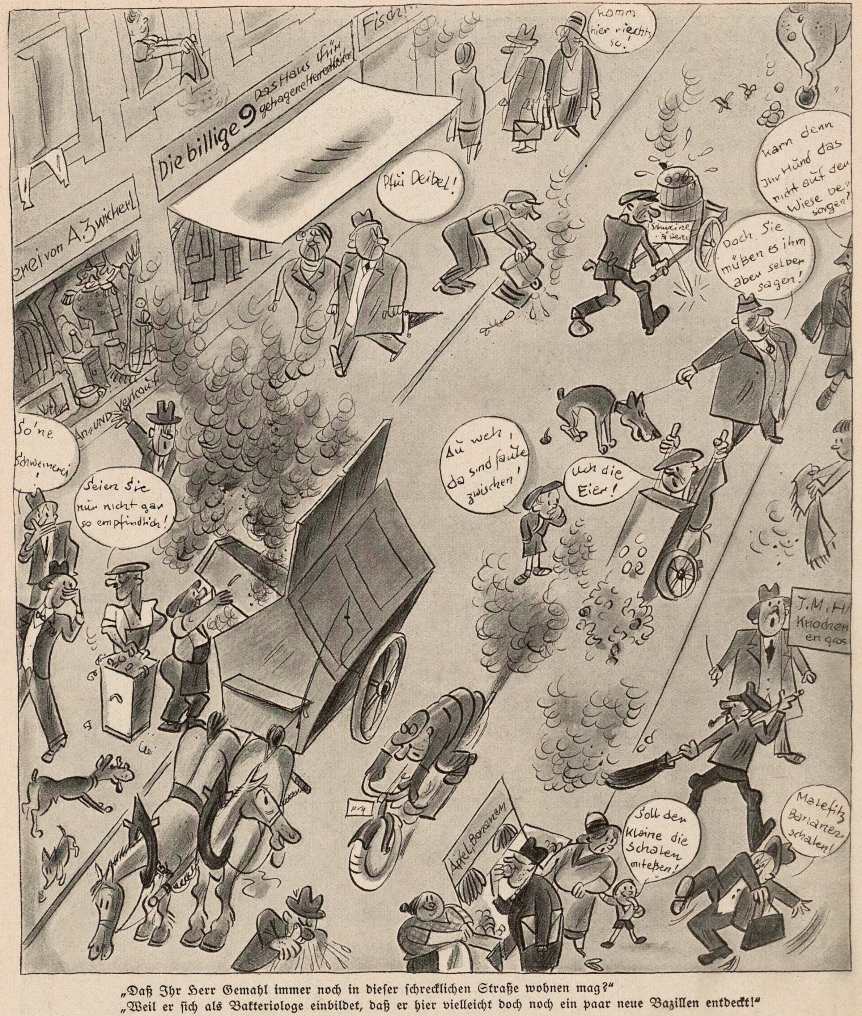
Although all the satirical journals referenced in this archive were published in larger cities and relied heavily on (at least moderately) literate urban readership, while public health challenges posed by epidemics in the nineteenth century often seem urban in nature by default, I think it is still worth singling out those cartoons that explicitly signal urban or rural themes.
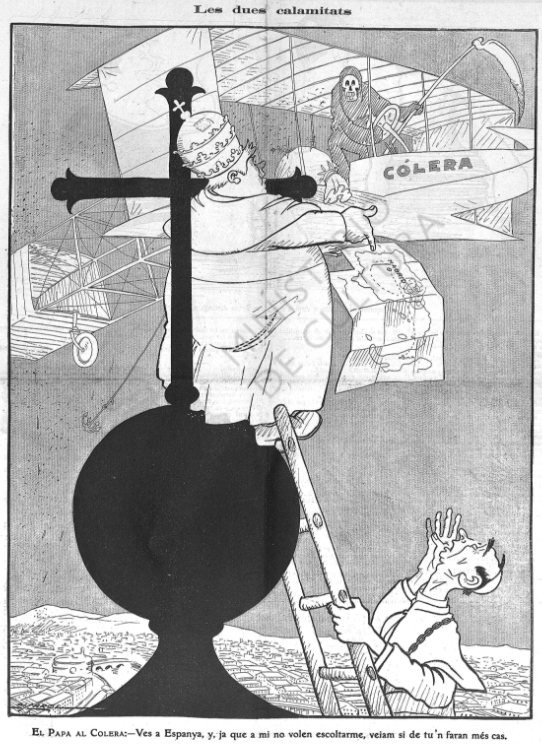
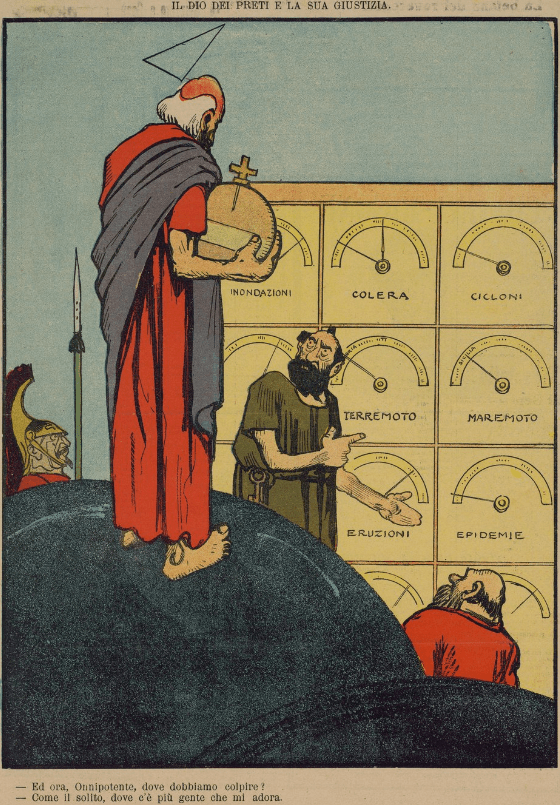
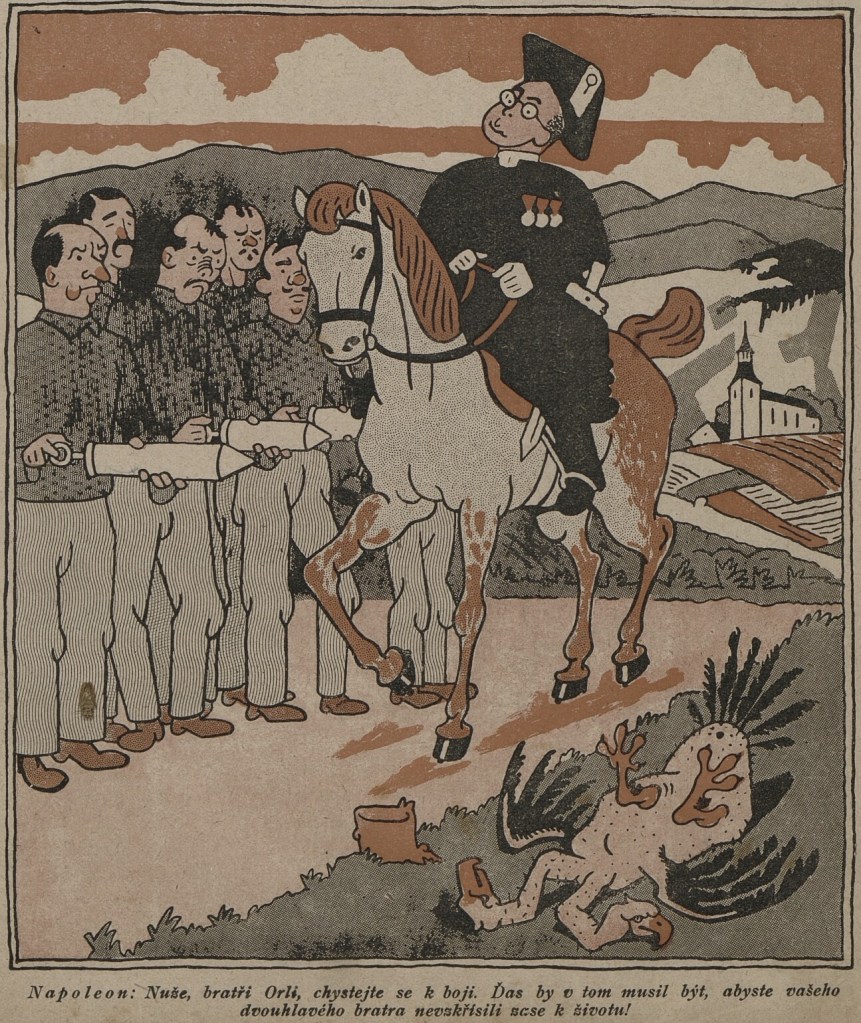
The Church
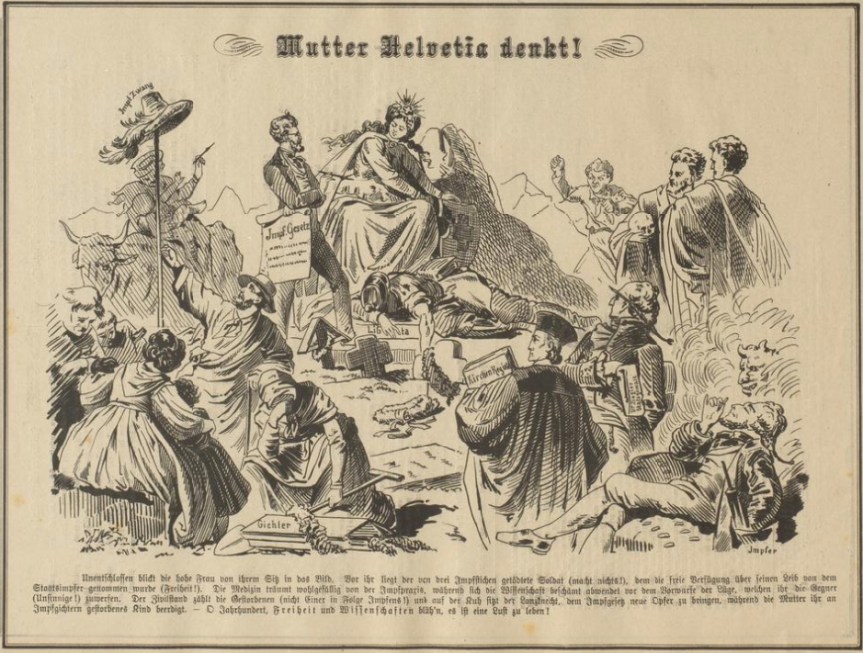
When epidemics give license to anticlerical sentiments.
Medical figures
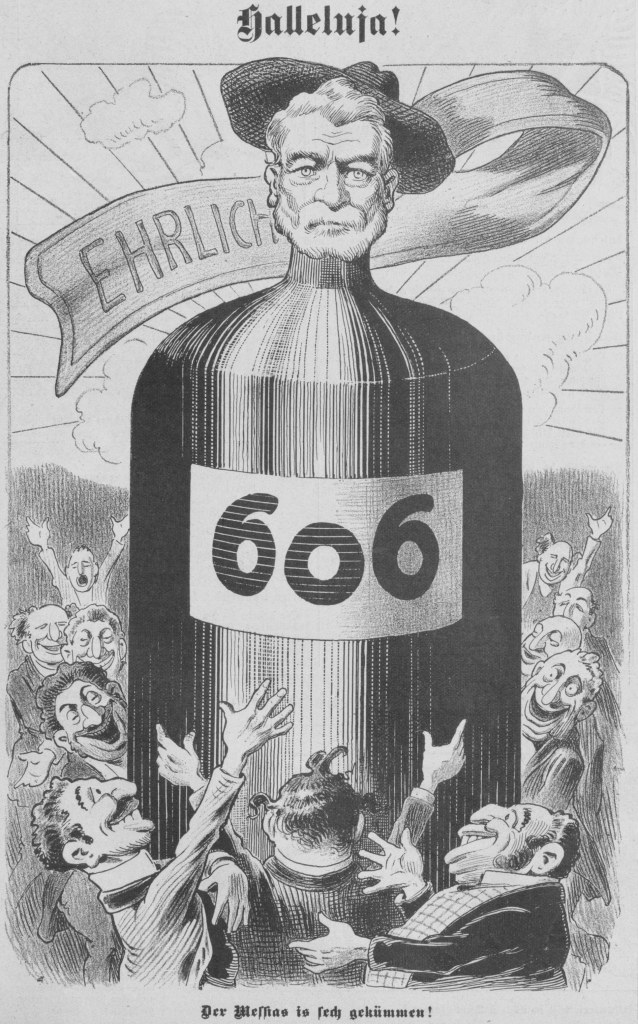
References, direct or indirect, to famous physicians and medical scientists. Satire of generic medical authorities.

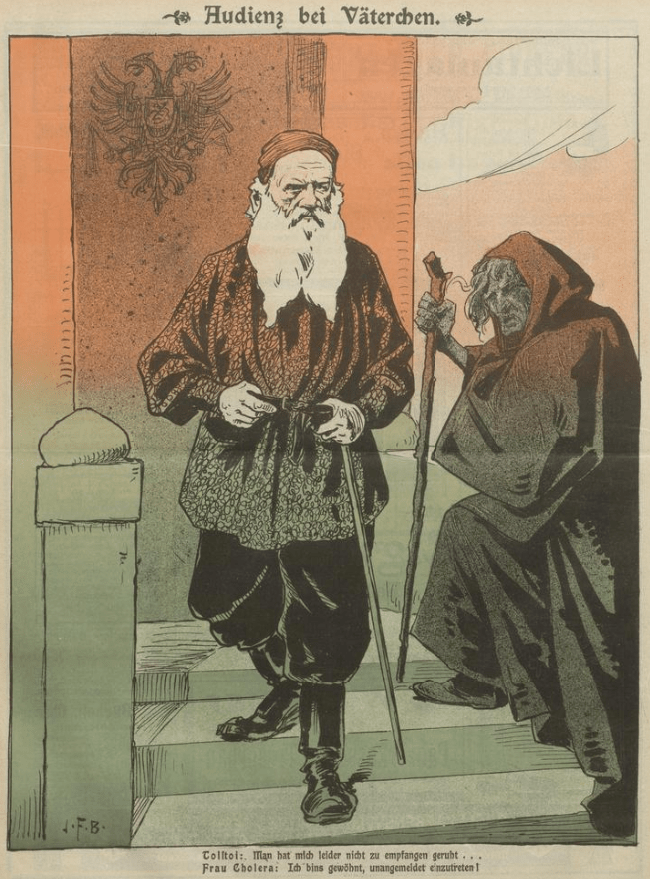
Literary figures
Anti-Semitism
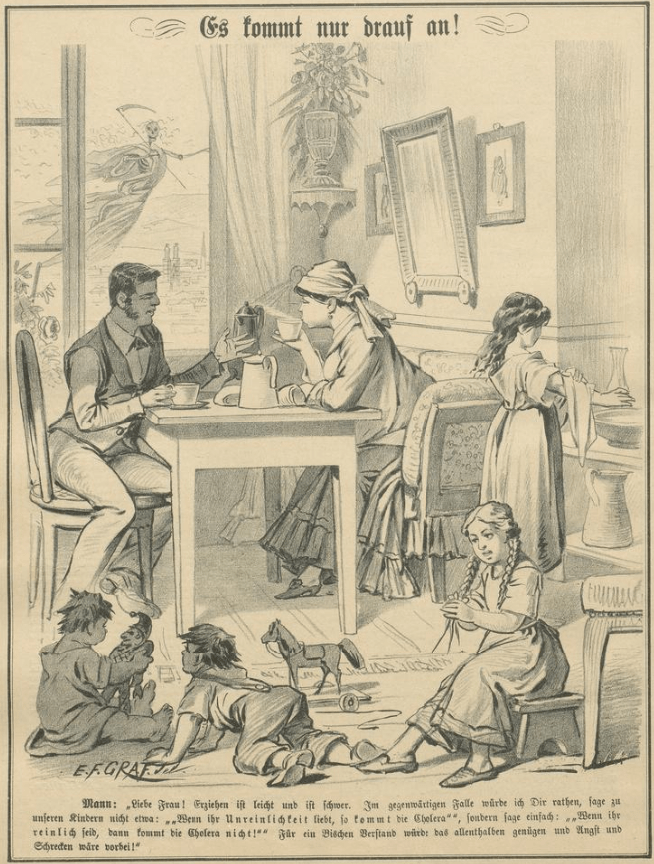
Gender and domesticity
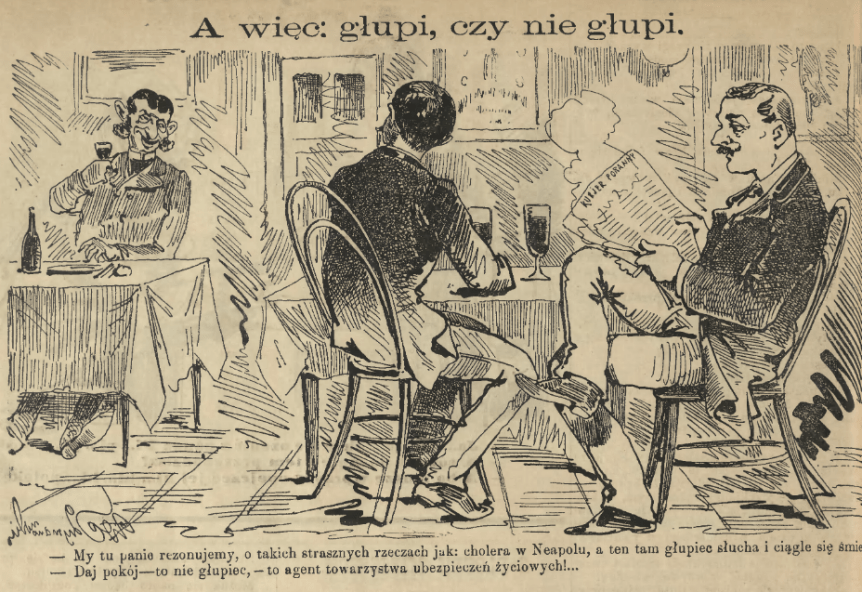
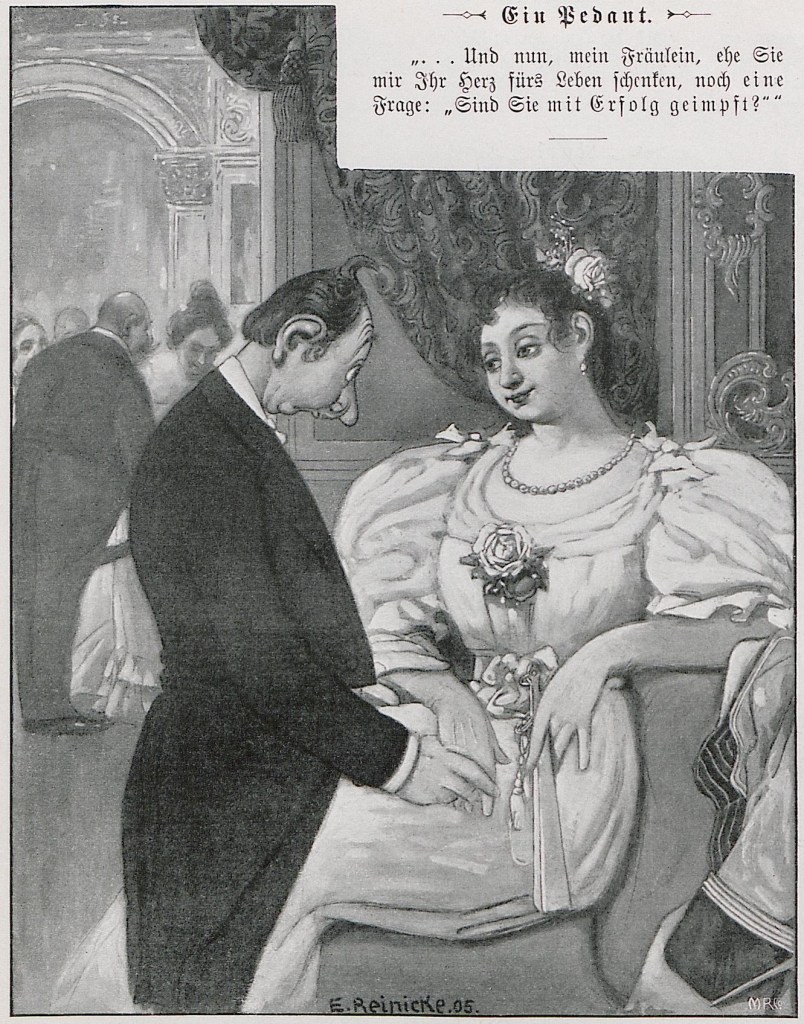
Many more of the cartoons on this site invite gender analysis, but this cluster will simply single out stereotypical roles and domestic settings.
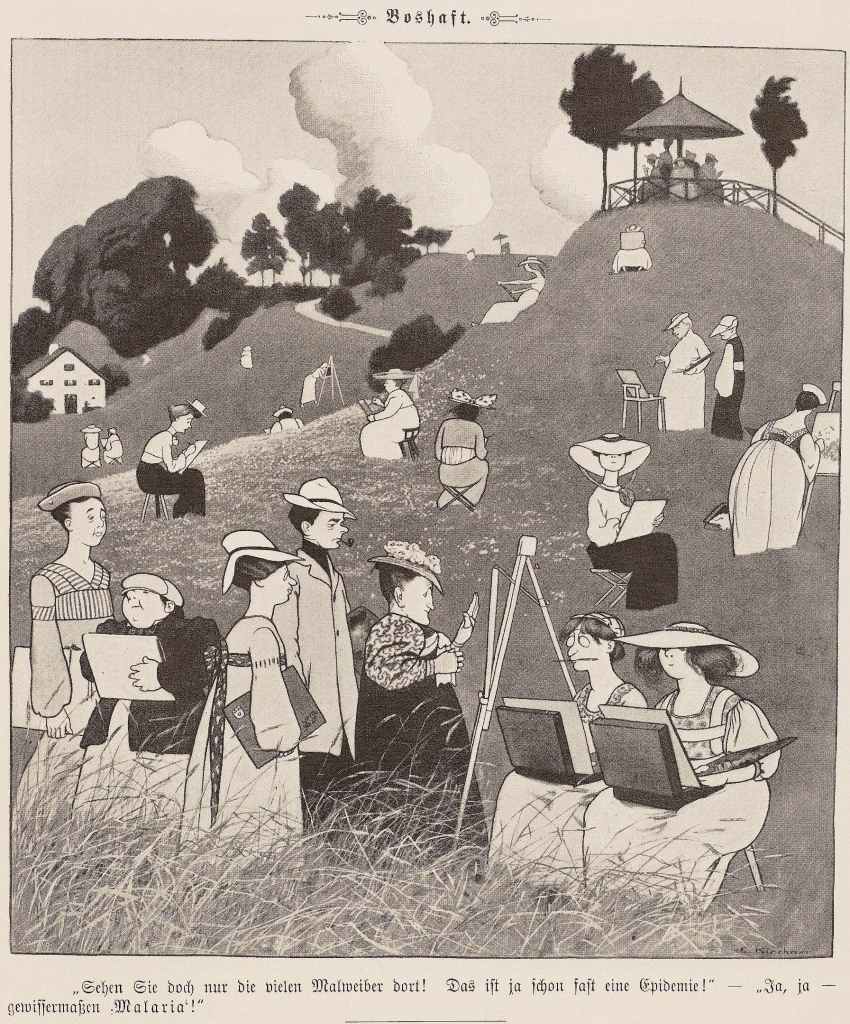
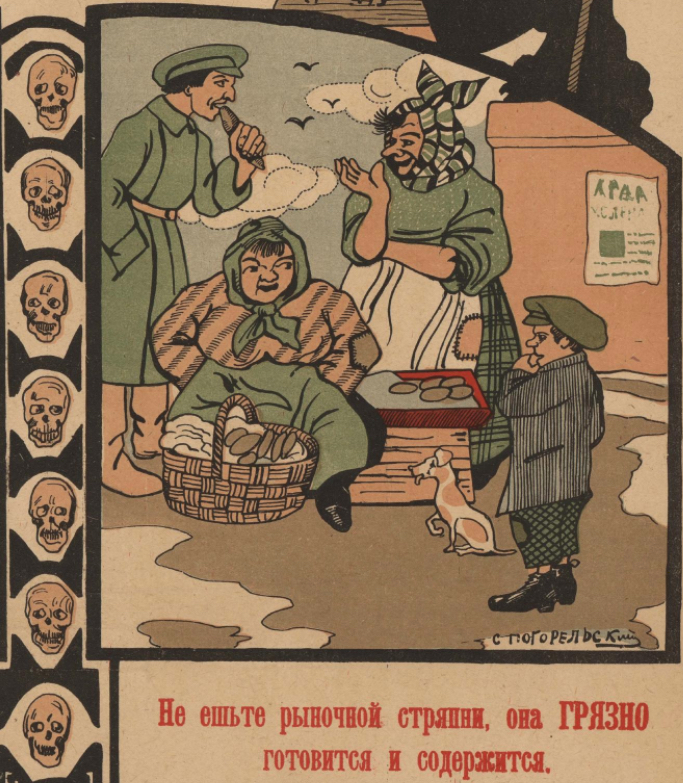
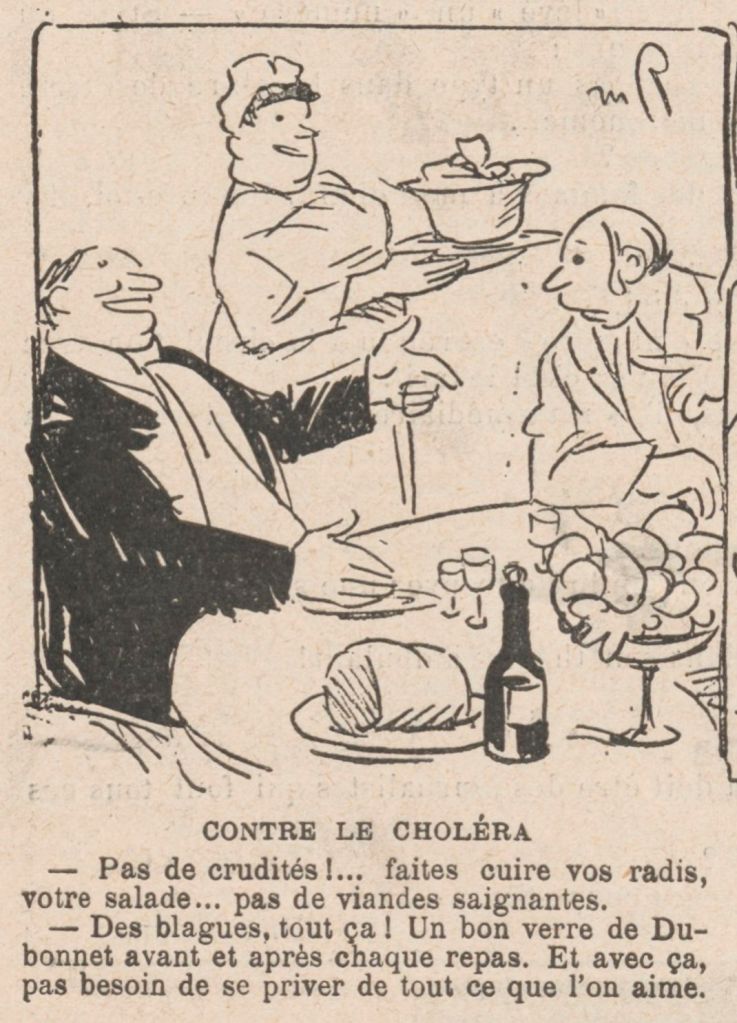
Food and drink
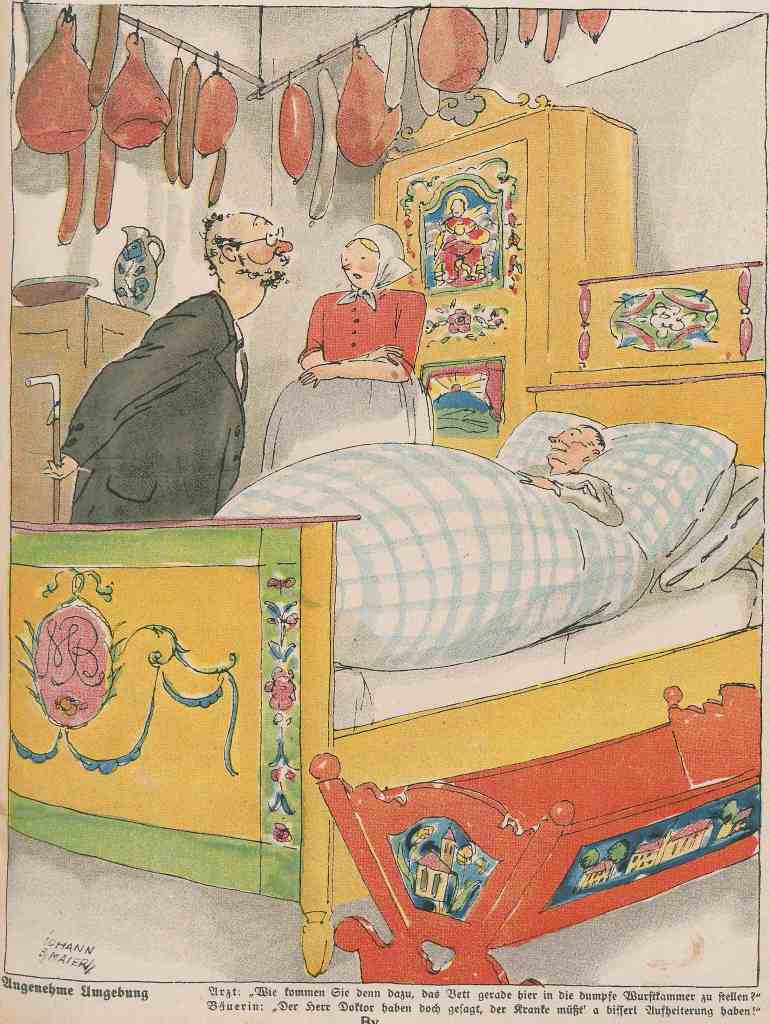
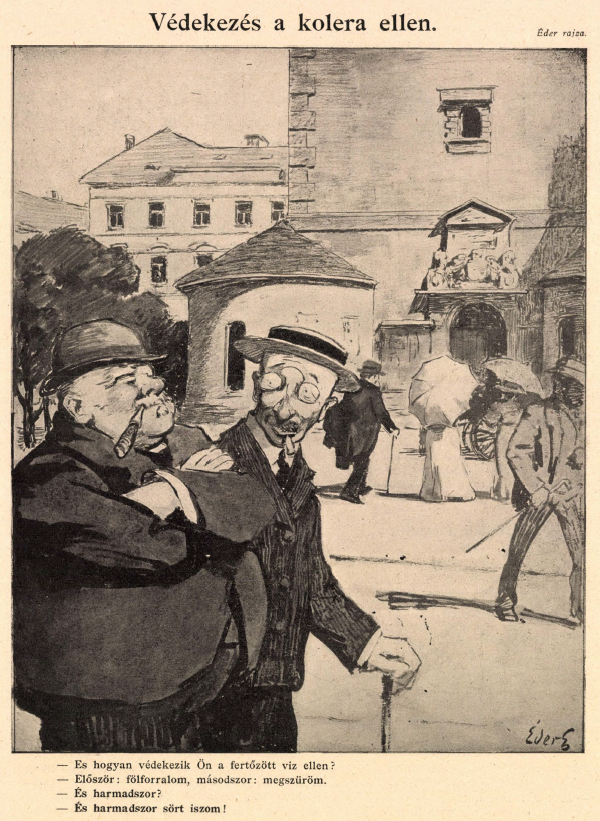
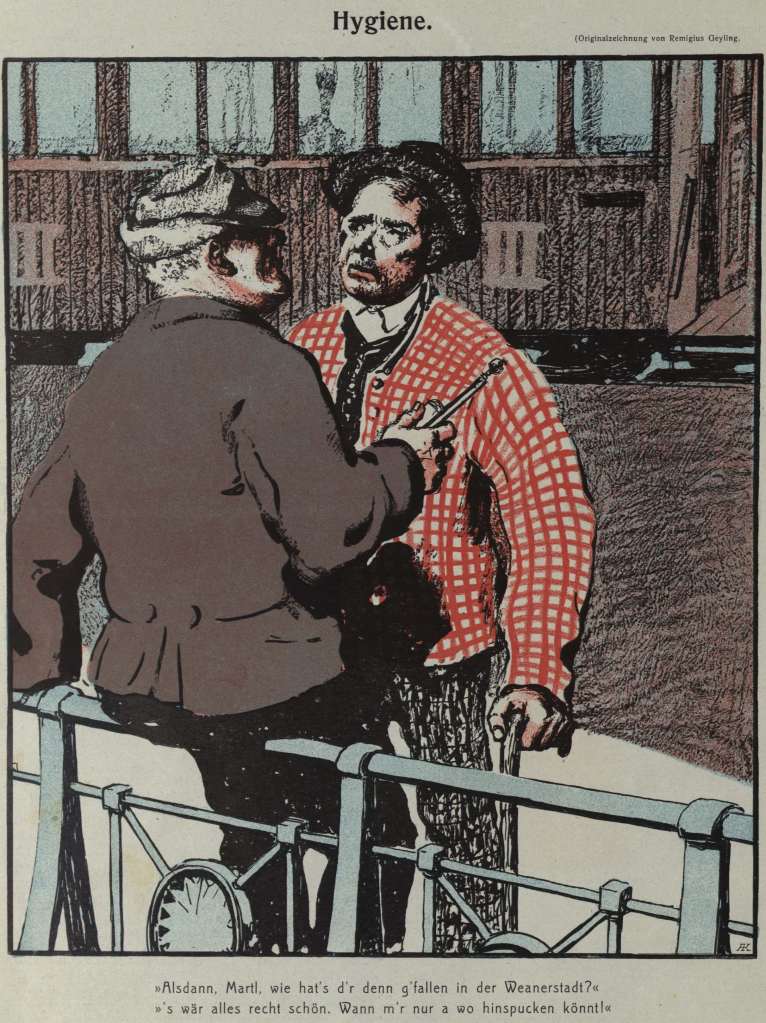
Disgust
Epidemic disease and its frightening symptoms often give rise to feelings of disgust and revulsion. Hygiene can function here as a set of social norms susceptible to willful or involuntary violation by the disease-ridden figure. Even cartoons can play on these responses for their own ends.

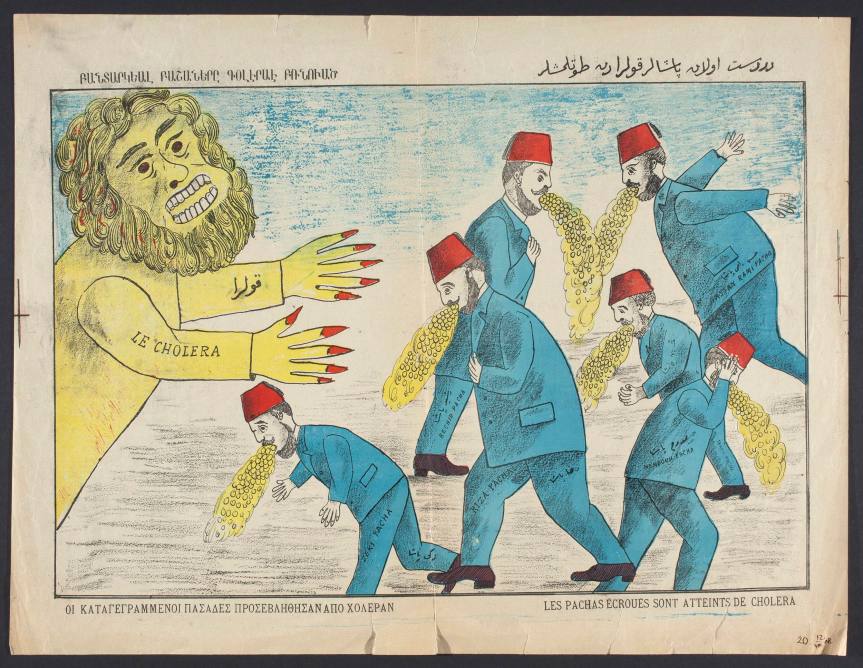
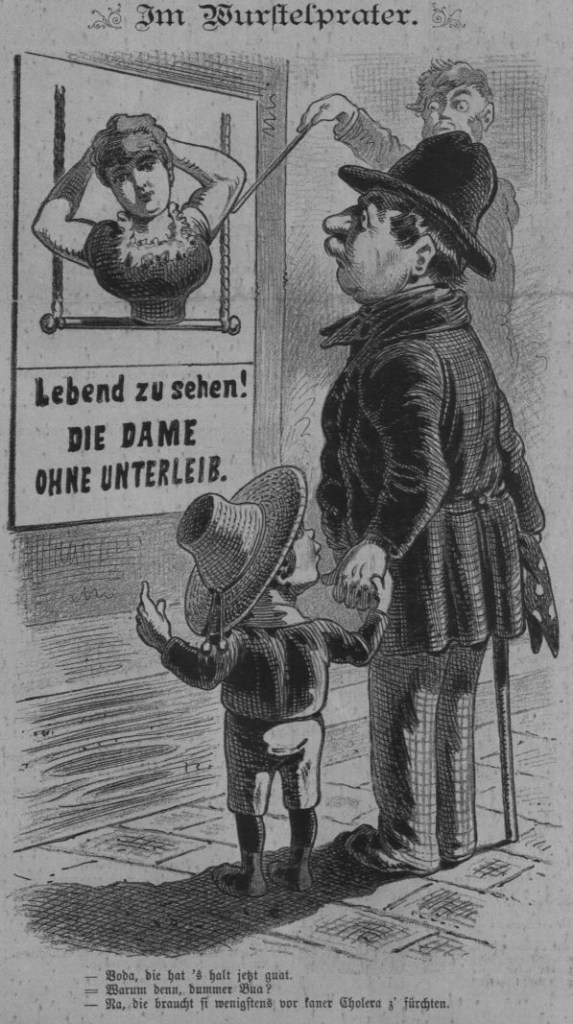
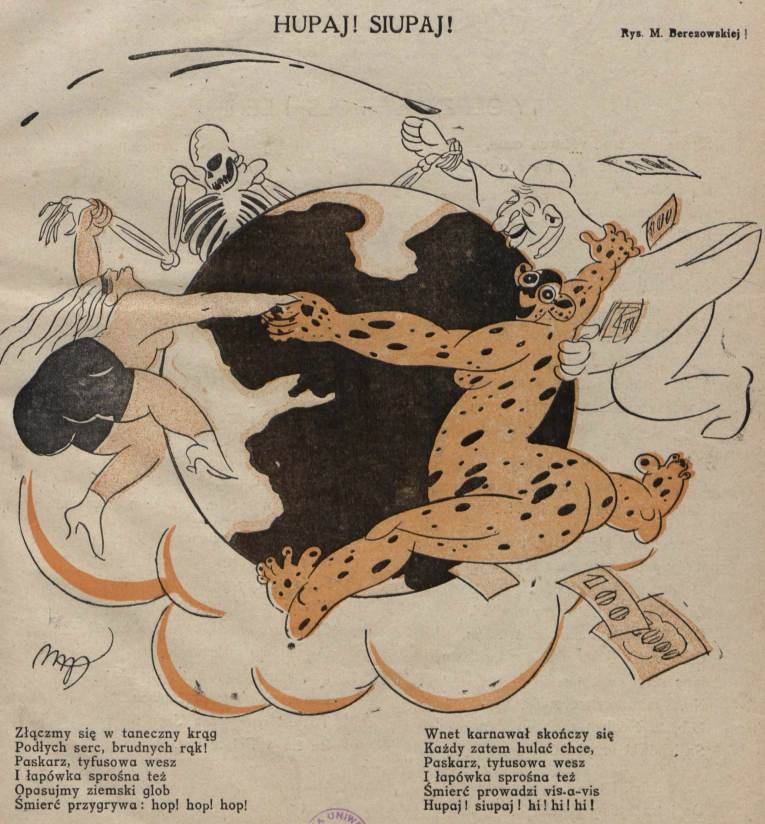
Carnivalesque
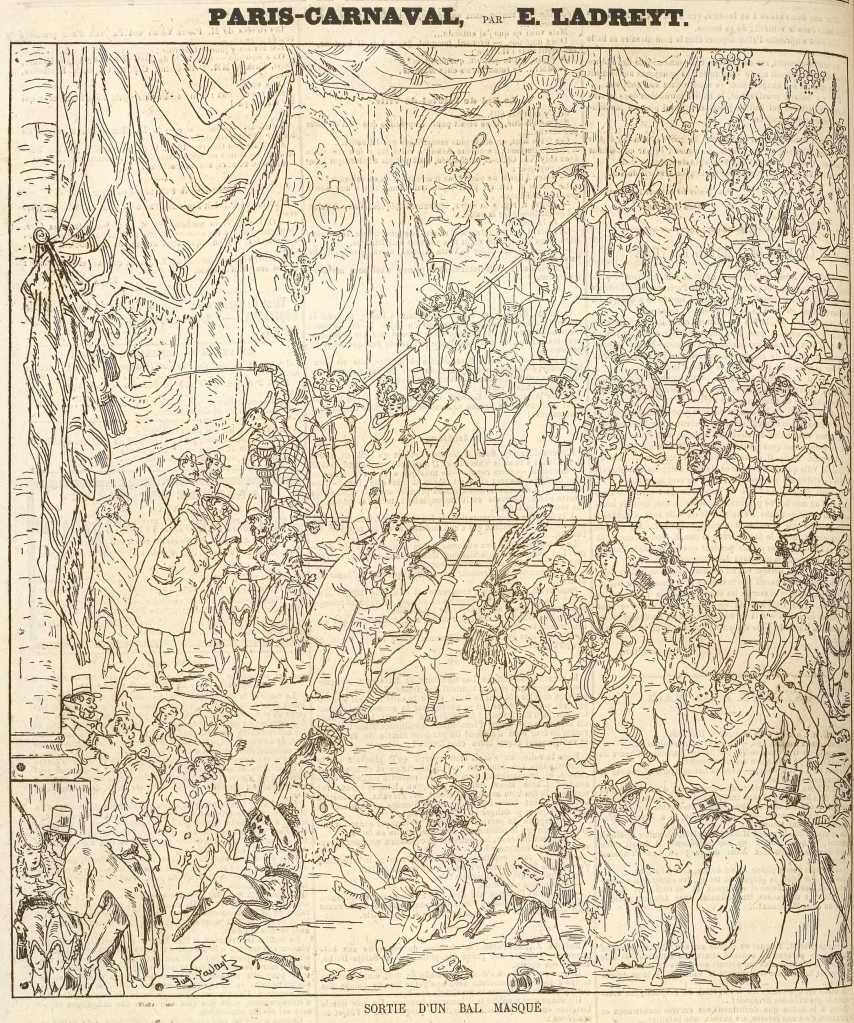
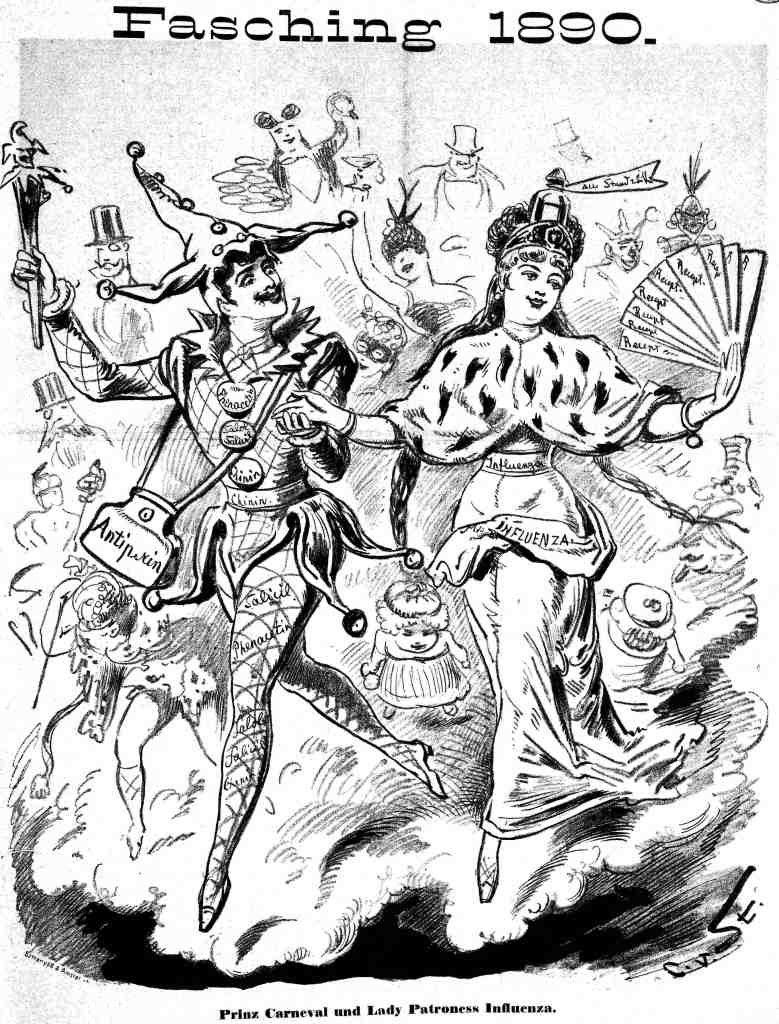
In a sense, all of the cartoons on this site participate in the carnivalesque, invoking epidemic themes to destabilize received views, most often in Terry Eagleton’s notion of licensed transgression, more rarely as utopian antidotes. This section will only single out images that more explicitly dance in the face of disease.
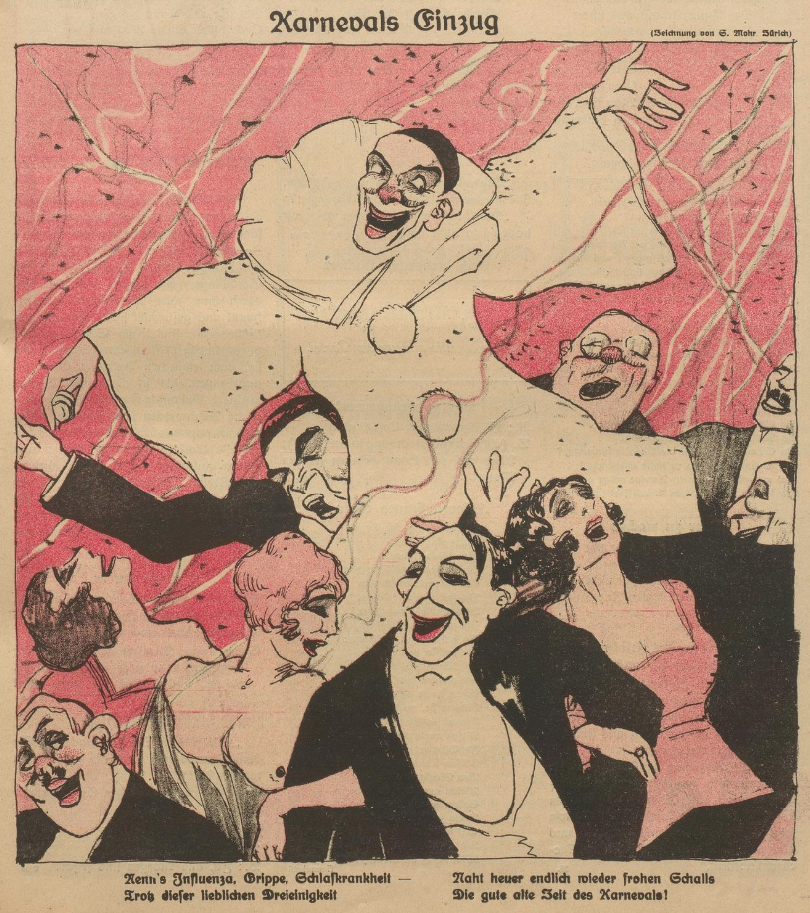
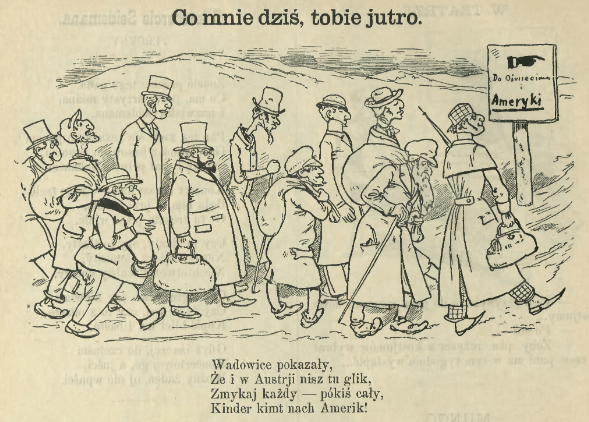
Boundaries, geopolitics, national glory
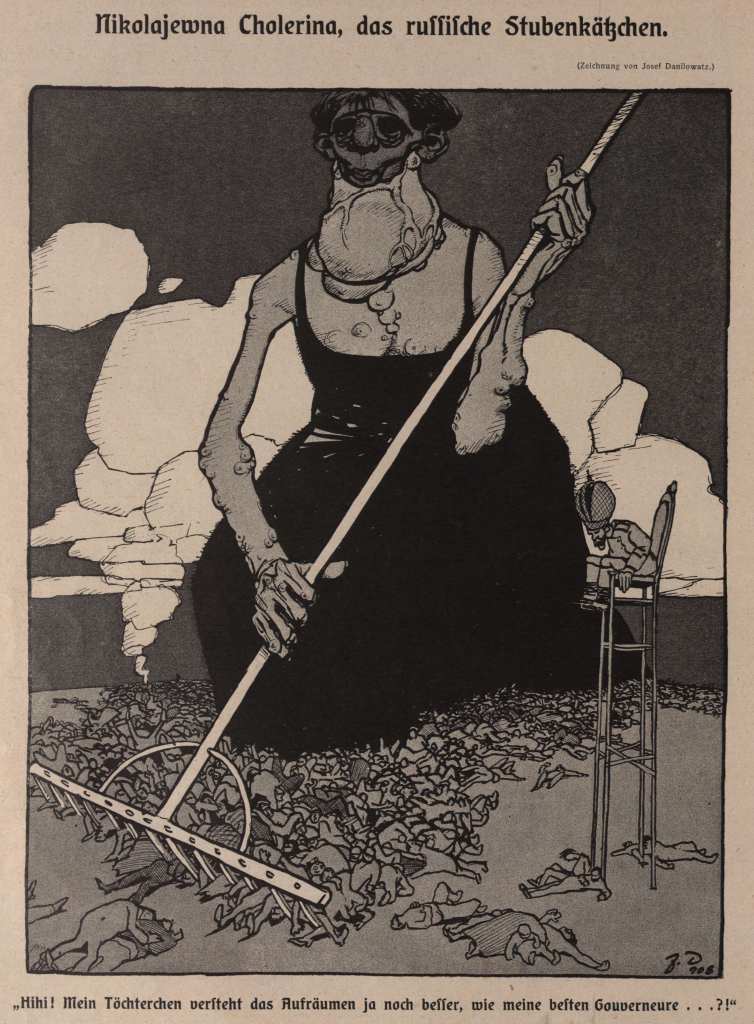
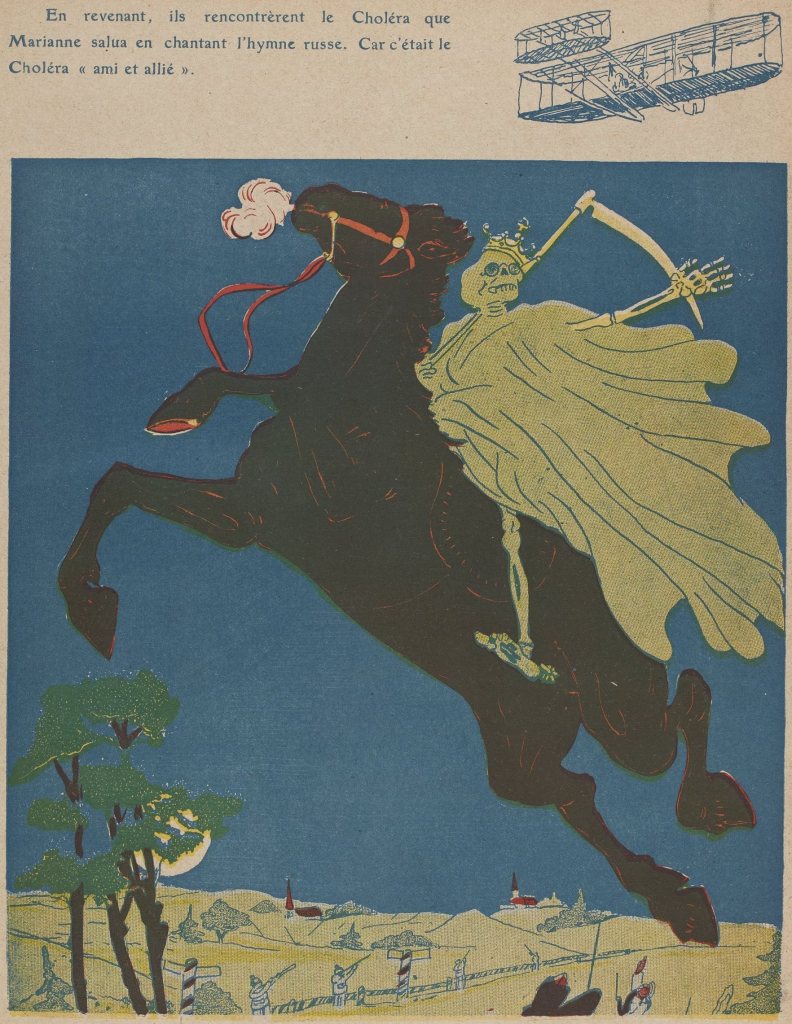
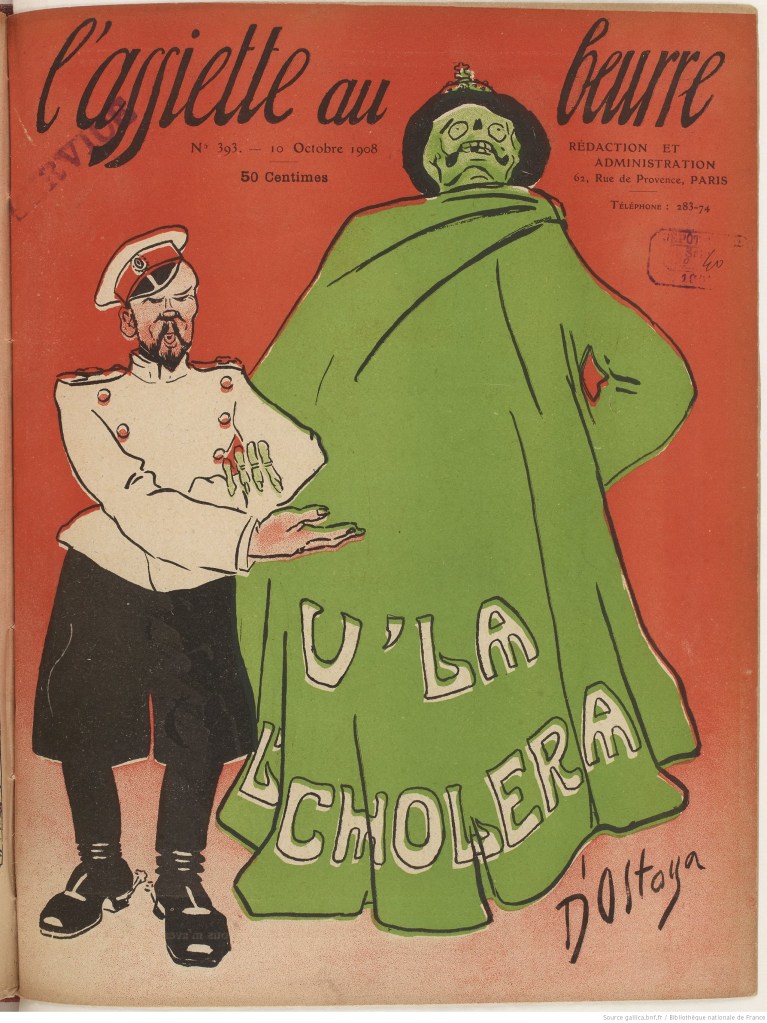
This is low-hanging metaphorical fruit in epidemic times, but the language tags are inefficient proxies, so I will collect a subset here for those who take an interest. The frequent Russophobia found in German, Austrian, Polish, and French venues would also fall under this category.
 Sic Transit Pestilentia